US Market Research | First Visit to the Los Angeles Vape Market: Flavor Ban Drives Industry Shift, C
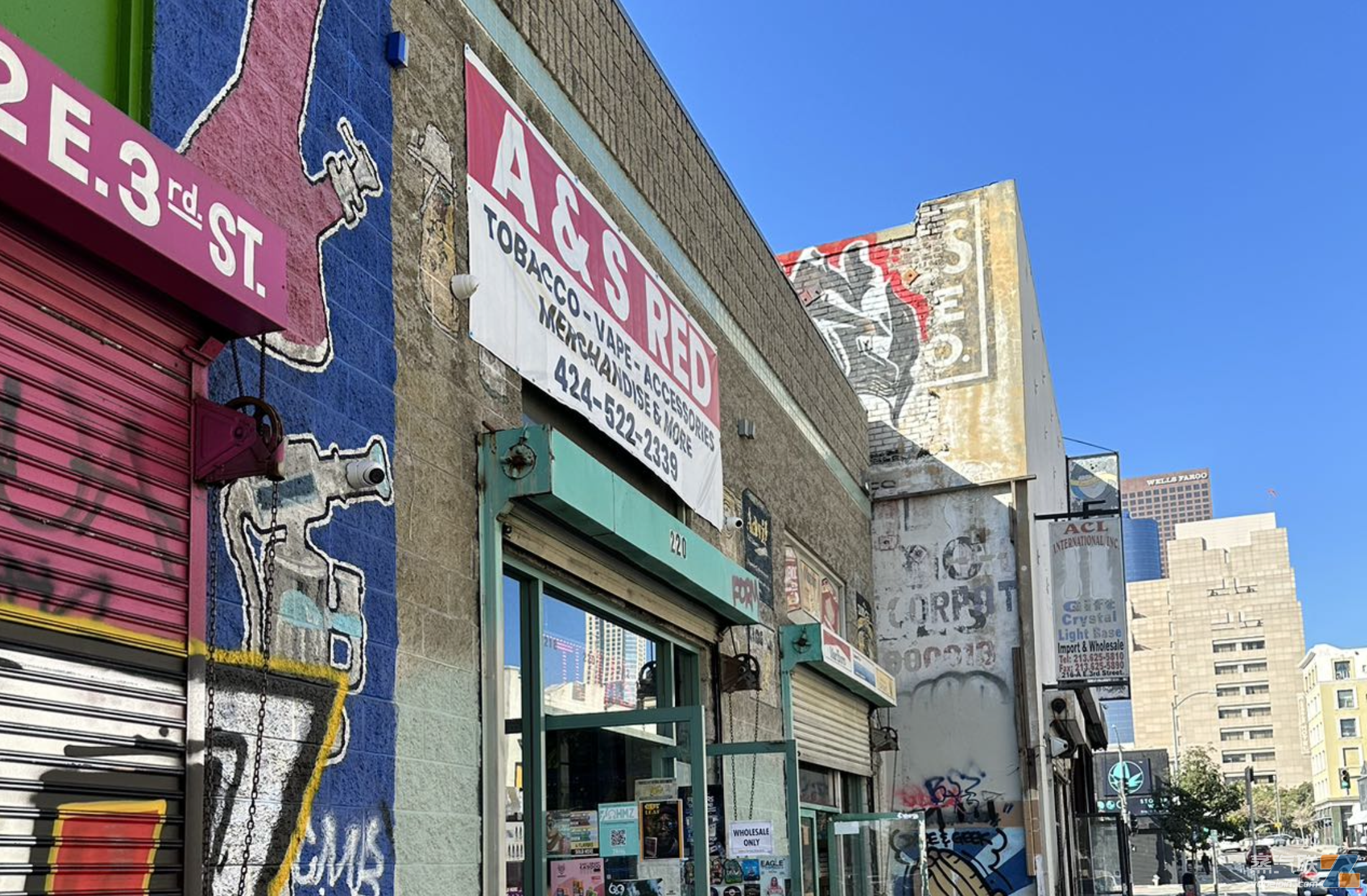 TPE24 is about to open, and Two Supremes has sent personnel to explore the offline e-cigarette market in the United States.
Special Statement:
This article is for internal industry research and communication only, no brand or product recommendations; minors are prohibited from access.
[Two Supremes reports from Los Angeles] TPE24 is about to open, and Two Supremes has sent personnel to explore the offline e-cigarette market in the United States. In 2024, as California, the largest economy in the U.S. and a major consumer of e-cigarettes, what changes have occurred in the offline e-cigarette market? A year after the flavor ban was implemented, what position do disposable e-cigarettes occupy in the market? Which e-cigarette products have stood out? How have legalized cannabis products entered the fray and changed the market ecology?
Policies Above, Countermeasures Below
On December 21, 2022, California's flavor tobacco ban officially took effect, requiring retailers to stop selling flavored tobacco products, including menthol cigarettes and tobacco flavoring additives.
E-cigarettes or e-cigarette devices containing or selling flavored liquids or elements;
Flavored e-liquids or pods;
Ingredients, parts, or accessories of tobacco products sold with flavored components;
Flavored little cigars or cigars, smokeless tobacco, rolling cigarettes, or rolling papers.
On January 23, 2024, a year after the implementation of the law, Two Supremes staff visited a block near Los Angeles City Hall, where many e-cigarette wholesalers are located, primarily serving business users.
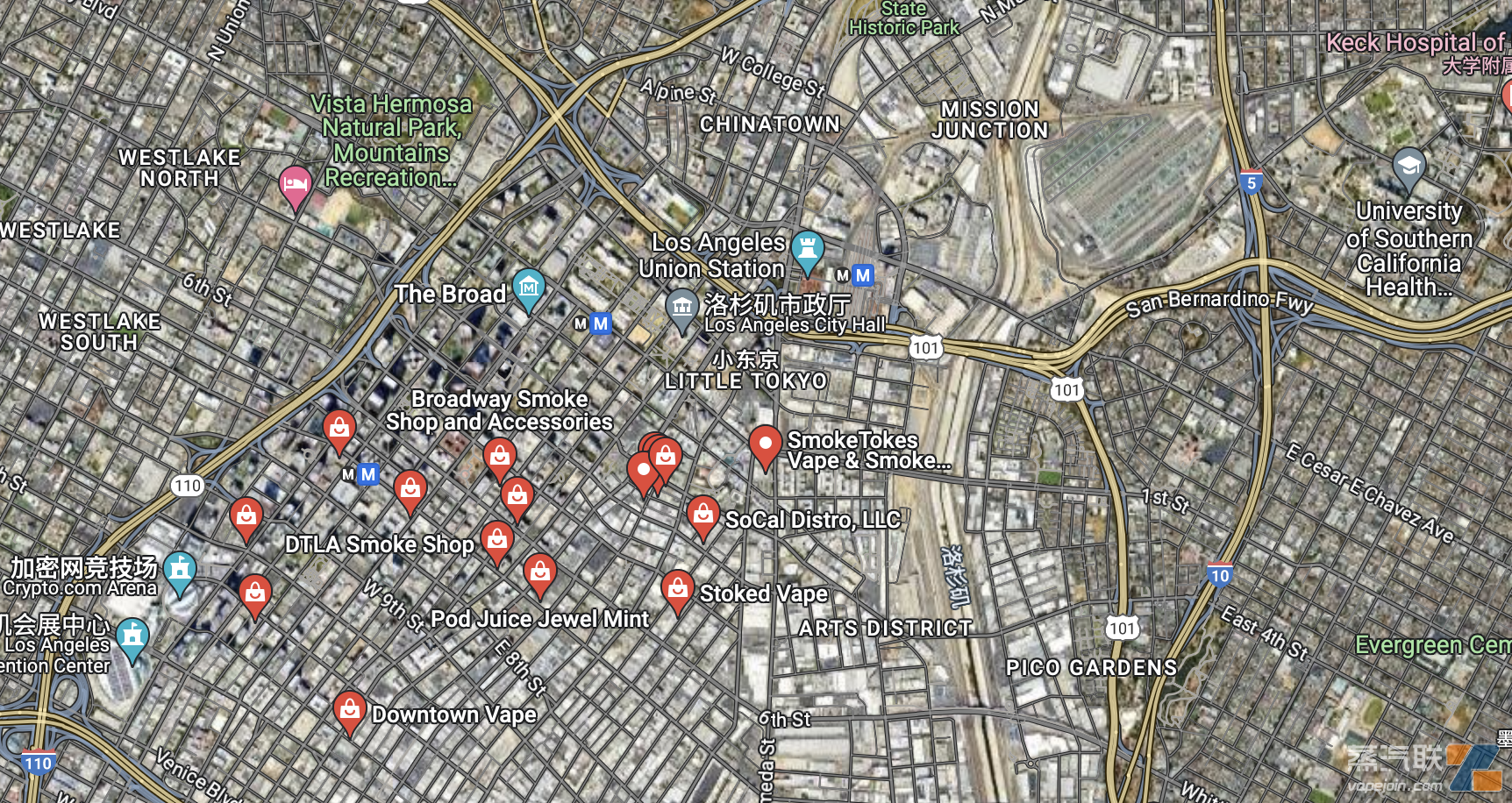 Density of e-cigarette shops in Los Angeles | Source: Google Map
In discussions with the first e-cigarette wholesaler, staff revealed that due to new products being detained by customs, they could only sell existing stock, with the main flavor series being Flum Pebble, and the best-selling flavors concentrated on Berrymelon Ice, Blueberry Mint, and Greenapple Watermelon, with the "Ice" sensation still being a widely accepted product.
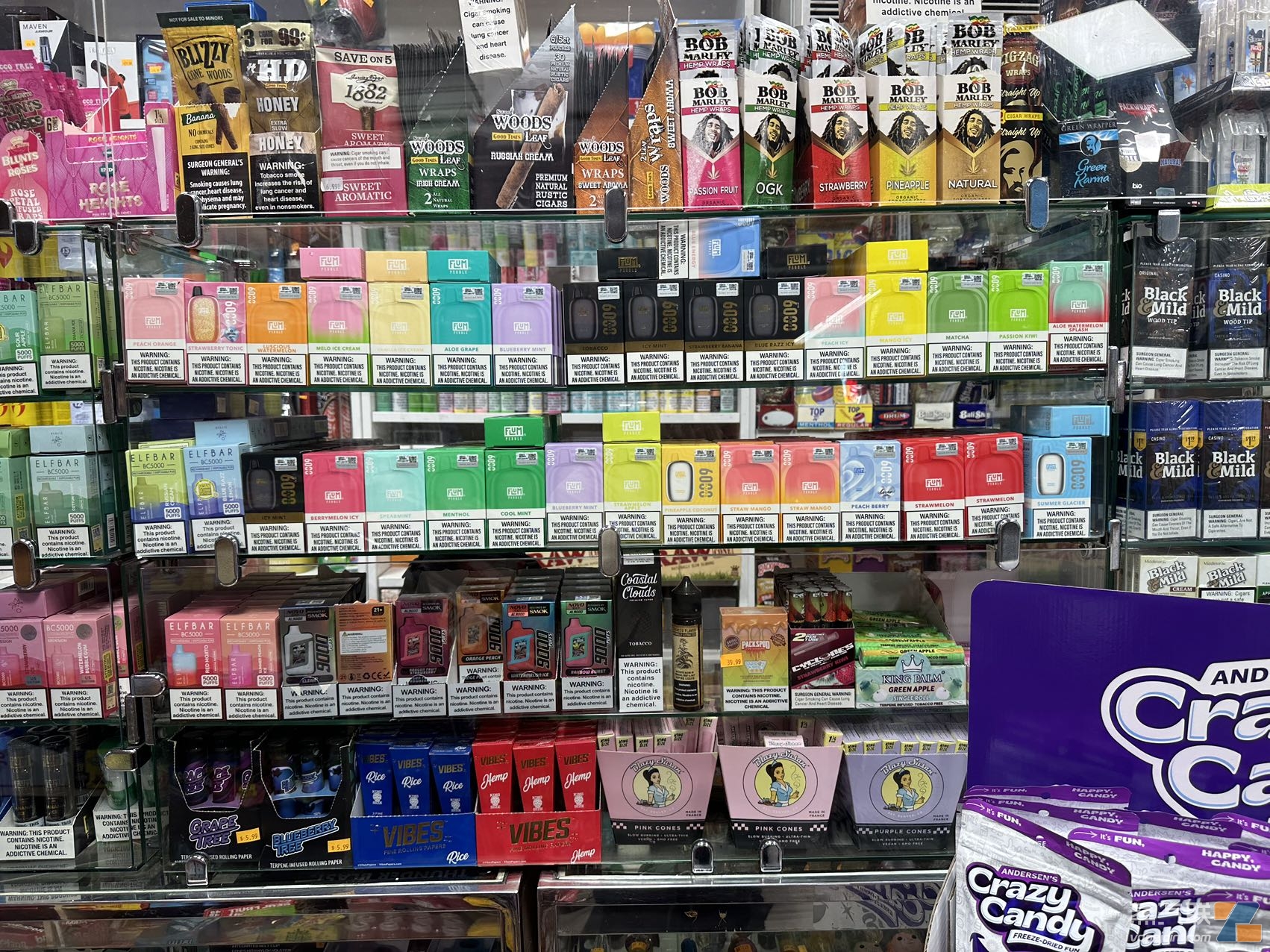 Publicly available flavored e-cigarette products | Source: Two Supremes
Two Supremes found that although California's flavor ban brought some fluctuations to the business, it did not seem to be a major issue for them.
A store owner stated that the flavor ban only prohibits flavors like apple and lemon, but he said there are clever ways to circumvent it. For example, naming flavors in Spanish or using numbers to correspond to flavors. The store owner told Two Supremes, "whatever the rules will be, you will always find a loophole."
This seems to explain why flavored products, although officially banned, still have a presence in the market. It is the market demand that drives merchants to trade, and the merchant emphasized that finding ways to circumvent regulations from the time of formulation to implementation can allow them to earn at least three months' worth of income.
He also stated that future enforcement may become stricter, but currently in the Los Angeles offline market, enforcement measures mainly involve confiscating related products, without involving fines. In other words, the losses for store owners are concentrated on the cost of the products themselves, without incurring additional economic losses.
Focusing on the Market, Adjusting Strategies
However, the impact of the flavor ban on the e-cigarette market has prompted some merchants to make choices, with some stores opting to stop selling disposable e-cigarettes, instead selling open or refillable e-cigarette products, or only selling devices without providing e-liquids and disposable products. Notably, in one store, Two Supremes found that 80% of the products were of the SMOK brand, and even one store simply stopped selling e-cigarettes altogether, focusing on other products like hookahs.
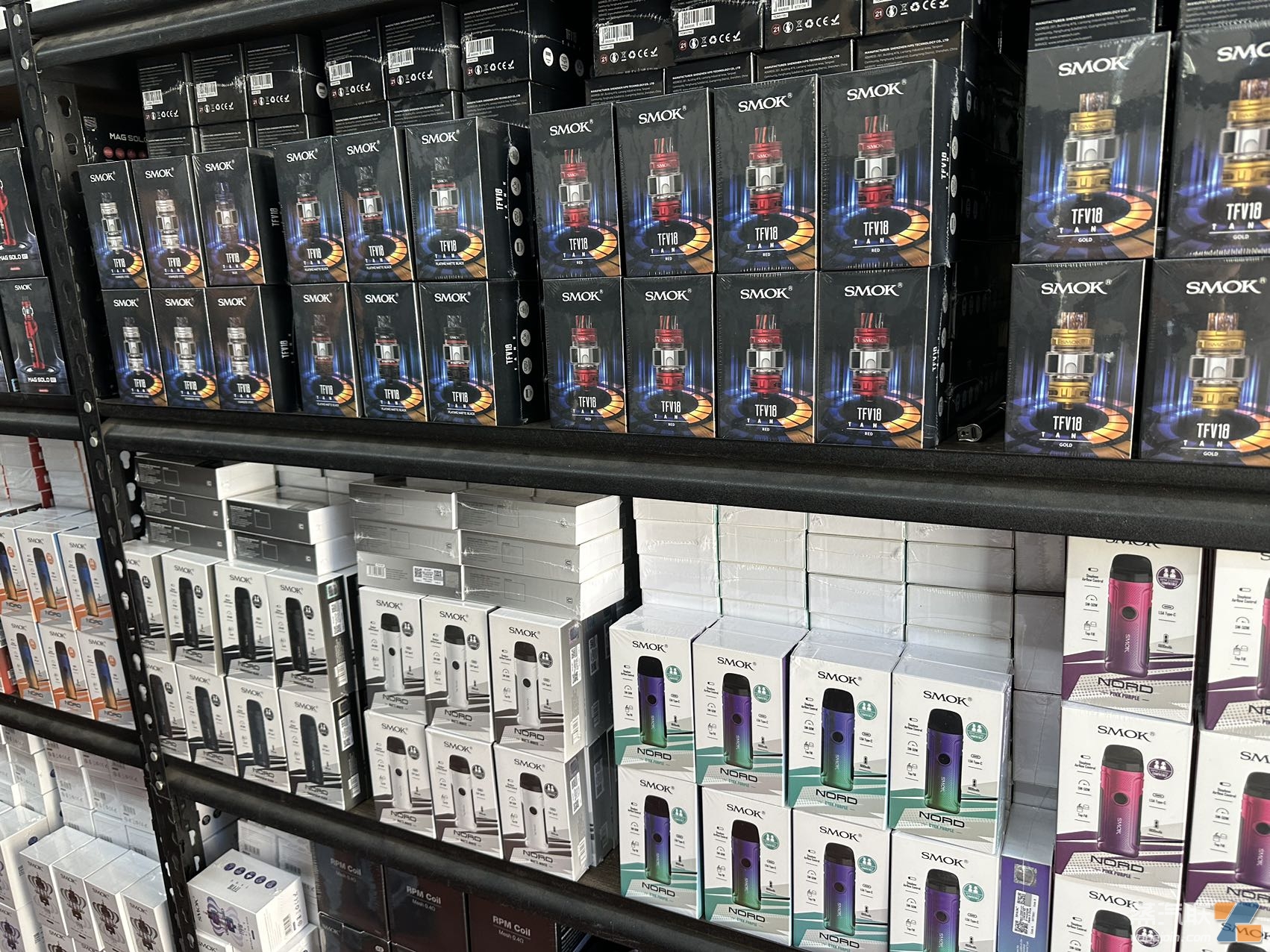 SMOK products | Source: Two Supremes
This merchant selling hookahs stated that since the flavor ban was introduced, they have rarely sold flavored disposable e-cigarettes, and for them, the tobacco category itself does not mean that there is only the option of e-cigarettes.
"We sell everything related to tobacco, so it doesn't matter; we just won't sell disposables anymore. We can still sell cartridge-based and open products."
 Internally displayed hookah products | Source: Two Supremes
Turning to Cannabis Products
In 1996, California began the process of legalizing medical cannabis, and in November 2016, California voters passed the Adult Use of Marijuana Act (Proposition 64) with 57% of the vote, legalizing recreational cannabis use.
The California Department of Tax and Fee Administration (CDTFA) reported cannabis tax revenue for the third quarter of 2023, totaling $269.3 million. Of this, cannabis consumption tax revenue was $156.9 million, and business sales tax revenue was $112.4 million.
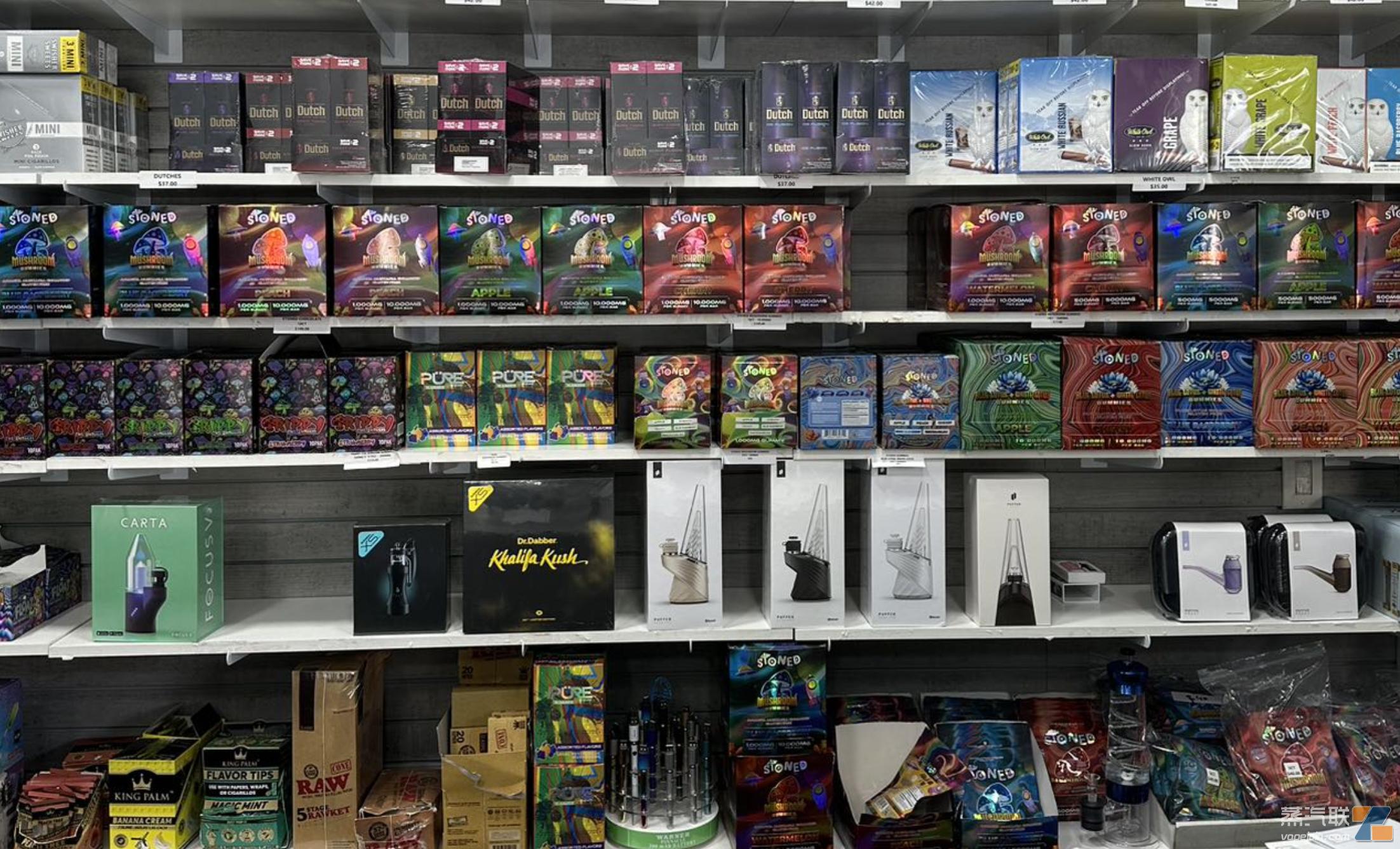
This has also affected consumer attitudes toward e-cigarettes. In the increasingly strict regulatory environment for e-cigarettes, many merchants have indicated that a large number of individuals previously engaged in the e-cigarette industry have now shifted to the cannabis industry, including products related to CBD and THC.
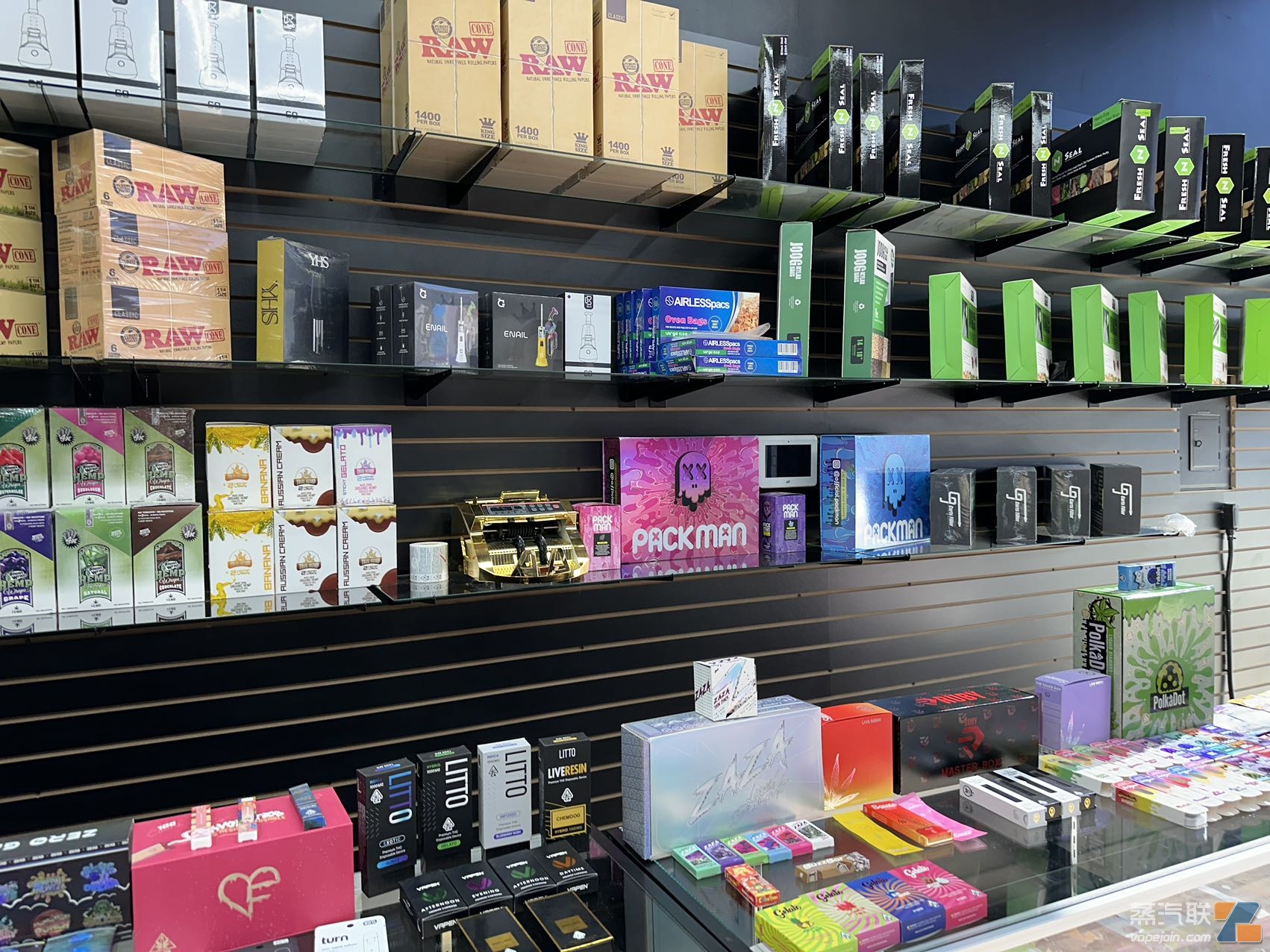 Some cannabis products | Source: Two Supremes
A store owner who transitioned from selling e-cigarettes to cannabis stated, "Since we can smoke cannabis, who cares about e-cigarette flavors? The government banning flavors will only make CBD e-cigarettes more popular." In his store, cannabis products were prominently displayed, while e-cigarettes were placed at the back of the store.
The "Must-Have Battleground" for Chinese Manufacturers
During visits to multiple stores, Two Supremes found that many store owners mistook Two Supremes staff for salespeople promoting e-cigarette brands. According to one store owner, three batches of Chinese salespeople had visited his store the day before, all promoting different e-cigarette brands. Just this morning, as Two Supremes arrived at his store, salespeople promoting e-cigarettes had just left.
Recent overall data on California's e-cigarette market has not yet been released, but a report from the well-known research organization WSPM disclosed the brand share situation in California's e-cigarette market for the second quarter of 2023: the top five brands were FLUM, ELFBAR, LOST MARY, FUNKY REPUBLIC, and EB DESIGN.
California, located on the west coast of the United States, has long been the strongest economic state in the U.S. According to a Bloomberg report in 2022, California is expected to surpass Germany to become the fourth-largest economy in the world, with Bloomberg commenting, "In terms of GDP growth, corporate valuation, renewable energy, and other aspects, California continues to lead other states and countries."
California's status cannot be ignored, becoming the first stop for many e-cigarette brands to seize the West Coast market. Los Angeles, as the economic center, gathers a large number of e-cigarette wholesalers who firmly grasp local distribution network resources.
During visits, Two Supremes found that many store entrances displayed signs stating wholesale only, minimum $1000, indicating that their main customers are wholesalers and e-cigarette stores that can purchase in bulk.
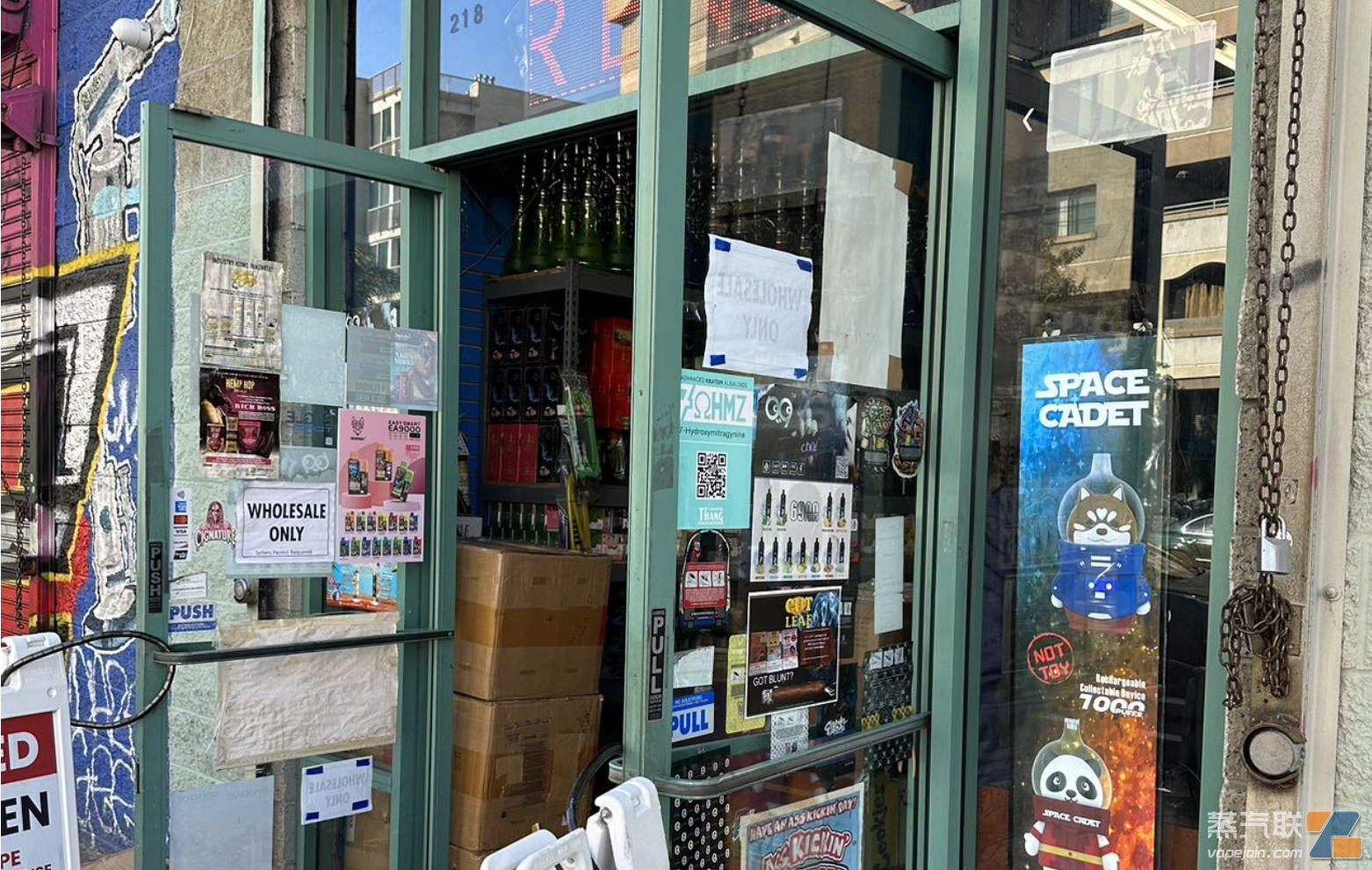 Posters at the entrance | Source: Two Supremes
In the future, how the California e-cigarette market will develop remains to be seen. Two Supremes' exploration of the U.S. offline market will continue, focusing on new trends and developments in the U.S. e-cigarette industry. After the TPE24 exhibition concludes, Two Supremes will hold a TPE exhibition and in-depth sharing session on the U.S. market on February 6. 2FIRSTS Global Executive Editor Hou Yuhan and the U.S. team will share the latest discoveries from the exhibition, delving into product trends, policy directions, and more. For more information and registration details, please scan the QR code below to contact Two Supremes staff.