Financial Times on British American Tobacco: Camel’s Halving Is the Last Straw for Investors
British American Tobacco is facing a difficult transition while pinning its hopes on smoke-free products; consumers are giving up traditional tobacco, and sales are declining; British American Tobacco has reiterated its determination to move toward a smoke-free world.
【Reprinted by Liang Ge Zhishang from the Financial Times】In industries such as tobacco that are expected to face long-term decline, companies confront tough strategic choices. They can extract as much value as possible from their legacy assets and effectively cash out their equity, or they can seek to build new, sustainable businesses.
Trying to do both at the same time creates execution risk. British American Tobacco faces exactly this dilemma.
Its traditional business—which accounts for more than 85% of total sales and all of its profits—is under pressure. BAT prefers to call it the combustibles business rather than tobacco. On Wednesday (December 6), it disclosed market data showing that a £25 billion impairment in its Reynolds American unit, along with lower growth expectations, effectively “burned away” nearly one-tenth of the company’s value.
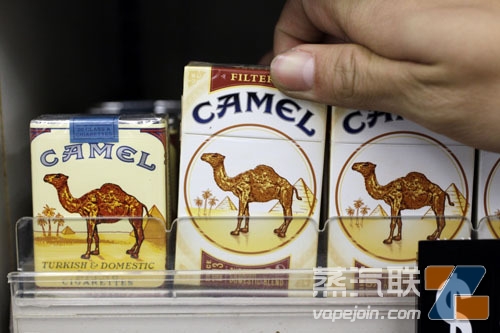
In the United States in particular, rising living costs and the emergence of disposable e-cigarettes caused cigarette sales to fall by 11% in 2022. British American Tobacco’s efforts to push premium brands such as Camel in the consumer market have performed poorly.
The company now expects this year’s sales to come in only at the bottom end of its 3–5% growth target range. However, when volumes are falling sharply, raising prices becomes much more difficult. BAT is currently signaling that growth through 2026 will remain below average, which is also one reason for the reaction in its share price.
In the often opaque world of accounting, this means the group no longer views its U.S. brands as having perpetual value. By shortening their economic life to 30 years, British American Tobacco has written down £25 billion of the £67 billion valuation assigned to its U.S. brands when it acquired Reynolds American in 2017.
At the time, BAT spent $49.4 billion to buy the 57.8% stake it did not already own, a deal that valued the entire company at more than $100 billion including debt. Although the impairment does not affect cash flow, it still amounts to roughly half of British American Tobacco’s current market capitalization.
E-cigarettes, heated tobacco products, and modern oral products (nicotine pouches) are expected to break even this year, earlier than previously anticipated.
In reality, these still relatively small businesses require substantial marketing investment, which weighs on profit margins. Government skepticism toward smoke-free products has also not helped improve the situation. Even so, British American Tobacco still hopes that smoke-free products will gain broad popularity before tobacco fully exits the market.
Given this year’s weak shareholder returns—even including a 10% yield—only a decline in global interest rates may be enough to bring investors back to British American Tobacco.