How New Tobacco Products Are Promoted in Japan: How Lobby Groups Won Public Visibility
new tobacco(Equipment) Why can we get such a large public exposure in Japan? Is it possible for other countries to follow up or even follow suit? Will Japan's promotion of new tobacco products turn in the future?
Statement:
[1]This article is limited to global atomization industry research and does not involve any brand or product recommendations.
[2]This article is only used for research and reference on the development of the global atomization industry and does not involve any capital market evaluation or investment suggestions. This article should not be used as the basis for any investment.
[3]The scope of this article is limited to the commercial field and does not include any comments on regulatory policies.
Promotion of new tobacco in Japan: How can lobbying groups win public exposure?
Why is new tobacco (equipment) so exposed to the public in Japan?
Is it possible for other countries to follow up or even follow suit?
Will Japan's promotion of new tobacco products turn in the future?
Wen| Two supremacy
author| CHalotte Yu
[Two Supremes Original] Philip Morrisheating non-burning(HNB) The device IQOS was launched nationwide in Japan in 2016, igniting the HNB market in Japan.
Currently, the main HNB products sold in Japan include British American Tobacco's glo and Japan Tobacco's ploom. All three companies have launched intensive banner advertising on the Internet, and ads from IQOS and ploom have even appeared on the free streaming "TVer".
But in Japan, traditional tobacco is treated differently. Due to the self-discipline standards of industry associations, advertisements for tobacco products are completely prohibited on television, and similar promotional content cannot be published on the Internet. Even Japan Tobacco, the local leader, cannot expose the image of smoking cigarettes. It can only expose it to the public with vague "impression advertisements" and roundabout content such as "smoking etiquette" and "tobacco control methods". (Elf bar adopts a similar promotional strategy in the UK with the roundabout content of "one-time product recycling".)
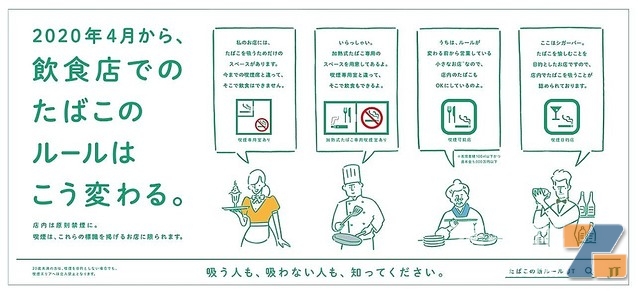
 Conceptual advertising of Japanese tobacco| Photo source: Japan Tobacco Official Website
Many people in the traditional cigarette industry dismiss the proliferation of heated tobacco advertisements on the Internet as "double standards." But the manufacturer claims that these are not "tobacco" advertisements, but rather describe themselves as "devices": whether in online stores, garbage disposal, HNB and atomizatione-cigarettesEquipment is classified as "small home appliances."
 Japan Tobacco's ploom advertising| Photo source: Japan Tobacco Official Website
Why is new tobacco (equipment) so exposed to the public in Japan? Is it possible for other countries to follow up or even follow suit? Will Japan's promotion of new tobacco products turn in the future?# p#pagination title #e#
Different standards of media control
As of March 2021, TVer has approximately 17 million monthly events and approximately 180 million views. On such a large-scale platform, ploom launched its first advertising in February 2020. IQOS will follow up in March 2021.
Among heated tobacco, IQOS's share accounts for an overwhelming 70% all year round. Ploom's share is estimated to be about 10%. By advertising on emerging and dynamic services, ploom is trying to turn the situation around, and IQOS is not willing to be outdone. Such a publicity platform has become a highland that giants are trying to seize.
This may seem counterintuitive: Why can new tobacco appear so freely in Japan's mass media?
In fact, in the absence of clear legal provisions stipulating new tobacco equipment, the media has various judgments on the scale.
The public relations director of online advertising giant Yahoo has said that both the tobacco and device parts of HNB products can be advertised, and the response of existing advertisements to users and society is checked at any time."
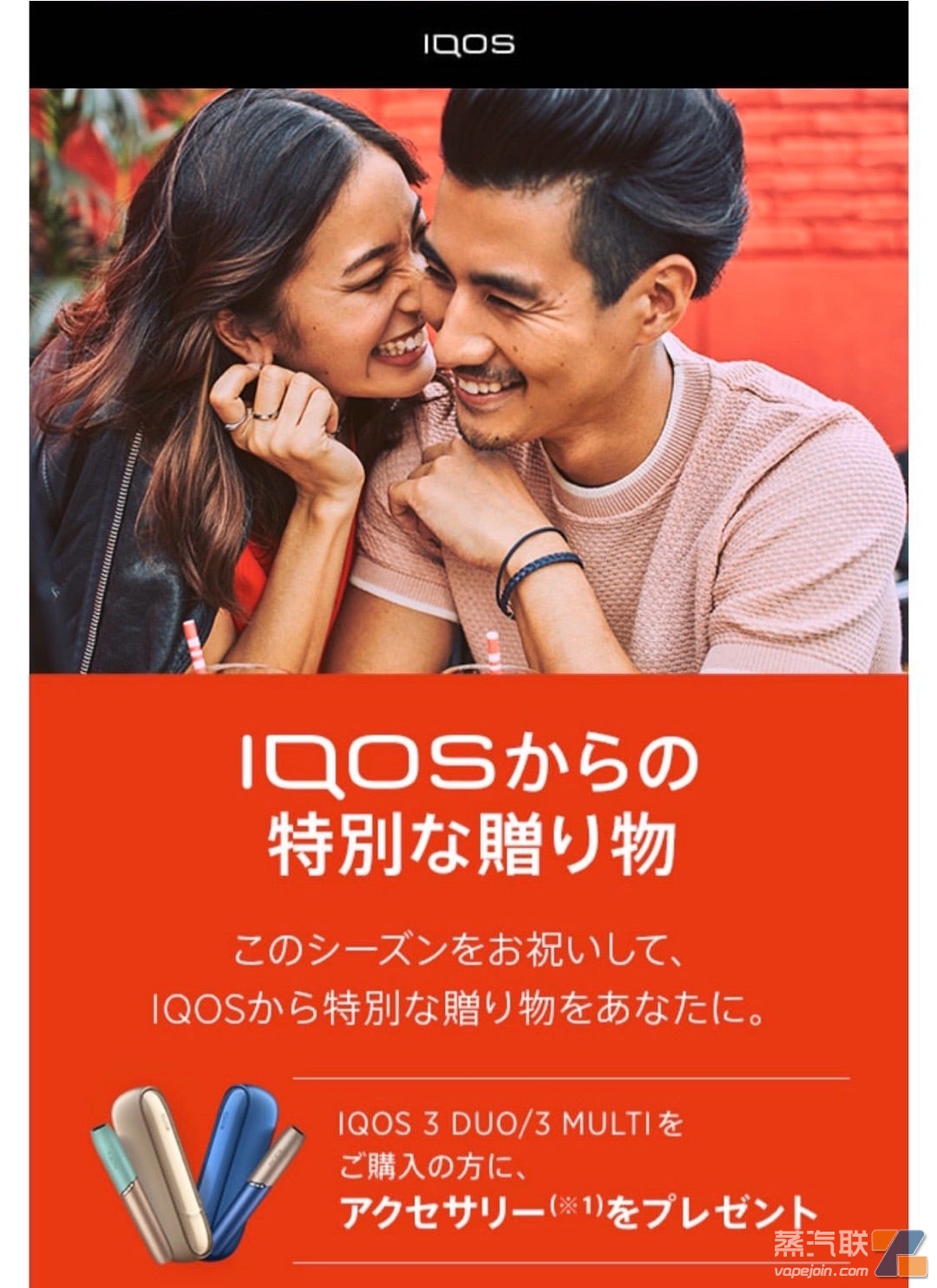 Philip Morris's iQOS advertising| Source: iQOS official website
JT's Plume ad was broadcast on ABEMA, which is invested and provided by Tver and TV Asahi. Both companies said in interviews that they "cannot censor individual advertisements."
Google, on the other hand, is on the opposite side. Google believes that because HNB, like cigarettes and aerosolized e-cigarettes, falls into the category of "dangerous products or services" under the company's advertising business policy, merchants are not allowed to place advertisements, including HNB equipment.
Observers and industry insiders responded that the policies of these giants are not static, but are sometimes tight and sometimes loose. Because the company's decisions are not as long as the policy change process, they are entirely based on commercial and public relations benefits. As commercial companies, Google and Yahoo will flexibly change their corresponding access rules.
But overall, online advertising channels are extremely friendly to HNB devices. With such lenient treatment, the "dividends" have even spilled over to other types of new tobacco products other than HNB, such as British American Tobacco andyueshiThe advertising screen of Lingini disposable products that have just been launched in Japan is almost the same as that of ordinary technology products. E-cigarettes have been able to enter the eyes of potential consumers in this country with a beautiful, fashionable, avant-garde lifestyle-completely different from the disturbing content of traditional tobacco warnings.
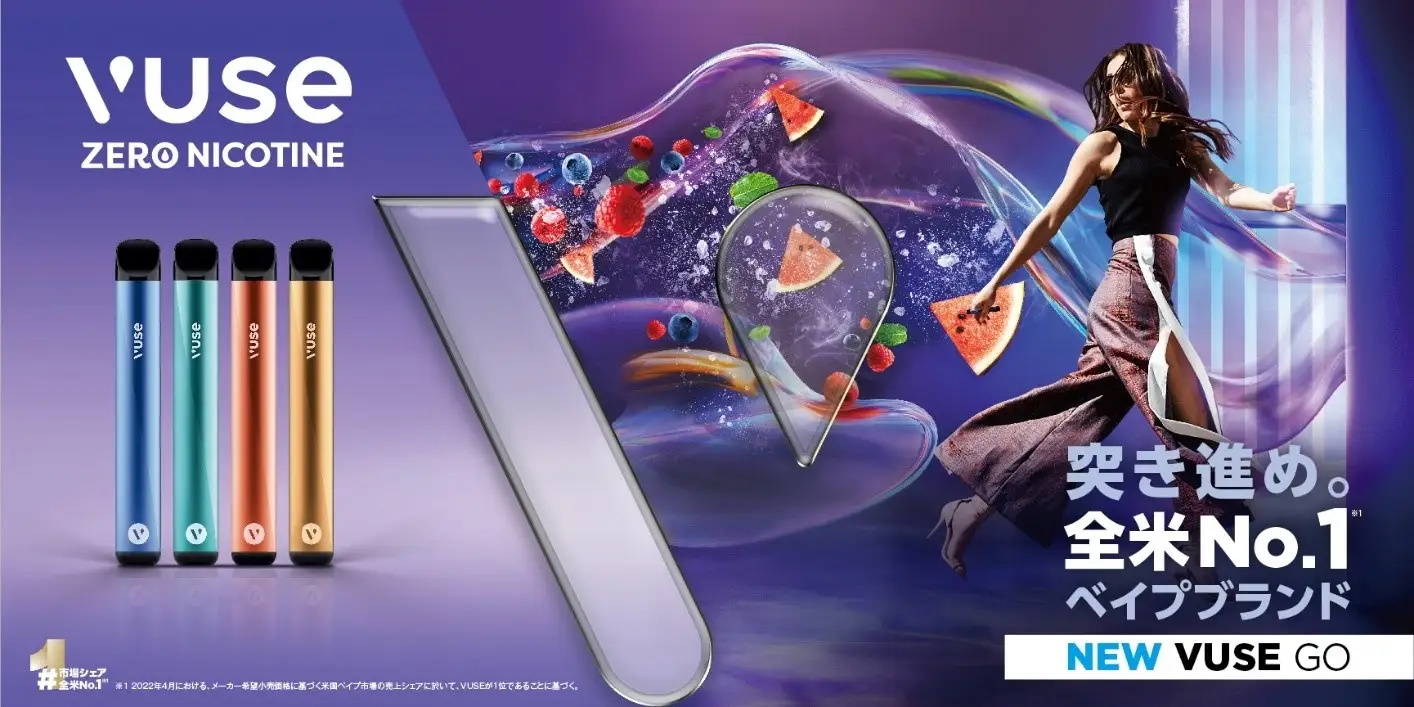 British American Tobacco's Vuse advertising| Source: Vuse official website
Disputes and legal basis for "double standards"
However, this "dividend" enjoyed by new tobacco will obviously not satisfy its "cousin" traditional tobacco, which has received strict supervision, and even the latter openly claims that the status quo is a "double standard." A senior executive of a commercial TV station once said that it is unreasonable to call for tobacco advertisements to be "removed" from television while ignoring the proliferation of HNB advertisements in online advertisements.
Is it reasonable in the Japanese context that advertisements for "traditional tobacco" and "new tobacco equipment" are treated so differently?
A general corporate legal person designed to regulate online advertisingJapan Interactive Advertising AssociationA spokesperson for (JIIAA) once said in an interview that as long as it does not touch the legal bottom line and meets the self-discipline standards of industry associations,"we think there will be no problem."# p#pagination title #e#
But he also admitted that they did discuss at the association's internal meeting whether there are substantial differences between "traditional tobacco" and "new tobacco equipment" for consumers viewing advertisements.
Dr. Takashi Tabuchi, assistant director of the Epidemiology and Statistics Department of the Cancer Prevention and Control Center at the Osaka International Cancer Center, pointed out a similar argument: "If you buy a HNB device, you will inevitably smoke, and it is meaningless to distinguish between the two."
Therefore, the act of classifying HNB devices as "small household appliances" and separating them from "cigarettes" is a bit of "exploiting loopholes" and "unreasonable arguments". More than one distributor in Japan told 2FIRSTS that such a "loophole" relies on years of lobbying by the team behind Japan Tobacco, the country's nicotine overlord.
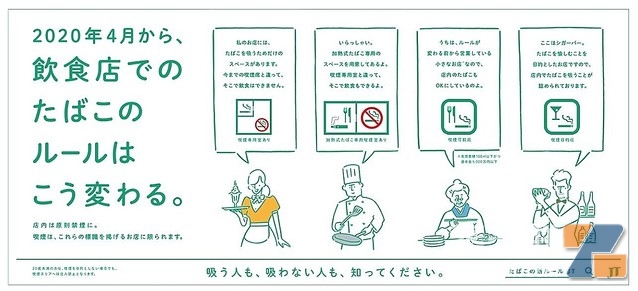 Japanese Tobacco's conceptual advertisement for "smoking etiquette"| Photo source: Japan Tobacco Official Website
However, academic circles have also provided their views on the whole matter from other perspectives. Professor Kihiro Hashimoto of the School of Law of Chuo University in Japan believes that the difficulty in restricting the proliferation of such advertisements on the Japanese Internet lies in "freedom of speech." He once said. Smoking is legal for adults. Therefore,"the judgment of tobacco products should first be left to individuals."
Will it tighten in the future?
At present, one of Japan's most solid arguments in support of new tobacco equipment that "reveals freedom online" is thatOnline advertisers have ways to confirm the age of the audience and accurately deliver them so that they will not pose any moral or legal problems.
But Dr. Tian Yuangui pointed out thatIt is not enough to just prevent minors from accessing advertisingThe purpose of advertising regulation is to prevent smoking from causing health hazards. Considering the environmental changes in the new product of heated tobacco, he believes it is time to review the regulatory content, including advertising.
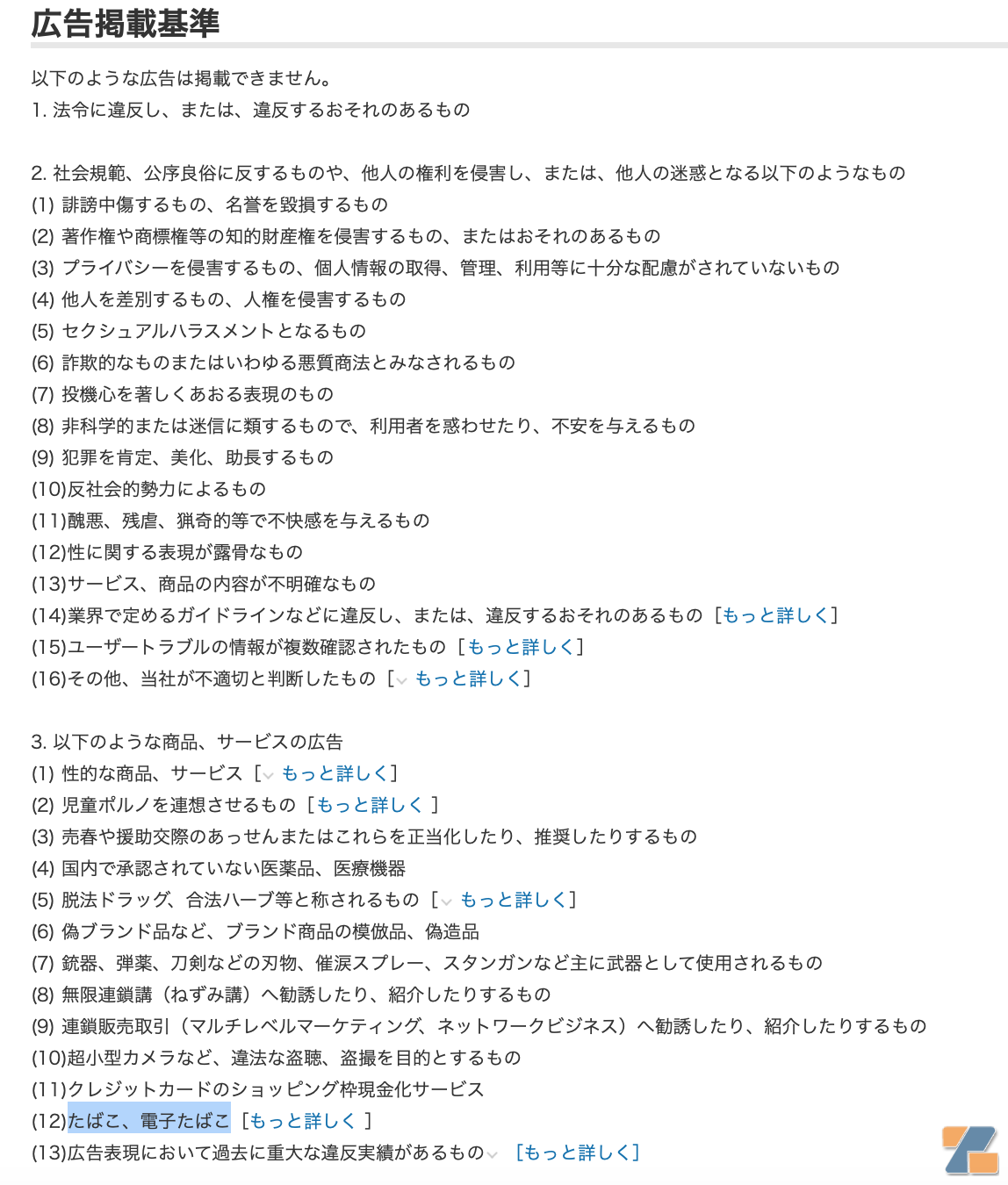
Japan Yahoo Advertising Standards| Source: Yahoo, Japan
Such loose regulations have helped HNB products gain an advantageous position in the Japanese market in the past decade. But the most important thing is, are new tobacco products, including HNB, really harm reduction products? What is the impact on health? Can it really help adult smokers quit smoking? These points need to be supported by more research results. Japanese regulators are probably waiting for more evidence to formulate next policy, including the "zero-Nigerian access" regulations.
2FIRSTS will continue to track new tobacco promotion activities and related regulatory policies in Japan and around the world.