After Aggressive Distribution in 2023, What Opportunities Did Major Manufacturers See in Japan?
 The airtight "credit society", harsh production conditions, and "repeatedly jumping" advertising channel merchants,new tobaccoIt is not easy for brands to enter the Japanese market. However, when small brands were stuck by entry conditions, and out of belief in the broad prospects of the market after the zero-nickel restriction was lifted, big brands began to enter the game and sell goods at this time.
[Two First Originals] The autumn and winter of 2023 will be a lively half year for Japan's new tobacco.yueshiLaunched one-time product priced at 1,320 yenRELX MagicGo will land in Japan in September 2023; ande-cigarette brandsLOST MARY launched a release plan in Japan. The first product, the LOST MARY BM3500 zero-nicotine model, will be available in Japan's online stores, Amazon, and Lotte Market starting from November 1, with a recommended price including tax of 1,980 yen; By December 18, British American Tobacco's "Vuse Go 700" zero-nicotine model will be officially launched in about 2300 FamilyMart convenience stores in Tokyo.
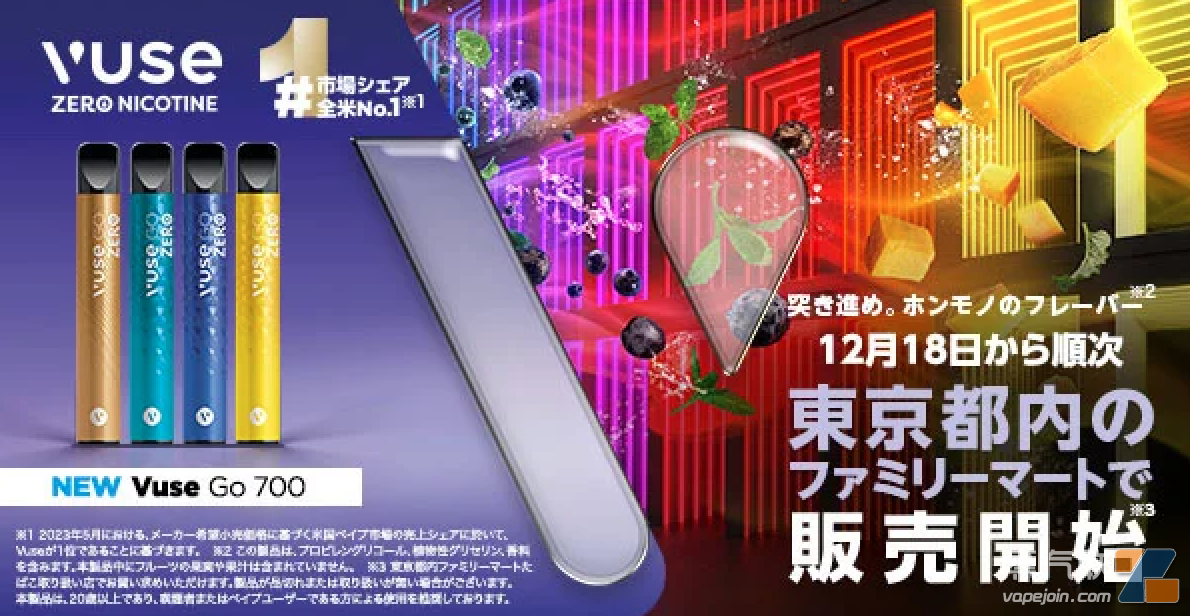 British American Tobacco's zero-nickel product "Vuse Go 700" is officially launched in approximately 2,300 FamilyMart convenience stores in Tokyo| Source: Screenshot from official website
Why did big brands choose this time to launch new products intensively in the Japanese market? These big manufacturers are zero-nicotine in Japan, which is currently relatively narrowe-cigarette marketWhat prospects do you see in China?
Strict compliance market
Since 2013, Japan has strictly enforced smoking bans in public places, and the scope of smoking bans has continued to expand. Under various anti-smoking measures, the overall sales of traditional Japanese tobacco have continued to shrink, reaching a minimum of 32.415 billion yuan in 2015; while Japan's drug regulations strictly limitsmoke oilSelling and importing tobacco oil, using tobacco oile-cigarettesTherefore, it has been slow to gain power.
The most distinctive feature of the Japanese market from other places is the "zero-nei" standard. Although other markets also have loose or tight restrictions on nicotine concentrations,"players" generally still have loopholes to exploit. In 2023, the British "Guardian" revealed that the British agency Inter scientific found that some e-cigarettes sold locally that claimed to be "nicotine-free" actually had the same level of nicotine as the "Ni-containing" products on the market. This gap not only increases product quality risks, but also actually activates the market.
But this kind of thing is hard to happen in Japan, which is highly regulated. According to many people working in Japan, Japan is still a "credit society." Once you have a "criminal record", you will find it difficult in the industry.
"Especially for such a small circle, once it loses its credibility, it will be difficult to go on in the future."
A channel dealer now living in Osaka told 2FIRSTS that the most "out-of-the-line" non-regulatory behavior is probably the degree of "China students studying in Japan making gray customs products several times." However, it is also difficult because of limited profits and blocked channels, which generally does not affect the fact that Japan as a whole is a relatively tight "compliance market."
Currently, the prescription of aerosol e-cigarettes in Japan is legal, but no product has passed prescription certification, and the Japanese government is still on the sidelines.。Local industry insiders told 2FIRSTS that Japan's policy shift is slow and time-consuming, including "Proposing legal bills-entrusting committee review-deliberation in plenary session of the House-voting (excluding publication)"The process. If there is no sign of letting go, it may take more time.
The first big brand to enter the game #p#pagination title #e#
When it comes to the brand's own style of play, it is another situation.
In addition to heated tobacco products (HTPs) products, the new tobacco products that can be found in the Japanese market are basically limited to non-nicotine atomized e-cigarettes. This category has long been questioned by industry insiders because zeroni products lack addictive nature and consumers will not rely on them.Without demand, there will be no repurchase。For example, for tea cigarettes that were introduced into the Japanese market early on by smokers who began to consciously quit smoking, tea was used instead of tobacco leaves to make cigarettes. However, because they did not contain nicotine, local practitioners told 2FIRSTS that their local performance has been "lukewarm".
Whether it's British American Tobacco's Vuse orLove miraclesIts Lost Mary, such one-time zero-nickel products, performed well after being put on shelves, kept the price very low and the overall gross profit was limited. Brands entering the Japanese market today may be thinking further than immediate profits.This profit-making marketing strategy may be to wait for the day when nicotine-containing products are legal, and seize the opportunity before that day arrives, giving priority to occupying the brand recognition of the market.
This stage has also occurred in the Spanish market. Taking ELUX as an example, the brand was the first to launch zero-nicotine products in the early stages of its entry into the market, but their main direction was to build brand loyalty and launch them in the future. Because nicotine is an addictive substance, there are large differences between devices that contain nicotine and non-nicotine. Even though the sales of ELUX's zero-nicotine products will perform well in 2023, the Spanish head of ELUX still told 2FIRSTS that he believes the prospects of nicotine-containing products will be better.
Time is life, especially for short-cycle industries such as e-cigarettes. If you succeed in creating a time lag, you will take a step towards future market success.
In Japan, where urban and rural residents are unbalanced, the new tobacco market is mainly concentrated in two densely populated urban agglomerations: the "Tokyo-Yokohama" metropolitan area and the "Keihan Shin-Kansai metropolitan area. But compared with the two, the former is more prosperous.
"Because Osaka's open-air restaurants and public places are more friendly to cigarette users, traditional smokers have relatively little incentive to switch to new cigarettes."
Therefore, the Kanto Capital City Circle currently has a relatively more favorable development environment for new tobacco.
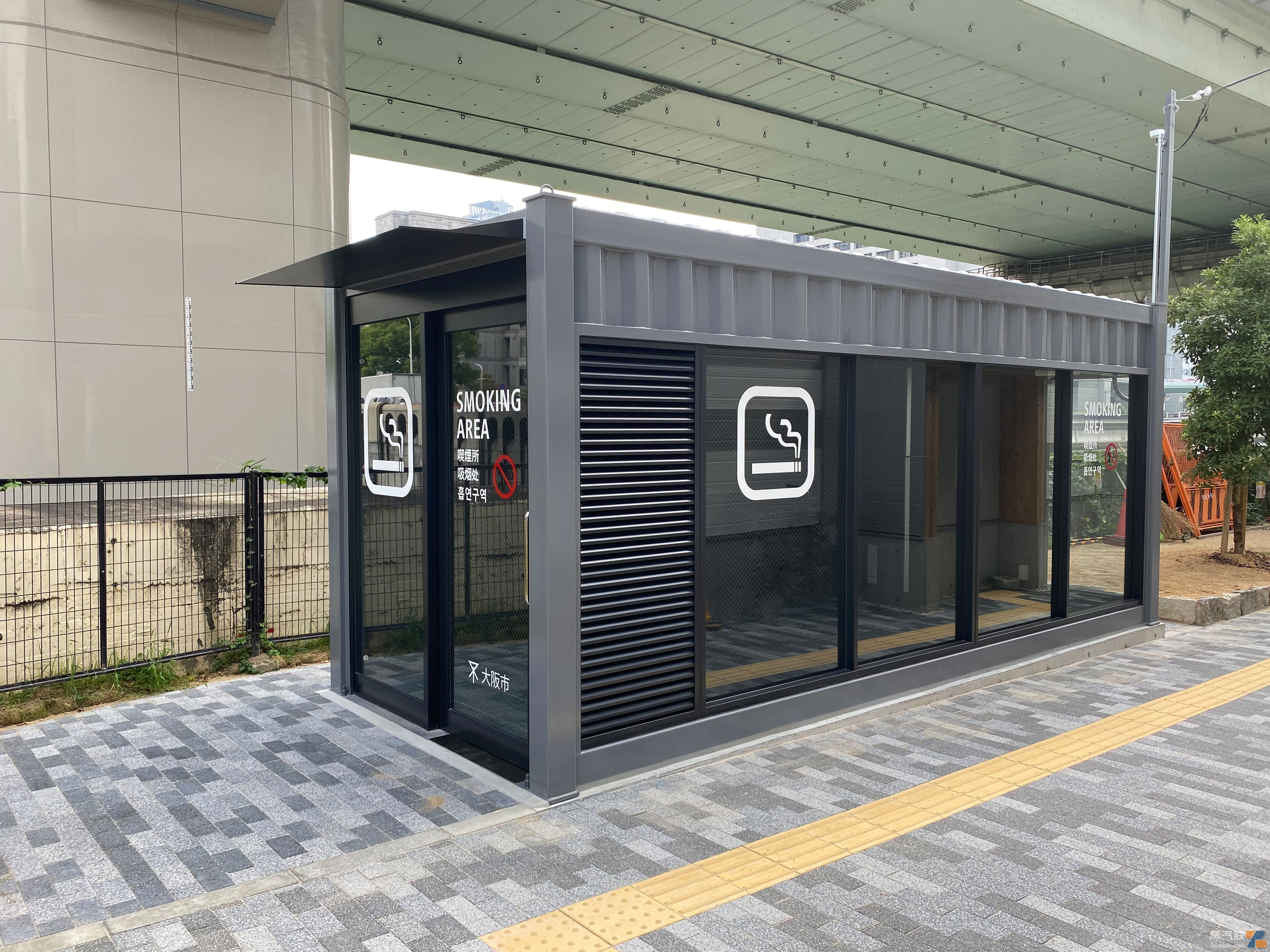 Smoking places in Osaka| Source: Network
Marketing campaign: Relatively loose, but costly
In the first year of 2024, New York State will begin to implement stricter marketing restrictions on e-cigarettes and atomizing products, including:The brand name, logo or other identification of e-cigarettes cannot appear on any product other than the actual e-cigarette; gifts related to the purchase of e-cigarettes cannot be provided; and brands cannot sponsor events such as sports competitions and concerts.
Compared with these countries, the promotion of new cigarettes in Japan is less restricted. E-cigarettes and heated smoking sets are not classified under nicotine products like cigarettes, but are sold as "small household appliances".
Such classification gives the seller the initiative to reveal the advertisement:Promotion activities are not subject to legal regulations at the national level, and the links that need to be broken have been transferred to online advertising distribution channels such as Yahoo and Google. Company policies change more frequently than the government, and brand dealers must follow each other's actions to make adjustments.
"It's very likely that they still ran your (new tobacco) ads normally last month, and started to restrict traffic this month, or simply refused them."
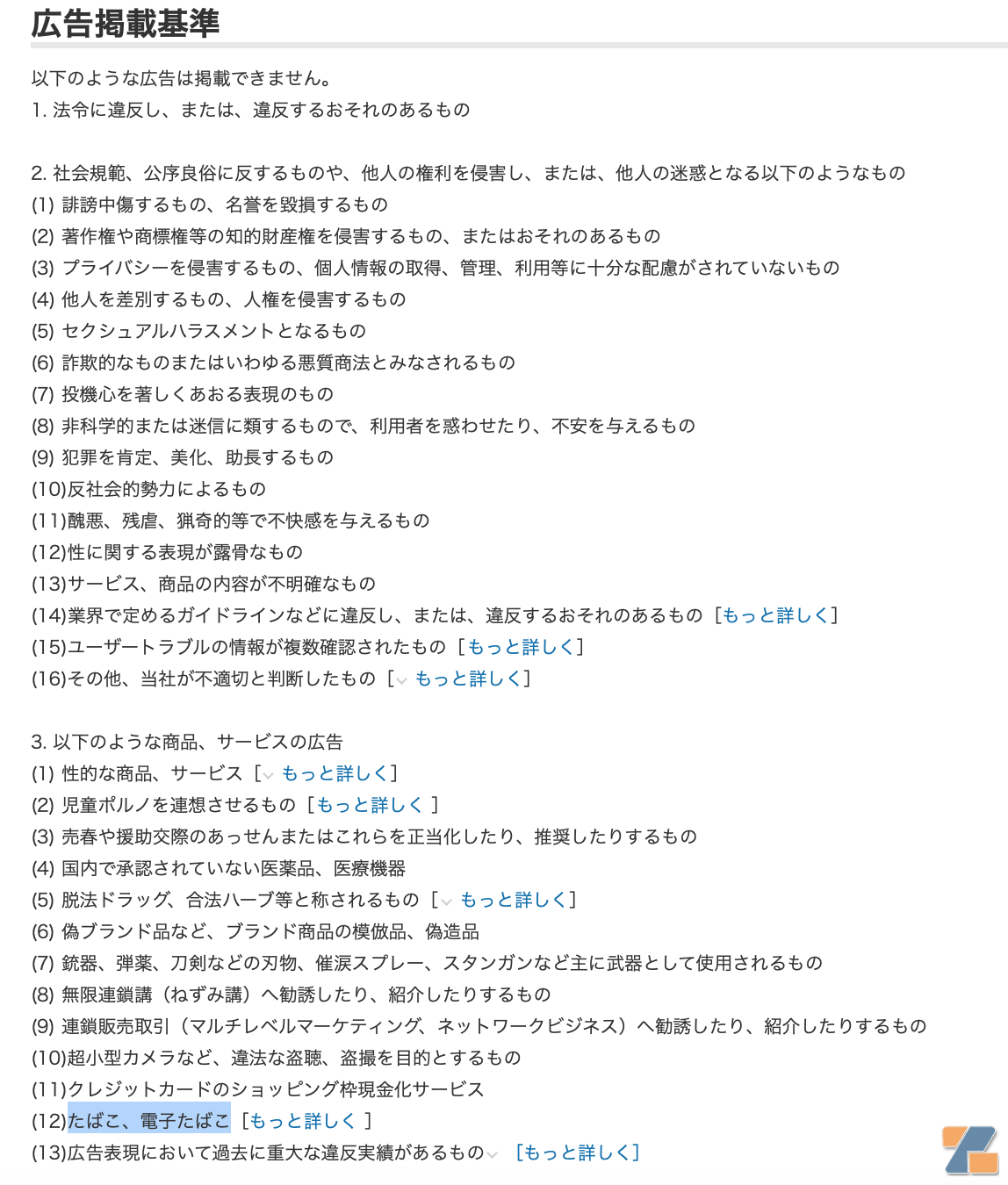 Current Yahoo advertising standards do not allow tobacco and e-tobacco products to be published| Source: Screenshot from official website
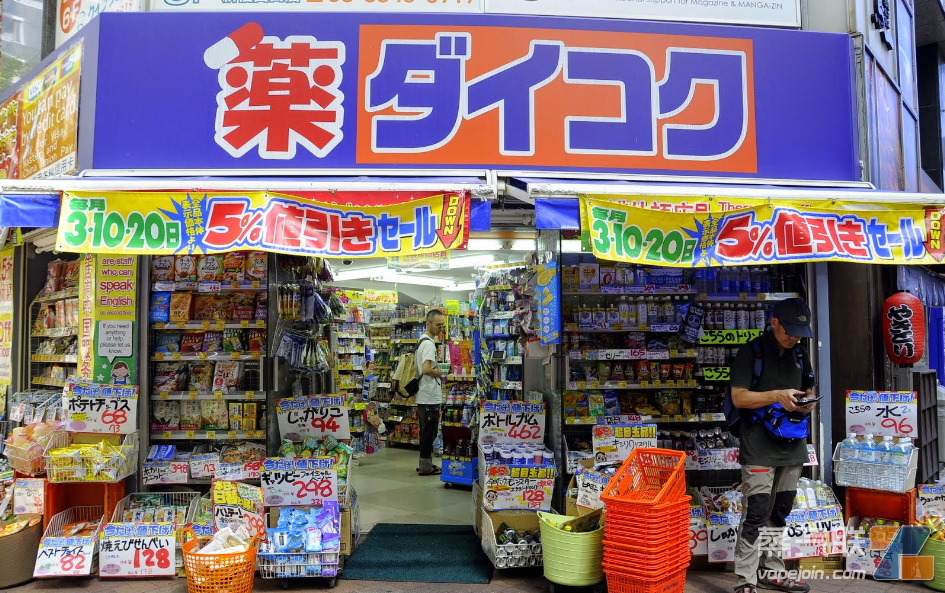
In addition to dealing with online platforms as publicity channels, another difficulty lies in cost control. The listing fees of drugstore and convenience stores, as well as the labor fees for local promotion, are also a round of washing process for brands. Because Japan's labor costs are generally high,"a working college student usually earns 10,000 yen (about US$67.55) a day, but professional sales personnel will ask more."# p#pagination title #e#
As for the former, Japan's convenience stores have to pay the supermarket a listing fee of about 250,000 yen (about US$1,688.78) just to put a new product on the shelves;"One store is 250,000, and 100 stores are 25 million yen (about US$168,878)."
In addition, 15% of the turnover in the first three months of sales will also belong to the store. Although there is basically no such thing as entry fees in drugstore stores, the product update rate is high. As long as the performance is poor for a period of time, the product will be removed from the shelves. Moreover, SKUs are extremely limited and require long-term and solid cooperation with stores-these restrict the development of small-scale brands.
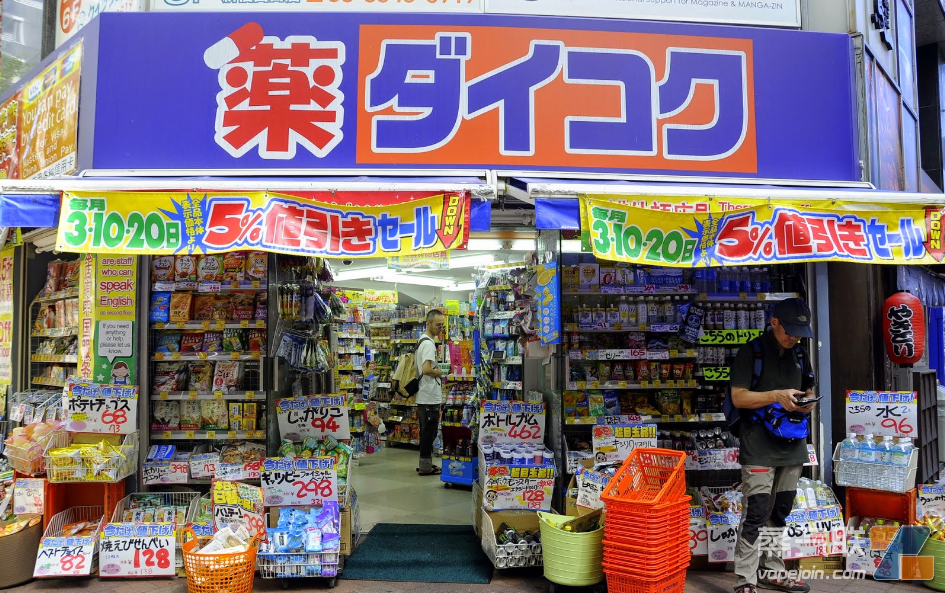 cosmetic shops in Japan| Source: Network
"Small brands have been dragged down to death in these initial stages, and there is basically no possibility of succeeding." The above-mentioned Osaka practitioner told 2FIRSTS.
This statement has also been confirmed by many industry insiders. According to a Tokyo dealer, many of them "buy tens of thousands of goods once, and then they can't sell them, and stop doing it after disposing of the inventory."
With an airtight "credit society", harsh production conditions, and "repeatedly jumping" advertising channels, it is not easy for new tobacco brands to enter the Japanese market. However, when small brands were stuck by entry conditions, and out of belief in the broad prospects of the market after the zero-nickel restriction was lifted, big brands began to enter the game and sell goods at this time.
Will the Japanese market of "zero-nickel" be liberalized in the foreseeable future? Will the investment of big factories at this time be rewarded then? 2FIRSTS will continue to track the latest developments in the Japanese market.