Which Overseas Market Should Vaping Companies Focus on in the Second Half of the Year?
With the promotion of compliance and strengthened regulations, China's electronic vaping industry has experienced explosive growth in overseas markets.
According to data from the General Administration of Customs, the national export of electronic vaping products reached 37.78 billion yuan in the first half of 2023. Meanwhile, data from the Shenzhen Special Zone Daily shows that Shenzhen's electronic vaping exports reached 26.2 billion yuan in the same period, a year-on-year increase of 35.8%, accounting for 69.3% of the national total. Currently, there are over 1,500 electronic vaping manufacturing and branding companies in China, with more than 70% focusing on exporting products overseas.
As the industry develops in an orderly manner under compliance and regulatory strengthening, the global electronic vaping market is witnessing a surge in capital and market activity. So, which overseas markets are currently popular for electronic vaping, and where will potential growth emerge?
Europe and America Remain the Main Export Battleground
Shenzhen is a major hub for global electronic vaping production and exports. According to Shenzhen Customs, in the first quarter of 2023, Shenzhen's electronic vaping exports were primarily directed towards mainstream consumer markets in Europe and America. Although the export share to the U.S. has decreased, it still accounted for 32.3% of the total export value, making it the largest market for Shenzhen's electronic vaping exports.
During the same period, exports to the EU, the UK, and Russia grew by 1.9 times, 90%, and 2.7 times respectively, collectively accounting for 40.9%. The European market is experiencing a significant growth phase, especially in countries like the UK, Germany, France, and Italy. The UK has a 0% consumption tax rate on electronic vaping products and relatively relaxed flavor restrictions, allowing the country's electronic vaping market to maintain its leading position.
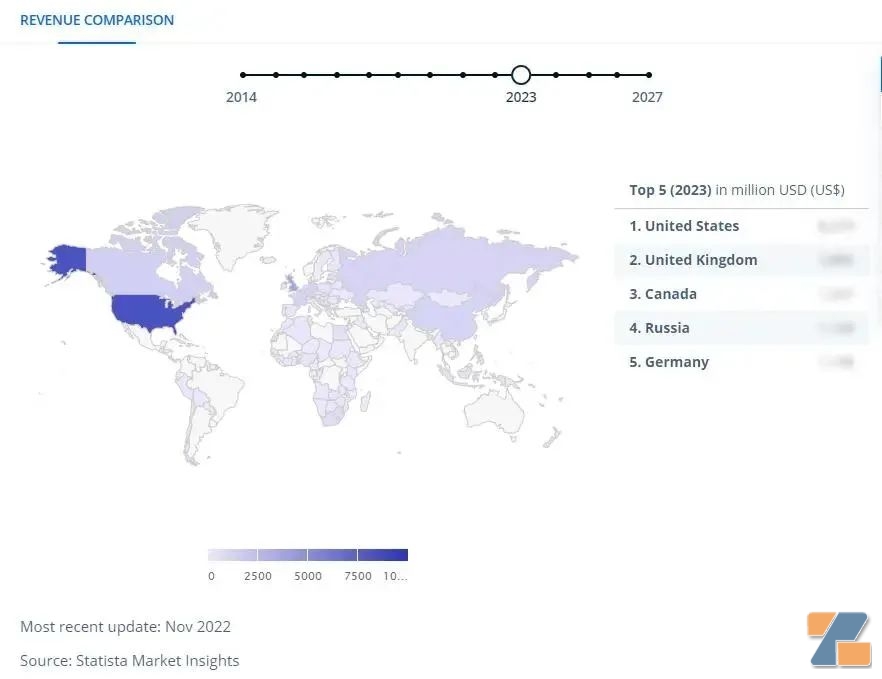
(Global electronic vaping revenue comparative distribution chart source: statista)
Industry insiders reveal that the European electronic vaping market has vast potential, with the market penetration rate just beginning. According to relevant data, the usage rate of electronic vaping among adults in Europe is only 2.9%, expected to reach 3.7% by 2025. Moreover, most European countries continue to view electronic vaping as a tool for smoking cessation, with local retail data being quite impressive, as convenience stores, gas stations, chain stores, and shops can all sell electronic vaping products.
Southeast Asia's Emerging Market Potential Should Not Be Underestimated
In recent years, Southeast Asia has gradually shown an increasing interest and demand for electronic vaping products. Countries like Malaysia, Indonesia, Thailand, and Vietnam are beginning to focus on the development of the electronic vaping market, exploring policies for legalization and commercialization.
Statistical data shows that the smoking population in Southeast Asia is large and continues to grow. For example, in Malaysia, the number of smokers is significant, and the long-term health hazards of smoking have raised widespread concern. Therefore, the Malaysian government recognizes the importance of reducing smoking rates and is actively exploring the introduction of alternatives to improve public smoking behavior. Similar situations are occurring in other Southeast Asian countries, which are also seeking feasible ways to lower smoking rates and promote healthier lifestyles.

In the Southeast Asian market, young people are one of the most powerful consumer groups, with a high acceptance of new things and purchasing power. To respond to this trend, electronic vaping manufacturers can attract more young consumers in Southeast Asia by developing personalized product designs and offering diverse flavor options. Additionally, with technological advancements and increased health awareness, electronic vaping products show great development prospects in the Southeast Asian market.
In summary, in Southeast Asia, the youthful and financially capable population, along with a large smoking demographic and high acceptance of new products, combined with technological advancements and increased consumer health awareness, make electronic vaping products worth looking forward to in this market.
Compliance and Patent Standards Competition Become Mainstream for Going Abroad
The wave of electronic vaping exports is not without its challenges and obstacles. Currently, it includes a constantly changing regulatory environment and the need to adapt to different cultural differences and consumption habits, as well as restrictions on advertising, sales, flavors, and product standards. Therefore, electronic vaping exports must always pay attention to the relevant policies and systems of the destination countries.

(Aerial view of Shekou Port, source: Shetu Network)
The export of electronic vaping has entered a new era of compliance. Only by continuously complying with regulations, having independent patents, and providing new experiences to global consumers through technological innovation can electronic vaping exports become mainstream.
Export Channels Are Particularly Critical
For domestic electronic vaping companies, expanding into the Southeast Asian market is a strategically significant opportunity. #p#分页标题#e#
Related Articles

Ahead of a Nationwide Ban, Hundreds of Russian Retailers Voluntarily Stop Selling Vapes

Illegal Vape Brands Try to Evade FDA Scrutiny by Posing as “Made in the USA”