
Planning to Build a Factory Overseas? A New Growth Track for the Vaping Industry?
Oil has never been a market for Chinese enterprises, but why are many companies focusing on the bottled oil market this year?
Recently, I learned that a domestic company producing e-liquid plans to open an e-liquid factory in Indonesia next month, primarily engaged in the e-liquid and tobacco stick business. This news indicates that Chinese companies are seeking to develop e-liquid businesses in various countries and regions, even establishing e-liquid factories in Indonesia to supply oil to Europe and America.
Brands are also not absent from the e-liquid market. For example, RELX and ELF BAR have launched their own e-liquid brands this year.
Once, Chinese companies carried their own e-liquids to the global market. However, after cultivating users, can Chinese e-liquids penetrate the global B2C market? The more extended chain they cultivate, the stronger the chain becomes, will it extend to a stronger competitive edge?
E-liquid B2C, market choices need to be segmented!
Especially in regions with an open oil injection market, e-liquid B2C is very popular.
For instance, in Indonesia, through CVIC, I visited many Indonesian distributors and found that stores generally display devices at the front and e-liquids at the back, with e-liquid sales far exceeding device sales each month. This indicates that in this market, the consumption power for e-liquids is much higher than for devices, and since the open market in Indonesia is mainstream, e-liquid consumption is normalized, and e-liquids are generally cheaper than tobacco sticks, thus the market demand is significant. However, it is essential to target specific demographics.
Speaking of new e-liquid brands launched by companies, China's RELX also debuted its e-liquid brand at the exhibition in Indonesia.
However, RELX's approach emphasizes market segmentation, typically choosing cities with strong purchasing power, such as Jakarta and Bali. Additionally, because Chinese e-liquid manufacturing standards are generally high, RELX's e-liquids are made locally in China without collaborating with local e-liquid companies, and RELX initially focuses on online promotion, later emphasizing offline stores, covering most commercial shopping centers in Indonesia.
Perhaps like RELX, establishing e-liquid operations in Indonesia is a new track.
In fact, in Indonesia, any brand of oil-injection e-cigarettes can use various brands of e-liquids, providing consumers with more choices. However, the challenge is how to ensure that devices are highly compatible with different e-liquids.
Moreover, exploring the e-liquid market is not limited to Indonesia.
Currently, there is a rapidly growing demand for e-liquids globally, including in the United States, Russia, and European countries. For example, last year, Russia sold over 10,000 liters of e-liquid. According to QYR (Hengzhou Bozhi) statistics and forecasts, the global e-liquid market sales reached $1.6 billion in 2022, and it is expected to reach $4 billion by 2029.
Additionally, ELF BAR has launched its own e-liquid brand in Italy this year, while more Chinese companies are moving towards the bottled oil market in Europe and America compared to the Middle East and Indonesia.
Can bottled e-liquid form a new trend?
Will e-liquid become another market barrier for brands?
Especially under the global consumption trend of e-cigarettes, some brands are realizing new opportunities, as bottled e-liquids transitioning to B2C brings new chances. This may quietly open another "incremental new track" for bottled e-liquids in the context of globalization, which is worth considering for Chinese enterprises.
For instance, in Indonesia, the best e-liquid brand, FOOM, is performing well in the B2C field. It is a technology consumer goods company headquartered in Indonesia. Its device looks similar to the JUUL device, with a USB drive shape, making it portable. The difference is that its tobacco sticks are refillable, catering to users who prefer adding their favorite flavors, being both affordable and flexible. It is already sold in Indonesia's largest modern retailer, Alfamart, and is continuously expanding to Vape Stores, Circle K, and other modern retailers.
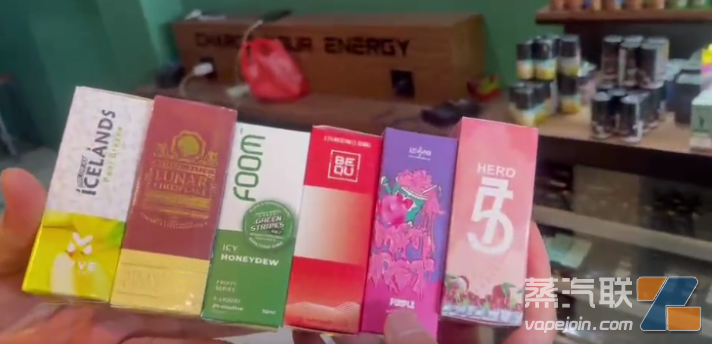
I have also learned from some domestic companies that several domestic e-liquid companies are exploring the bottled e-liquid market, from Hongfu to Bodun, which are already developing this market. Some companies have explicitly stated, "The bottled oil market is indeed very large."
Recently, I have come into contact with some brand companies that are looking for partnerships to establish bottled e-liquid factories for the European and American markets.
Chinese e-liquid technology and standardization are very high; is it time to go global?
However, one point of concern is that e-liquids are strongly localized. To enter the global e-liquid market, one generally needs to start from localization; otherwise, due to high taxes and other issues, costs may be very high.
As for whether the bottled e-liquid market will grow rapidly, there may not be a definitive conclusion yet. However, with the demand for open oil injection markets in some regions and the current policy risks faced by disposables, the bottled e-liquid market may welcome a new trend!
With the rising consumption enthusiasm, there are also new extensions in the e-cigarette consumption chain, which can extend from incremental groups to incremental choices, further strengthening consumers' recognition barriers towards brands.
Especially since the Chinese e-liquid industry has developed highly standardized and process-oriented, moving towards the global B2C market is indeed an opportunity! Especially with the large-scale international expansion of Chinese disposables, covering many global consumers, there is a new understanding in terms of flavor and reputation.
Related Articles

Ahead of a Nationwide Ban, Hundreds of Russian Retailers Voluntarily Stop Selling Vapes

Illegal Vape Brands Try to Evade FDA Scrutiny by Posing as “Made in the USA”
