Could Indonesia be the next big opportunity for Chinese companies? How can the vaping market be open
Indonesia, a Southeast Asian island nation with a population of 270 million, has over 60 million smokers. The openness of e-cigarette policies and the advancement of market commercialization indicate a vast market potential.<\/p>
 <\/p>
<\/p>
(Researching Indonesia)<\/p>
It is reported that the Indonesia e-cigarette exhibition will be held from August 3-5, with over 70 companies participating, including Yuoto, ESMOO, RELX, HQD, ELUX, MOTI, ZL Energy, Kanger, Haosutong, OXVA, aiir, ganabar, TUGBOAT, MR FOG, suorin, polobolo, and others. This will be another "Indonesian wind" for Chinese companies.<\/p>
Indonesia Market 01 Market Consumption Pattern Indonesia 2023<\/strong><\/p> Indonesia is primarily a market for open-system refillable pod devices, accounting for 70-80% of the market. Locals generally spend over 100 yuan to purchase a device and then spend a few dozen yuan on a bottle of e-liquid, which can last for half a month, making it quite economical.<\/p> (Indonesia)<\/p> Disposable devices have very low visibility, only about 5%, as very few consumers are willing to purchase disposables due to their lack of cost-effectiveness.<\/p> Refillable pod systems account for about 10-20% of the market, primarily dominated by RELX. In recent years, some local brands in Indonesia, such as JVS, have been trying to promote refillable pods, often holding events in bars and launching various promotional activities, but the results have not been ideal. 02 Brand Development Status Indonesia 2023<\/strong><\/p> In Indonesia, the open-system market is primarily represented by OXVA, UWELL, aspire, VOOPOO, SMOK, JELLYBOX, lostvape, Geekvape, and Coze (the leading local brand), with OXVA having very high visibility.<\/p> According to survey data, OXVA sold 40 million pods last year, ranking among the top in the market. OXVA is also the fastest-growing open-system brand in Indonesia over the past two years, capturing several key points: first, it entered the market three years ago when it was still relatively empty; second, it aligns well with local attributes in terms of policy, product features, and channel distribution; third, it operates with a localized team in Indonesia, unlike many Chinese companies that merely launch products without subsequent local channel operations and development.<\/p> Refillable pods are primarily represented by RELX, with SP2 and Lana as secondary players. RELX has opened over 700 stores in Indonesia, many of which collaborate with convenience stores and operate as specialty stores, achieving a sales revenue of 200 million yuan from refillable pods last year.<\/p> Currently, disposable devices are rarely seen in Indonesia, mainly represented by JUUL, RELX, HQD, ELFBAR, and Miwo. Although many companies wish to enter the market, they have struggled to gain traction.<\/p> Some brands have been promoting disposables in Indonesia, such as Yuzu, which markets disposables in food malls and night markets for over 60 yuan each.<\/p> E-liquids are primarily dominated by Foom and JVS. Local e-liquids lead the Indonesian market, and many Chinese e-liquid manufacturers have opened factories in Indonesia, collaborating with local e-liquid producers.<\/p> 03 Channel Ecosystem Analysis Indonesia 2023<\/strong><\/p> Indonesia has relatively loose regulations on e-cigarettes; for instance, retail stores can sell e-cigarettes without a license, only requiring a business license.<\/p> The main channel formats are specialized e-cigarette stores and mall counters, with convenience stores and gas stations being relatively rare. Most stores operate as multi-brand collections.<\/p> Local distributors prioritize several factors when collaborating with brands: first, the brand's strength and product features, whether they align with local needs and profitability; second, the investment budget for local brand building, such as advertising, participation in exhibitions, and other promotional activities; third, whether there is collaboration with local partners.<\/p> 04<\/strong><\/p> Policy Analysis Indonesia 2023<\/strong><\/p> Currently, most e-cigarettes in Indonesia are produced by Chinese companies, with 99% of e-cigarette devices manufactured in China, while e-liquids and flavorings are produced locally.<\/p> Due to local e-liquid policy reasons, open-system e-liquids are taxed much less than closed-system refillable pods, with a difference of about six times. For example, for e-cigarettes, open-system e-liquids may incur a tax of only 0.2 yuan per milliliter, while refillable pods may incur a tax of 1.2 yuan per milliliter.<\/p> Currently, Indonesia imposes a consumption tax on e-liquids, and e-cigarette imports are subject to high tariffs of 57%. According to local e-liquid policies, since 2022, e-liquids are taxed by unit, with local e-liquids incurring a tax of 445 Indonesian rupiah/ml, while closed-system pre-filled products incur a tax of 6030 Indonesian rupiah/ml, indicating a clear bias towards local e-liquid manufacturers. There are no restrictions on e-liquid volumes, with larger sizes available up to 200ML, while 30ML and 60ML are more common. Regulations for disposables are limited to 3ML, typically around 2000 puffs, with a nicotine cap of 50 mg/ml, but most consumers prefer 30 mg/ml as the maximum.<\/p> 05<\/strong><\/p> Regional Market Outlook Indonesia 2023<\/strong><\/p> The Indonesian market is primarily concentrated in Jakarta, Bandung, Surabaya, and Bali, with Jakarta having a population of over 30 million and a significant number of e-cigarette consumers, ranging from 16 to 60 years old. Many e-cigarettes also enter Indonesia from Medan and Sumatra, which are close to Malaysia.<\/p> (Main market areas in Indonesia)<\/p> Local e-cigarette consumption is primarily driven by younger consumers. Since there are no age restrictions on e-cigarettes, many companies are expanding their efforts in this demographic market.<\/p> According to local distributors' analyses, the Indonesian market has significant growth potential. First, there is room for capacity. Currently, there are only about 1,000 specialized e-cigarette stores in Indonesia, and the market could potentially reach 10,000 stores, indicating over nine times the market potential. Additionally, local delivery costs are relatively high, leading consumers to prefer in-store purchases.<\/p> Second, there is still room for development in other regions. Currently, the market is mainly concentrated in Jakarta, but other regional markets have not been fully tapped. Even in Jakarta, there is still considerable space for growth, as local consumption trends are promising. During surveys, I encountered several good stores that could sell several orders per hour, with a steady stream of customers.<\/p> Indonesia has a natural connection with Chinese companies, whether in factory investment or market proximity.<\/p> At present, the main local brands are primarily Chinese e-cigarette brands, with most focusing on open-system refillable pod devices. Disposables are relatively rare, only visible in some convenience stores. Closed-system refillable pods are also relatively scarce, mainly represented by RELX. Currently, local consumers show a degree of tolerance towards brand consumption, without a clear bias, which presents an opportunity. <\/p>
<\/p>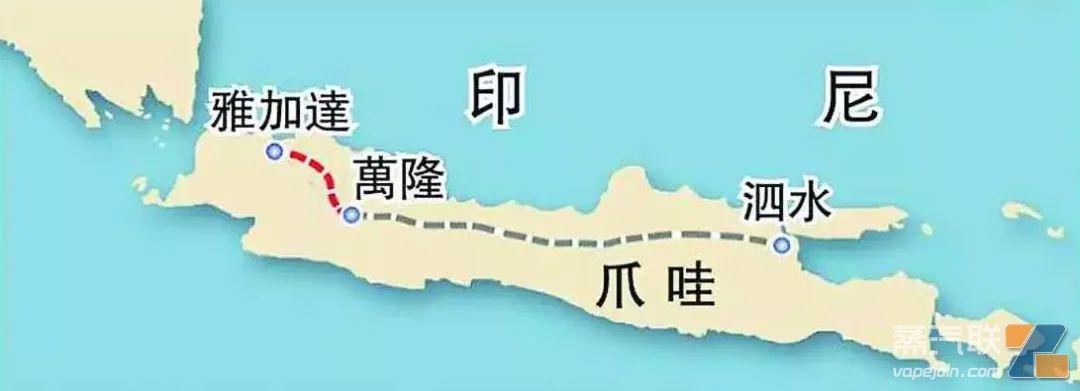 <\/p>
<\/p>