UK Vaping Regulation Focus Shifts to Convenience Store Channels, With Facial Recognition Possibly Ac
According to British retail media reports, minors initiated by the UK Health and Social Care Committeee-cigarettesThe survey on increased usage rates officially ends.
Investigation showed that illegal retailers were determined to have provided e-cigarettes to school children.
In response to this survey result, e-cigarette trading organizations and charity structures gave relevant suggestions. Including restrictions on retailers displaying e-cigarettes, imposing a punitive consumption tax on single-use e-cigarettes, and imposing a fine of at least £ 10000 for violating retailers.
The charity is represented by the Smoking Health Action Group (ASH). Its chief executive Deborah Arnott has proposed a one-time consumption tax of up to £ 5. According to retail media estimates, this may lead to an increase in the wholesale price of a brand of 600 disposable e-cigarettes sold in the UK market to as much as £ 7.64. In addition to increasing punitive consumption taxes, Deborah Arnott also recommended restricting products, including products with overly brightly colored packaging and banning names related to candies and cartoon characters, to reduce their appeal to minors; and restrict retailers 'in-store furnishings and move e-cigarettes to areas that cannot be reached by minors. The above recommendations are supported by some major tobacco manufacturers. The representative of the trade body is the British Electronic Cigarette Association (UKVIA). Its Director-General John Dunne's position is to manage channels by introducing operating licenses to implement more effective age checks and ensure that all products sold meet relevant regulations. John Dunne also reiterated his recommendation to impose a minimum fine of £ 10000 on offending retailers. nbsp;
This incident once again shows that British regulators are paying more attention to the issue of underage sales. The previous incident of excessive oil filling levels has gradually subsided. Regarding this trend, Gewu Consumption once analyzed it in the tweet "Follow-up to the British Over-betting Storm: Brands are divided into two camps, focusing on protecting minors" on June 6 this year: At that time, the British media learned from practitioners that most batches currently sold in British supermarket channels were fully compliant at one time.And the current top priority of the British government is already to control the use of e-cigarettes by minors.
A landmark event was that at the end of May this year, the British Prime Minister publicly stated that he was concerned about the sharp rise in the use of e-cigarettes by minors, and criticized advertising that induced minors to use e-cigarettes in a television interview. After this point in time, British regulation revolved almost entirely around the protection of minors. Looking back at the results of this survey and the suggestions of relevant people. Regulation of e-cigarettes has focused on convenience store channels.
According to Geophysical analysis, the current possible solution may not be to completely ban the sale of e-cigarettes in convenience stores, but to introduce a more complete age verification mechanism for e-cigarette sales.
According to Gewu, the Bestway Retail convenience store in Southampton, England, has installed facial recognition devices to verify whether consumers purchasing e-cigarettes are adults. Equipment supplier Innovative Technology revealed that its system, MyCheckr, has been tested by similar British low-cost retail chains such as Costcutter and Bargain Booze and the British government.
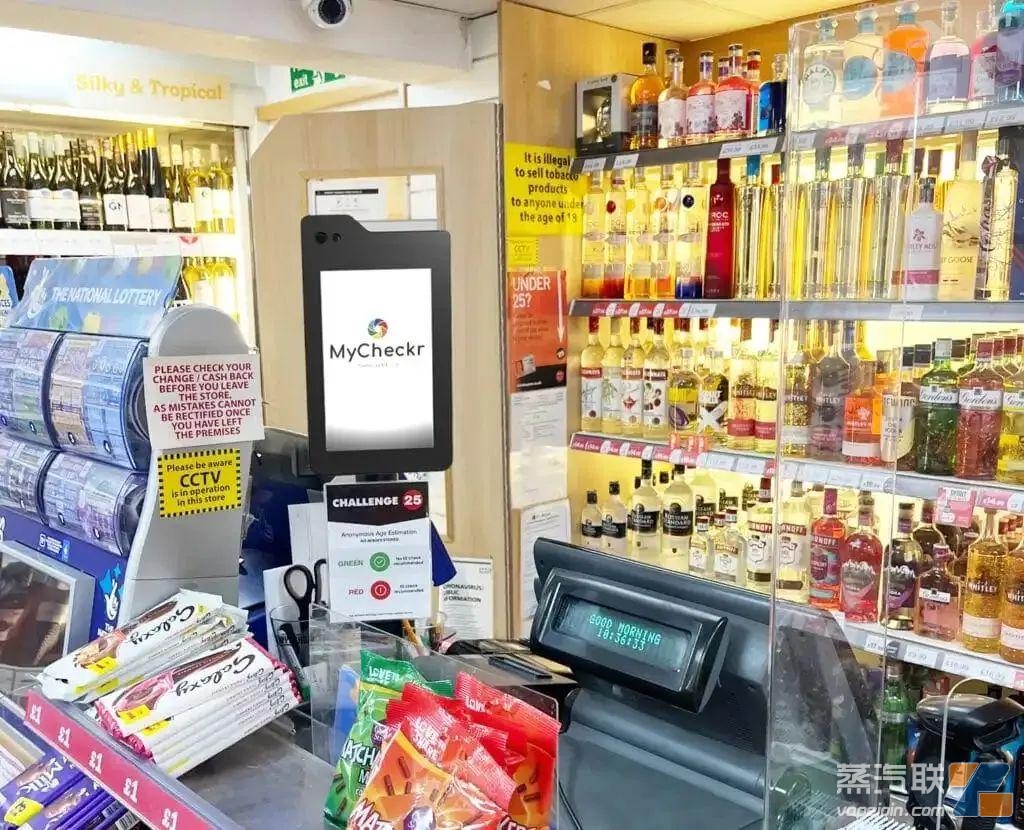
Relevant data released by the Convenience Store Association (ACS) points out that manual ID checking is a major cause of violent conflicts (because it involves personal privacy). We have reason to speculate that this facial recognition technology may become a solution to regulating e-cigarette sales through convenience store channels.