Comparison of Leak-Proof Sealing Processes: Ultrasonic Welding vs. Laser Welding
Generally speaking, the plastic base of the atomization chamber of the atomization equipment and the plastic oil chamber are sealed by means of sealing rings or threaded fit. However, such a connection method cannot achieve a complete sealing effect, and the atomized liquid will still leak and evaporate during the placement process, which will affect the user's experience.
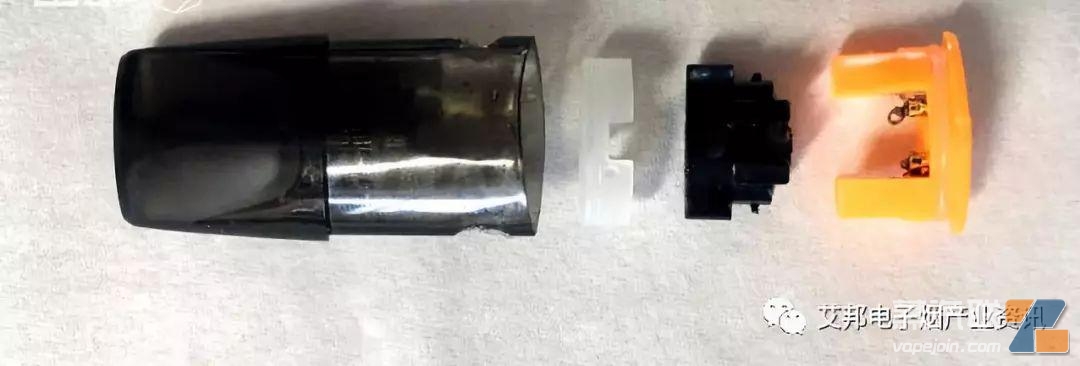
Figure YKthe cartridgeThe disassembly structure comes from the Jiguo.com
In order to achieve a complete sealing effect, some atomization chambers use glue to connect the oil chamber and the base, but the curing time will affect production efficiency, and the purchase of glue will also affect production costs.
In addition to sealing rings, threads, and glue, in the assembly process of the atomization chamber of the atomization equipment, the oil chamber and the base can also be hermetically connected by welding, so as to achieve a better water-tight and air-tight effect.
The main welding methods include ultrasonic welding and laser welding. Currently, ultrasonic welding is the main method. Laser welding is expected to become the mainstream of new applications in the industry due to its cleanliness, debris free and easy automated integration.
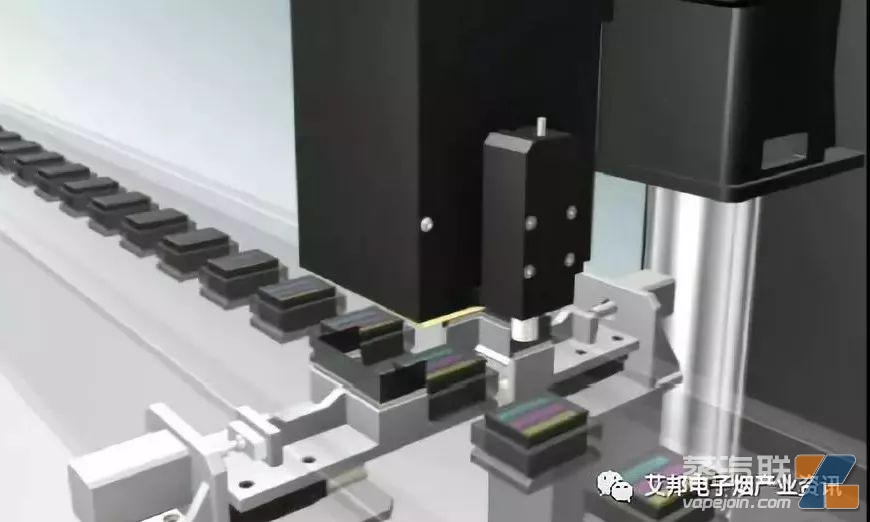
Figure Laser welding, Beng Neng Xin
1. Ultrasonic welding--fast
Ultrasonic welding uses high-frequency mechanical vibration to form joints. The parts to be assembled are pressed and clamped between the oscillating welding head and the fixed welding head, and then at right angles to the contact surface, and receive ultrasonic vibration with a frequency of 20 to 40KHz. Alternating high-frequency stresses generate heat at the joint interface, resulting in a high-quality weld.
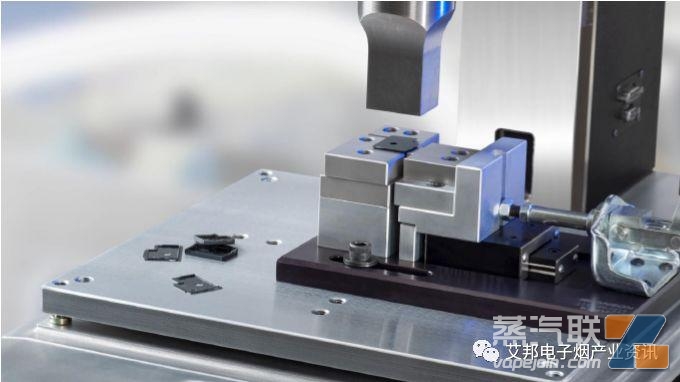
Figure Branson's new generation ultrasound system GSX-E1
Advantages of ultrasonic welding process:
Lowest total costs in mass production
Short welding cycle, welding time within 1s
requires very little operation and maintenance
Can achieve water-tight and air-tight assembly requirements
No curing time required
There are no consumables for the welding process
High welding consistency
Pollution-free technology
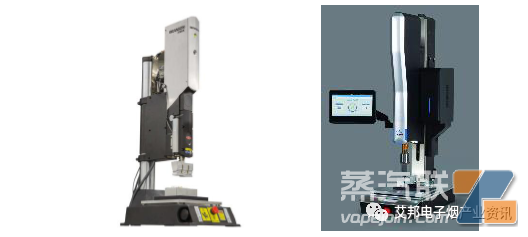
Picture ultrasonic welding equipment, must be able to believe
2. Laser welding-zero debris
Laser welding is an efficient precision welding method that uses a high-energy-density laser beam as a heat source. The most commonly used method is laser transmission welding.
Laser transmission welding is to clamp two plastic parts to be welded together under pressure, and then direct a beam of laser in the short-wave infrared region to the part to be bonded. The laser beam passes through the upper transparent material and is then absorbed by the lower material. Absorbed, laser energy is absorbed and converted into thermal energy. Since the two layers of materials are pressed together, the thermal energy is conducted from the absorption layer to the transparent layer, causing the two layers of materials to melt and combine.
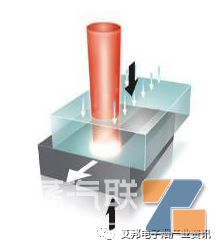
Laser welding schematic diagram
Advantages of laser welding process:
No debris and smoke are generated during the welding process, and no surface scratches are found.
High-speed welding of 2D and 3D products of different size
The welding cycle is short, and the welding time is between 0.5s and 5s depending on the process
Can achieve water-tight and air-tight assembly requirements
High repeatability and consistency in large-scale production
Can be used for more types of plastics
No curing time required
No consumables are used during welding
Easy automated integration
There is no vibration during the welding process and internal components will not be damaged
In ultrasonic welding, surface contact is required to generate friction, which will lead to the generation of debris. Even if a material retaining groove is used, it is impossible to completely ensure that debris will not enter.smoke oilSmoke bombs and even atomization chambers, and laser welding can avoid the generation of debris.
The above is a simple comparison between ultrasonic welding and laser welding processes in the plastic parts assembly process of the atomization chamber of atomization equipment.
Note: Part of the content of this article refers to the PPT of the speech" Branson's "Synchronous Engineering" Service Solve Assembly Problems in the Development of Atomization Equipment Products ", compiled and edited by the Aibang team.