
A Breakdown of High-Power Vape Coil Structures
Vaping devices are generally divided into low-vapor and high-vapor types based on vapor production. Some people in the industry also refer to them as mouth-to-lung and direct-lung devices. In terms of operating principle, the essential difference between high-vapor and low-vapor devices lies in power output: the higher the wattage, the greater the vapor production. As a result, use tends to involve inhaling deeper into the lungs, which is where the terms mouth-to-lung and direct-lung come from.
In addition, the coil in a high-vapor atomizer can usually be removed and replaced separately. It is also called a prebuilt coil, although that term does not seem to be universally used across the industry. In any case, the core of a high-vapor setup is the coil, so today let’s take a look at its structure.
First, let’s look at the overall structure of a high-vapor atomizer, which mainly consists of the atomizer and the battery mod. The atomizer itself includes the drip tip, top cap, coil, glass tank, and more.
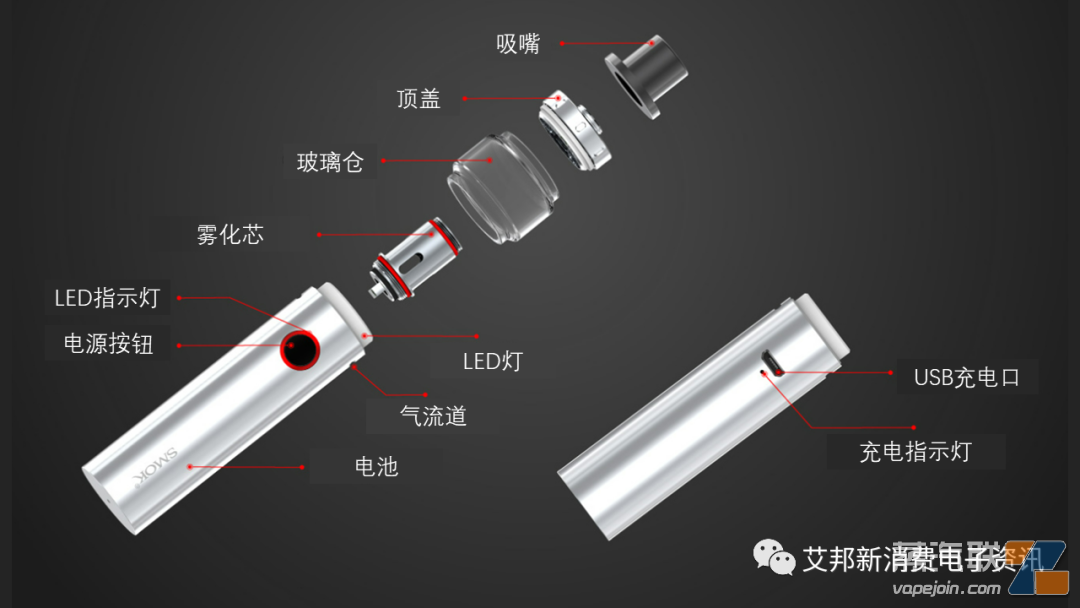
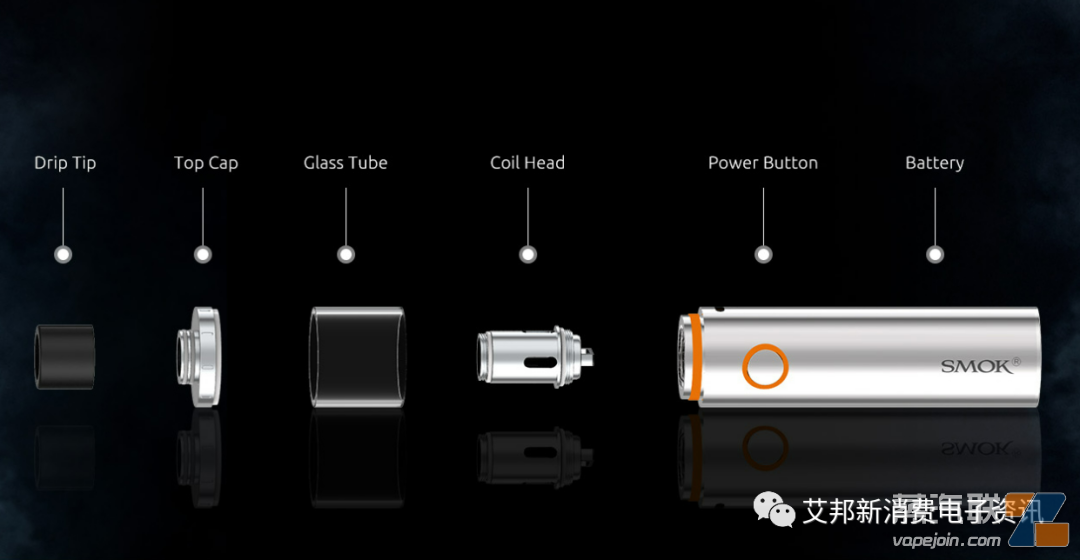
Image source: SMOK
The main structural components of the coil include the heating element (most commonly an etched mesh coil, though ceramic coils and heating wire are also used), wicking cotton, sealing rings, outer casing, base, and so on.
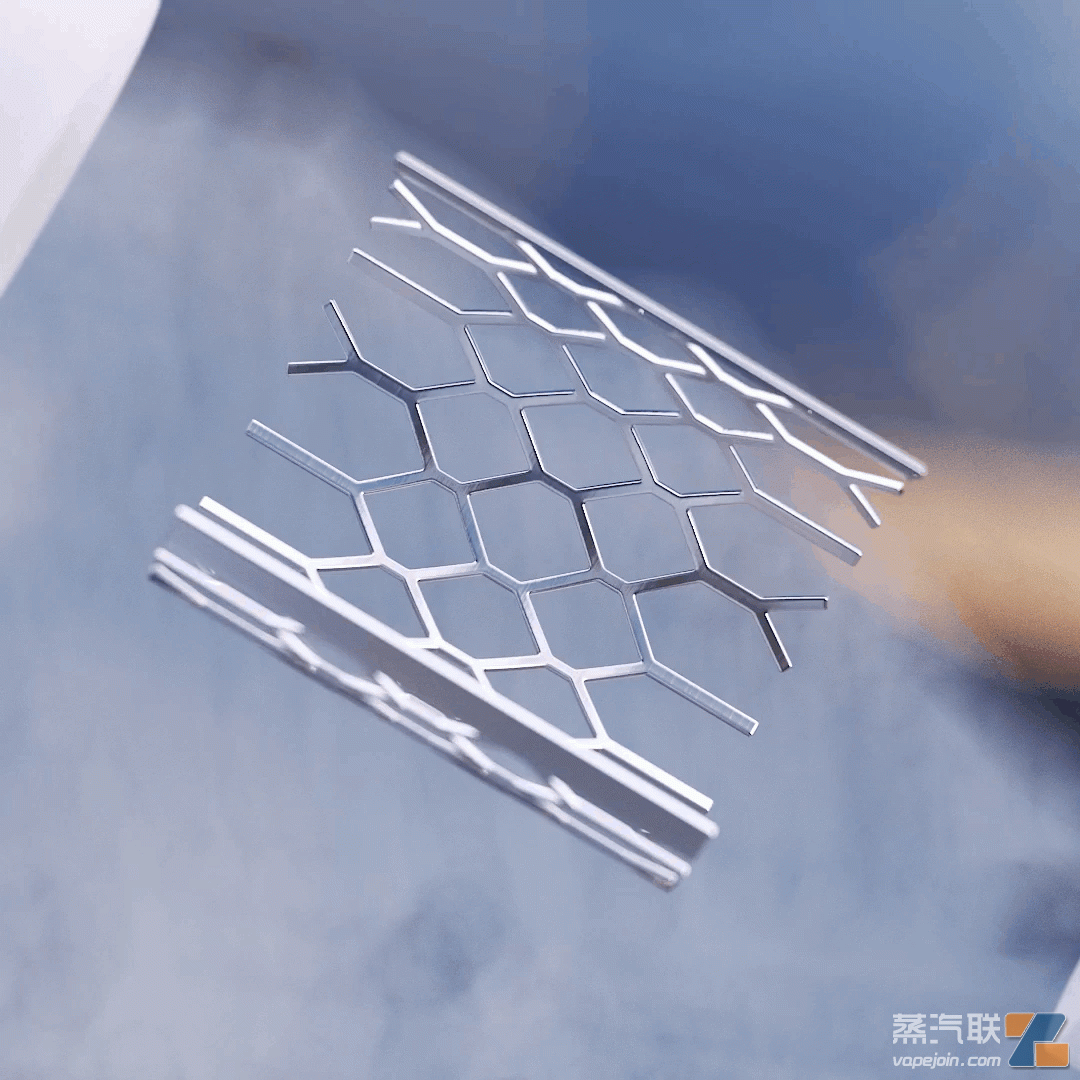
Image source: VAPORESSO
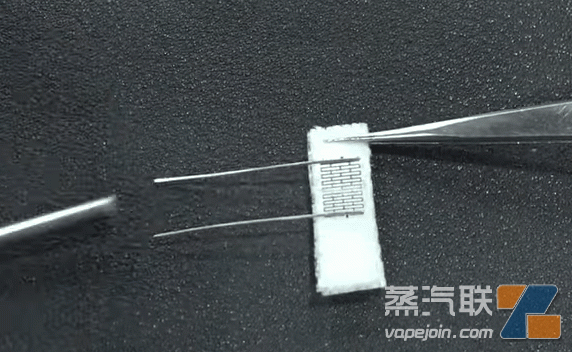
Image source: JOYETECH
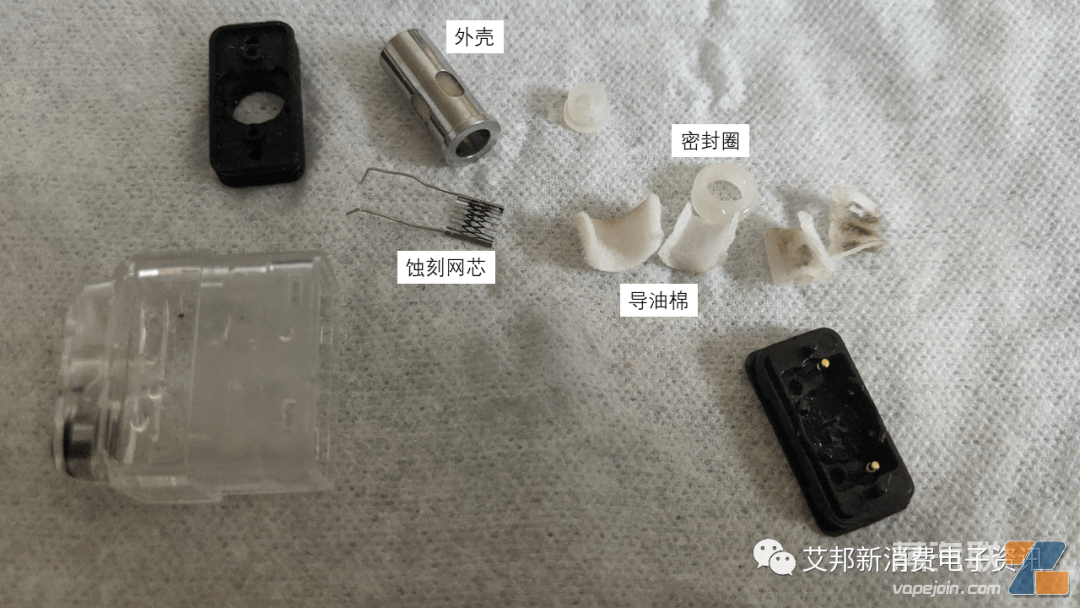
Image source: reddit
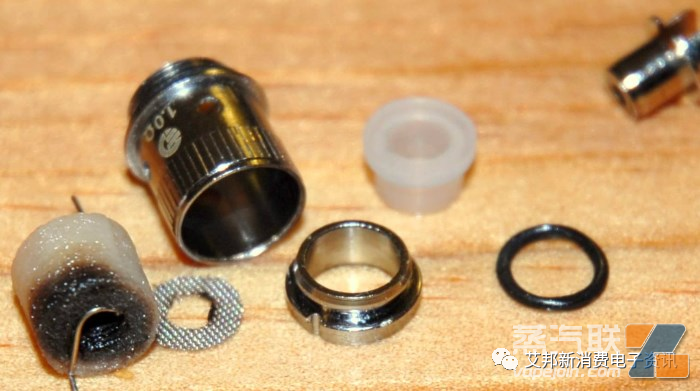
Image source: ecigone
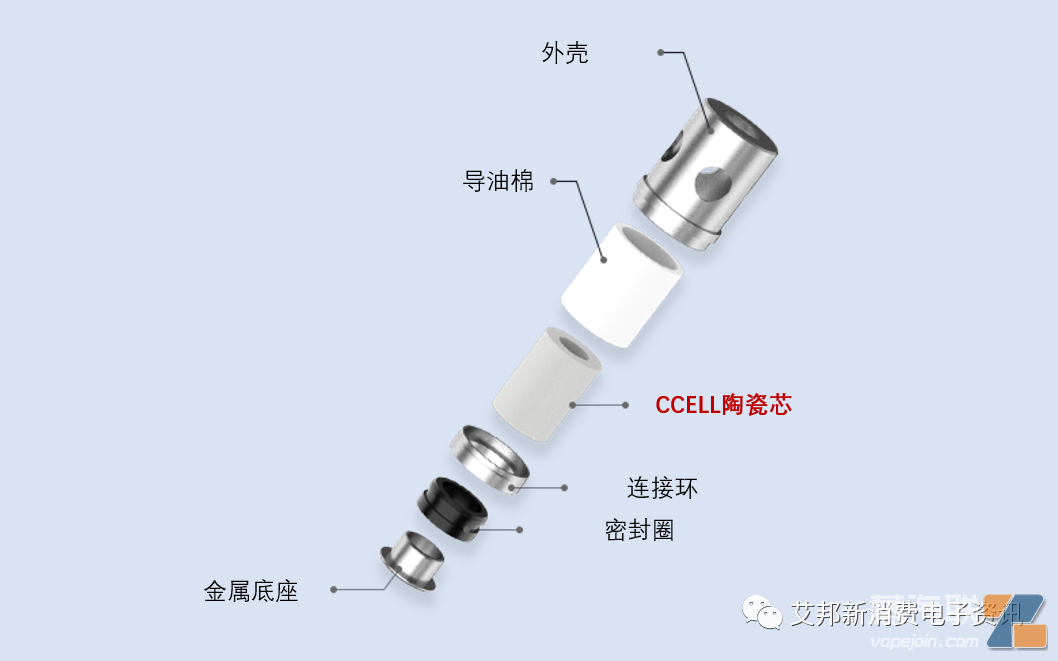
Image source: VAPORESSO
At present, high-vapor atomizers are mainly popular in European and American markets, and their primary users are advanced enthusiasts. Although they are not mass-market products, their related technologies can carry over into low-vapor devices. For example, the cotton-core structures used in some disposable vaping devices today are similar to the coil structures found in high-vapor products, except they are made smaller and slimmer. As for whether other technologies will continue to prove useful in low-vapor products, that will depend on ongoing technological iteration in the vaping industry.


