
Shenzhen Vape Expo Closes Today — Despite CCTV 315 Criticism, Investor Interest Keeps Rising
Although e-cigarettes were criticized during the CCTV 315 program, enthusiasm for the industry has not faded. Following the media spotlight, the IECIE Vape Expo, the first major e-cigarette trade show of the year, opened in Shenzhen on April 16. Shenzhen
315 named e-cigarettes, but the industry's heat remains unabated.
After being named by CCTV, the first large-scale exhibition of the e-cigarette industry, the IECIE e-cigarette expo, is being held in Shenzhen on April 16. As Shenzhen accounts for nearly 90% of China's e-cigarette production capacity, this is the fifth edition of the expo since its inception in 2015.
With the rapid advancement of the e-cigarette industry, the scale of the IECIE expo has grown from an exhibition area of 15,000 square meters, 183 exhibitors, and over 40,000 attendees in 2015, to an exhibition area of 40,000 square meters, with 1,500 brands from 45 countries and regions, and 50,000 professional visitors in 2019.
"Although 315 named e-cigarettes, it does not mean a complete denial of the new tobacco industry; heated non-combustion e-cigarettes are the best alternative," said an exhibitor to the Securities Times e-company reporter. Observations at the expo show that the e-cigarette industry chain is now very complete, from upstream lithium batteries and hardware machinery to downstream assembly and e-liquid production, with most exhibitors coming from the Pearl River Delta, especially Shenzhen.
Various funds are also accelerating their layout. Among the exhibitors at the expo are Shanghai Green Fresh (backed by Shunhao Co. and Dongfeng Co.), a Hong Kong-listed e-cigarette booth, and Yunnan Tobacco, a state-owned enterprise, which has set up a large booth to showcase multiple products.
Homogeneity and low pricing have become challenges faced by e-cigarette manufacturers. The reporter observed that most products are concentrated in the price range of over 40 yuan to over 300 yuan, significantly lowering the entry barrier for e-cigarettes. Products are mainly traditional e-cigarettes that burn e-liquid and heated non-combustion products that use real tobacco, but most manufacturers are quite similar, making it difficult to distinguish clear advantages.
Regulatory ambiguity awaits rule establishment
"We have influencers from Indonesia performing tricks with smoke rings for everyone." At the booth of the world's largest e-cigarette R&D manufacturer, Heyuan Group, performers demonstrated smoke ring tricks, while foreign models showcased e-cigarette products.

Compared to the typical industrial exhibitions in Shenzhen, the IECIE e-cigarette expo features more fashionable and trendy exhibitors, closely tied to the positioning of e-cigarettes.
Originally, e-cigarettes represented a subculture, often referred to as "big smoke." Big smoke devices had a high entry barrier, requiring manual e-liquid refilling, with a single device costing nearly a thousand yuan. E-cigarettes primarily had two consumer groups: young people and high-net-worth individuals. In fact, the marketing strategies of e-cigarettes, which emphasize "trendy," "fashionable," and "harmless," have led some young people to start trying nicotine through e-cigarettes.
At the expo, many young people were eager to come and "explore." "I used to smoke e-cigarettes, and I came to check it out after hearing about the exhibition." A visitor born in the 2000s, Li Ming (pseudonym), bought a portable e-cigarette with pre-filled e-liquid for 40 yuan, which can provide about 300 puffs, similar to the consumption of a pack of regular cigarettes.
"This e-cigarette is about the size of a lighter and is not expensive," said a sales representative at the Shanghai Green Fresh booth, noting that many consumers choose smaller e-cigarettes as entry-level options.
It is understood that e-liquid e-cigarettes can save a significant amount of costs compared to traditional cigarettes. Traditional cigarettes incur high taxes, with a pack typically priced between ten to a hundred yuan, and regular smokers spend about 20 yuan daily. In contrast, e-cigarette devices require an initial one-time purchase of around 300 yuan, and subsequent purchases of e-liquid cost about 40 yuan, which can fill 6-8 pods, lasting a week, averaging daily expenses of 5-10 yuan.
On the other hand, compared to traditional e-cigarettes that burn e-liquid, exhibitors showcased a large number of heated non-combustion e-cigarettes. The industry believes that considering the significant tax impact of tobacco and the substitution effect of e-cigarettes on traditional tobacco, heated non-combustion products emit flavors by heating tobacco rather than e-liquid, making them closer to traditional tobacco while reducing harmful substances.
It is worth noting that as early as 2017, the National Tobacco Administration issued a notice on strengthening supervision of the monopoly market, which included heated non-combustion e-cigarettes under tobacco regulation, but did not provide clear regulatory rules for e-liquid vapor products.
At the Hong Kong-listed Guilian Holdings e-cigarette booth, multiple heated non-combustion devices were on display. One device, about the size of a lighter, allows users to insert tobacco-containing pods and heats them using lithium batteries to emit flavors. According to sales personnel, similar heated non-combustion devices can heat for 3.5 hours.
#p#分页标题#e#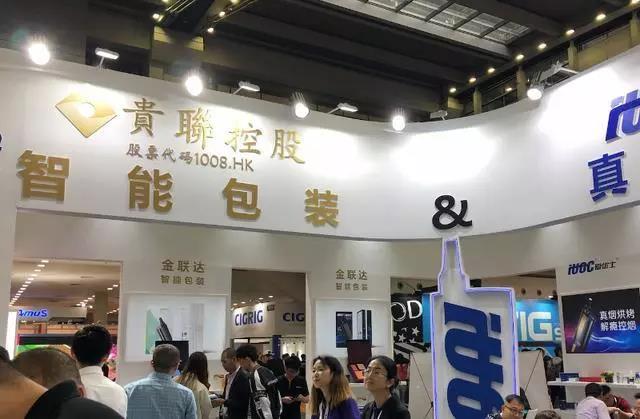
"Although 3.15 named e-cigarettes, it does not mean a complete denial of the new tobacco industry; heated non-combustion e-cigarettes are the best alternative," said an exhibitor.
3.15 did not stop the market's heat
During the CCTV 3.15 gala, e-cigarettes were named and exposed, stating that e-cigarettes also release harmful substances, endangering the health of smokers and passive smokers, and long-term use of e-cigarettes can also lead to nicotine dependence. According to CCTV reports, some e-cigarette liquids have irregular nicotine content labeling, and some exceed the standard. The liquids contain formaldehyde, propylene glycol, and glycerin. Additionally, the report pointed out that due to the cool smoking method, e-cigarettes are labeled as non-tobacco products, which may entice non-smoking youths to become smokers; e-cigarettes claim to be healthy, but some manufacturers have e-cigarettes with excessive nicotine content or intentionally mislabeling, posing significant health risks.
In response to the accusations from the 3.15 gala, the large crowds and exhibitors at the IECIE e-cigarette expo showed no signs of decline. According to the organizers, this year's IECIE, the fifth e-cigarette expo, has reached its largest scale ever. The Shenzhen Convention and Exhibition Center has a total area of 40,000 square meters, with over 500 domestic and foreign e-cigarette, new tobacco, and related enterprises exhibiting, and the number of brands exceeding 1,800.
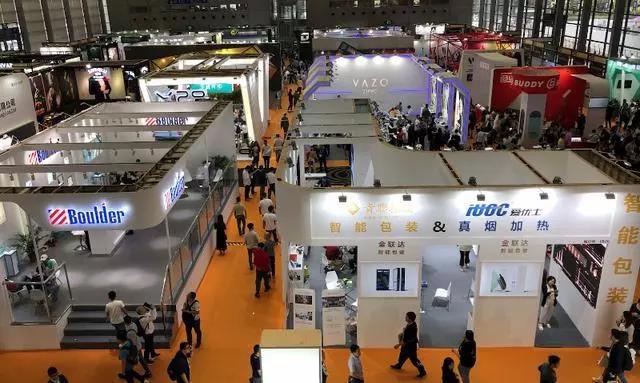
The exhibition covers everything from upstream accessory supply chains to downstream finished products and e-commerce solutions, attracting 50,000 professional visitors from 45 countries and regions.
The Securities Times e-company reporter observed that many attendees were buyers and distributors eager to explore regional agency business opportunities in e-cigarettes. Mr. Chen, who operates several physical e-cigarette stores in Guangzhou, stated that after 3.15 named e-cigarettes, store owners generally reported no impact.
The first to respond were e-commerce platforms, which, after the 3.15 e-cigarette segment aired, found that keywords like "e-cigarette" were basically no longer searchable on platforms like Suning, Tmall, and JD. However, after March 16, most e-commerce platforms had lifted the ban on "e-cigarettes." Mr. Chen noted that e-commerce platforms currently have no authority to prevent the sale of legal and compliant e-cigarettes.
Many exhibitors' sales representatives told reporters that e-cigarettes pose less harm compared to traditional cigarettes and have gained recognition in Europe and the United States, indicating that the future still holds promise. Before regulatory rules are perfected, many manufacturers have clearly stated their intention to accelerate their layout and seize opportunities during this regulatory ambiguity period.
"Can you smoke e-cigarettes in non-smoking areas?" Many attendees expressed this concern. Manufacturers jokingly replied, "Of course, you can't smoke e-cigarettes in non-smoking areas, but it mainly depends on how you view this product." The ambiguous answers also reflect the vagueness of e-cigarette regulation.
Due to its inherent tobacco attributes, e-cigarettes have always walked a fine line. Currently, there are no regulatory laws specifically targeting e-cigarettes in China. The classification of e-cigarettes has not yet been clearly defined, and there is no consensus on whether e-cigarettes are safe, whether they can help quit smoking or reduce smoking, or whether their advertising should be banned, which has delayed the establishment of relevant regulatory laws and is still under discussion.
However, in 2019, several regions introduced related bans on e-cigarettes. Hangzhou implemented the latest revised "Hangzhou Public Places Smoking Control Regulations" on January 1, 2019. The regulations clearly state that smoking refers to inhaling and exhaling tobacco smoke or harmful e-cigarette aerosol. Shenzhen also plans to include e-cigarettes in the smoking ban.
Recent news indicates that e-cigarettes have been placed under the management of the monopoly bureau, and regulatory regulations are expected to be introduced in 2019. The National Standards Committee issued the third batch of national standards for revision on September 28, 2017, which clearly stated that the National Tobacco Monopoly Bureau would lead the formulation of mandatory national standards for e-cigarettes. Specific regulatory regulations for e-cigarettes are expected to be introduced by the national bureau in 2019.
Capital competition at the expo
Various funds are also accelerating their layout in the e-cigarette sector. Among the exhibitors at the expo are Shanghai Green Fresh (backed by Shunhao Co. and Dongfeng Co.), a Hong Kong-listed e-cigarette booth, and Yunnan Tobacco, a state-owned enterprise, which has set up a large booth to showcase multiple products.
#p#分页标题#e#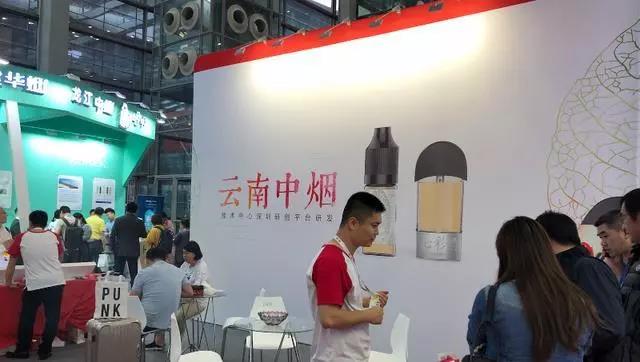
In fact, many domestic tobacco companies are currently laying out heated non-combustion tobacco products, such as Sichuan Tobacco's Kuan Zhai, Yunnan Tobacco's MC, and Guangdong Tobacco's MU+, ING, etc.
Domestic tobacco label leader Jinjia Co. has deeply bound its cooperation with Yunnan Tobacco in the new tobacco field. In October last year, Jinjia's wholly-owned subsidiary, Jinjia Technology, signed a strategic cooperation agreement with a wholly-owned subsidiary of Yunnan Tobacco, Huayu Technology, to jointly invest 20 million yuan to establish a joint venture company, Jiayu Technology, which will expand in the new tobacco industry.
At the Shenzhen e-cigarette expo, multiple heated non-combustion devices and pods were displayed at the Yunnan Tobacco Huayu Technology booth. Huayu Technology is a subsidiary of Yunnan Tobacco, relying on its background and rich experience in the research and development of new tobacco products, possessing complete independent research and production capabilities, making it a "national team" in the e-cigarette sector.
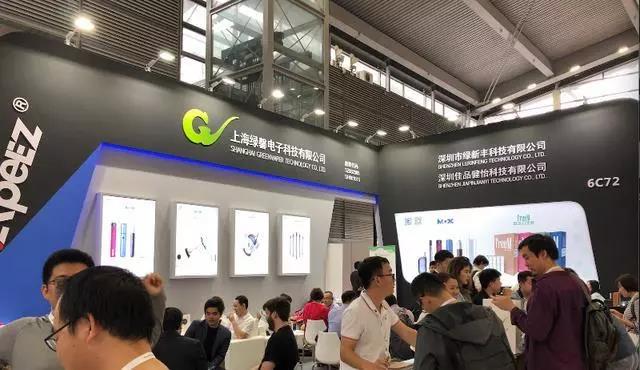
Meanwhile, Shanghai Green Fresh, backed by Shunhao Co. and Dongfeng Co., also appeared at this expo. Additionally, Shenzhen Green Xinfeng and Shenzhen Jiapin Jianyi, both backed by Shunhao Co., also exhibited various products, including e-cigarettes and heated non-combustion devices.
In the secondary capital market, e-cigarette concept stocks represented by Shunhao Co., Maikewei, Yingqu Technology, and Aivip Siwei have performed well this year. The combination of e-cigarettes and industrial hemp concepts has seen Shunhao Co. and Dongfeng Co. achieve cumulative increases of 402% and 85%, respectively, by April 15.
In terms of the new tobacco industry, it is still in a rapid growth phase, with a current situation of mixed quality, many controversies, and policies still under discussion. However, globally, the growth trend of heated non-combustion products remains strong. More importantly, due to the very complete industry chain, the entry barrier for the e-cigarette industry is quite low. Data shows that Shenzhen is the largest production base for e-cigarettes, with over 500 companies, 80% of which are small enterprises with fewer than 50 employees. Guohai Securities pointed out that in the future, heated non-combustion tobacco products will be marketed reasonably while being strictly regulated, ultimately capturing a share of the cigarette market.
After being named by CCTV, the first large-scale exhibition of the e-cigarette industry, the IECIE e-cigarette expo, is being held in Shenzhen on April 16. As Shenzhen accounts for nearly 90% of China's e-cigarette production capacity, this is the fifth edition of the expo since its inception in 2015.
With the rapid advancement of the e-cigarette industry, the scale of the IECIE expo has grown from an exhibition area of 15,000 square meters, 183 exhibitors, and over 40,000 attendees in 2015, to an exhibition area of 40,000 square meters, with 1,500 brands from 45 countries and regions, and 50,000 professional visitors in 2019.
"Although 315 named e-cigarettes, it does not mean a complete denial of the new tobacco industry; heated non-combustion e-cigarettes are the best alternative," said an exhibitor to the Securities Times e-company reporter. Observations at the expo show that the e-cigarette industry chain is now very complete, from upstream lithium batteries and hardware machinery to downstream assembly and e-liquid production, with most exhibitors coming from the Pearl River Delta, especially Shenzhen.
Various funds are also accelerating their layout. Among the exhibitors at the expo are Shanghai Green Fresh (backed by Shunhao Co. and Dongfeng Co.), a Hong Kong-listed e-cigarette booth, and Yunnan Tobacco, a state-owned enterprise, which has set up a large booth to showcase multiple products.
Homogeneity and low pricing have become challenges faced by e-cigarette manufacturers. The reporter observed that most products are concentrated in the price range of over 40 yuan to over 300 yuan, significantly lowering the entry barrier for e-cigarettes. Products are mainly traditional e-cigarettes that burn e-liquid and heated non-combustion products that use real tobacco, but most manufacturers are quite similar, making it difficult to distinguish clear advantages.
Regulatory ambiguity awaits rule establishment
"We have influencers from Indonesia performing tricks with smoke rings for everyone." At the booth of the world's largest e-cigarette R&D manufacturer, Heyuan Group, performers demonstrated smoke ring tricks, while foreign models showcased e-cigarette products.
Compared to the typical industrial exhibitions in Shenzhen, the IECIE e-cigarette expo features more fashionable and trendy exhibitors, closely tied to the positioning of e-cigarettes.
Originally, e-cigarettes represented a subculture, often referred to as "big smoke." Big smoke devices had a high entry barrier, requiring manual e-liquid refilling, with a single device costing nearly a thousand yuan. E-cigarettes primarily had two consumer groups: young people and high-net-worth individuals. In fact, the marketing strategies of e-cigarettes, which emphasize "trendy," "fashionable," and "harmless," have led some young people to start trying nicotine through e-cigarettes.
At the expo, many young people were eager to come and "explore." "I used to smoke e-cigarettes, and I came to check it out after hearing about the exhibition." A visitor born in the 2000s, Li Ming (pseudonym), bought a portable e-cigarette with pre-filled e-liquid for 40 yuan, which can provide about 300 puffs, similar to the consumption of a pack of regular cigarettes.
"This e-cigarette is about the size of a lighter and is not expensive," said a sales representative at the Shanghai Green Fresh booth, noting that many consumers choose smaller e-cigarettes as entry-level options.
It is understood that e-liquid e-cigarettes can save a significant amount of costs compared to traditional cigarettes. Traditional cigarettes incur high taxes, with a pack typically priced between ten to a hundred yuan, and regular smokers spend about 20 yuan daily. In contrast, e-cigarette devices require an initial one-time purchase of around 300 yuan, and subsequent purchases of e-liquid cost about 40 yuan, which can fill 6-8 pods, lasting a week, averaging daily expenses of 5-10 yuan.
On the other hand, compared to traditional e-cigarettes that burn e-liquid, exhibitors showcased a large number of heated non-combustion e-cigarettes. The industry believes that considering the significant tax impact of tobacco and the substitution effect of e-cigarettes on traditional tobacco, heated non-combustion products emit flavors by heating tobacco rather than e-liquid, making them closer to traditional tobacco while reducing harmful substances.
It is worth noting that as early as 2017, the National Tobacco Administration issued a notice on strengthening supervision of the monopoly market, which included heated non-combustion e-cigarettes under tobacco regulation, but did not provide clear regulatory rules for e-liquid vapor products.
At the Hong Kong-listed Guilian Holdings e-cigarette booth, multiple heated non-combustion devices were on display. One device, about the size of a lighter, allows users to insert tobacco-containing pods and heats them using lithium batteries to emit flavors. According to sales personnel, similar heated non-combustion devices can heat for 3.5 hours.
#p#分页标题#e#
"Although 3.15 named e-cigarettes, it does not mean a complete denial of the new tobacco industry; heated non-combustion e-cigarettes are the best alternative," said an exhibitor.
3.15 did not stop the market's heat
During the CCTV 3.15 gala, e-cigarettes were named and exposed, stating that e-cigarettes also release harmful substances, endangering the health of smokers and passive smokers, and long-term use of e-cigarettes can also lead to nicotine dependence. According to CCTV reports, some e-cigarette liquids have irregular nicotine content labeling, and some exceed the standard. The liquids contain formaldehyde, propylene glycol, and glycerin. Additionally, the report pointed out that due to the cool smoking method, e-cigarettes are labeled as non-tobacco products, which may entice non-smoking youths to become smokers; e-cigarettes claim to be healthy, but some manufacturers have e-cigarettes with excessive nicotine content or intentionally mislabeling, posing significant health risks.
In response to the accusations from the 3.15 gala, the large crowds and exhibitors at the IECIE e-cigarette expo showed no signs of decline. According to the organizers, this year's IECIE, the fifth e-cigarette expo, has reached its largest scale ever. The Shenzhen Convention and Exhibition Center has a total area of 40,000 square meters, with over 500 domestic and foreign e-cigarette, new tobacco, and related enterprises exhibiting, and the number of brands exceeding 1,800.
The exhibition covers everything from upstream accessory supply chains to downstream finished products and e-commerce solutions, attracting 50,000 professional visitors from 45 countries and regions.
The Securities Times e-company reporter observed that many attendees were buyers and distributors eager to explore regional agency business opportunities in e-cigarettes. Mr. Chen, who operates several physical e-cigarette stores in Guangzhou, stated that after 3.15 named e-cigarettes, store owners generally reported no impact.
The first to respond were e-commerce platforms, which, after the 3.15 e-cigarette segment aired, found that keywords like "e-cigarette" were basically no longer searchable on platforms like Suning, Tmall, and JD. However, after March 16, most e-commerce platforms had lifted the ban on "e-cigarettes." Mr. Chen noted that e-commerce platforms currently have no authority to prevent the sale of legal and compliant e-cigarettes.
Many exhibitors' sales representatives told reporters that e-cigarettes pose less harm compared to traditional cigarettes and have gained recognition in Europe and the United States, indicating that the future still holds promise. Before regulatory rules are perfected, many manufacturers have clearly stated their intention to accelerate their layout and seize opportunities during this regulatory ambiguity period.
"Can you smoke e-cigarettes in non-smoking areas?" Many attendees expressed this concern. Manufacturers jokingly replied, "Of course, you can't smoke e-cigarettes in non-smoking areas, but it mainly depends on how you view this product." The ambiguous answers also reflect the vagueness of e-cigarette regulation.
Due to its inherent tobacco attributes, e-cigarettes have always walked a fine line. Currently, there are no regulatory laws specifically targeting e-cigarettes in China. The classification of e-cigarettes has not yet been clearly defined, and there is no consensus on whether e-cigarettes are safe, whether they can help quit smoking or reduce smoking, or whether their advertising should be banned, which has delayed the establishment of relevant regulatory laws and is still under discussion.
However, in 2019, several regions introduced related bans on e-cigarettes. Hangzhou implemented the latest revised "Hangzhou Public Places Smoking Control Regulations" on January 1, 2019. The regulations clearly state that smoking refers to inhaling and exhaling tobacco smoke or harmful e-cigarette aerosol. Shenzhen also plans to include e-cigarettes in the smoking ban.
Recent news indicates that e-cigarettes have been placed under the management of the monopoly bureau, and regulatory regulations are expected to be introduced in 2019. The National Standards Committee issued the third batch of national standards for revision on September 28, 2017, which clearly stated that the National Tobacco Monopoly Bureau would lead the formulation of mandatory national standards for e-cigarettes. Specific regulatory regulations for e-cigarettes are expected to be introduced by the national bureau in 2019.
Capital competition at the expo
Various funds are also accelerating their layout in the e-cigarette sector. Among the exhibitors at the expo are Shanghai Green Fresh (backed by Shunhao Co. and Dongfeng Co.), a Hong Kong-listed e-cigarette booth, and Yunnan Tobacco, a state-owned enterprise, which has set up a large booth to showcase multiple products.
#p#分页标题#e#
In fact, many domestic tobacco companies are currently laying out heated non-combustion tobacco products, such as Sichuan Tobacco's Kuan Zhai, Yunnan Tobacco's MC, and Guangdong Tobacco's MU+, ING, etc.
Domestic tobacco label leader Jinjia Co. has deeply bound its cooperation with Yunnan Tobacco in the new tobacco field. In October last year, Jinjia's wholly-owned subsidiary, Jinjia Technology, signed a strategic cooperation agreement with a wholly-owned subsidiary of Yunnan Tobacco, Huayu Technology, to jointly invest 20 million yuan to establish a joint venture company, Jiayu Technology, which will expand in the new tobacco industry.
At the Shenzhen e-cigarette expo, multiple heated non-combustion devices and pods were displayed at the Yunnan Tobacco Huayu Technology booth. Huayu Technology is a subsidiary of Yunnan Tobacco, relying on its background and rich experience in the research and development of new tobacco products, possessing complete independent research and production capabilities, making it a "national team" in the e-cigarette sector.
Meanwhile, Shanghai Green Fresh, backed by Shunhao Co. and Dongfeng Co., also appeared at this expo. Additionally, Shenzhen Green Xinfeng and Shenzhen Jiapin Jianyi, both backed by Shunhao Co., also exhibited various products, including e-cigarettes and heated non-combustion devices.
In the secondary capital market, e-cigarette concept stocks represented by Shunhao Co., Maikewei, Yingqu Technology, and Aivip Siwei have performed well this year. The combination of e-cigarettes and industrial hemp concepts has seen Shunhao Co. and Dongfeng Co. achieve cumulative increases of 402% and 85%, respectively, by April 15.
In terms of the new tobacco industry, it is still in a rapid growth phase, with a current situation of mixed quality, many controversies, and policies still under discussion. However, globally, the growth trend of heated non-combustion products remains strong. More importantly, due to the very complete industry chain, the entry barrier for the e-cigarette industry is quite low. Data shows that Shenzhen is the largest production base for e-cigarettes, with over 500 companies, 80% of which are small enterprises with fewer than 50 employees. Guohai Securities pointed out that in the future, heated non-combustion tobacco products will be marketed reasonably while being strictly regulated, ultimately capturing a share of the cigarette market.
Related Articles

Vaping News
Ahead of a Nationwide Ban, Hundreds of Russian Retailers Voluntarily Stop Selling Vapes
2026-04-16

Vaping News
Illegal Vape Brands Try to Evade FDA Scrutiny by Posing as “Made in the USA”
2026-04-08

Vaping News
Jordan’s New Tobacco Control Rules: Waterpipe Tobacco Market Set for Major Changes
2026-03-17