
Vape Weekly: Juul exits Tmall and JD; US bans flavored vapes
This weekly roundup reviews major developments in the domestic and international vaping industry over the past week, helping readers stay on top of the sector. I. China 1. Taizhou, Zhejiang cracks a case involving the illegal sale of heated tobacco cigare
The weekly report will summarize and share significant events that have occurred in the domestic and international electronic cigarette industry over the past week, aiming to make readers knowledgeable experts in the vaping world.
1. Domestic
1. Zhejiang Taizhou cracks down on illegal sales of heated tobacco
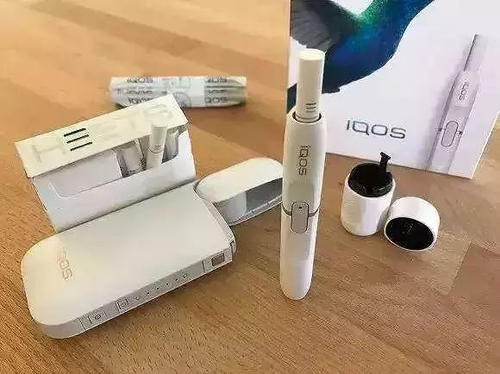
According to the China Tobacco Professional Bureau, recently, the Taizhou Tobacco Monopoly Bureau in Zhejiang Province, in conjunction with the police, cracked down on a case of illegal sales of heated tobacco via the mobile internet. As of now, three suspects have been arrested, and the initial amount involved is over 5 million yuan.
It is reported that in April of this year, the Taizhou Bureau's Jiaojiang Inspection Team obtained clues about Hu's illegal operation of heated tobacco. After several months of investigation, in late August, the special task force seized the opportunity to arrest the three main suspects and confiscated a computer and five mobile phones used for illegal sales, with the initial amount involved exceeding 5 million yuan. Currently, two people have been criminally detained, and one has been released on bail; the case is under further review.
2. Xunwei Communication enters the electronic cigarette market to supply US clients

According to reports from the Electronic Cigarette World, recently, it has been revealed that Xunwei Communication, a leading A-share mobile antenna company, has entered the electronic cigarette industry, with job postings indicating they are hiring a sales director for electronic cigarettes. Reports also indicate that their clients are American tobacco companies, and the overall shipment volume is not yet large.
Xunwei Communication's main business includes RF components, primarily antennas, wireless charging modules, EMI/EMC devices, RF connectors, audio/RF modules, RF materials, and RF front-end devices, applicable in mobile terminals, base stations, and automotive fields.
According to the H1 financial report, Xunwei Communication achieved an operating income of 1.954 billion yuan, a year-on-year increase of 7.05%; the net profit attributable to shareholders of the listed company was 368 million yuan, a year-on-year decrease of 15.67%. From the semi-annual financial report, it can be seen that Xunwei Communication is facing slow growth in operating income and a significant decline in net profit, and entering the electronic cigarette industry may be another growth business that Xunwei is targeting.
3. EVE Energy responds to US government's ban on flavored vapes: minimal impact on Mikuai

On September 12, in response to the news from the FDA that the "government plans to ban flavored vapes," EVE Energy, a major shareholder of Mikuai, made a statement on the interactive platform.
EVE Energy stated that the FDA is not banning vapes; it is only considering temporarily prohibiting the sale of non-tobacco flavored vapes, which can be resold after FDA approval. In the short term, this will have some impact on Mikuai, but in the long term, the impact will be minimal, as American clients are actively preparing to submit FDA applications.
It is understood that the news of the ban on flavored vapes spread rapidly in China, leading to significant turmoil in the domestic electronic cigarette market, with stocks of several related companies experiencing varying degrees of decline. Among them, EVE Energy's stock hit the limit down, with a market value loss of 4 billion yuan.
4. JUUL exits Tmall and JD; stores offline within a week
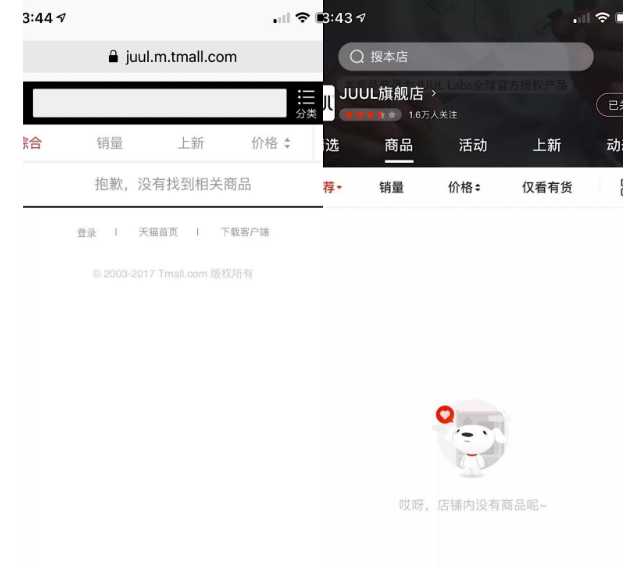
On September 14, it was reported that the American electronic cigarette brand JUUL, which opened stores on Tmall and JD on September 9, has gone offline as of the 13th, and direct purchases of products are no longer possible. The reason for the store's offline status is still unclear. Sources revealed that JUUL was reportedly interviewed by relevant departments on the day it launched, but this has not been confirmed.
According to previous reports, JUUL officially launched its Tmall and JD flagship stores on September 9, offering product bundles and prices that were consistent: 1. Electronic cigarette kit, including one device and two pods, priced at 369 yuan, with four pods included for free; 2. Electronic cigarette device, priced at 299 yuan, available in silver and gray; 3. Electronic cigarette pods, a box of four pods, priced at 149 yuan, with nicotine content options of 3% and 5%.
2. International
1. Egyptian MP submits bill urging a ban on imported vapes

According to VapingPost, last week, Egyptian MP Rizk-Allah submitted a proposal urging a ban on imported vapes and restrictions on sellers of these products. Rizk-Allah cited the World Health Organization (WHO) stating that vapes are not safer than regular cigarettes.
At the same time, Allah added that many studies warn of the risks posed by these products, such as potential negative effects on the brain, leading to high blood pressure, and issues with fertility and sexual function. Therefore, she urged the Ministry of Foreign Trade to prohibit the import of vapes and strictly control their export.
2. Cigarette sales decline; Japan Tobacco International to restructure

According to Tobacco Industry News, due to the continuous decline in cigarette sales, the Swiss International Tobacco Information Company (Swissinfo) recently released a report stating that as part of restructuring measures, Japan Tobacco International (JTI) plans to reduce its workforce by a quarter at its Geneva headquarters over the next three years.
JTI stated that among the 268 positions being cut, some may be relocated to East Asia and Eastern Europe, with plans to concentrate resources in Warsaw, Poland, St. Petersburg, Russia, and Manila, Philippines. The global layoffs are expected to affect 3,720 employees, accounting for 6% of the total workforce.
3. US government condemns Juul for illegal marketing; investigation threatens heavy penalties
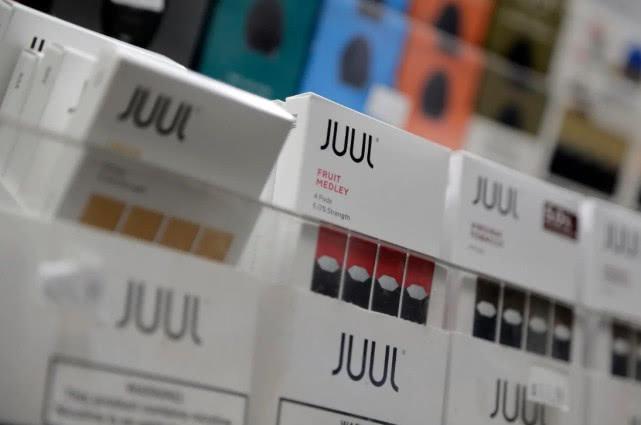
According to Tencent Technology, the US Food and Drug Administration (FDA) criticized Juul Labs in a stern warning letter for illegally marketing its vapes, claiming they are less harmful than regular cigarettes. The agency ordered the company to immediately correct its violations or face stricter enforcement actions.
The agency stated that it took action after reviewing testimony from the US House of Representatives' "Oversight and Reform Subcommittee" regarding Juul's marketing and promotional practices. According to US federal regulations, such "product risk-adjusted claims" must be approved by the FDA. The FDA stated that Juul's failure to obtain such authorization means the company is selling "adulterated" products.
4. Bloomberg Philanthropies launches new anti-smoking initiative, costing $160 million
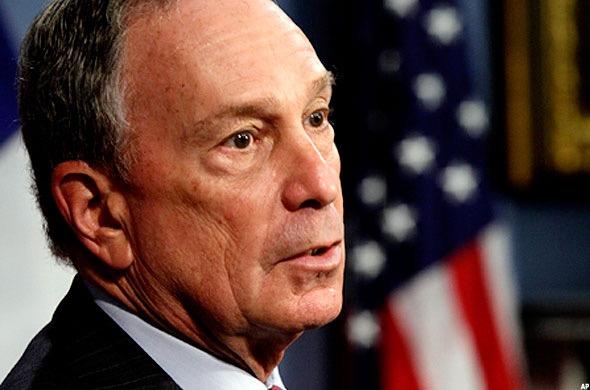
On September 10, it was reported that in response to recent severe respiratory disease cases related to American electronic cigarettes, Bloomberg Philanthropies announced a new anti-smoking initiative costing $160 million, aimed at banning all flavored vapes and preventing vape companies from marketing their products to children.
Michael R. Bloomberg, founder of Bloomberg Philanthropies and global ambassador for non-communicable diseases at the World Health Organization, stated that vape companies and the tobacco companies supporting them are capturing America's youth, and the federal government has a responsibility to protect children from harm but has failed, so the rest of us are taking action.
This three-year initiative will be led by the Campaign for Tobacco-Free Kids, which will collaborate with other organizations, including parents and community groups.
5. US government plans to ban flavored vapes

According to foreign media reports, US Health Secretary Alex Azar stated in an interview on Wednesday that the Trump administration is preparing to ban flavored vapes to control the trend of youth vaping. Azar stated that the surge in underage vaping is one of the reasons for their proposed sales ban, which will remain in effect until the FDA can thoroughly review and confirm their safety.
The FDA is currently refining this guideline, aiming to remove all non-tobacco flavored vapes from the market, which will include popular mint and menthol flavored vapes.
6. CNN decides to stop airing vape advertisements

According to foreign media reports, due to the increasing cases of fatal lung diseases related to vaping, CNN has decided to no longer accept advertisements for Juul or other vaping products.
It is understood that through social media operations, vape brands have successfully attracted a lot of attention. For example, Juul's annual advertising budget for television, tablets, and radio amounts to millions of dollars. However, CNN has stated that as health agencies continue their investigations, this policy may change in the future. CNN explained that due to the recent news reports about vaping products causing serious diseases and even deaths, CNN revised its advertising policy regarding vaping. However, if new facts emerge during the investigation, the ban may be lifted at that time.
1. Domestic
1. Zhejiang Taizhou cracks down on illegal sales of heated tobacco
According to the China Tobacco Professional Bureau, recently, the Taizhou Tobacco Monopoly Bureau in Zhejiang Province, in conjunction with the police, cracked down on a case of illegal sales of heated tobacco via the mobile internet. As of now, three suspects have been arrested, and the initial amount involved is over 5 million yuan.
It is reported that in April of this year, the Taizhou Bureau's Jiaojiang Inspection Team obtained clues about Hu's illegal operation of heated tobacco. After several months of investigation, in late August, the special task force seized the opportunity to arrest the three main suspects and confiscated a computer and five mobile phones used for illegal sales, with the initial amount involved exceeding 5 million yuan. Currently, two people have been criminally detained, and one has been released on bail; the case is under further review.
2. Xunwei Communication enters the electronic cigarette market to supply US clients
According to reports from the Electronic Cigarette World, recently, it has been revealed that Xunwei Communication, a leading A-share mobile antenna company, has entered the electronic cigarette industry, with job postings indicating they are hiring a sales director for electronic cigarettes. Reports also indicate that their clients are American tobacco companies, and the overall shipment volume is not yet large.
Xunwei Communication's main business includes RF components, primarily antennas, wireless charging modules, EMI/EMC devices, RF connectors, audio/RF modules, RF materials, and RF front-end devices, applicable in mobile terminals, base stations, and automotive fields.
According to the H1 financial report, Xunwei Communication achieved an operating income of 1.954 billion yuan, a year-on-year increase of 7.05%; the net profit attributable to shareholders of the listed company was 368 million yuan, a year-on-year decrease of 15.67%. From the semi-annual financial report, it can be seen that Xunwei Communication is facing slow growth in operating income and a significant decline in net profit, and entering the electronic cigarette industry may be another growth business that Xunwei is targeting.
3. EVE Energy responds to US government's ban on flavored vapes: minimal impact on Mikuai
On September 12, in response to the news from the FDA that the "government plans to ban flavored vapes," EVE Energy, a major shareholder of Mikuai, made a statement on the interactive platform.
EVE Energy stated that the FDA is not banning vapes; it is only considering temporarily prohibiting the sale of non-tobacco flavored vapes, which can be resold after FDA approval. In the short term, this will have some impact on Mikuai, but in the long term, the impact will be minimal, as American clients are actively preparing to submit FDA applications.
It is understood that the news of the ban on flavored vapes spread rapidly in China, leading to significant turmoil in the domestic electronic cigarette market, with stocks of several related companies experiencing varying degrees of decline. Among them, EVE Energy's stock hit the limit down, with a market value loss of 4 billion yuan.
4. JUUL exits Tmall and JD; stores offline within a week
On September 14, it was reported that the American electronic cigarette brand JUUL, which opened stores on Tmall and JD on September 9, has gone offline as of the 13th, and direct purchases of products are no longer possible. The reason for the store's offline status is still unclear. Sources revealed that JUUL was reportedly interviewed by relevant departments on the day it launched, but this has not been confirmed.
According to previous reports, JUUL officially launched its Tmall and JD flagship stores on September 9, offering product bundles and prices that were consistent: 1. Electronic cigarette kit, including one device and two pods, priced at 369 yuan, with four pods included for free; 2. Electronic cigarette device, priced at 299 yuan, available in silver and gray; 3. Electronic cigarette pods, a box of four pods, priced at 149 yuan, with nicotine content options of 3% and 5%.
2. International
1. Egyptian MP submits bill urging a ban on imported vapes
According to VapingPost, last week, Egyptian MP Rizk-Allah submitted a proposal urging a ban on imported vapes and restrictions on sellers of these products. Rizk-Allah cited the World Health Organization (WHO) stating that vapes are not safer than regular cigarettes.
At the same time, Allah added that many studies warn of the risks posed by these products, such as potential negative effects on the brain, leading to high blood pressure, and issues with fertility and sexual function. Therefore, she urged the Ministry of Foreign Trade to prohibit the import of vapes and strictly control their export.
2. Cigarette sales decline; Japan Tobacco International to restructure
According to Tobacco Industry News, due to the continuous decline in cigarette sales, the Swiss International Tobacco Information Company (Swissinfo) recently released a report stating that as part of restructuring measures, Japan Tobacco International (JTI) plans to reduce its workforce by a quarter at its Geneva headquarters over the next three years.
JTI stated that among the 268 positions being cut, some may be relocated to East Asia and Eastern Europe, with plans to concentrate resources in Warsaw, Poland, St. Petersburg, Russia, and Manila, Philippines. The global layoffs are expected to affect 3,720 employees, accounting for 6% of the total workforce.
3. US government condemns Juul for illegal marketing; investigation threatens heavy penalties
According to Tencent Technology, the US Food and Drug Administration (FDA) criticized Juul Labs in a stern warning letter for illegally marketing its vapes, claiming they are less harmful than regular cigarettes. The agency ordered the company to immediately correct its violations or face stricter enforcement actions.
The agency stated that it took action after reviewing testimony from the US House of Representatives' "Oversight and Reform Subcommittee" regarding Juul's marketing and promotional practices. According to US federal regulations, such "product risk-adjusted claims" must be approved by the FDA. The FDA stated that Juul's failure to obtain such authorization means the company is selling "adulterated" products.
4. Bloomberg Philanthropies launches new anti-smoking initiative, costing $160 million
On September 10, it was reported that in response to recent severe respiratory disease cases related to American electronic cigarettes, Bloomberg Philanthropies announced a new anti-smoking initiative costing $160 million, aimed at banning all flavored vapes and preventing vape companies from marketing their products to children.
Michael R. Bloomberg, founder of Bloomberg Philanthropies and global ambassador for non-communicable diseases at the World Health Organization, stated that vape companies and the tobacco companies supporting them are capturing America's youth, and the federal government has a responsibility to protect children from harm but has failed, so the rest of us are taking action.
This three-year initiative will be led by the Campaign for Tobacco-Free Kids, which will collaborate with other organizations, including parents and community groups.
5. US government plans to ban flavored vapes
According to foreign media reports, US Health Secretary Alex Azar stated in an interview on Wednesday that the Trump administration is preparing to ban flavored vapes to control the trend of youth vaping. Azar stated that the surge in underage vaping is one of the reasons for their proposed sales ban, which will remain in effect until the FDA can thoroughly review and confirm their safety.
The FDA is currently refining this guideline, aiming to remove all non-tobacco flavored vapes from the market, which will include popular mint and menthol flavored vapes.
6. CNN decides to stop airing vape advertisements
According to foreign media reports, due to the increasing cases of fatal lung diseases related to vaping, CNN has decided to no longer accept advertisements for Juul or other vaping products.
It is understood that through social media operations, vape brands have successfully attracted a lot of attention. For example, Juul's annual advertising budget for television, tablets, and radio amounts to millions of dollars. However, CNN has stated that as health agencies continue their investigations, this policy may change in the future. CNN explained that due to the recent news reports about vaping products causing serious diseases and even deaths, CNN revised its advertising policy regarding vaping. However, if new facts emerge during the investigation, the ban may be lifted at that time.
Related Articles

Vaping News
Ahead of a Nationwide Ban, Hundreds of Russian Retailers Voluntarily Stop Selling Vapes
2026-04-16

Vaping News
Illegal Vape Brands Try to Evade FDA Scrutiny by Posing as “Made in the USA”
2026-04-08

Vaping News
Jordan’s New Tobacco Control Rules: Waterpipe Tobacco Market Set for Major Changes
2026-03-17