
China’s Vaping Market Is Worth Hundreds of Billions, Yet Confidence Is Weak
Last Wednesday, provisions on smoking control in the Henan Provincial Patriotic Health Regulations were amended to clearly ban smoking, including vaping, in indoor public areas, workplaces, and public transportation within urban areas. Vaping, once promot
Last Wednesday, the "Henan Provincial Patriotic Health Regulations" were amended to explicitly prohibit smoking (including e-cigarettes) in indoor areas of public places, workplaces, and public transportation in urban areas.
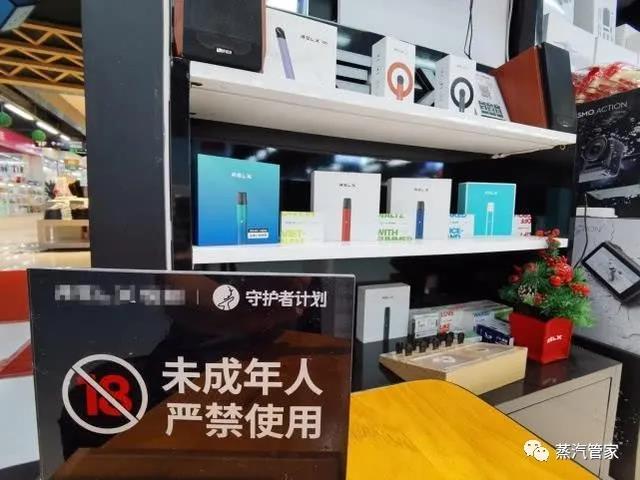
E-cigarettes, marketed with slogans like "healthy smoking alternative" and "0 tar", were once at the forefront of investment and received significant attention. Following the "strictest notice" in the e-cigarette industry, e-cigarettes have again attracted policy-level attention in our province. How is the current development of this industry? What are the views within the industry?
Some companies have regulations prohibiting smoking in the workplace, with violators fined 200 RMB, but this measure has proven ineffective against e-cigarettes.
Liu Wei (pseudonym), who works in administration at a real estate company in Zhengzhou, remembers a company rule from his first day on the job in 2018—no smoking in the office, with a 200 RMB fine for violators. "Once, a senior executive smoked in the office, and our department leader took a photo and sent it to the group, demanding the fine be paid."
Although traditional cigarettes have indeed "disappeared" from the workplace, e-cigarettes have made their way in. Liu Wei said that sometimes meetings last for several hours, and some colleagues take a few puffs from e-cigarettes to stay alert. Although he knows e-cigarettes are still tobacco products, the lack of specific regulations against them means no penalties have been enforced. "Now that there is policy support, we might change our requirements."
It is understood that on June 3, the 18th meeting of the 13th Henan Provincial People's Congress passed the decision to amend eight local regulations, including the "Henan Provincial Population and Family Planning Regulations". Among them, Article 16 of the "Henan Provincial Patriotic Health Regulations" was amended to explicitly prohibit smoking (including e-cigarettes) in indoor areas of public places, workplaces, and public transportation in urban areas.
Additionally, the "Zhengzhou Public Places Smoking Prohibition Regulations" have also been amended to clarify the smoking ban in indoor public places. It also stipulates that those who smoke in prohibited areas will be ordered to correct their behavior by the Zhengzhou municipal and district health administrative departments, with fines of 50 RMB; those who refuse to correct will face fines of 200 RMB.
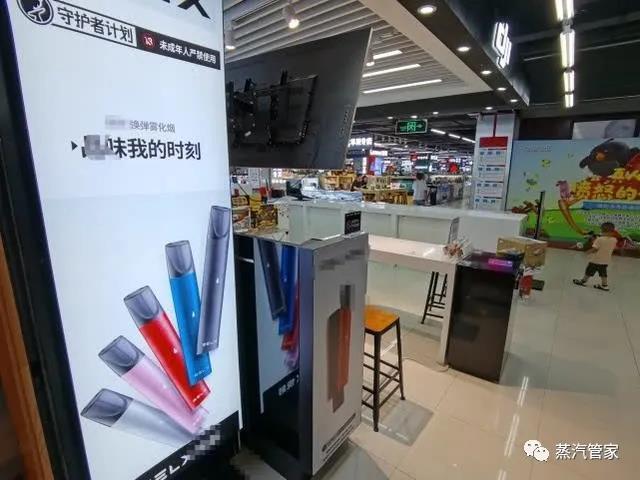
The e-cigarette market is large, with a certain brand of e-cigarettes developing over 80 exclusive stores in Zhengzhou within a year.
The introduction of regulations regarding e-cigarettes has attracted attention from all sides, bringing the e-cigarette industry back into the public eye.
Xiao Zhou, a post-90s entrepreneur, opened an e-cigarette specialty store in Zhengzhou's Jinshui Shenglong Plaza (formerly Manhattan) and started smoking early. He began using e-cigarettes around 2015, "At that time, we were using oil-filled e-cigarettes, which are characterized by large vapor production and are fun to use, allowing for smoke rings."
As e-cigarettes have continued to "evolve", they have now transformed into "pod-based" vaping devices, and Xiao Zhou has shifted from using them for fun to using them as a substitute for traditional cigarettes to achieve smoking cessation.
Data released by the China Industrial Research Institute shows that 30% of traditional smokers in the UK have switched to e-cigarettes. The penetration rate of e-cigarettes in the US has also reached 13%, while in China, it is less than 1%. However, the overall number of smokers in China is large, and the potential profits in the e-cigarette market can reach hundreds of billions.
Seeing such a large market, Xiao Zhou joined a well-known e-cigarette brand, transitioning from a user to a seller.
Data from Qichacha shows that after 2013, the number of e-cigarette-related companies grew rapidly. In 2015, 11,000 new e-cigarette-related companies were established, 18,000 in 2017, and 30,000 in 2019.
At the same time, e-cigarette stores in Zhengzhou are also rapidly developing. For example, the brand Xiao Zhou joined has expanded to over 80 exclusive stores in Zhengzhou within a year.
Media reports indicate that currently, there are 144,000 companies related to e-cigarettes in China. Shandong, Guangdong, and Jiangsu provinces rank in the top three for company registrations, while Hebei, Henan, Anhui, Zhejiang, Shaanxi, Sichuan, and Hubei are also in the top ten. #p#分页标题#e#

2019 was the "year of e-cigarettes"; however, due to the impact of the pandemic and policies, the e-cigarette market began to "decline".
Many industry insiders believe that 2019 was the most glorious year for e-cigarettes.
Wang Qiang (pseudonym) is a dealer for a certain e-cigarette brand and started engaging in the e-cigarette business in 2018. "At the end of 2018, the e-cigarette market in Zhengzhou began to rise, and it flourished in 2019. One could say that the period from late 2018 to early November 2019 was the 'highlight moment' for e-cigarettes."
Xiao Zhou shares Wang Qiang's perspective, stating that 2019 was the "year of e-cigarettes". He noted that during that time, more people began to use e-cigarettes, and awareness of them grew. Xiao Zhou's specialty store opened in May 2019, and aside from a mediocre first month, sales increased significantly each month, reaching 80,000 to 90,000 RMB by October, with some stores in large shopping malls achieving sales of 140,000 to 150,000 RMB per month. "I initially wanted to open a second store, but after investigating, I found that almost every shopping mall had an e-cigarette specialty store."
Xiao Zhou and Wang Qiang's experiences align with the capital market during that period. Starting in the second half of 2018, emerging e-cigarette brands flooded the market, with at least 20 e-cigarette companies receiving over 30 rounds of financing during that time. According to incomplete statistics, the total financing amount for the e-cigarette industry exceeded 1 billion RMB in the first half of 2019.
In November 2019, the National Tobacco Monopoly Administration and the State Administration for Market Regulation issued a notice on further protecting minors from the harm of e-cigarettes, urging e-cigarette manufacturers and sellers to shut down websites related to e-cigarette marketing and sales.
Following the release of this "strictest notice" in the e-cigarette industry, various e-commerce platforms expressed their "full cooperation", "strong support", and "firm execution" of the regulations.
Industry insiders noted that previously, the industry heavily relied on online sales, but after the notice was issued, they had to shift to offline sales. "Having been used to online sales, many people suffered significant losses due to the lack of channels and experience in offline sales."
"I have lost confidence in this industry..." said an industry insider who operates multiple e-cigarette retail stores, expressing that the lack of clear regulations at the policy level, combined with the impact of the pandemic, has left many stores in a state of suspension, and he is also preparing to change careers.
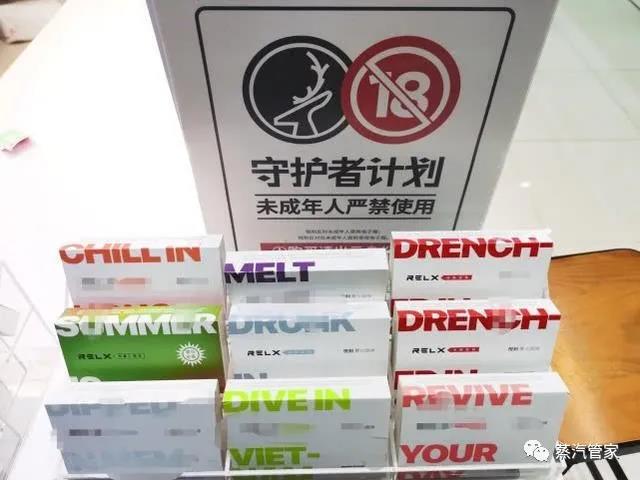
Industry insiders hope for the swift introduction of a "national standard" to regulate e-cigarettes more effectively.
In contrast to the pessimistic views, many still see potential in the industry.
"During the severe pandemic, we did not open for business, but now that we have reopened, more than half of the inquiries about e-cigarettes are from 'new blood'. The increase in newcomers indicates that this market still has great potential." Additionally, Xiao Zhou noted that with the recent "smoking ban policy" including e-cigarettes, he sees that the government has begun to recognize the existence of e-cigarettes.
Xiao Zhou calculated that his weekly expenditure on e-cigarettes is 200 RMB, which is considered moderate. Currently, there are about 50,000 e-cigarette users in Zhengzhou, which means that the annual market size for e-cigarettes in Zhengzhou alone exceeds 500 million RMB.
When discussing the future of the industry, Xiao Zhou mentioned that the low entry barriers and high profits of e-cigarettes have led many companies to enter the market. However, the lack of industry standards has resulted in varying product quality and the prevalence of counterfeit products, which is harmful to the industry.
Many e-cigarette operators share Xiao Zhou's views, expressing optimism about the market prospects but concern over the presence of counterfeit products and small workshops. They hope that the national level can introduce industry standards to regulate product quality and other aspects.
Professor Yu Jianjun from the Tobacco Institute of Henan Agricultural University stated that the national level is currently formulating technical standards for e-cigarettes.
It is worth mentioning that many people who have come into contact with e-cigarettes hold the belief that they are a smoking cessation tool and perceive them as less harmful. However, according to Yu Jianjun, there is no significant difference in harm between e-cigarettes and traditional cigarettes. "E-cigarettes also pose certain risks; studies have found that the aerosols produced by e-cigarettes contain many harmful components. Additionally, some e-cigarette labels are inaccurate, and the additives used (such as glycerin) may also pose safety threats."
Note: Chief reporter of Henan Business Daily, Sun Ke; Interns: Li Jialan/Writing, Deng Wanli/Photos; Editors: Wu Bing, Ji Qianqian)
E-cigarettes, marketed with slogans like "healthy smoking alternative" and "0 tar", were once at the forefront of investment and received significant attention. Following the "strictest notice" in the e-cigarette industry, e-cigarettes have again attracted policy-level attention in our province. How is the current development of this industry? What are the views within the industry?
Some companies have regulations prohibiting smoking in the workplace, with violators fined 200 RMB, but this measure has proven ineffective against e-cigarettes.
Liu Wei (pseudonym), who works in administration at a real estate company in Zhengzhou, remembers a company rule from his first day on the job in 2018—no smoking in the office, with a 200 RMB fine for violators. "Once, a senior executive smoked in the office, and our department leader took a photo and sent it to the group, demanding the fine be paid."
Although traditional cigarettes have indeed "disappeared" from the workplace, e-cigarettes have made their way in. Liu Wei said that sometimes meetings last for several hours, and some colleagues take a few puffs from e-cigarettes to stay alert. Although he knows e-cigarettes are still tobacco products, the lack of specific regulations against them means no penalties have been enforced. "Now that there is policy support, we might change our requirements."
It is understood that on June 3, the 18th meeting of the 13th Henan Provincial People's Congress passed the decision to amend eight local regulations, including the "Henan Provincial Population and Family Planning Regulations". Among them, Article 16 of the "Henan Provincial Patriotic Health Regulations" was amended to explicitly prohibit smoking (including e-cigarettes) in indoor areas of public places, workplaces, and public transportation in urban areas.
Additionally, the "Zhengzhou Public Places Smoking Prohibition Regulations" have also been amended to clarify the smoking ban in indoor public places. It also stipulates that those who smoke in prohibited areas will be ordered to correct their behavior by the Zhengzhou municipal and district health administrative departments, with fines of 50 RMB; those who refuse to correct will face fines of 200 RMB.
The e-cigarette market is large, with a certain brand of e-cigarettes developing over 80 exclusive stores in Zhengzhou within a year.
The introduction of regulations regarding e-cigarettes has attracted attention from all sides, bringing the e-cigarette industry back into the public eye.
Xiao Zhou, a post-90s entrepreneur, opened an e-cigarette specialty store in Zhengzhou's Jinshui Shenglong Plaza (formerly Manhattan) and started smoking early. He began using e-cigarettes around 2015, "At that time, we were using oil-filled e-cigarettes, which are characterized by large vapor production and are fun to use, allowing for smoke rings."
As e-cigarettes have continued to "evolve", they have now transformed into "pod-based" vaping devices, and Xiao Zhou has shifted from using them for fun to using them as a substitute for traditional cigarettes to achieve smoking cessation.
Data released by the China Industrial Research Institute shows that 30% of traditional smokers in the UK have switched to e-cigarettes. The penetration rate of e-cigarettes in the US has also reached 13%, while in China, it is less than 1%. However, the overall number of smokers in China is large, and the potential profits in the e-cigarette market can reach hundreds of billions.
Seeing such a large market, Xiao Zhou joined a well-known e-cigarette brand, transitioning from a user to a seller.
Data from Qichacha shows that after 2013, the number of e-cigarette-related companies grew rapidly. In 2015, 11,000 new e-cigarette-related companies were established, 18,000 in 2017, and 30,000 in 2019.
At the same time, e-cigarette stores in Zhengzhou are also rapidly developing. For example, the brand Xiao Zhou joined has expanded to over 80 exclusive stores in Zhengzhou within a year.
Media reports indicate that currently, there are 144,000 companies related to e-cigarettes in China. Shandong, Guangdong, and Jiangsu provinces rank in the top three for company registrations, while Hebei, Henan, Anhui, Zhejiang, Shaanxi, Sichuan, and Hubei are also in the top ten. #p#分页标题#e#
2019 was the "year of e-cigarettes"; however, due to the impact of the pandemic and policies, the e-cigarette market began to "decline".
Many industry insiders believe that 2019 was the most glorious year for e-cigarettes.
Wang Qiang (pseudonym) is a dealer for a certain e-cigarette brand and started engaging in the e-cigarette business in 2018. "At the end of 2018, the e-cigarette market in Zhengzhou began to rise, and it flourished in 2019. One could say that the period from late 2018 to early November 2019 was the 'highlight moment' for e-cigarettes."
Xiao Zhou shares Wang Qiang's perspective, stating that 2019 was the "year of e-cigarettes". He noted that during that time, more people began to use e-cigarettes, and awareness of them grew. Xiao Zhou's specialty store opened in May 2019, and aside from a mediocre first month, sales increased significantly each month, reaching 80,000 to 90,000 RMB by October, with some stores in large shopping malls achieving sales of 140,000 to 150,000 RMB per month. "I initially wanted to open a second store, but after investigating, I found that almost every shopping mall had an e-cigarette specialty store."
Xiao Zhou and Wang Qiang's experiences align with the capital market during that period. Starting in the second half of 2018, emerging e-cigarette brands flooded the market, with at least 20 e-cigarette companies receiving over 30 rounds of financing during that time. According to incomplete statistics, the total financing amount for the e-cigarette industry exceeded 1 billion RMB in the first half of 2019.
In November 2019, the National Tobacco Monopoly Administration and the State Administration for Market Regulation issued a notice on further protecting minors from the harm of e-cigarettes, urging e-cigarette manufacturers and sellers to shut down websites related to e-cigarette marketing and sales.
Following the release of this "strictest notice" in the e-cigarette industry, various e-commerce platforms expressed their "full cooperation", "strong support", and "firm execution" of the regulations.
Industry insiders noted that previously, the industry heavily relied on online sales, but after the notice was issued, they had to shift to offline sales. "Having been used to online sales, many people suffered significant losses due to the lack of channels and experience in offline sales."
"I have lost confidence in this industry..." said an industry insider who operates multiple e-cigarette retail stores, expressing that the lack of clear regulations at the policy level, combined with the impact of the pandemic, has left many stores in a state of suspension, and he is also preparing to change careers.
Industry insiders hope for the swift introduction of a "national standard" to regulate e-cigarettes more effectively.
In contrast to the pessimistic views, many still see potential in the industry.
"During the severe pandemic, we did not open for business, but now that we have reopened, more than half of the inquiries about e-cigarettes are from 'new blood'. The increase in newcomers indicates that this market still has great potential." Additionally, Xiao Zhou noted that with the recent "smoking ban policy" including e-cigarettes, he sees that the government has begun to recognize the existence of e-cigarettes.
Xiao Zhou calculated that his weekly expenditure on e-cigarettes is 200 RMB, which is considered moderate. Currently, there are about 50,000 e-cigarette users in Zhengzhou, which means that the annual market size for e-cigarettes in Zhengzhou alone exceeds 500 million RMB.
When discussing the future of the industry, Xiao Zhou mentioned that the low entry barriers and high profits of e-cigarettes have led many companies to enter the market. However, the lack of industry standards has resulted in varying product quality and the prevalence of counterfeit products, which is harmful to the industry.
Many e-cigarette operators share Xiao Zhou's views, expressing optimism about the market prospects but concern over the presence of counterfeit products and small workshops. They hope that the national level can introduce industry standards to regulate product quality and other aspects.
Professor Yu Jianjun from the Tobacco Institute of Henan Agricultural University stated that the national level is currently formulating technical standards for e-cigarettes.
It is worth mentioning that many people who have come into contact with e-cigarettes hold the belief that they are a smoking cessation tool and perceive them as less harmful. However, according to Yu Jianjun, there is no significant difference in harm between e-cigarettes and traditional cigarettes. "E-cigarettes also pose certain risks; studies have found that the aerosols produced by e-cigarettes contain many harmful components. Additionally, some e-cigarette labels are inaccurate, and the additives used (such as glycerin) may also pose safety threats."
Note: Chief reporter of Henan Business Daily, Sun Ke; Interns: Li Jialan/Writing, Deng Wanli/Photos; Editors: Wu Bing, Ji Qianqian)
Related Articles

Vaping News
Ahead of a Nationwide Ban, Hundreds of Russian Retailers Voluntarily Stop Selling Vapes
2026-04-16

Vaping News
Illegal Vape Brands Try to Evade FDA Scrutiny by Posing as “Made in the USA”
2026-04-08

Vaping News
Jordan’s New Tobacco Control Rules: Waterpipe Tobacco Market Set for Major Changes
2026-03-17