
What Are the Harms of Nicotine Patches?
Nicotine patches are a common smoking cessation patch product. Many smokers say that compared with the first three days, after using nicotine patches they no longer feel the urge to smoke after meals. Nicotine patches really help a lot! Do nicotine patche
Nicotine patches are common smoking cessation products, and many smokers report that compared to the first three days, their desire to smoke after meals has completely disappeared with the use of nicotine patches, which have indeed been very helpful! Do nicotine patches have side effects? What are the harms of nicotine patches? Below, I will summarize and introduce them.
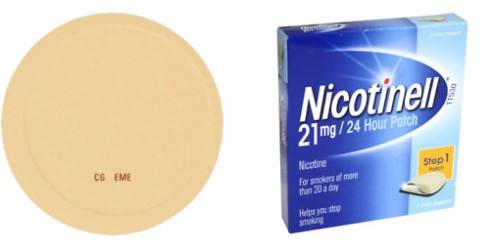
The harms of nicotine patches
Currently, the effectiveness of using medication for smoking cessation treatment is highly uncertain, and the side effects are varied. What are the harms of nicotine patches? Can using too many nicotine patches be fatal? Below, I will provide examples:
1. Dr. Lerman and others studied certain biomarkers representing nicotine clearance rate (NMR) to verify whether they could predict smokers' responses to nicotine patches or varenicline treatment. Among them, 418 people received nicotine patches and placebo pills, 420 people received varenicline and placebo patches, and 408 people received placebo pills and placebo patches, while participants also received behavioral counseling, and blood samples were collected for analysis.
The results showed that nicotine metabolizers had better responses to oral nicotine replacement than those using nicotine patches. At the same time, researchers found that slow metabolizers experienced severe side effects from oral nicotine replacement.
2. There is a movie called "Thank You for Smoking," where the main character is a spokesperson for tobacco. Due to smoking causing countless deaths, he faced public outrage. Eventually, he was put in a van covered in nicotine patches and displayed on the thigh of a Lincoln statue. Later, a doctor told him that if he were a non-smoker, such a high concentration of nicotine would surely be fatal, but since he was already tolerant, he began to boast that nicotine patches could kill people, while the doctor said smoking saves lives...
Assuming he is 180 cm tall and weighs 80 kg, calculating his body surface area gives 2 m^2. The commonly found 21 mg/24 h sustained-release nicotine patches in the US market are about 18 cm^2, and theoretically, one could apply 1111 patches; excluding the head and private areas, and areas that cannot be patched, let's say 700 patches could be applied.
If we assume a constant release rate, each patch releases 0.875 mg per hour, so 700 patches would release a total of 612.5 mg per hour. For an average person, not to mention dying, even dying multiple times would not be enough... Theoretically, this is just a theory. In the movie screenshot, the patches are clearly round and applied sparsely, roughly estimating that only about 50 patches were applied. Assuming 50 patches, the nicotine released per hour would be about 43.75 mg, and the half-life of nicotine in the blood is about 2 hours, meaning a non-smoker would likely be doomed, while a smoker could tolerate some nicotine, but such a high concentration would likely be on the brink of death.
The harms of nicotine patches
Currently, the effectiveness of using medication for smoking cessation treatment is highly uncertain, and the side effects are varied. What are the harms of nicotine patches? Can using too many nicotine patches be fatal? Below, I will provide examples:
1. Dr. Lerman and others studied certain biomarkers representing nicotine clearance rate (NMR) to verify whether they could predict smokers' responses to nicotine patches or varenicline treatment. Among them, 418 people received nicotine patches and placebo pills, 420 people received varenicline and placebo patches, and 408 people received placebo pills and placebo patches, while participants also received behavioral counseling, and blood samples were collected for analysis.
The results showed that nicotine metabolizers had better responses to oral nicotine replacement than those using nicotine patches. At the same time, researchers found that slow metabolizers experienced severe side effects from oral nicotine replacement.
2. There is a movie called "Thank You for Smoking," where the main character is a spokesperson for tobacco. Due to smoking causing countless deaths, he faced public outrage. Eventually, he was put in a van covered in nicotine patches and displayed on the thigh of a Lincoln statue. Later, a doctor told him that if he were a non-smoker, such a high concentration of nicotine would surely be fatal, but since he was already tolerant, he began to boast that nicotine patches could kill people, while the doctor said smoking saves lives...
Assuming he is 180 cm tall and weighs 80 kg, calculating his body surface area gives 2 m^2. The commonly found 21 mg/24 h sustained-release nicotine patches in the US market are about 18 cm^2, and theoretically, one could apply 1111 patches; excluding the head and private areas, and areas that cannot be patched, let's say 700 patches could be applied.
If we assume a constant release rate, each patch releases 0.875 mg per hour, so 700 patches would release a total of 612.5 mg per hour. For an average person, not to mention dying, even dying multiple times would not be enough... Theoretically, this is just a theory. In the movie screenshot, the patches are clearly round and applied sparsely, roughly estimating that only about 50 patches were applied. Assuming 50 patches, the nicotine released per hour would be about 43.75 mg, and the half-life of nicotine in the blood is about 2 hours, meaning a non-smoker would likely be doomed, while a smoker could tolerate some nicotine, but such a high concentration would likely be on the brink of death.
Related Articles

Vaping News
Ahead of a Nationwide Ban, Hundreds of Russian Retailers Voluntarily Stop Selling Vapes
2026-04-16

Vaping News
Illegal Vape Brands Try to Evade FDA Scrutiny by Posing as “Made in the USA”
2026-04-08

Vaping News
Jordan’s New Tobacco Control Rules: Waterpipe Tobacco Market Set for Major Changes
2026-03-17