CDC Scientists Present New Evidence: No Secondhand Smoke Issue With Vaping
On July 27, a new paper released by researchers at the U.S. Centers for Disease Control and Prevention (CDC) showed that the level of the tobacco-specific nitrosamine (TSNA) metabolite NNAL in vapers' urine was extremely low, only 2.2% of that in cigarett
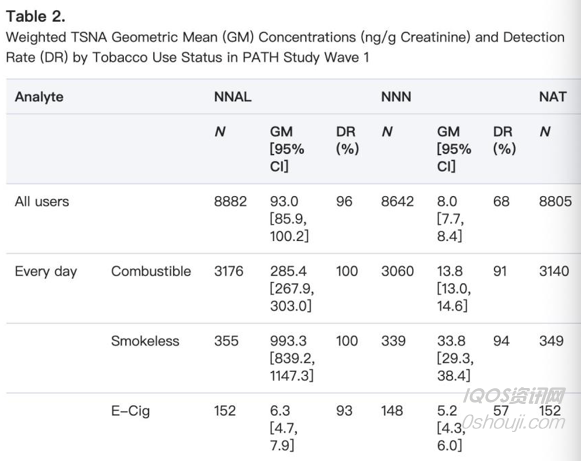
On July 27, researchers from the Centers for Disease Control and Prevention (CDC) released a new paper showing that the levels of tobacco-specific nitrosamine (TSNA) metabolite NNAL in the urine of e-cigarette users are extremely low, only 2.2% of that found in cigarette smokers and 0.6% of that found in smokeless tobacco (snuff, chewing tobacco, etc.) users.<\/div>
<\/div>
This research further proves that the harm of e-cigarettes is far lower than that of traditional tobacco, and that e-cigarettes do not have the secondhand smoke issues associated with traditional tobacco.<\/div>
<\/div>
More than 70 carcinogens have been identified in traditional tobacco and secondhand smoke, among which tobacco-specific nitrosamines (TSNA) are the main carcinogens produced by tobacco and its combustion, posing significant health risks to smokers and secondhand smoke victims. TSNA includes NNK, NNN, NAB, NAT, etc.<\/div>
<\/div>
The World Health Organization (WHO) has identified NNK and NNN as the primary factors contributing to the carcinogenicity of cigarette smoke.<\/div>
<\/div>
This study lasted seven years, starting in 2013, collecting epidemiological data on tobacco use behaviors, including usage patterns, attitudes, habits, and health impacts, to assess the impact of the FDA's relevant tobacco regulatory policies.<\/div>
<\/div>
This paper is the first phase result of the study, mainly monitoring the urine NNAL concentrations of participants in the PATH study from September 12, 2013, to December 15, 2014.<\/div>
<\/div>
NNAL is a metabolite produced by the human body when processing nitrosamines (TSNAs), excreted through urine. People can produce the TSNA metabolite NNAL by using tobacco products or inhaling secondhand smoke.<\/div>
<\/div>
The research results show that the average urine NNAL concentration for smokeless tobacco users is 993.3 ng/g creatinine, for cigarette smokers is 285.4 ng/g creatinine, and for e-cigarette users is 6.3 ng/g creatinine, indicating that the level of the tobacco-specific nitrosamine metabolite NNAL in the urine of e-cigarette users is only 2.2% of that of cigarette smokers and 0.6% of that of smokeless tobacco users.
This study is not the first time the CDC has published evidence that e-cigarettes do not have the secondhand smoke issues associated with traditional tobacco.<\/div>
<\/div>
As early as 2014, CDC researchers published a study on the VOCs (volatile organic compounds) in the smoke of traditional tobacco and e-cigarettes, showing that the VOC metabolite levels in the urine of e-cigarette users are similar to those of non-smokers, while the VOC levels in smokers' urine are significantly higher than those of e-cigarette users, smokeless tobacco users, and non-smokers.<\/div>
<\/div>
VOCs are a collective term for organic compounds that are volatile under certain conditions, including harmful substances such as benzene, toluene, and formaldehyde.<\/div>
TSNA (nitrosamines) and VOCs (volatile organic compounds) are the two most important carcinogenic harmful substances in traditional tobacco secondhand smoke. The CDC's aforementioned research proves that e-cigarettes do not have secondhand smoke issues similar to traditional tobacco.<\/div>
<\/div>
This also reiterates that equating e-cigarettes with traditional tobacco, or using the harms of traditional tobacco secondhand smoke as evidence to classify e-cigarettes under indoor smoking bans, is scientifically unfounded and absurd.<\/div>