As the Longest-Serving President Departs After Privatization, Where Is South Korea’s Largest Tobacco
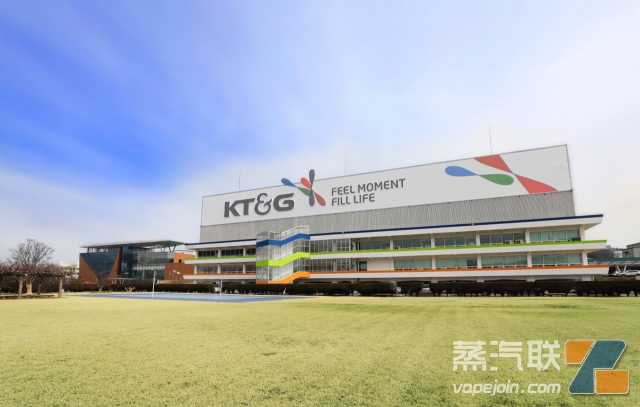 South Korea's largest tobacco company is about to bid farewell to the nearly nine-year era of Baek Foo-in. What happened to KT G, which once put down its rhetoric in 2020 to "become the world's fourth largest tobacco company in 2025"? Who will be the next one to carry the palm print? Where will the Korean tobacco market go in the foreseeable future?
[Two Supremes Original] On January 9, 2024, Korea's largest tobacco company, Korean Tobacco Ginseng Co., Ltd.(KT G), announced that CEO Bak Bok-in expressed his willingness to seek re-election at the board meeting the day before. After the news was released, KT G's share price fell from a high of 90,900 won on the 10th to the closing price of 87,400 won on the 12th, and its market value fell to 9.85T won (approximately US$749.6 billion).
Bai Furen joined KT G through open recruitment in 1993, became CEO in October 2015, and was re-elected twice in 2018 and 2021. During his tenure, he improved his skills by signing a 15-year long-term contract with Philip Morris International (PMI)new tobaccoGlobal competitiveness of the business; and achieved record annual sales, reaching approximately 6 trillion won (approximately 456 billion US dollars).
But sales are reflected in profits and stock prices, and the numbers are less satisfying to shareholders. During Bai Furen's tenure, KT&G's operating profit fell from 1.46 trillion won (approximately US$111 billion) in 2016 to 1.26 trillion won (approximately US$95.8 billion) in 2022; during Bai Furen's nine years in office, South Korea's composite stock price index KOSPI has increased by 26%, while KT G's share price has fallen by 19% from its 2015 high against the market.
According to previous forecasts from financial institutions, KT G's revenue in 2024 may fall to 5.84 trillion won (approximately US$445.4 billion), while operating profit may also fall by 10.5% to 1.13 trillion won (approximately US $). If the forecast is accurate, this will be the first time KT G has faced a decline in revenue since 2018,
South Korea's largest tobacco company is about to bid farewell to the nearly nine-year era of Baek Foo-in. What happened to KT G, which once put down its rhetoric in 2020 to "become the world's fourth largest tobacco company in 2025"? Who will be the next one to carry the palm print? Where will the Korean tobacco market go in the foreseeable future?
The besieged South Korean HNB market
In 2023, the profit of the Korean tobacco market will reach US$9.198 billion, and statistical agencies predict that it will achieve an annual growth of 0.78% in the next five years. Recently, the news that the Korean regulatory market has been abuzz with isSynthetic nicotine will be included in new tax policyrumors.
According to South Korean customs data, imports in 2021e-cigarettesThe total amount of oil is 378 tons, of which 98 tons contain synthetic nicotine, accounting for 26% of the total.
Currently, South Korea imposes five types of taxes and fees on natural nicotine: consumption tax, new value-added tax, national health promotion fee, local tobacco consumption tax and local education tax; in contrast, synthetic nicotine is not subject to any taxes or fees. South Korean congressman Choi Hye-young recently proposed charging synthetic nicotine with the same tax and health promotion fees as natural nicotine starting next year. The Budget Policy Office of the South Korean National Assembly analyzed that if the new tax policy is implemented, it is expected to increase by 101.2 billion won (approximately 101.2 billion won) in the next five years.7.707 billionUS dollars) tax.
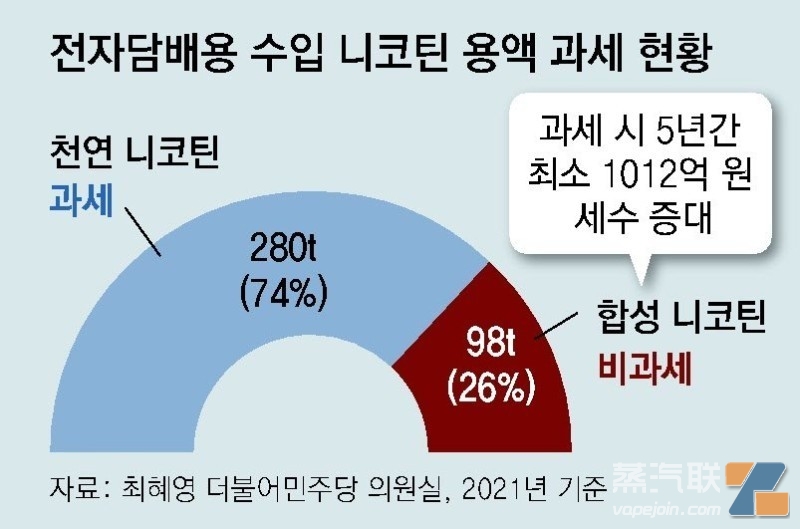 Electronics imported from South Korea in 2021smoke oilThe total amount is 378 tons, of which 26% contains synthetic nicotine.| Source: Network screenshot
This may be good news for KT G. Because KT G's new tobacco business is mainly concentrated in #p#pagination title #e#heating non-burning(HNB) In terms of business, there is no fog on salee-cigarette brands。Once this new tax law is implemented, the main competing product of atomized e-cigarettes will be heavily taxed.
KT G, which has been established for more than 100 years, was privatized in 2002. It has five subsidiaries, which are involved in ginseng, medicine and other fields, but the most well-known is its tobacco business and is the only reconstituted tobacco manufacturer in South Korea. According to Euromo InternationalAccording to data from nitor International, KT&G ranked fifth in the world in terms of sales volume and market share in 2019. It was also in the following 2020 that bold words were made to join the "Big Four".
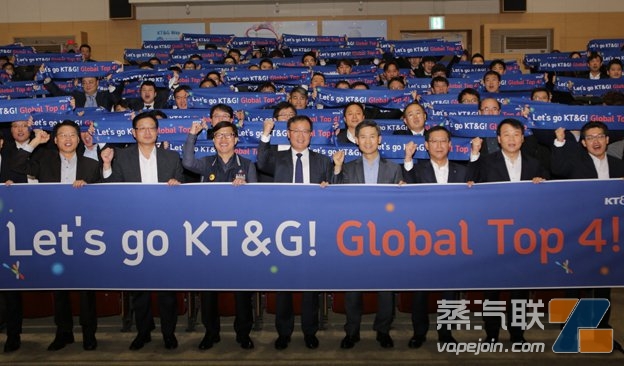 In 2020, KT& G made bold promises to join the "Big Four".| Source: KT G official website
There are policy reasons behind not getting involved in atomizing e-cigarettes. As early as 2019, the Ministry of Health and Welfare of South Korea recommended that people stop using aerosolized e-cigarettes and promised to determine as soon as possible whether the sales of e-cigarettes should be banned; in October 2022, the Ministry of Health and Welfare of South Korea issued a document strongly recommending that people publish relevant hazard test results. Stop using aerosolized e-cigarettes until before. At the same time, the South Korean government has proposed a series of improvement measures to eliminate the "dead zone" of e-cigarette supervision.
For similar reasons in the Japanese market, HNB gained the upper hand in South Korea. KT G then focused the new tobacco on HNB. Currently, the company's HNB brands include the Lil series, which is adapted tothe cartridgeFiit series and MIX series. Among them, the Lil series of smoking equipment performed well. In May 2023, Lil accounted for 48% of the market share in South Korea's HNB market, defeating Philip's ace IQOS, which has a market share of 42%.
But competition in this field has long been heated. Data from Euromonitor International shows that the size of South Korea's HNB market will reach 2.2 trillion won (approximately US$167.5 billion) in 2023 and is expected to reach 2.4 trillion won (approximately US$182.8 billion) by 2025. As the South Korean HNB market continues to heat up, many multinational tobacco companies are competing fiercely in the South Korean market.
In February 2022, British American Tobacco (BAT) launched a new product Glo Hyper X2 in South Korea, increasing BAT's market share, which had been hovering around 6% in the Korean heated cigarette market, to 11.7%; In December 2023, sources said that Philip Morris Products SA, the Swiss headquarters of Philip Morris, had applied for Trademark Registering for its heated tobacco product SENTIA in South Korea. SENTIA is a cigarette bomb specially designed for the IQOS ILUMA series and is not yet available in South Korea; at the beginning of 2024, there is news that there is currently no HNB quota in South Korea by Japan Tobacco International (JTI launched the use of liquid cigarette bombs in South Korea in 2019.e-cigarette productsPloom Tech, which will stop selling in 2021) is ready to return to the South Korean market again.
South Korea's domestic new tobacco market, which has been divided by PMI, KT G and BAT, may face a scuffle for some time to come after JTI returns to the war. Amid the pressure of many major international tobacco companies, KT G, as the only competitor to completely abandon atomizing e-cigarettes and focus on HNB, has gone to war with an "all or nothing" determination.
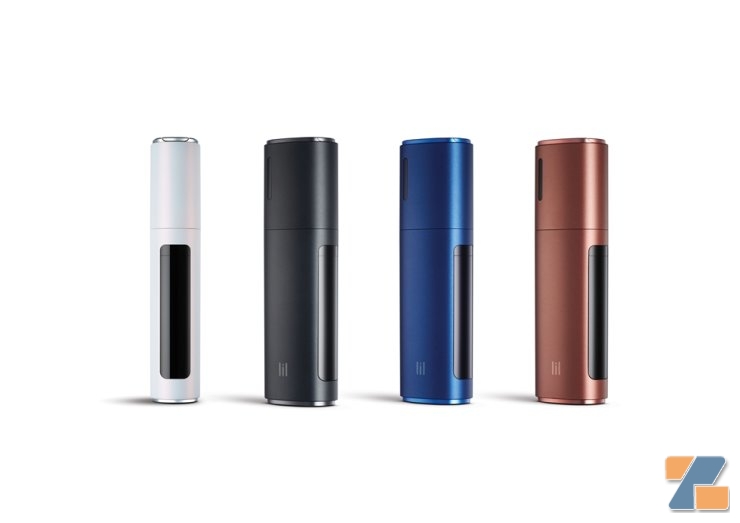 KT& G's Lil series HNB products| Source: Lil official website
However, as KT G's lone note, the growth of the company's HNB division has stalled in 2023. From 2020 to 2022, KT G's tobacco business (including cigarettes and HNB) nearly tripled from 279.3 billion won (approximately US$212.6 billion) to 876.3 billion won (approximately US$666.5 billion); however, by the first half of 2023, the company's HNB sales dropped 10.7% to 389.6 billion won (approximately US$296.1 billion) from 436.3 billion in the same period last year.# p#pagination title #e#
Given the fact that the giants do not have absolute product advantages, whether KT G is really ready for itself is still unknown.
"Agreement to go to sea" and "Transfer of profits"
KT&G's sailing is largely driven by the strategic cooperation agreement signed by KT G and Philip Morris International in 2020. The agreement was a major achievement during Bai Furen's tenure and played an important role in KT G's access to the Russian and Ukraine markets. In both markets, KT G is able to share with PMIResources and infrastructure; in Ukraine, the latter even has full responsibilityKT G'sProduct sales.On January 30, 2023, the two sides extended the three-year cooperation agreement signed in 2020 to 15 years.
Also in 2020, KT G also cooperated with Dubai's FMCG giantAlokozayThe group signed a contract of 2.2 trillion won (approximately US$1.8 billion) for a period of 7 years and 4 months. The agreement will help KT G avoid the huge cost of establishing an independent sales network in the United Arab Emirates and also protect part of KT G's overseas business because it requires Alokozay to purchase a certain number of KT G products during the agreement period.
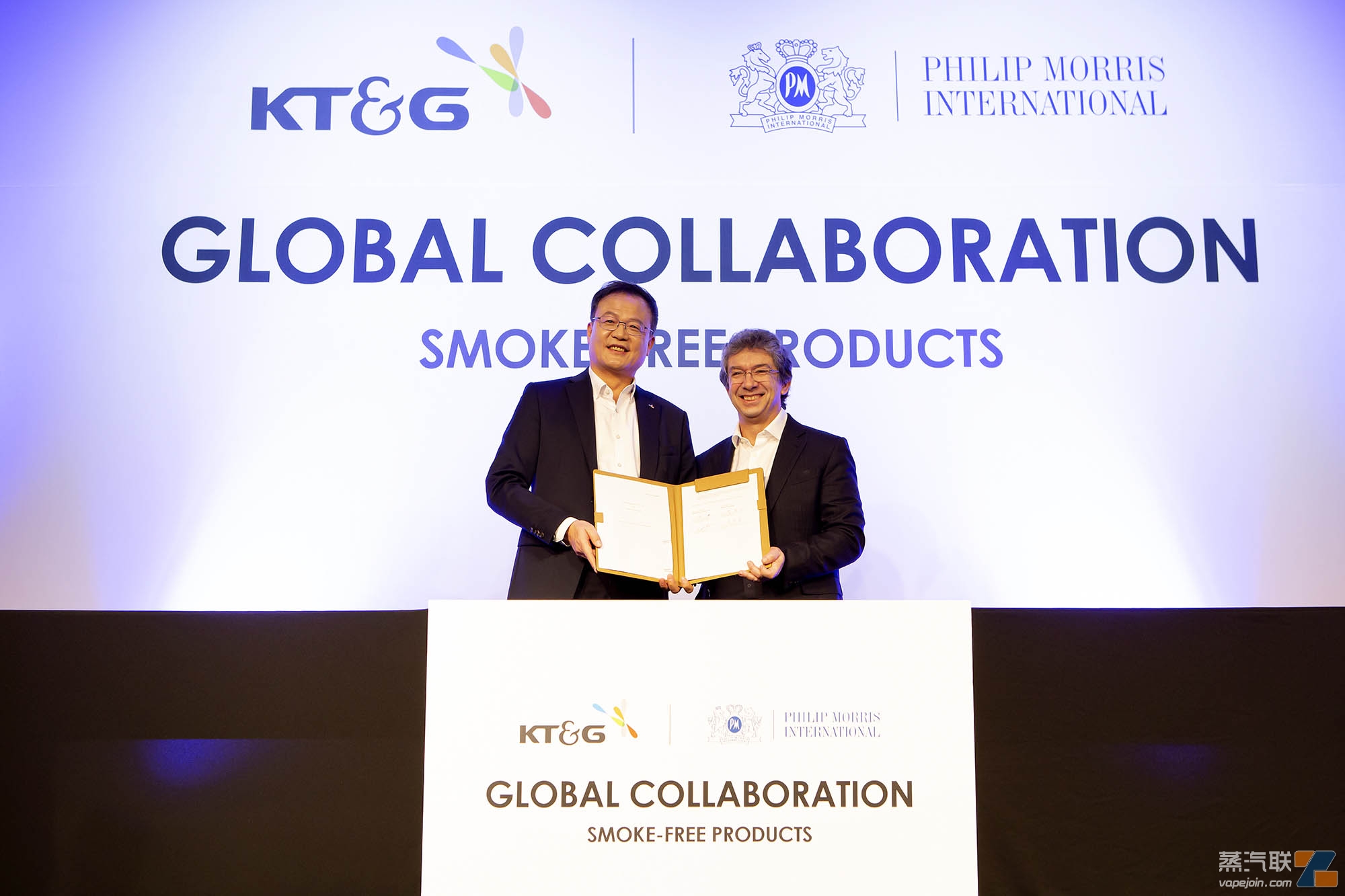 International& cooperation signing ceremony between KT G and Philip Morris| Source: KT& G official website
However, this kind of "agreed-to-sea" has its drawbacks: once the situation of the other party to the agreement changes, KT G will have to passively adjust with a high probability. For example, due to the outbreak of the Russia-Ukraine War, Philip Morris International, an American company, has significantly adjusted its layout in Russia: Philip Morris International's fourth quarter 2022 financial report specifically pointed out that after the Russia-Ukraine market is included, the company's global total shipment volume growth has been dragged down from 2.6% to 1.2%; KT G, which originally had no clear political inclination, also had to follow suit: KT G also specifically mentioned in its financial report that sanctions imposed by the United States and even the entire West on Russia, such as restrictions on SWIFT settlement methods, have affected the company's newly developed market in Russia.
In addition, although the agreement requires Alokozay to purchase a certain number of KT G products, the unit price for such large-scale agreement purchases is generally low. This use of "giving profits" to increase "sales volume" has also led to KT G being questioned as "pursuing sales volume in vain" at the expense of profits.
But the sea continues. In October 2023, KT G held a high-profile groundbreaking ceremony on the new factory land in the Almaty region of Kazakhstan. KT G President Bai Furen, the governor of Almaty region and other local dignitaries all attended. KT G said that the new factory will become a "hybrid production base" in Europe and Asia, which reflects that KT G regards Kazakhstan as a key strategic base for its Eurasian business growth, and will establish a complete value chain locally and strengthen its overseas direct business ambition.
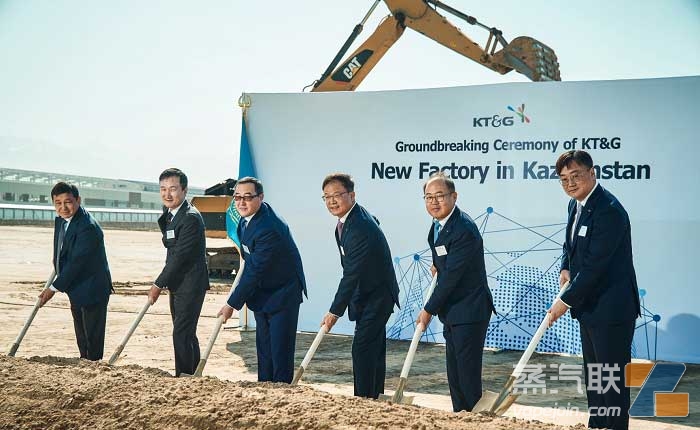 The& groundbreaking ceremony for KT G's new factory in the Almaty region of Kazakhstan| Source: KT& G official website
As the group's sales grew in Latin America, South America and Africa, KT G was confident that growth would continue. However, according to the latest 2023 Q3 annual report, in the first nine months of 2023, KT G's export value was 1.293 billion won (approximately US$98.382 billion), a contraction of about 7% from 1.393 billion won (approximately US$1,059.09) in the same period in 2022.
It is worth mentioning that according to financial disclosures, KT G does not have any external customer accounting for more than 10% of profits. Such a retail customer structure not only helps KT G resist instability, but also proves that the company does not have a stable and deep-rooted market that is "one meter wide and ten meters deep", allowing KT G to serve as an anchor point to consolidate its advantages and worry about worries. New land.# p#pagination title #e#
In the global market, the heavy reliance on the Philippines and the "Grand Accord", the influence of geopolitics, and the lack of stability anchors have made KT G's voyage full of uncertainty.
"Closed meetings" and evaporated pensions
On January 11, KT G's Regulatory Structure Committee announced 24 candidates for the next president on the 11th, but Bai Furen, who expressed his intention to resign on the 9th, was not among them.2FIRSTS asked KT G about the candidates for the next CEO and the selection process. There was no reply as of press time.
At present, these 24 candidates will be reviewed by the recommendation committee, and a second round of short lists will be generated in mid-February and made public. It is expected that the final candidate will be determined by the end of February. Finally, at the regular shareholders meeting at the end of March, the collective wishes of all shareholders will be reflected to determine the next CEO.
To understand the motivation behind the entire personnel change, we must start from the CEO selection system of large companies like South Korea. South Korea's largest steel companyPoSCO Steel (POSCO)For example, to select a new CEO, it is usually based on the "President's Re-election Priority Review System". Some board members form a "President Candidate Recommendation Committee" of about 7 people, and then determine the CEO candidates, and then announce the final candidate after voting. It is neither transparent nor clearly documented. The whole process can be said to be a "closed-door meeting."
KT G's approach is similar. Normally, the entire process requires three stages: "Supervision Structure Committee-Presidential Candidate Recommendation Committee-Shareholders 'Meeting Approval", which takes about three months. However, in early December, the board of directors completed the entire process and made it public. The whole process was criticized because the only candidate given by the "Presidential Candidate Recommendation Committee" was Bai Furen, who was about to complete his third term; and the entire decision-making process only took 11 days.
On December 13, Singapore, a shareholder of KT GFlashlightCapital Partners published a cartoon at the entrance of the Korean Corporate Governance Forum website, trying to use the most popular form to call on young South Korean investors to oppose KT G's management. Flashlight will describe the entire process as a "word game" and a "closed vote," call for changes to the chief executive selection process and require the board to appoint two independent directors.
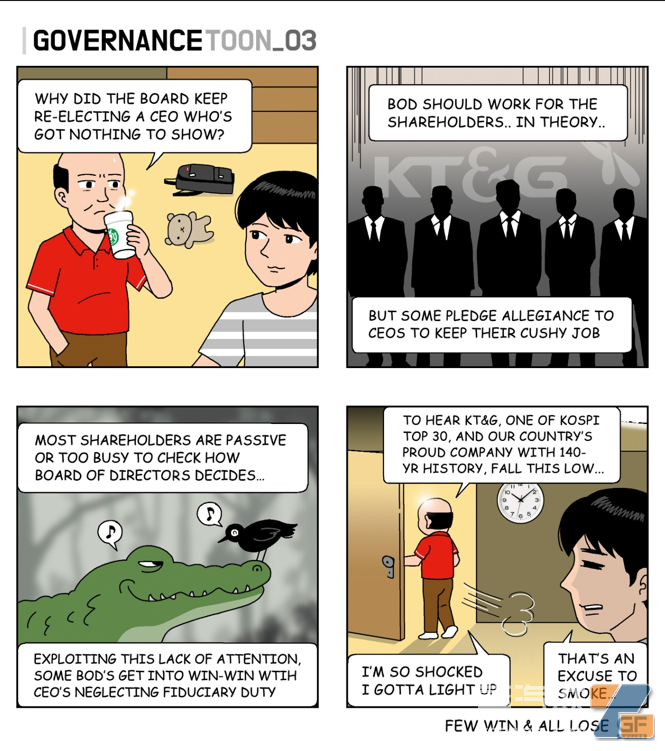 Online cartoon against KT G management published by Flashlight Capital Partners&| Source: Network screenshot
KT G is not the only case in the past year where the CEO of a widely held company failed to achieve re-election. In 3,Korea Telecom Corporation (KT)、PoSCO Steel (POSCO)Both have been convicted ofKorean National Pension (NPS)obstruction continues to fail.
The reason is clear: the Korean people's "pension money" is bet on these big companies by the Korean National Pension.
Korea National Pension is currently the third largest shareholder of KT&G, and now the largest shareholder holding a 6.3% stake in KT&G is a Korean policy bankCorporate Banking (IBK)。This act is state-owned by the government of the Republic of Korea. In 2018, it opposed Bai Furen's entry into the third term, believing that there was a problem with the president selection process and questioning the entry of radical investment funds into the company.
When the stock price trend is not optimistic, the dissatisfaction caused is indeed well-founded. When a large part of the evaporation of market value came from citizens 'pensions, dissatisfaction spread throughout society: through the attitude of corporate banks, the South Korean government showed a negative attitude towards the re-election of KT&G's CEO; shareholders also questioned the management's "futile pursuit of sales" at the expense of profits.# p#pagination title #e#
Whether it is the market or personnel changes in large companies, they are always a reflection of society. Bai Furen's initiative to abdicate this time was largely driven by public opinion. During the COVID-19 epidemic, South Korea set off a boom in retail investment, attracting many young people to enter the market, and the influence of retail investors on the market is increasing day by day. game retailerGameStopSuch meme stocks also became popular overnight during the epidemic, reflecting how online communities can shake the capital market.
This is also the reason why Singapore Flashlight Capital Partners, one of the shareholders of KT G, chose to use the Internet to "defend rights" this time. Two weeks after the comics went online, KT G, who could not resist the pressure, ritually released the CEO's "recruitment notice" on December 28, 2023, and promised that the entire selection process would be conducted "transparent" and "open".
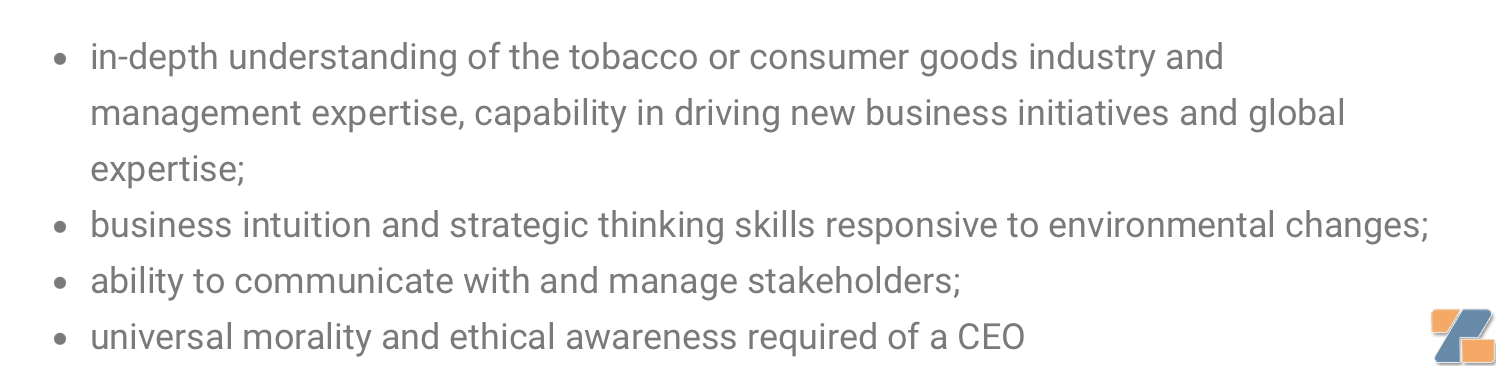 CEO& Recruitment Requirements published by KT G| Source: KT& G official website
After giving up his desire to seek re-election, Bai Furen said in an interview that he hopes to appoint the next CEO of a global leader who will lead the realization of future visions and promote higher growth of the company; but such a giant ship, in the process of turning in the new era. What obstacles will we encounter?
2FIRSTS will continue to track trends in KT G and the Korean tobacco market.