Black Market Dominance and Weak Regulation: Is Australia's Compliant Vaping Market Still Worth Enter
Two in-depth articles | Australia has fully implemented a ban on disposables for half a year; what is the current situation?
[Two Original] On social media platform Twitter, several users from Australia shared their experiences of legally purchasing e-cigarettes from New Zealand through prescriptions. They emphasized the legality of this action.
In fact, since May of this year, Australia has completely banned the sale of disposable e-cigarettes. The only legal way to purchase them is through prescriptions issued by general practitioners, either at pharmacies or overseas websites. Other purchasing methods, such as buying from tobacco shops or convenience stores, are considered illegal.
Why do e-cigarettes require a prescription? This is because the Therapeutic Goods Administration (TGA) of Australia believes that e-cigarettes may help smokers quit, so they are classified as "therapeutic goods" in the country. However, smokers must be diagnosed by a general practitioner to determine if they need to use e-cigarettes for "smoking cessation therapy," hence the prescription is also referred to as "nicotine replacement therapy."
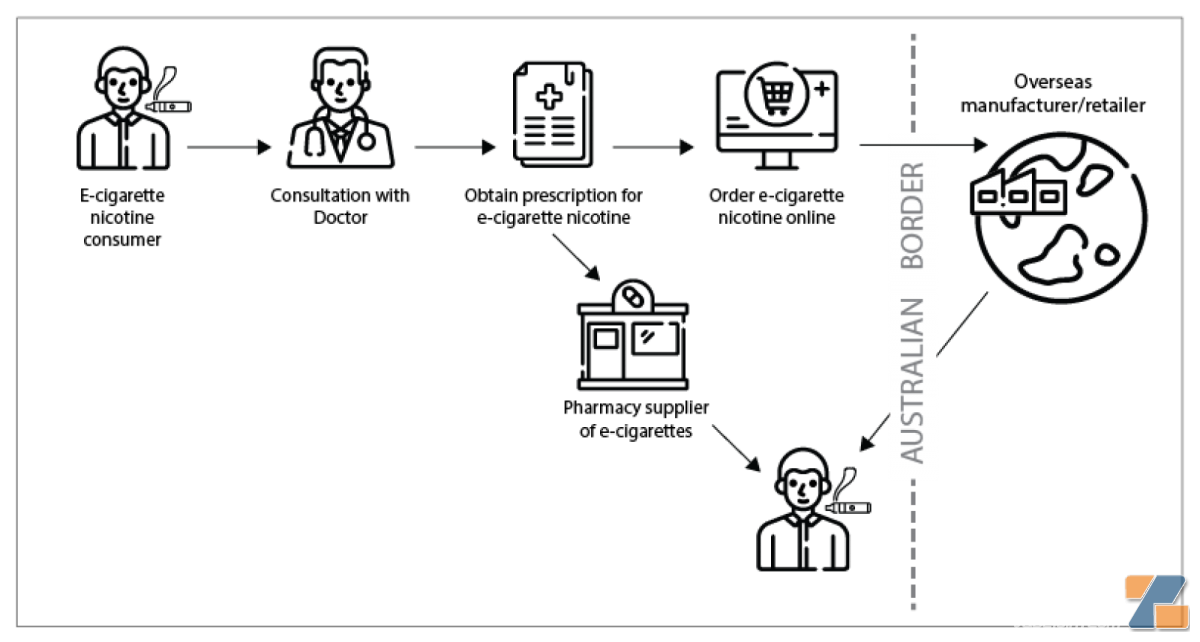
Compliance process for purchasing e-cigarettes in Australia | Source: TGA
So, how effective is the "prescription e-cigarette" model strongly promoted by the Australian government?
Sudden Increase in E-cigarette Bans
The policy for purchasing e-cigarettes through prescriptions in Australia did not just emerge this year; it has been in effect since October 1, 2021.
When the policy was first introduced, the Australian government stipulated that consumers must have a prescription to purchase all nicotine e-cigarette products. However, due to the large number of tobacco shops in Australia and the overly complicated process of obtaining a prescription from a general practitioner, this policy did not achieve the expected results.
In May of this year, the Australian government tightened its control over e-cigarettes again, implementing a comprehensive ban on disposable e-cigarettes and explicitly prohibiting unauthorized e-cigarette products from entering Australia.
This means that consumers who previously could ignore the "e-cigarette prescription" issue must now actively consult a general practitioner to obtain a prescription if they want to use e-cigarettes. Meanwhile, all e-cigarette businesses in Australia, including those in tobacco shops and retail stores, have had to cease operations.
Compliance Market Bound by Form
In Australia, Zhang Hua (a pseudonym) engaged in the e-cigarette business, detailed the process of obtaining e-cigarette prescriptions offline:
First, the "patient" needs to consult a general practitioner to obtain a prescription for e-cigarettes. The cost of the prescription is about 70 AUD (approximately 330 RMB). The treatment options include 3 months, 9 months, and 12 months, with the specific duration determined by the doctor based on individual circumstances. After obtaining the prescription, the "patient" also needs to contact a pharmacy to pre-order e-cigarettes, as most pharmacies do not regularly stock e-cigarette products.
Additionally, Two Original learned that e-cigarette prescriptions can also be issued online, but the cost is relatively higher.
On a website claiming to be "Australia's leading smoking cessation and nicotine e-cigarette harm reduction clinic," Two Original found that the site offers online e-cigarette prescription application services. Applicants need to provide basic personal information and smoking history, and pay a fee of 85 AUD (approximately 400 RMB) to obtain a prescription valid for 12 months.
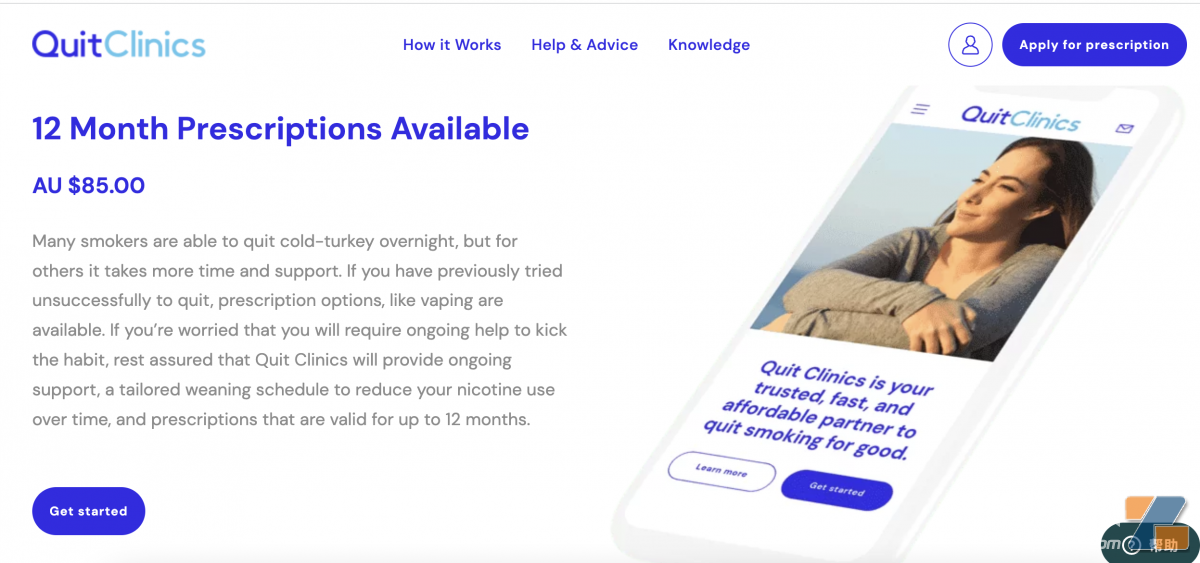 In an Australian online clinic, obtaining a nicotine e-cigarette prescription costs 85 AUD | Source: Quit Clinics
What kind of products can enter the pharmacy system? Zhang Hua stated that this requires distributors or importers to submit declarations to the local Australian government, and after approval, they need to find pharmacies willing to sell these products.
However, finding pharmacies willing to accept e-cigarette products is not easy. On July 5, Two Original reported that to persuade Australian pharmacies to sell the e-cigarette product VEEV, international tobacco giant Philip Morris International (PMI) actively relinquished 80% of the sales profit.
Moreover, Zhang Hua further explained that the e-cigarettes sold in pharmacies are 2ml refillable products with limited flavors, mainly mint and some basic flavors. The brands usually include one well-known brand from China, RELX (悦刻).
However, according to Zhang Hua, the legal e-cigarette business in Australia has almost no market, and prescriptions seem to be merely a formal policy requirement.
New Zealand Unexpectedly Profiting
Among the legal ways to purchase e-cigarettes in Australia, besides going to pharmacies, there is also a method called "personal import plan."
According to Two Original's understanding, this method also requires a prescription. After obtaining a prescription, consumers can purchase e-cigarettes from overseas e-cigarette official websites, and the seller will then ship the products to the consumers. This method allows consumers to choose brands and flavors without many restrictions.
However, the TGA stipulates that this method requires individuals to import no more than a 3-month supply of e-cigarettes (based on the manufacturer's recommended maximum daily usage), and in any 12-month period, no more than a 15-month supply.
Two Original learned that consumers using this method to purchase e-cigarettes mostly buy from New Zealand e-cigarette online stores.
Industry insiders familiar with the New Zealand market stated that there are many brands in the New Zealand e-cigarette market, but no absolute leading brand. One of the best-selling e-cigarette brands is Airspops, under the well-known British e-cigarette company AIRSCREAM.
Black Market Dominance
However, whether through "e-cigarette pharmacies" or the "personal import plan," their market share is quite limited. The main sales of e-cigarettes in Australia still heavily rely on the illegal market, with the black market occupying over 95% of the market share.
After the comprehensive ban policy was implemented in May, an Australian e-cigarette dealer expressed his views on this policy on TikTok. He openly stated that he would not close his business due to the government's new regulatory measures and would choose to continue operating in the "black market."
As of now, the e-cigarette ban policy in Australia has been in effect for five months, and it seems that many dealers share the same view as the aforementioned dealer. Zhang Hua stated that there are about 2,000 e-cigarette shops and tobacco shops selling e-cigarettes in the Sydney area.
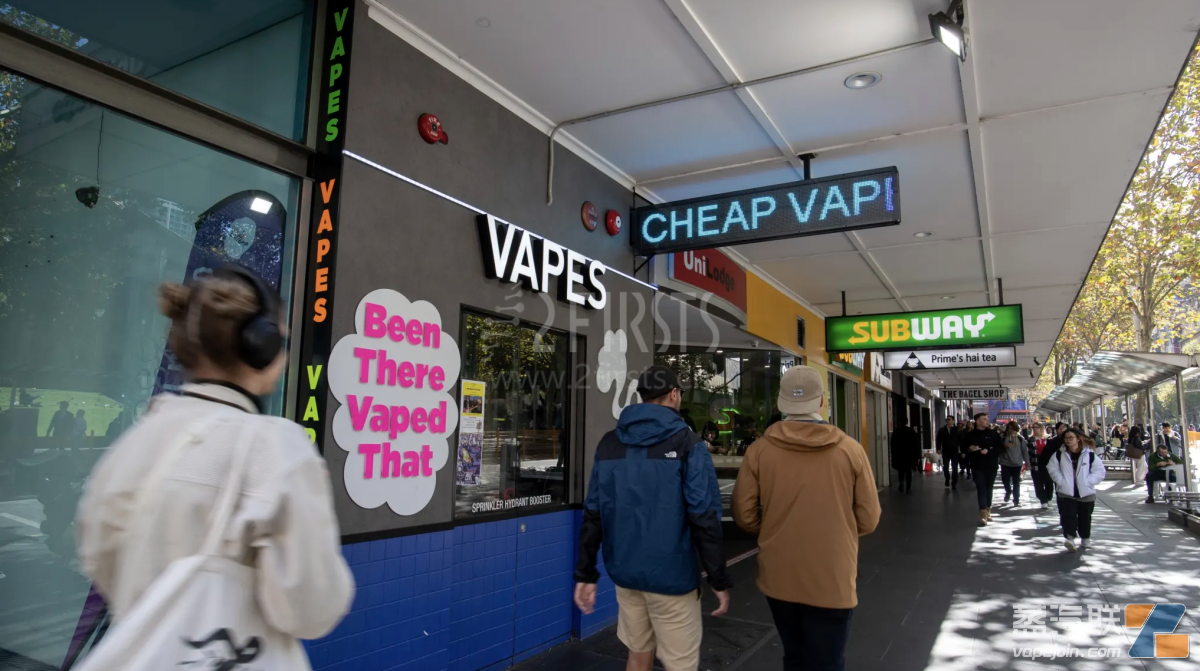
Electronic cigarette specialty store on the streets of Melbourne, a coastal city in southern Australia | Source: theage
Zhang Hua added that due to the relatively weak enforcement in Australia, although regulatory personnel occasionally check tobacco shops, overall penalties are not strict. Typically, the first violation results in a warning, the second may lead to confiscation of goods, and the third and subsequent violations may result in fines, while tobacco shops may be allowed to restart operations by changing names or licenses even after being shut down.
It is understood that the mainstream e-cigarette brands in Australia's black market mainly include IGET, HQD, GUNNPOD, and WAKA. According to Zhang Hua, IGET holds the largest market share, estimated to be 60%-70%, while the other three brands account for 20%-30% of the share.
However, due to Australia's strict regulations on e-cigarette imports, unauthorized e-cigarette products face significant risks of being detained when entering the market. An industry insider specializing in e-cigarette logistics revealed to Two Original that Australia's e-cigarette import policies are extremely strict, making compliance procedures difficult to navigate. The number of logistics companies capable of delivering e-cigarettes to Australia is very limited.
Will the Future Ban Be Lifted?
According to data released by the Australian Department of Health, over 3.5 million residents aged 14 and older use cigarettes or e-cigarettes, accounting for about 13.5% of the total population. This proportion is comparable to the smoking rate in the UK, the leader in the European e-cigarette market, which is 13.3%.
Additionally, according to the export data released by the General Administration of Customs of China in September, China exported e-cigarette products worth $17.39 million to Australia. This also indicates that there is considerable demand for e-cigarettes in the Australian market.
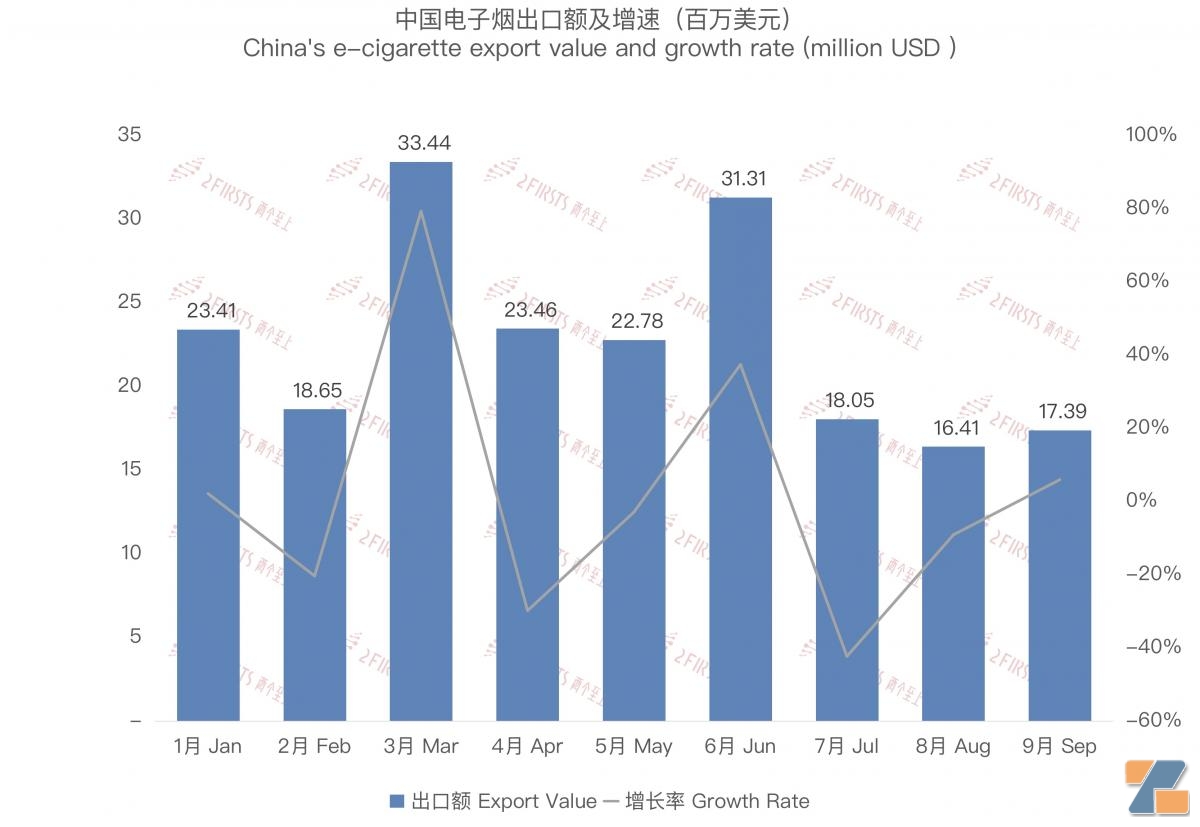
Export value of e-cigarettes from China to Australia from January to September 2023 | Source: Two Original
Many tobacco harm reduction experts and scholars are concerned that Australia's strict e-cigarette control policies may lead to a more prosperous black market, which contradicts the original intention of prohibiting e-cigarette products in the country.
At the 2023 Global Tobacco and Nicotine Forum (GTNF), Colin Mendelsohn, a former member of the Victorian Parliament in Australia, stated that the Australian government has failed to effectively implement tobacco harm reduction (THR) measures. Caroline Beaumont, founder of the prescription service company MedicalNicotine, also stated that the prescription e-cigarette system in Australia has not completely eliminated the use of non-prescription e-cigarettes, and this approach remains debatable.
Meanwhile, Dr. Colin Mendelsohn, a tobacco control expert in Australia, bluntly stated in an exclusive interview with Two Original that the prescription model for e-cigarettes in Australia is a failed model.

Dr. Colin Mendelsohn, a tobacco control expert in Australia | Source: GTNF
Currently, many tobacco harm reduction experts and international tobacco companies are actively calling for and lobbying the Australian government to lift the ban on disposable e-cigarettes and to re-establish new regulatory policies. Whether the Australian government will heed these calls to open the e-cigarette market remains uncertain.