Vape Shop Owner Shows Off Monthly Orders Exceeding 50,000, Sparking Controversy
Recently, a vape shop owner shared insights on the e-cigarette national standard market terminal situation on a well-known forum, expressing great optimism about the market. However, this information sparked widespread discussion and revealed some hidden issues within the market.
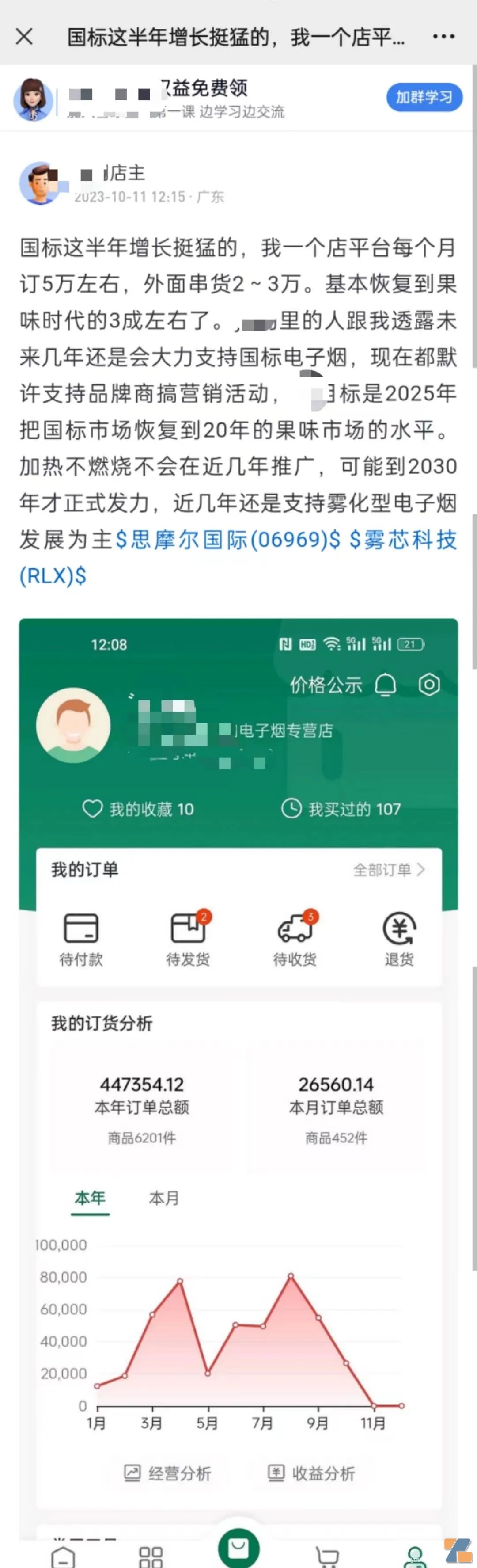
(Screenshot from the internet)
Despite a crackdown on illegal fruit-flavored e-cigarettes in March and April this year, there seems to be a resurgence of non-compliant fruit-flavored products recently, which has excited some e-cigarette shop owners, and even the herbal vapor market has prospered.
In this context, the vapor chief also shared some information I learned:
Challenges faced by e-cigarette brands in the national standard market
Market sales are declining, and revenue is sharply reduced, mainly due to the impact of the fruit-flavored market and insufficient product strength of national standard products.
Brand companies are generally facing losses, declining sales, thin profit margins, and high taxes, making it difficult to cover costs and operating expenses, leading to survival challenges.
Lack of confidence in the future market; many licensed brand companies are worried about market prospects.
User loss is rapid, with a small number of active users and extremely low penetration rates; the industry faces significant challenges (industry experts indicate that in 2021, there were about 12 million e-cigarette users, while the number of active users in China is about 2 million).
Promotion is hindered; brand activities and marketing budgets are being cut, forcing many brands to significantly reduce their advertising budgets, leading to stagnation in promotional needs. Several brands have eliminated their marketing departments, and several industry media outlets have gone out of business.
Due to policy restrictions and the sluggish performance of the national standard market, capital is hesitant to enter, severely impacting small and medium-sized brand companies (after a year of running, small and medium-sized brand companies have basically emptied their wallets).

From the terminal feedback between October and December last year, some e-cigarette stores have hit rock bottom and are struggling to recover, like underdeveloped "birds" facing extinction before they even leave the nest. In early December last year, a second-tier brand announced the direct closure of over twenty direct stores in the Shanghai area, and the original direct stores of various brands have vanished, making them seem a bit "underdeveloped" compared to the vast e-cigarette consumption market (from originally 70,000 stores to currently only 20,000 active stores).
After a year of development and adaptation, although the market is gradually recovering, the market size of new national standard products is still in the climbing stage. In the long run, as illegal fruit flavors are controlled and new products continue to iterate, terminal demand will gradually recover.
Sales are stagnant, and closures are burying the industry; product strength needs urgent improvement.
Sales success is determined at the terminal, and the competition for terminals is exceptionally fierce. The vapor chief deeply visited e-cigarette terminals in Shenzhen, intending to investigate the performance of national standard products already on the shelves. However, it was found that most national standard products only provided a "stock" value that allowed consumers to see the products, severely lacking the "must-buy" effect.
Currently, national standard products do not have significant differences in flavor characteristics among brands, and there have yet to be any unique or blockbuster flavors. Based on the experience of products launched in the past year, the lack of product strength is an unavoidable issue that still far from meeting user expectations. Currently, each brand is in the process of exploring market demand and improving product strength.
It is not difficult to see that among the first batch of licensed companies last year, during the transition period, many were only focused on "getting products approved"; previously, everyone lacked a data foundation for the tobacco flavor market (main flavors were also strictly regulated), all starting from the same starting line. To get brand products approved and on the market as soon as possible, they could not meticulously refine flavor development and lacked sufficient consumer data support, essentially launching products in a bare state. Especially for small and medium-sized brands, among dozens of flavor products sent for testing, having 2-3 pass the review is already a reason to celebrate.
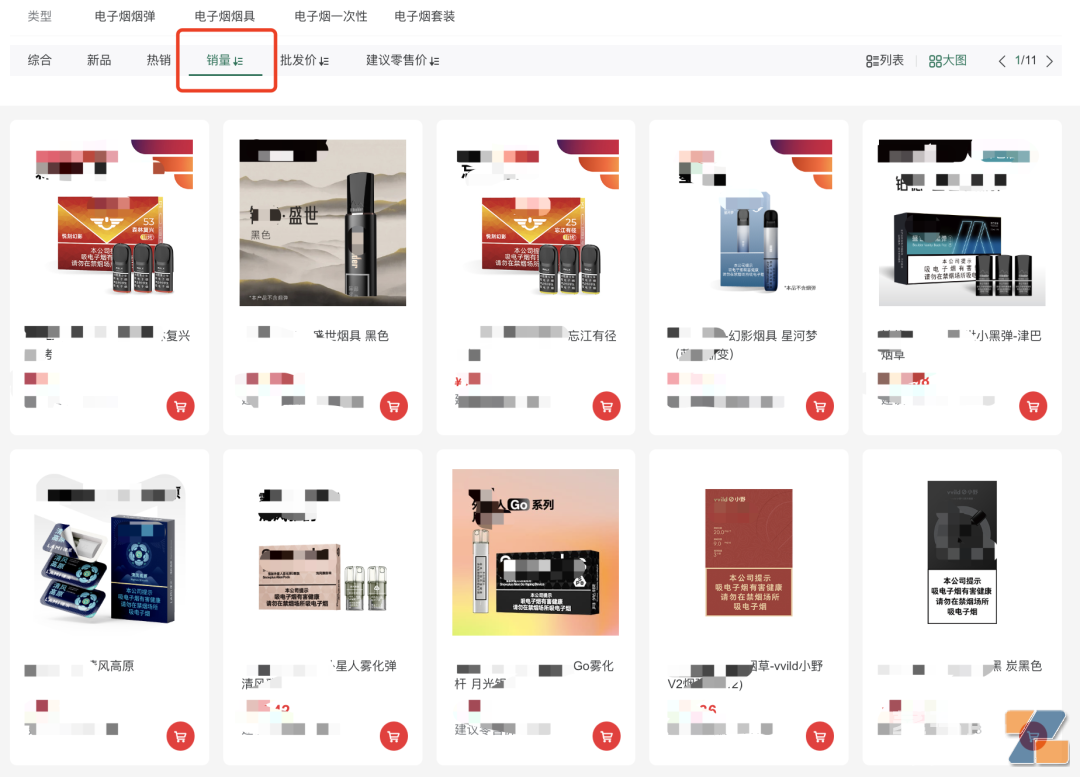
(A certain regional platform shows)
After a year of sales promotion, we can see that 80% of the flavors that brands can launch are still in single digits (with platform restrictions on SKU numbers). Low sales and inability to move products have led to tobacco inventory, forcing many brands to delist their products. In the process of introducing new products to regional markets, how effective is the initial store order placement? The second order quantity and cycle, can they meet the expected goals? These are often among the most critical factors determining the success or failure of new products in regional markets. For many stores, especially large store owners, the initial order placement for new products may be done quickly, but market activation after the product order ends is often slow. Once "sales stagnate," it means that this new product or brand leaves a bad impression on the terminal store. More troubling is that if inventory accumulates in tobacco warehouses and cannot be sold within a certain period, the brand's products may be directly delisted from the local e-cigarette unified trading management platform, and the accumulated inventory will be returned to the brand, making store owners even more hesitant to restock.
Currently, most regions' tobacco departments forecast order demands for each brand mainly based on bottom-up reporting from stores. Based on demand forecasts, they replenish stock periodically within a week or a certain cycle, with orders established on a real-time rolling sales basis.

The current state of the industry is extremely competitive, resembling the rampant situation of "knockoff phones"; product homogeneity and competition are severe. Brand marketing efforts are mostly superficial, creating a buzz with store owner tasting gift packages, making posters, posting tweets, and sharing on social media. However, the content of these carriers is fleeting, remaining within the company and only among a few store owners' social circles, merely showcasing strength to competitors and store owners. Additionally, the more important value for companies is often overlooked, especially for factory-type brand companies. Currently, besides RELX, no other brand has achieved this.
Faced with these challenges, the e-cigarette market needs to find innovative strategies and methods to cope with the ever-changing market environment. Understanding market dynamics is crucial for practitioners in the e-cigarette industry. In the future, we will delve deeper into the current status of the national standard market and gather valuable suggestions from brand terminal operators and store owners. If you wish to learn more, please continue to follow the vapor chief, break through difficulties, and regain growth momentum.