Is the U.S. PMTA for Vaping Products a Burden or a Golden Ticket?
"PMTA certification has reduced or eliminated flavor, so it may not be necessary to go that long. Thousands of companies have submitted six to seven million applications, but so far, only 23 have been approved. As far as I know, several companies have submitted more than a million applications themselves. The irony is that every approved company is a big tobacco company, and they only account for the entire company.e-cigarette marketA small part of it."
The second irony beyond that is that those so-called approved products are something no one wants.
What is PMTA
PMTA, the full name of the Premarket Tobacco Application, stands for tobacco premarket application. This is the case for the U.S. Food and Drug Administration (FDA)new tobaccoA market access license has been developed for products such as:
As the U.S. federal governmente-cigarettesControl measures for category products will be gradually upgraded and increased, and PMTA (Tobacco Pre-Market Application) will be the most important domestice-cigarette enterprisesA threshold that cannot be circumvented to enter the U.S. market is either to follow the trend or to retreat and give up.
The PMTA requires that the legal promotion of any new tobacco product needs to be reviewed and approved by the FDA. The FDA needs to comprehensively consider whether the product is beneficial to public health (treating smokers and non-smokers as a whole). After passing the test, the FDA will issue Premarket Tobacco Product Marketing Orders.
Family Smoking Prevention and Tobacco Co.The ntrol Act (Home Smoking Protection and Tobacco Control Act) gives the FDA (Food and Drug Administration) the right to regulate traditional tobacco for the first time, but the scope of supervision is limited to cigarettes, cigarette tobacco, smokeless tobacco and homemade cigarettes.
FDA approves the first premarket tobacco application PMTA, awarded to SwedenMATCH smokeless tobacco products marketed by snus, a north american company.
On May 10, 2016, the FDA issued new Deeming Tobacco Products Regulation rules to regulate all tobacco products, including e-cigarettes, cigars, hookah and pipe cigarettes, which will take effect on August 8, 2016. The new regulations officially include e-cigarettes among regulated tobacco products, which means that e-cigarettes are fully included in the PMTA. PMTA's terms on e-cigarettes require that any ENDS (Electro) after August 8, 2016nic nicotine delivery system) must obtain PMTA before it can be sold in the U.S. market, and alle-cigarette brandsBoth manufacturers and manufacturers must submit applications before August 2022. Products marketed before August 8, 2016 must obtain PMTA certification before August 8, 2020 before they can continue to be sold.
Since then, the FDA has been able to legally regulate ENDS (e-cigarettes, Electronic Nicotine Delivery Systems) manufacturing, importing, packaging, labeling, advertising, promotion, sales and distribution. For example:
Manufacturers in the United States are required to register every tobacco production site in their factories with the FDA and report any harmful and potentially harmful substances. (Companies outside the U.S. do not need to register for the time being, but will have to register in the near future)
U.S. manufacturers are required to submit lists of tobacco products to the FDA.
ENDS manufacturers are required to submit a list of ingredients for each product to the FDA.# p#pagination title #e#
Dangerous modifiers such as light, low, and mild cannot be used to describe tobacco products.
Free samples of tobacco products (such as e-cigarettes, etc.) are not allowed to be sold (except for B2B), etc.
In July 2017, the FDA announced a comprehensive plan for tobacco and nicotine regulation, extending the PMTA application submission deadline for ENDS(e-cigarettes) to August 8, 2022.
On March 14, 2019, the FDA announced that it would recommend amending the current ENDS (e-cigarette) compliance policy (July 2017 Policy). The amendment draft is particularly aimed at flavored e-cigarettes, including: 1. Some flavored e-cigarettese-cigarette productsWill no longer be sold. 2. The PMTA deadline for flavored e-cigarettes will be advanced by one year to August 8, 2021. 3. Flavoured cigars will no longer be sold. 4. Suggest that e-cigarettes, like traditional cigarettes, cannot be promoted through social media.
On June 11, 2019, the FDA finalized the "Electronic Cigarette Device (ENDS) Tobacco Product Premarket Application" guidance, further clarifying the tobacco product premarket application (PMTA) process for manufacturers of e-cigarettes and related tobacco products. The guidance is intended to assist people submitting tobacco product premarket applications (PMTA) for electronic cigarettes (ENDS) under section 910 of the FD&C Act (21 USC 387j). The guidance explains what products are, when the PMTA process is needed, and (ENDS)'s general procedures for premarket applications for tobacco products; including what information the FD&C(Federal Food, Drugs, and Cosmetic) Act requires to be submitted in the PMTA; and information that the FDA recommends that products can be submitted can be beneficial to public health.
According to the FDA, PMTA applications are relatively complex, and the information that needs to be submitted includes ingredients, product design, possible health risks, etc., and costs hundreds of thousands of dollars. So far, only IQOS and one Swedish company have passed the PMTA.
PMTA's review projects include nine aspects:
apply for qualification
basic information
descriptive information
product samples
product label
scientific findings
Product attributes and production processes
in vivo toxicology studies
HPHCS (Hazardous and potentially harmful ingredients)
The cost of PMTA will take about two years from start to adoption, and the total project cost is expected to be US$117,000-US$466,000.
Which domestic companies have PMTA
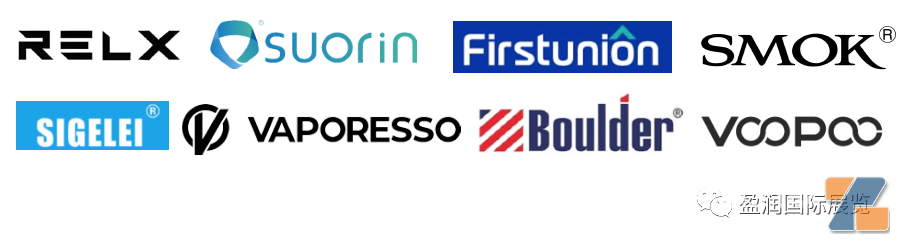
At present, some domestic powerful e-cigarette companies have begun to launch the PMTA program.
- #p#pagination title #e#
yueshi(RELX)
You and I Group (YouMe GROUP) Brandssuorin
Avipus(SMOK)
Simmore's brandsVAPORESSO
Jier TechnologyitsVOOPOO
first Union
Segreysigelei
bode(Boulder)
U.S. e-cigarette policy in recent years
Restrictions on sales to minors
As of March 31, 2023, all 50 states, the District of Colombia, Guam, the Northern Mariana Islands, Palau, Puerto Rico and the United States Virgin Islands have passed legislation banning the sale of e-cigarettes to minors.
American Samoa and the Marshall Islands do not have any legislation prohibiting the sale of e-cigarettes to people under a certain age.
Electronic cigarette retail license
As of March 31, 2023, 34 states (Alabama, Alaska, Arkansas, California, Colorado, Connecticut, Florida, Georgia, Hawaii, Idaho, Indiana, Iowa, Kansas, Louisiana, Maine, Maryland, Massachusetts, Minnesota, Montana, Nebraska, Nevada, New Hampshire, New Jersey, New Mexico, New York, North Dakota, Ohio, Oregon, Pennsylvania, Rhode Island, Texas, Utah, Vermont and Washington), the District of Colombia, the Northern Mariana Islands, Palau and the U.S. Virgin Islands islands have passed legislation requiring a retail license to sell e-cigarettes over the counter.
Smoke-free indoor air laws, including e-cigarettes
As of March 31, 2023, 17 states (California, Colorado, Connecticut, Delaware, Hawaii, Massachusetts, Minnesota, New Jersey, New Mexico, New York, North Dakota, Ohio, Oregon, Rhode Island, South Dakota, Utah and Vermont) The District of Colombia and Puerto Rico have passed comprehensive smoke-free indoor air laws, including e-cigarettes. These laws prohibit smoking and the use of e-cigarettes in indoor areas in private workplaces, restaurants and bars.
Effective October 1, 2018, Alaska has implemented new legislation to ban smoking and the use of e-cigarettes in indoor areas in private workplaces, restaurants and bars. The legislation also includes provisions that municipalities can opt out of these through a voter referendum. Because Alaska municipalities are able to exempt the legislation, it is not considered a comprehensive smoke-free indoor air policy that includes e-cigarettes.
Electronic cigarette tax
As of March 31, 2023, there are 30 states (California, Colorado, Connecticut, Delaware, Georgia, Illinois, Indiana, Kansas, Kentucky, Louisiana, Maine, Maryland, Massachusetts, Minnesota, Nevada, New Hampshire, New Jersey, New Mexico, New Hampshire) York, North Carolina, Ohio, Oregon, Pennsylvania, Utah, Vermont, Virginia, Washington, West Virginia, Wisconsin and Wyoming), the District of Colombia, Puerto Rico and the United States Virgin Islands have passed legislation requiring a tax on e-cigarettes. Twelve states (Connecticut, Delaware, Kansas, Louisiana, New Jersey, North Carolina, Ohio, Utah, Virginia, Washington, West Virginia and Wisconsin) tax e-cigarettes per milliliter of liquid or consumable materials. Fifteen states (California, Colorado, Illinois, Indiana, Maine, Maryland, Massachusetts, Minnesota, Nevada, New York, Oregon, Pennsylvania, Utah, Vermont, and Wyoming), the District of Colombia and the U.S. Virgin Islands tax e-cigarettes at a percentage of specific costs. Georgia, Kentucky, New Hampshire and New Mexico have closed e-cigarette systems per milliliter of liquid (pre-installed #p #pagination title #e #the cartridge) and open e-cigarette systems (refillable cartridges) are taxed at a percentage of the specified cost. Puerto Rico taxes the e-cigarette device itself (if it is disposable) and the nicotine cartridge per milliliter of consumable liquid.

Norm Bour: Current situation of the e-cigarette industry
"The more things change, the more they remain the same", which has been around for nearly two centuries, illustrates the fact that the small picture of life may change, but the larger picture will not.。e-cigarette industryand all the challenges and changes that have taken place in the past decade are the exact opposite of this famous saying.
Ten years ago, the e-cigarette industry was an epidemic in the Wild West, with e-cigarette stores everywhere and everyone making electronics in their bathtub at home.smoke oil。Regulation and competition have changed all that, bringing a degree of "order" to the market, but with state and federal regulations bombarding the industry and the FDA creating onerous and hard-to-achieve guidelines, the e-cigarette space has truly become the way to survive.

I recently attended an e-cigarette event in Phoenix, gathering dozens of top manufacturers, distributors, and buyers, and everyone generally lamented the same concern: business decline.
Why did business decline?
There are many reasons, including strict regulations, which are now more strictly enforced, but overall, the reasons are much simpler. The sharp rebound of COVID-19 in 2020 - 22 has given consumers more money in their pockets and given them more time. These problems add up to create an artificial bubble that many believe will persist. But time has passed. Coupled with inflation that has pushed up food and other living costs, some formerly necessities have now become unaffordable luxuries.
"It's a balancing act between the addictive nature of some nicotine products and buyer budget constraints," said Jamie Reed of Simple Vape Supply in Orange County, California. "I've been working in this industry for more than a decade, and it's the purest form of evolution and based on 'survival of the fittest.'"
Simple produces and distributes more than 100 different types of nicotine cartridges, including disposable cartridges, including CBD、DELTA-8 and KrATOM Various versions of.
"It's interesting," Reid added. "When I was hired, I was told there was an 'expiration date' and we both knew the industry might not last long and the cream would rise (to its peak). We plan to be one of the surviving companies, and we have been able to adapt to the times."
Her company and many that still exist are mostly run by rebels, radicals and envelope promoters. Many people have actually made changes accordingly, but some have just learned how to "play the game" and appear to be following the rules on the surface, but the actual situation may be different.
"We know that the COVID-19 epidemic is just a one-time incident. People were at home, they had government money to spend, and no one checked them or asked for any urine tests. The boom of Delta Air Lines (8, 10) has really exacerbated this trend, and everyone has joined the trend,"she said excitedly.
The CBD series is an example of how the industry is proceeding and continues to resist. The FDA said you can't do this, so the industry said,"Fuck you, let's do this."
As regulation eliminates or reduces product selection, almost every industry will do the same: adapt; repurpose or reposition.
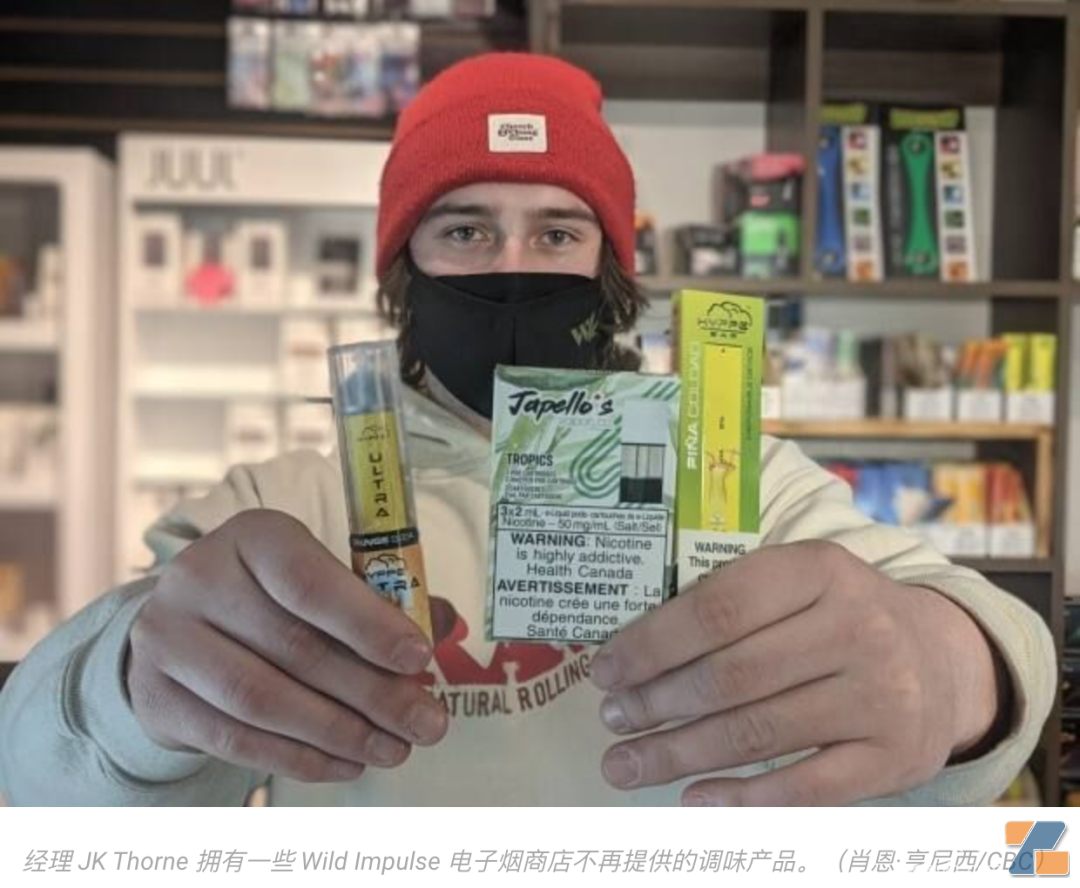
Among the dozens of people I interviewed at the event, the numbers (from shop owners and manufacturers) were very consistent, with most of them down by 20% to 30%. Many say the procurement scale is below normal, and a typical $10,000 order is now only half the normal level. They see some stores closing, but most stores are seeing revenue decline. At the same time, on the other side of the equation, e-cigarette liquid manufacturers trying to "play the game" correctly and file premarket tobacco product applications (PMTA) with the Food and Drug Administration are frustrated with the time required and how to get the job done. A lot of money is thrown into a (seemingly) black hole.
 #p#Pagination Title #e#
I spoke with one of the owners of a large e-cigarette manufacturing and distribution company in Idaho, and he shared some facts and data about the process they tried to make their products "legal". In the FDA's view, legal issues have caused his company to waste more than $5 million in the past few years trying to obtain authorization.
Mike Larsen is a detailed and dedicated e-cigarette expert who has worked in the industry for more than a decade and works for Lotus Vaping Technology, which was founded in 2011. As a partner and sales director, he is on the front line of everything the company does and rides a roller coaster every day to maintain legitimacy and compliance.
"Disposable products really change the rules of the game," he said,"They diminish the role of e-cigarette stores where people used to seek education and guidance." Mergers and closures have also reduced the number of stores by 30% to 40%, and there are now larger conglomerates taking on the work of many stores."
We talked about a possible nationwide flavor ban, and he said he was skeptical.
"PMTA certification has reduced or eliminated flavor, so it may not be necessary to go that long. Thousands of companies have submitted six to seven million applications, but so far, only 23 have been approved. As far as I know, several companies have submitted more than a million applications themselves. The irony: Everyone that gets approved is a large tobacco company, and they only account for a small portion of the entire e-cigarette market."
The second irony beyond that is that those so-called approved products are something no one wants.
We discussed whether these approvals were fair or the result of favoritism and bias, and he laughed because we all knew the answer.
"When you look at the PMTA process and strict requirements, you see that they are clearly formulated to the advantage of large companies, established companies, and that 'small companies' have little chance in this twisted game. You can't even budget for something like this,"he continued. "The original application cost more than a million dollars, and I know of several companies that invested another 10 million dollars, but they were all rejected. Who has such strong financial resources? In 2016, I could list more than 150 well-run and highly liquid companies; today I can name about three dozen."
This is why the number of companies manufacturing tobacco and e-cigarette products has halved and is decreasing year by year. The FDA continues to change the rules of the game.
"Something happened here, but it's unclear what it is," is the opening line of a song about the changes taking place in society. The Buffalo Springfield song may not have anything to do with e-cigarettes, but the message says the same thing: something is happening here, although it may be clearer than we realize. We all knew this would happen; it was predicted ten years ago.
In the field of e-cigarettes, the more changes... the more changes there will be.
Norm Bour is the founder of VapeMentors and works with e-cigarette companies around the world.