What Policies Should You Understand Before Expanding Into Africa’s Vaping Market?
E-cigarette use in South Africa
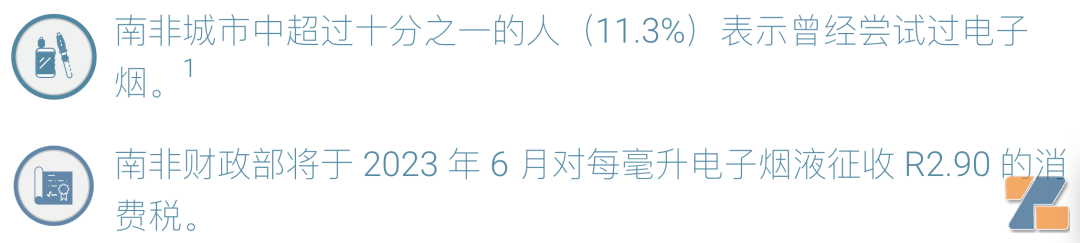
·Per millilitere-cigarettesLiquid is subject to R2.90 consumption tax
·More than 1 in 10 people have tried e-cigarettes
E-cigarettes-products
Electronic Nicotine Delivery System (ENDS)
These products heat nicotine-containing liquids that may be synthesized or naturally extracted from tobacco leaves. ENDS may contain fragrances and other ingredients to create aerosols (e.g.: Twisp)
Electronic Non-Nicotine Delivery System (ENNDS)
ENNDS heats non-nicotine liquids that may contain flavors and other ingredients to create aerosols (e.g.: Eciggies berries or cinnamon concentrate)
Heated Tobacco Products (HTP)
HTP (also calledheating non-burningProducts) consist of heat-treated tobacco leaves that allow users to inhale nicotine aerosol (e.g.: IQOS, Glo)
In South Africa, there are 2,661 e-cigarette supplements, 171 different types of hardware, and more than 231 unique e-cigarette websites.
Prevalence of e-cigarettes-in South African cities

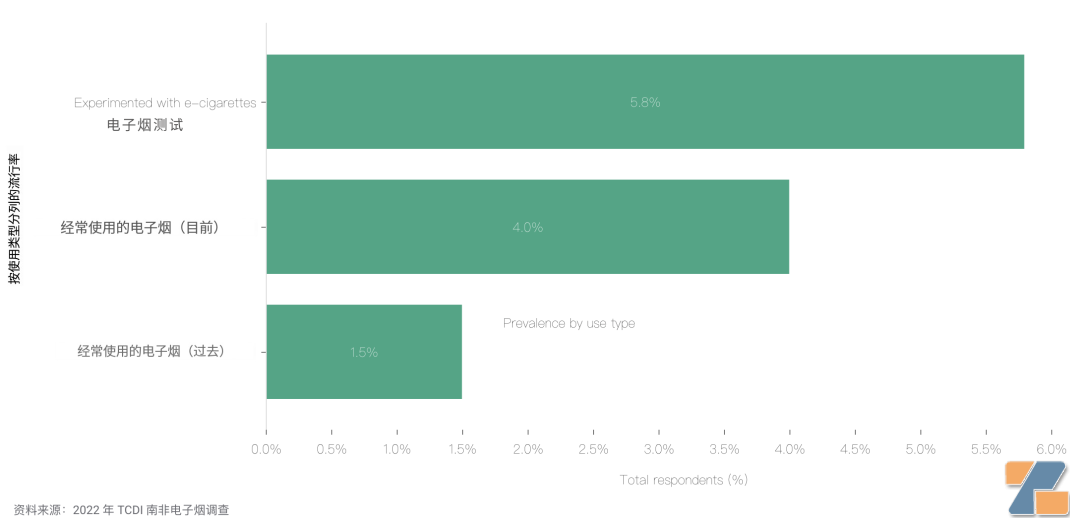
4.0% frequently used e-cigarettes (defined as at least once a week) during the survey. More than half (58%) of these users also currently smoke. Smokers.
1.5% used e-cigarettes regularly in the past, but later quit.
5.8% of people have tried e-cigarettes (defined as at least one puff, but never one puff per week as in a typical month).

E-cigarette users-by type
dual user
Dual users are individuals who currently regularly use e-cigarettes and combustible cigarettes.
The demographics of dual users are very similar to those of e-cigarette users. Compared with other populations, dual use is less common among black people (1.4%), more common among men (3.1%) than women (1.4%), and more common among young people (3.2% among people under 34)), and prevalence decreases with age.
E-cigarette users and combustible cigarette smokers
The number of urban South African people who have smoked or tried combustible cigarettes (26.8%) is twice as high as the number of people who report trying or using e-cigarettes (11.3%).

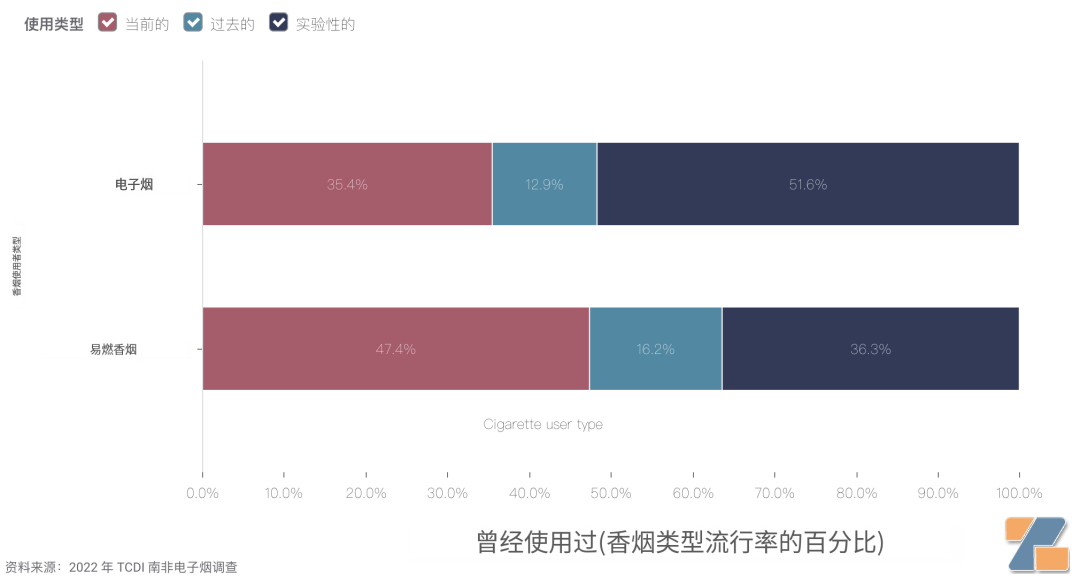
Among those who have tried e-cigarettes, 35% are current users, while 47% smoke combustible cigarettes.
The most common form of e-cigarettes is experimental use (52%), while for combustible cigarettes, it is current use (47%).
For e-cigarette users (13%) and combustible cigarette users (16%), frequent use in the past is the least common form of use.


The majority of people who currently use combustible cigarettes and/or e-cigarettes only smoke combustible cigarettes (72%), while dual users (16%) are compared to those who only smoke e-cigarettes (12%).

Order of use-e-cigarettes and combustible cigarettes

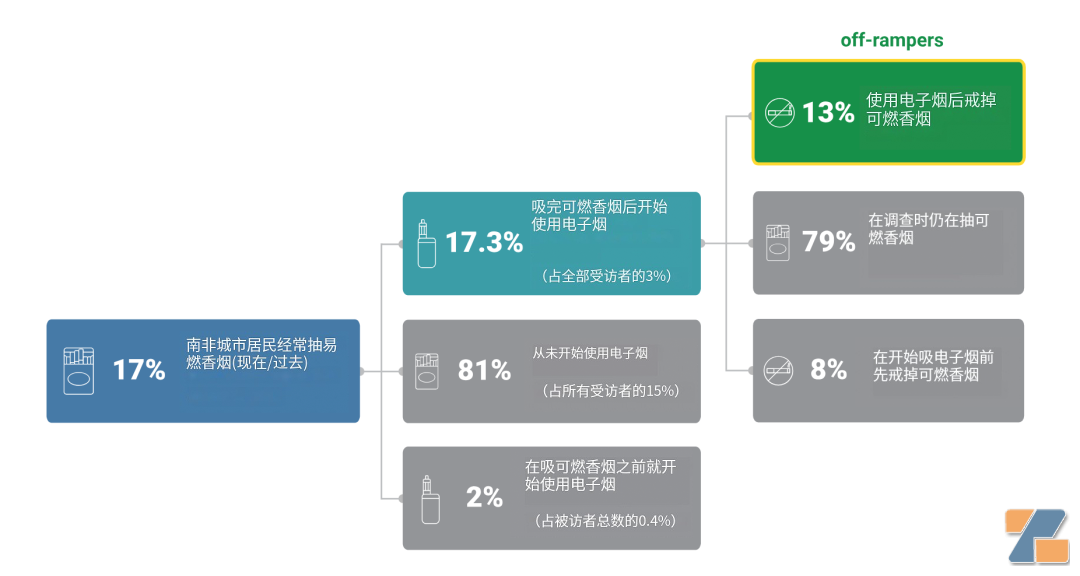
Among the 5.5% of urban South Africans who regularly use e-cigarettes (whether now or in the past): The majority (61%) started smoking combustible cigarettes before using e-cigarettes, while 39% had no previous history of smoking combustible cigarettes.
Among people with no history of smoking: One in five (19%) started smoking (on-ramper) after using e-cigarettes. Further exploration is recommended to understand why they started smoking.
Among intruders: The majority (88%) were still smokers at the time of the survey. This is equivalent to 5.6% of all e-cigarette users and 0.3% of South Africa's urban population.


Among the 17.1% of urban South Africans who regularly smoke combustible cigarettes (whether now or in the past): 17.3% started using e-cigarettes after starting smoking combustible cigarettes.
Among people who started using e-cigarettes after smoking combustibles: One in eight (13%) later quit smoking (off-ramper). Further exploration is recommended to understand why they quit smoking.# p#pagination title #e#
For many smokers, quitting smoking is difficult and relapse is common. Most clinical trials only characterize lifelong smoking cessation in people who have quit smoking for at least 6 or 12 months. 11 12 In the TCDI sample, 44% of respondents classified as smokers had quit smoking less than a year before the survey, and 27% of respondents had quit smoking less than 6 months before the survey. Therefore, it should be noted that for approximately half (44%) of downcomers, lifelong smoking cessation is uncertain.

* Explanation on prevalence statistics: The 2022 South Africa e-cigarette Survey defines regular smokers as those who have smoked at least 100 cigarettes in their lifetime and currently smoke at least once a day or week. The TCDI prevalence page reports statistical data on South African smoking rates in the GATS in 2021.
The GATS definition of current smokers differs from the TCDI definition because it does not limit current smokers to:
1)Smoked at least 100 cigarettes in his life
2)Current smokers smoke at least once a week
In addition, the definition of GATS includes both hand-made and manufactured cigarettes, while South Africa's 2022 e-cigarette survey only includes manufactured cigarettes. Differences in current smoker prevalence between these pages are due to these different definitions.
Consumption tax-for e-cigarettes

The e-cigarette consumption tax will be implemented at a rate of R2.90 per milliliter of e-cigarette liquid, regardless of the nicotine content. This rate is one of the highest in the world.
This new e-cigarette tax is an important step for South Africa. In addition to imposing a consumption tax on the amount of e-liquids, the Taxable Product Economics Research Unit (REEP) also recommends that the Ministry of Finance impose a minimum tax floor of R50 for all containers.
The recommendation was made because the REEP showed that the tax burden of 2.90 rand per milliliter tax proposal would always be lower than the tobacco tax burden, while a tax of 5 rand per milliliter would attempt to partially solve the problem, but not effective enough. REEP shows that per unit of electronsmoke oilA tax floor of 50 rand could solve this problem. Given the pollution and environmental damage caused by disposable cigarette devices,
It is also recommended that they be taxed in the future.
Policy-for e-cigarettes
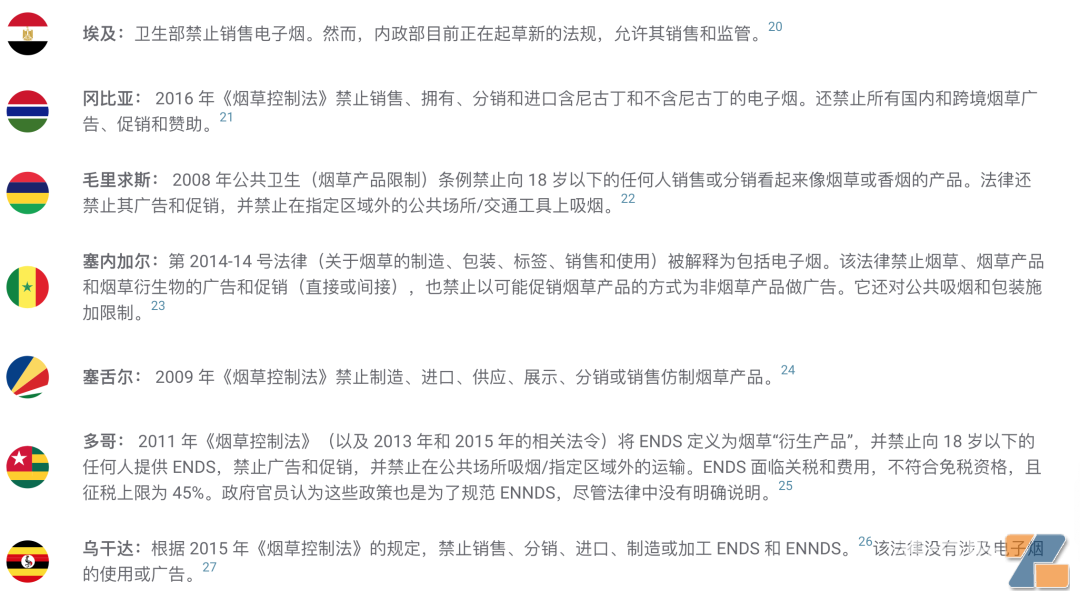
In view of growing evidence of the harm caused by e-cigarettes, more than 100 countries have passed laws regulating e-cigarettes, including African countries such as Egypt, Gambia, Mauritius, Senegal, Seychelles, Togo and Uganda. The most common forms of regulation are taxes, sales bans, use restrictions (in public places without e-cigarettes), purchase age requirements, and advertising and promotion bans.
The World Health Organization (WHO) recommends that regulators in jurisdictions that have not banned e-cigarettes consider monitoring harmful compounds such as nicotine, aldehydes and carbon monoxide in e-cigarette emissions and reducing their levels as appropriate, based on WHO recommendations and country-specific circumstances.
South Africa lags behind other countries in e-cigarette legislation and has not yet promulgated the draft Tobacco Products and Electronic Delivery Systems Control Act, which proposes to treat e-cigarettes as traditional tobacco products to regulate their use, marketing, sales and taxation.
To protect public health, comprehensive regulatory measures are needed to address e-cigarette advertising, marketing and sponsorship issues.
Demographic data for e-cigarette advertising in South Africa is needed to inform public health plans, practices and policies. However, the data available is quite limited, and one study analyzed e-cigarette advertising exposure in 2017. This study shows that:
20% of the samples said they had been exposed to e-cigarette advertisements. By age, exposure was the most common among people aged 16 - 19 (24.6%). nbsp;
The main sources of exposure were stores (40.7%), shopping centers (30.9%) and television (32.5%). nbsp;
Among those who know about e-cigarettes, 61.2% believe that "e-cigarette advertisements and promotions may give teenagers the idea of smoking traditional cigarettes";62.7% believe that "e-cigarette advertisements and promotions may give quitters the idea of starting smoking again";59.5% support the statement that "e-cigarettes should be banned indoors like traditional cigarettes."
Regarding the passage of the Tobacco Products and Electronic Delivery Systems Control Act, it was found thate-cigarette industryThe commissioned report distorted the potential impact of restricting e-cigarette advertising and promotion, mainly by significantly underestimating the popularity of e-cigarettes. - Cigarette use in South Africa. In addition, a nationally representative study shows that the number of e-cigarette users is much larger than the number provided in the industry commissioned report. By underestimating the prevalence of e-cigarette use among the population, these reports also underestimate the income-generating capacity of a potential e-cigarette consumption tax proposed by South Africa's National Ministry of Finance. Regulation of e-cigarettes will benefit South Africa's public health.
E-cigarettes: Spice Ban
By 2022, more than 30 countries will not allow the sale of e-cigarettes as consumer goods, and thus will not allow the sale of flavored e-cigarettes.
Among the countries allowed to sell, six have national bans on flavors other than tobacco flavors (Finland, Hungary, the Netherlands, Ukraine, Lithuania, and China), three have banned flavors other than tobacco and menthol (Denmark, Estonia, and the Philippines, which were later revoked), and two countries (Canada and the United States) have established local restrictions.
Through administrative practice, the U.S. Food and Drug Administration rejected marketing orders for e-cigarettes with flavors other than tobacco and menthol. In South Africa, the Tobacco Products and Electronic Delivery Systems Control Act empowers the Minister of Health to determine what type and where South Africans smoke, which could end flavored e-cigarette liquids and e-cigarette juices.
Regulations in African countries
Youth--e-cigarettes
Teenagers are vulnerable to e-cigarettes
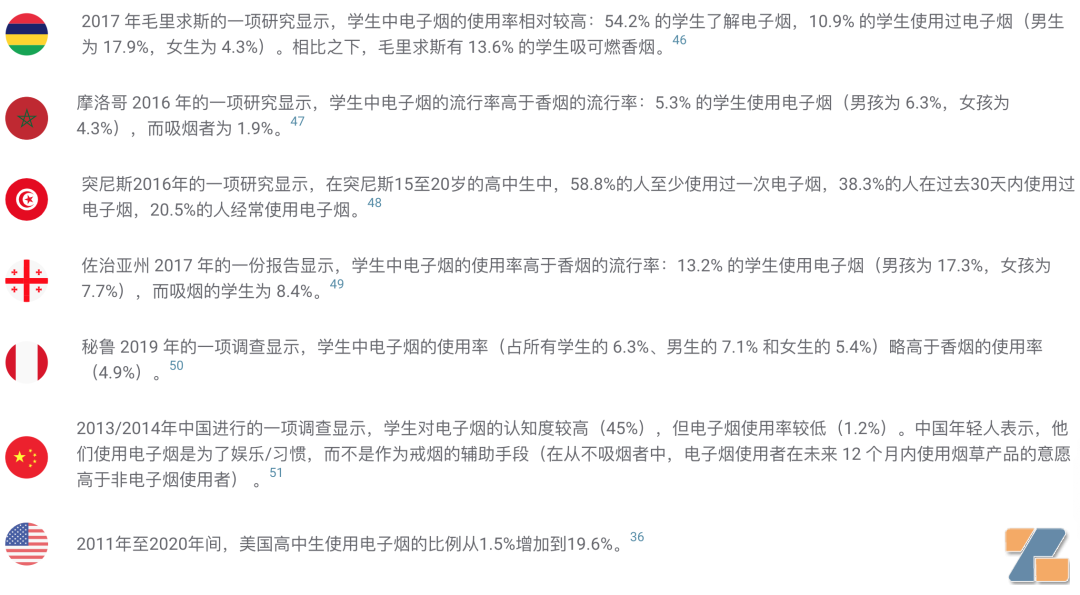
Although detailed data on the prevalence of e-cigarette use among young people in South Africa is not available, data from the United States shows that the number of young people using e-cigarettes is increasing rapidly. A study found that in 2017, 25% of U.S. 12th graders had used e-cigarettes in the past 30 days. This has made e-cigarettes the most commonly used tobacco product among young people, with a rapid increase in prevalence since near zero in 2011.
The high use of e-cigarettes among young people in the United States is attributed to lax marketing regulations. A study of American teenagers who have never used e-cigarettes found that there is a positive correlation between exposure to e-cigarette advertisements and an individual's willingness to use e-cigarettes, and the more marketing channels the teenagers have access to, the stronger the relationship.
There is relatively little data on e-cigarette use among adolescents in developing countries, but recent surveys conducted by the Global Youth Tobacco Survey have sometimes included questions about e-cigarette use. These are usually nationally representative studies that ask students (defined as schoolchildren aged 13 to 15) about their views on e-cigarettes and their prevalence (defined as their use over the past 30 days).
Teenagers believe that e-cigarettes are less harmful than cigarettes
Among Tunisian high school students:
53.8% of people believe that e-cigarettes are harmful, but 78.4% believe that e-cigarettes are less harmful than ordinary cigarettes. nbsp;
50.5% believe they may be addictive. 45.4% believe that smoking e-cigarettes can reduce anxiety, 33.3% believe e-cigarettes make them sociable, and 30.6% believe e-cigarettes make them confident." nbsp;
E-cigarette users (relative to non-users) more generally believe that e-cigarettes are less harmful than tobacco and are not addictive. It is more widely believed that e-cigarettes can reduce anxiety and make users more sociable and confident.
E-cigarette shops target young people in South Africa
As e-cigarettes become popular in South Africa, the number of e-cigarette stores selling these equipment and appliances is also increasing. In addition to being a point of sale, there are concerns that e-cigarette stores also serve as spaces that promote safety concepts and social acceptability that support tobacco. These positive views are important because they can lead to experimentation and ultimately continued use.
There is evidence that e-cigarette shops and companies specifically target young people, offering "cupcakes" and "marshmallowA range of flavors such as this has led young people to try and possibly continue to use e-cigarettes. In addition, e-cigarette stores and companies target young people by marketing e-cigarettes through discounts and other promotional programs, as well as opening e-cigarette stores close to college campuses. A study of 240 e-cigarette stores in South Africa found that 50% of their suppliers were located within a 5-kilometer radius of higher education institutions. The study also found that among adults aged 18 to 29, proximity to e-cigarette stores was associated with a higher likelihood of having used e-cigarettes.


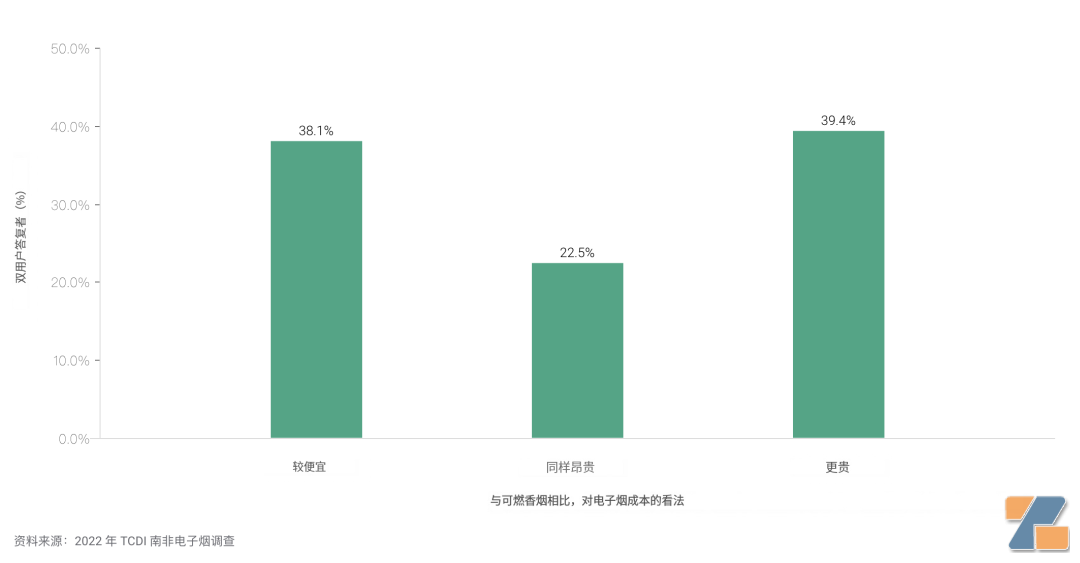
Compared with those who believed that e-cigarettes were cheaper (38.1%), slightly more dual users (39.4%) believed that e-cigarettes were more expensive than combustible cigarettes, while 22.5% of dual users who believed that e-cigarettes and combustible cigarettes were equally expensive.