The Market Is Heating Up: Is Disposable Vape Growth in Eastern Europe Also Surging?
Today, attention is also turning to Eastern Europe vaping devices.
Countries like Poland, the Czech Republic, Hungary, and Russia are included. Despite increasing restrictions, the overall region recognizes vaping devices and promotes their development.
Additionally, some vaping events in Eastern Europe reveal a vibrant vaping culture in the region.

(Eastern Europe, another market focus)
At the same time, it has been found that in some Eastern European countries, disposable devices are experiencing rapid growth, averaging 35% annually, which is quite significant.
According to Lev Grigory, the general manager of Russia's largest distributor, BABYLON, "Currently, disposable vaping devices are the fastest-growing category in the Russian market, with an average annual growth rate of about 35%, and products with 7000 puffs are the most popular." This distributor handles the disposable giant brand ELFBAR. Currently, brands like ELFBAR, NOQO, OXIDE, HQD, LOST MARY, NOQO, OXIDE, SOAK, WAKA, and VOZOL are among the leading disposable brands in Russia. The largest local online distribution platform, VARDEX, is also an important online distribution channel for distributor Babylon.
From this information, we gather that the disposable category is rapidly growing in Eastern Europe, attracting a large number of manufacturers and brands to enter the regional market, and there is a specific demand for puff counts. Russian consumers' demand for high puff count disposables continues to grow. This seems to differ from the mainstream vaping markets in Europe and the U.S., where Russian disposable vaping devices are moving towards larger numbers. Many consumers prefer not to frequently visit physical stores; they prefer to purchase large-capacity vaping devices at once.
When discussing the Eastern European Russian market, several points can be analyzed:
Since 2023, Russia has introduced a series of regulatory measures for vaping devices, from "honest labeling" to "import and production licensing systems," to "online sales bans and offline display bans," including potential future bans on vaping flavors and proposals to impose tariffs on vaping devices ranging from 0% to 13%. These are all "variables" in the Russian market.
1
//// Disposable devices are currently the main growth category in the market!
Similar to markets in Western Europe and the U.S., Eastern European countries, including Russia, are entering a disposable-dominated market.
Compared to many Eastern European countries, Russia's growth rate in disposables is indicative of the future potential for other countries in Eastern Europe. After all, many Eastern European countries have not banned disposables; even with restrictions on vaping devices, the demand and recognition for vaping devices remain in a relatively favorable market position.
At the same time, for business shipments, wholesalers are more willing to buy disposables, and the current "volume is already very large," which leads to their downstream distributors and retailers being more inclined to take disposables.
However, to succeed in disposables, branding is essential, as Russia is a buyer's market where brand importance is significant.
2
//// Is there an opportunity for refillable devices?
With increased regulation on vaping device capacities and import restrictions in the market, refillable devices may welcome new opportunities.
From the Russian market perspective, refillable vaping devices are priced lower, and although this category is currently growing at a moderate pace, it is expected to develop well in the future, making it the third fastest-growing category in Russia.
3
//// Is there a new future for closed-system devices?!
Closed-system devices have potential, while open-system vaping devices are moving towards "mature" development!
Due to capacity restrictions and other standards, most countries in Europe still maintain a large cloud machine market.
For example, in Russia, the open-system vaping device market share remains relatively stable, primarily targeting mature consumers, who are mainly player-type consumers. Vaping devices have a considerable history of development in Europe and the U.S., accumulating a group of relatively mature and stable player-type consumers, whose attributes include not only consumption but also cultural consumption needs.
Moreover, pod-based vaping devices are more suitable for sustainable future trends, becoming the second fastest-growing category in Russia. Currently, the development appears stable, with no significant fluctuations. Major Russian brands are promoting the development of pod-based products, as in the unique Russian market, the vaping devices themselves are not taxed, compared to the 20 rubles/mL e-liquid tax on disposable products, pod-based products can achieve lower costs in the future, combined with strict regulatory trends, indicating a larger growth space for pod-based products in the future.
From the Russian market, it can also be seen that the trend of vaping device restrictions in Eastern European countries is continuing. #p#分页标题#e#
However, currently, the Russian vaping market is not "completely one-size-fits-all."
For instance, since June 2023, Russia officially banned online sales of vaping devices, and many distributors have begun implementing offline pickup modes for all their products. This is somewhat similar to practices in Poland and Italy.
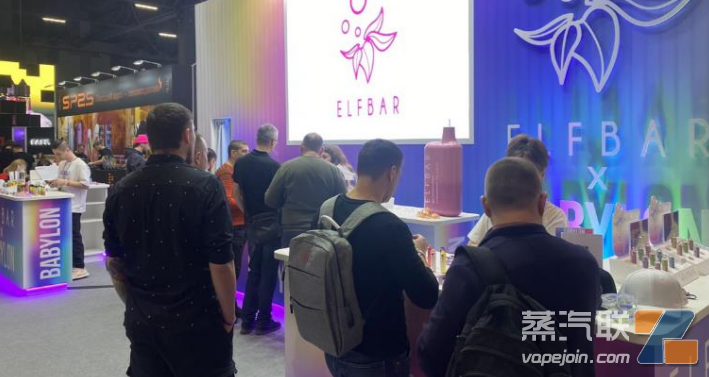
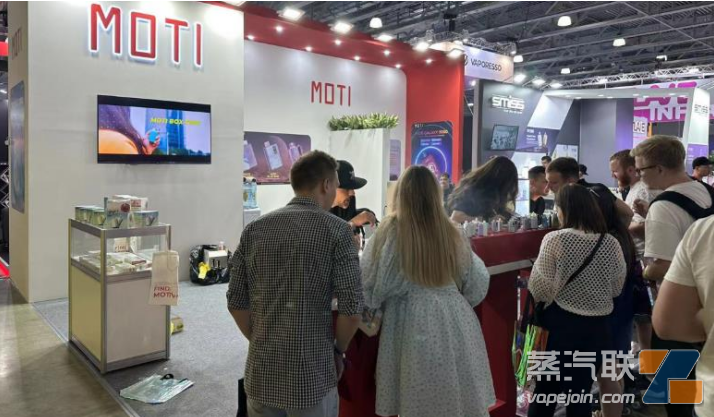
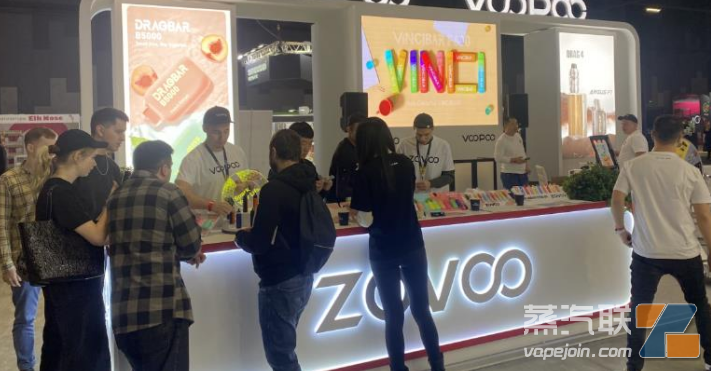
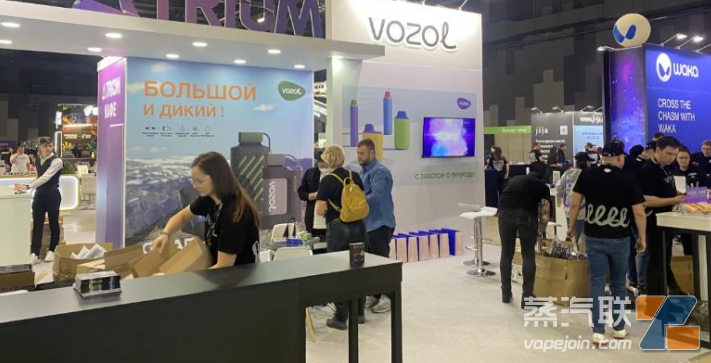
(The Eastern European market is not lacking participants)
However, with the regulatory measures in Russia, the growth rate of vaping devices is inevitably slowing.
As a significant global vaping consumption market, Russia is merely a "microcosm" of Eastern Europe. The clustering of open-system refillable devices, disposables, and various innovative electronic devices will further stimulate the development of the Eastern European market.
In fact, Poland, the Czech Republic, Austria, Hungary, Romania, and Latvia maintain a relatively good operational level of vaping policies, and many countries with heavy smoking populations are seeing space for vaping devices. Meanwhile, countries like Lithuania and Slovakia are maintaining considerable growth in disposables; Albania favors nicotine-containing disposable fruit-flavored and refillable vaping devices. Lithuania and Poland have a very high number of vaping device users.

(The consumption attributes of Eastern Europe are closely related to bars)
Although the current market scale in Western Europe is much larger than in Eastern Europe, expanding the Eastern European vaping market, combined with the highly developed economies of some Eastern European countries, supports the market's extensibility, which is worth the attention of Chinese factories!
Related Articles

Ahead of a Nationwide Ban, Hundreds of Russian Retailers Voluntarily Stop Selling Vapes

Illegal Vape Brands Try to Evade FDA Scrutiny by Posing as “Made in the USA”