Going ToB: the e-cigarette industry’s “pragmatism” in the second half of the year
In the first half of the year, many companies have gone out according to their established plans, meeting the right people, sending samples, and waiting for order contracts to be signed; some companies have already gone out but may not have met more of the right people.
The differentiated global regional markets see manufacturers and brand owners competing to enter the sight of overseas distributors.
After half a year, many industry insiders have new perspectives on the market. Some in Western Europe and the Middle East lament the competition. There are too many companies going overseas, too many brands, and competition in the paths and methods of going overseas, as well as in pricing. However, after visiting some countries for research, they have felt the different consumption atmosphere in various industries abroad. For example, in the UK, using electronic vaping has become a very normal lifestyle consumption method, and one would be surprised at the prevalence of such consumption scenes on the streets, leading to the realization that there is great potential in overseas markets. For many companies, it is urgent to do the next step of "pragmatism."
Pragmatism:
1. Continuously effective customer acquisition pragmatism
2. Channel implementation pragmatism
3. Brand co-construction market pragmatism
4. Deep penetration into key regional markets pragmatism
5. Business docking pragmatism
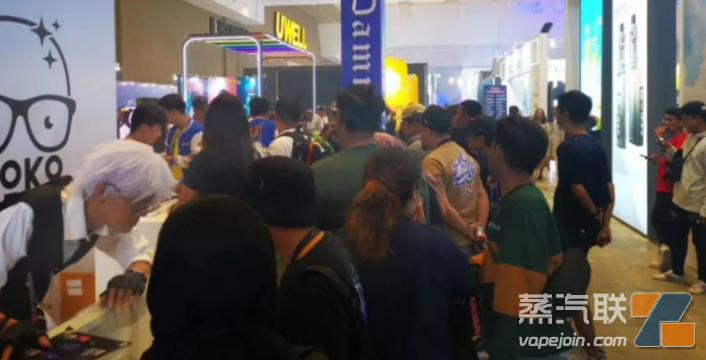
(The market is always there; how to penetrate it?)
Is there a systematic path for going overseas, accurately reaching, reducing costs, increasing efficiency, and becoming a regional leader?
From mature markets to pursuing risk alternatives in the global market.
In the first half of the year, Chinese electronic vaping companies have been seen going overseas. Compared to previous years, this year has seen an increase in the presence of Chinese companies in global markets such as Europe, the Middle East, Russia, Egypt, and Indonesia.
Due to the strengthened regulations and entry barriers in the U.S. market, many Chinese companies have shifted their focus to the European market, particularly looking for alternatives in the Middle East, Indonesia, and Eastern Europe and Russia. One cannot place all hopes in one basket.
I have researched some factories, and some reported that the first half of the year was okay, while others said it was not so good.
One OEM factory stated, "It's okay; we have old customers, and we have a client in the Middle East and Egypt who has invited us to set up a factory there."
There is also a phenomenon where many traders are experiencing a surge in entrepreneurship, with some traders openly stating, "We just started." The overseas blue ocean has attracted many dream chasers. Some traders are starting from OEM and are considering branding without factory resources.
Some traders who did not perform well in the first half of the year said they plan to go out for ground promotion in the second half of the year to expand the market.
Upon closer examination of the paths, it is also found that some brands specifically choose certain regions to break into the market, rather than trying to cover everything, thus revealing differences in market leaders in different regions. For example, in the Middle East, the top three brands in large puff counts are YUOTO, TUGBOAT, and MAZAJ. However, in some markets in the UK and Europe, brands like ELF BAR, LOST MARY, SKE, and ELUX dominate the disposable market.
However, the market is characterized by different user demographics. For instance, in the UK, mainstream brands for open products include SMOK, VOOPOO, aspire, and Geek vape, which have a higher proportion of white users.
Of course, the distinctiveness of market regions also determines that different brands have opportunities to emerge. Regular overseas "customer acquisition" has become a symbol label for the first half of the year.
Participating in overseas exhibitions is currently the main way for most domestic companies to acquire customers. Some companies have stated that some exhibitions are effective, while others are not. Not to mention the manpower and resources, but everyone is aware that attending an exhibition requires a significant cost.
I specifically compiled data showing that in the first half of the year, at least dozens of Chinese companies regularly participated in major overseas exhibitions, and these companies are often seen making brand appearances and securing market orders. For example, VOOP, VAPORESSO, UWELL, YUOTO, ELF BAR, TugBoat, SMOK, ELUX, RELX, KIWI, VOZOL, MOTI, SKE, HQD, AAOK, firstunio and other well-known brands. Leading companies like Smoore, AIVIPUS, GEELOTECH, IQOS, and YILUGU frequently appear on major international exhibition lists.
Some companies are also increasing their overseas market expansion, such as OXVA, ESMOO, MR FOG, ABUFAN, etc.
New brands are also expanding into overseas markets, such as LONO (under Jinjia Co., Ltd.). At some international exhibitions, you will see many unfamiliar new brands emerging, even discovering different cultural designs.

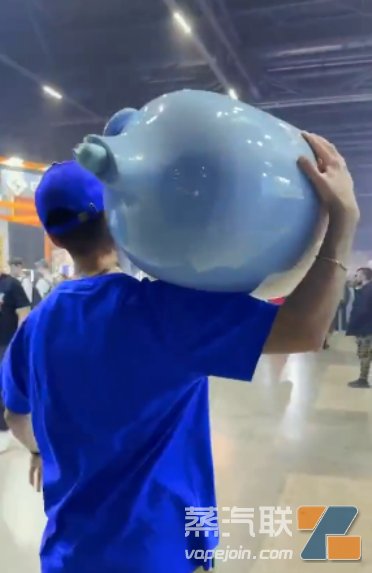
(Overseas culture)
In the context of global electronic vaping, different overseas distributors are also adopting brand strategies, leveraging China's customized manufacturing capabilities to create many new brands, which are penetrating the international market. It is foreseeable that future global market competition will become increasingly fierce.
One company summarized, "Opportunities exist where channels are unstable; Europe and the U.S. have large volumes but also greater competition; the Middle East and Eastern Europe have development space." Another aspect of brand channels is that channels are king, no exceptions.
However, all overseas endeavors emphasize efficiency.
Reflecting on a business person's statement, "There has never been an online or offline distinction, only efficient and inefficient."
Going overseas emphasizes "efficiency."
How to pragmatically achieve efficiency and provide substantial channel services and reach? Many companies have missed numerous international exhibitions, and one might wonder how much it costs to attend an exhibition? Is there a way to save costs and increase efficiency?
CVIC's "pragmatic" approach to overseas customer acquisition focuses on reducing costs and increasing efficiency, allowing products and brands to easily reach designated regional distributors and targeted merchant groups, establishing recognition. Even without going abroad, brands can be exposed to distributors.
In the second half of the year, it is essential to take the right "pragmatic" steps, with "customization" being the first step in reaching out to customers.