Chinese company invests in thousands of retail stores as urgency grows to build e-cigarette channels
A new channel competition marks the "lifeline" of the new era of going overseas!
In the context of going overseas, expanding foreign "localization" channel networks is filled with "urgency".
Recently, a piece of news has attracted attention: a Chinese e-cigarette giant has entered the French market for the first time through a dedicated store network in February this year, planning to sell in thousands of retail stores in the country, confirming that the number of retail stores in France will be 4,000. This company is ELFBAR, and it is reported that the exclusive distributor for ELFBAR in France is SPF (Fimar-Marty, Pipal, SPP, and SoCOPi), which is also the largest chain tobacco retail network in France.
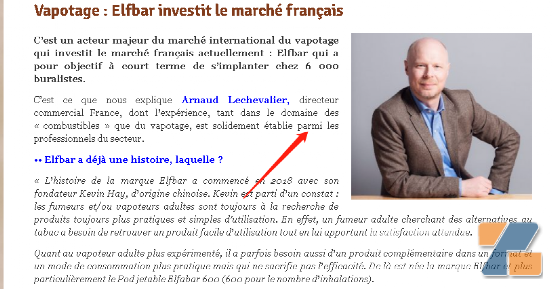
(Entering France)
What is noteworthy is that it is not only in France; it has long been penetrating channels in the UK, Germany, Italy, and many other countries. ELFBAR has utilized all the channels accumulated over the years, not missing even the smallest distributors, to enter various e-cigarette retail stores and online websites globally. This year, it has also expanded into Korea, signing with Setopia to enter convenience stores and large shops in Korea.
It is evident that the layout of e-cigarette channels is one of the decisive factors for Chinese e-cigarette brands to go overseas and seize market share and position. This company's e-cigarettes have been very popular in the UK, Italy, Germany, the USA, Eastern Europe, and other regions in recent years, and its rapid channel layout and strategies have played a significant role.
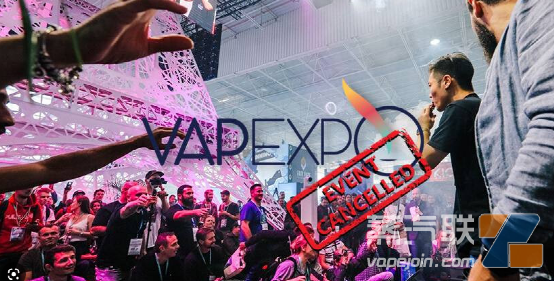
Speaking of the French market, there are many local e-liquid manufacturers. Compared to foreign brands, French smokers tend to recognize local brands more, making it difficult for foreign brands to penetrate. However, it seems that Chinese companies are already trying. For example, a recent e-cigarette vapor event in Lyon, France, attracted no less than 20 Chinese companies, including well-known brands such as Geekvape, VAPORESSO, ELUX, VOZOL, SMISS, and others.
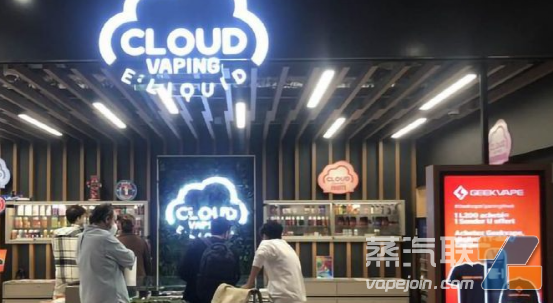
In fact, building channels is a common practice for many brands entering overseas markets. For instance, RELX International has already established cooperation with over 2,000 retailers in Germany within a year. In Paris, France, Chinese company Geekvape has announced the official launch of a co-branded e-cigarette store with Cloud Vaping in Paris.
(Image of a French e-cigarette store)
Here are a few points to consider:
1. What kind of channels are suitable for rapid overseas layout?
2. What kind of products are suitable for these channels?
3. How to find key channels or incremental channels to penetrate the market?
4. How can companies without foreign trade resources build overseas channel networks?
5. How to establish a "complementary distribution network"?
6. Why is the current e-cigarette channel distribution filled with "urgency"?
Over the past 20 years of e-cigarette development, China has borne over 90% of the global e-cigarette production capacity, establishing China's position in the e-cigarette supply chain. The transition of Chinese e-cigarettes from previous foreign trade OEMs and manufacturing to the current brand export era has seen brand recognition and penetration frequency achieved through brand establishment and channel expansion.
So why is building e-cigarette channels currently filled with "urgency"?
Because as going overseas enters a new era, more brands are rushing to go overseas, with more product categories available abroad, and under the backdrop of homogenization, the demand for differentiated products is stronger. Only more unique and differentiated products can help brands stand out in mature market competition! Therefore, in this new era, expanding e-cigarette distribution channels is a very urgent task.
At the same time, without a channel network, it will be impossible to obtain stable order pathways, and even more impossible to establish products as a long-term business in various foreign markets.
It can be said that in a gradually maturing and regulated overseas market, "channels" are important, and the strategic empowerment of brands in this new phase of channels is even more crucial. For every Chinese company creating a brand overseas, it is entering a brand new competition for overseas channels.
So what is the relationship between channels and brands?
Generally, the role of a brand is to make "products sell well," while the role of a channel is to "sell products well," forming a closed loop of marketing through mutual reinforcement.
In general, companies that advocate brand-first place more emphasis on the design and dissemination of brand image, enhancing consumers' memory of the company's brand information. For many manufacturers, channel issues may be more troublesome than the products themselves. Companies lacking marketing channels, no matter how strong their technical research and development capabilities or financial resources, will find it difficult to find a place to apply them.
It can be said that whether a company can survive and develop in the long term largely depends on the level of its "marketing channel system construction."