Does the New Bloomberg Philanthropies Foundation Spread E-Cigarette Bans in Low-Income Countries?
According to reports today, in February, Michael Bloomberg, the billionaire philanthropist, announced an additional $420 million commitment to tobacco control through his organization, Bloomberg Philanthropies. A significant portion of this funding will be directed towards low- and middle-income countries (LMICs), where 80% of smokers live.
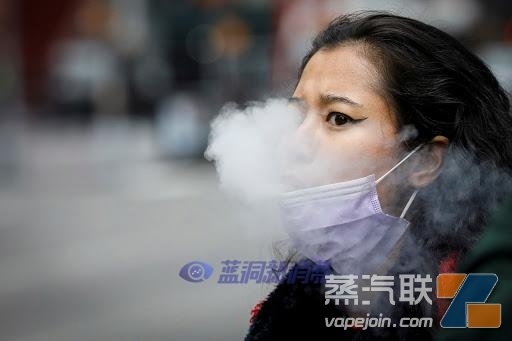
The stated purpose of this funding is to reduce tobacco use and protect non-users from harm. However, advocates for harm reduction, consumers, and some legislators are concerned that these funds will be used to promote policies that contradict the public health interests of these countries.
According to the World Health Organization (WHO), the long-term investment of over $2 billion annually by governments in tobacco control is insignificant compared to the $94.1 billion global tobacco and nicotine product market, which is expected to reach $10 billion in 2023.
However, despite tobacco control funding accounting for only about 10% of Bloomberg's total donations, it is seen as his most impactful public contribution—directly affecting the lives of 1.3 billion tobacco users.
Bloomberg Philanthropies has spent $1.58 billion in 150 countries over the past 20 years, making it the largest private donor for tobacco control in LMICs. By funding hundreds of government organizations and influential non-profits, it has significant power to influence national tobacco control policies.
Globally, the organization has donated nearly $1 billion to the WHO for anti-tobacco work. Since 2016, Bloomberg has held the prestigious title of WHO Ambassador.
While Bloomberg Philanthropies' tobacco control efforts are often seen as a positive force that helps gradually reduce direct and indirect tobacco harm, many low- and middle-income countries are increasingly witnessing its negative impacts. This is because it tends to push for one-size-fits-all policies that are either unimplementable or harmful—especially in the absence of public healthcare and insurance, it opposes harm reduction measures in critical countries.
Many activists argue that these hardline policy stances fail to take into account local contexts, cultures, and needs.
“Bloomberg Philanthropies provides tobacco control grants in exchange for policy amendments,” said Joseph Magro, chairman of the Pan-African Consumer Advocacy Organization for Safer Alternatives Movement, to Filter. “Unfortunately, their ban agenda pushes nicotine products, including cigarettes, into the thriving black market in low- and middle-income countries. Despite 44 African countries having ratified the WHO Framework Convention on Tobacco Control, smoking rates continue to rise.”
In at least one instance, national legislators intervened to prevent Bloomberg Philanthropies from interfering with their domestic policies.
“I welcome well-meaning organizations that aim to promote public health in the Philippines,” Congressman Estrellita Suansing told Filter. “However, in the case of the Philippines, what we see from Bloomberg Philanthropies and its funded organizations is that the government agencies receiving grants are actually incentivized to mimic their regulatory stance, even if it contradicts the direction of Congress.”
Suansing referred to grants received by the Philippine Food and Drug Administration (FDA) from Bloomberg-funded organizations. These prompted the agency to adopt a prohibitionist stance on e-cigarette products and oppose congressional efforts to provide harm-reducing smoking alternatives. In a country that has undergone a long bloody drug war, adding e-cigarettes to the list of prohibited substances poses particular dangers.
“We follow the UK and New Zealand in recognizing that these e-cigarettes are less harmful than cigarettes.”
“When foreign organizations' funding pushes regulatory policies that violate our national laws, disconnection occurs,” Suansing continued. “According to our tax laws, Congress authorized the Philippine FDA to regulate vapor products and heated tobacco products in 2020. However, we see that the FDA is not a balanced regulatory body when it releases draft regulations containing very costly and time-consuming requirements, effectively leading to a ban on these products.”
Suansing subsequently submitted a bill to shield administrative agencies from foreign interest group pressures, which Congress passed in 2022 as the Vaporized Nicotine and Non-Nicotine Products (VNNP) Act.
#p#page title#e#
“We follow the UK and New Zealand in recognizing that these VNNPs are less harmful than cigarettes and should be made available to adult smokers to help them quit this deadly habit,” she said.
Philippine legislators successfully blocked Bloomberg's intervention, but most low- and middle-income countries are not prepared or willing to do the same.
Bloomberg-funded groups often celebrate the success of prohibition legislation. India is an example, having implemented a ban on nicotine e-cigarettes in 2019. The coalition released a press release outlining how it affected the outcomes. In Mexico, a legal advisor for the Smoke-Free Children Movement drafted legislation to ban e-cigarettes submitted to Congress in 2021.
“It replaces the expertise of local groups regarding the needs of the communities they serve with directives from a distant American billionaire.”
This situation raises concerns that a new wave of Bloomberg funding will again push for bans on safer nicotine alternatives in LMICs.
Michelle Minton, a senior policy analyst at the Reason Foundation, highlighted many such interference incidents in a 2021 report titled “Exposed: Bloomberg's Anti-Tobacco Interventions in Developing Countries.” She described Bloomberg Philanthropies' fundraising efforts as charitable capitalism.
“Such a large sum of money, especially in countries with limited funding for charitable work, will almost certainly lead certain parts of civil society to change their priorities to qualify for grants,” she told Filter. “Replacing local groups' expertise about the needs of the communities they serve with directives from a distant American billionaire, whose primary interest is legislation rather than improving outcomes.”
Notably, Bloomberg Philanthropies has stated that it does not advocate for a ban on all e-cigarette products, although it actively supports banning flavors that those trying to quit smoking find helpful.
A spokesperson for Bloomberg Philanthropies declined to comment directly on the inconsistency between this stance and the calls for a comprehensive ban from Bloomberg-funded organizations.
Dr. Kelly Henning, head of Bloomberg Philanthropies' public health program, wrote in a letter to prominent scientists seeking a dialogue on reducing tobacco harm in 2021:
“I want to reiterate; we are not calling for a policy to ban the sale of all e-cigarettes. We do not oppose the sale of tobacco-flavored e-cigarettes and support the federal government taking more measures to protect youth and ensure that products offered to adult smokers who want to quit are indeed effective, increasing the chances of smokers quitting completely, and ideally transitioning to less harmful products when quitting is not possible.”
Bloomberg Philanthropies spokesperson Veronica Lewin declined to comment directly on the inconsistency between this stance and the calls for a comprehensive ban on all e-cigarettes from Bloomberg-funded organizations, or whether Bloomberg Philanthropies might hold different views on e-cigarette policies in Western countries versus LMICs.
“Bloomberg Philanthropies and its partners take a multi-faceted approach, including protecting people from secondhand smoke and increasing tobacco taxes to strengthen public health and prevent smoking-related premature deaths,” she told Filter. “We have always believed that if the tobacco industry took health issues seriously, they would take formal steps to allow e-cigarettes to be approved as smoking cessation tools. But they haven’t. Instead, the industry has tried to block the implementation of tobacco control measures and increasingly targets flavored products at young people, hoping to make them lifelong customers.”
In the United States, some tobacco and e-cigarette companies are going to great lengths to obtain FDA authorization for their e-cigarette products, believing they are suitable for protecting public health. In the U.S., heated tobacco products have also received risk-reduction authorization.
In the UK, efforts are underway to grant medical licenses to e-cigarette products, although experts in reducing tobacco harm advocate regulating them as consumer products to ensure they are as easily accessible as tobacco products.
It is hard to see how banning or strictly limiting e-cigarettes could achieve the goal of preventing smoking-related deaths in LMICs.
For a long time, e-cigarettes have been proven to be significantly less harmful than smoking. The latest Cochrane Review found them to be more effective than nicotine replacement therapies for quitting smoking.
In the UK, where e-cigarettes are widely popular, an estimated 4.3 million people now use e-cigarettes; of these, 2.4 million were former smokers, and another 1.5 million have tried e-cigarettes (and may be fully transitioning), with only 350,000 having never smoked. After an initial spike, e-cigarette use among American teenagers has also significantly declined, and the number of frequent e-cigarette users among never-smokers has remained low. #p#page title#e#
Given such evidence, it is impossible to see how banning or strictly limiting e-cigarettes could achieve the goal of preventing smoking-related deaths in LMICs.
Roberto Sassman, president of the consumer rights protection organization Pro-Vapeo Mexico, told Filter: For its work to be meaningful in developing countries, Bloomberg Philanthropies should clearly state its opposition to banning the use of lower-risk alternatives to replace deadly smoking and local products.
Sassman has previously criticized Bloomberg's influence on Mexico's tobacco control policies.
He continued that Bloomberg Philanthropies should also fund smoking cessation facilities to help strengthen efforts to prevent sales to minors, reject the prescription model for e-cigarettes, and support harm reduction measures by stopping the demand for similarly restrictive regulations on e-cigarettes as cigarettes.
Without such a commitment, at least some of the new Bloomberg funding flowing into LMICs may do more harm than good.