
Major reversal: the Philippines introduces a new vaping policy
While retail licenses are being issued domestically, overseas vaping policy changes have also drawn significant attention. Southeast Asia, with a population of 600 million, is an important emerging global vaping market, so every move is closely watched. N
As retail licenses are being issued domestically, adjustments to overseas e-cigarette policies are also particularly noticeable. Southeast Asia, with its population of 600 million, is an important emerging market for e-cigarettes, and every move it makes is closely watched. Notably, the Philippines has introduced a new e-cigarette policy.
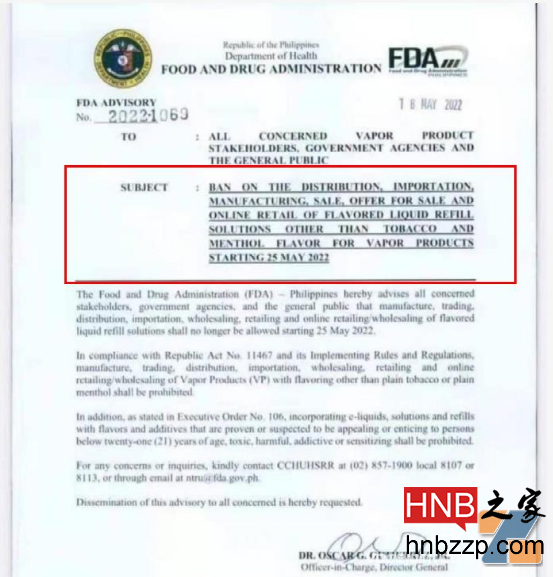
It's a major reversal! According to the newly released Republic Act No. 11467 and its implementing rules and regulations, the sale and online retail of e-cigarette products, except for tobacco and menthol flavors, will be prohibited starting from May 25, 2022 (today). This law marks the beginning of a "legal licensing" period for e-cigarettes in the Philippines. The Philippines will be the second country in Southeast Asia, following Indonesia, to legislate on e-cigarettes. It also means that the previously discussed new legislation in the Philippines may not relax flavor restrictions, as it appears that "flavored" e-cigarettes are still not allowed.
With a population of 110 million, the Philippines has over 16 million smokers, making it an important emerging market for e-cigarettes in Southeast Asia. The introduction of this new legislation also signifies a growing trend towards compliance with e-cigarette regulations in Southeast Asia.
It's a major reversal! According to the newly released Republic Act No. 11467 and its implementing rules and regulations, the sale and online retail of e-cigarette products, except for tobacco and menthol flavors, will be prohibited starting from May 25, 2022 (today). This law marks the beginning of a "legal licensing" period for e-cigarettes in the Philippines. The Philippines will be the second country in Southeast Asia, following Indonesia, to legislate on e-cigarettes. It also means that the previously discussed new legislation in the Philippines may not relax flavor restrictions, as it appears that "flavored" e-cigarettes are still not allowed.
With a population of 110 million, the Philippines has over 16 million smokers, making it an important emerging market for e-cigarettes in Southeast Asia. The introduction of this new legislation also signifies a growing trend towards compliance with e-cigarette regulations in Southeast Asia.


