
Why Does an E-Cigarette Taste Burnt, and How Can You Avoid It?
Why does an e-cigarette produce a burnt taste, and how can you avoid it? If your coil is only slightly scorched, you may notice a mild burnt taste, as if something is off. Since burnt coils can produce harmful chemicals, it is still best to replace them.
Why does an e-cigarette taste burnt, and how can you avoid it? If your coil is only slightly burnt, you might notice a faint burnt taste, as if something is off. Considering that we know burning coils produce harmful chemicals, you should probably replace it.
Occasionally, you might get a burnt taste right after replacing a burnt coil. Sometimes it disappears after a few puffs, but other times you may need to replace the e-liquid.
Why do coils burn?
To avoid burnt coils, it's important to understand why coils burn in the first place. This is simple and forms the basis of all advice in this article.
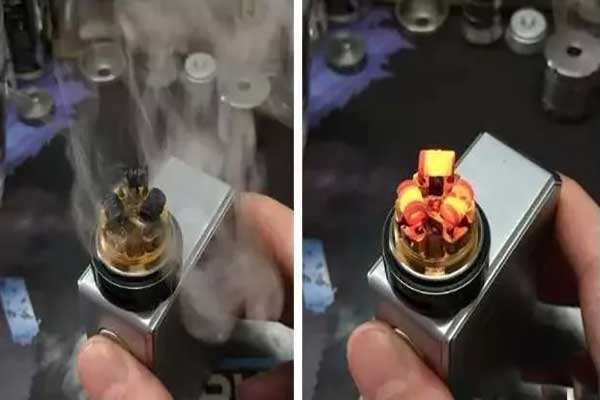
First, think about when you vape without a burnt taste. When you press the fire button, electricity flows through your coil, heating it. The heat is absorbed by the e-liquid soaked in the wick, turning the liquid into vapor. Because the liquid absorbs the heat, the coil temperature doesn't get too high.
When the liquid in the wick evaporates, the wick dries out a bit. However, you have a reservoir full of e-liquid surrounding the coil, constantly replenishing the wick. This means when you take another puff, the wick is wet again, and everything works normally.
But what happens when the wick has no or insufficient liquid? When you press the fire button, the coil heats up with nothing to absorb the extra heat, causing the coil temperature to rise. This leads to two unwanted things:
The residual liquid in the wick gets "overcooked," heated excessively, causing PG to decompose into formaldehyde. To clarify: formaldehyde smells absolutely disgusting.
With nothing to protect it from heat, the wick is directly exposed to the hot coil. Since it's often made of cotton, the wick burns. If completely dry, it can ignite. Yes, burning cotton smells awful too.
These two factors are the key ingredients of the "Mèche Brûlée" (burnt wick) e-liquid taste: formaldehyde and burnt cotton. A disgusting combination.
How to avoid burnt e-cigarette taste?
From the above, it's clear we need to ensure the wick always has liquid when vaping.
This means you shouldn't "dry burn" your coil, as most coils use cotton that gets destroyed without liquid protection. For ceramic coils, dry burning is acceptable since they use silica instead of cotton.
When your wick has liquid, risks are lower, but you still need to protect your coil. Pressing the fire button consumes the liquid in the wick, so ensure your device is set up to allow new e-liquid to flow in at the rate you vape.
This is the key to preventing coil burning. But what does this mean practically? What should you do?
7 ways to avoid burnt e-cigarette taste
1 - Prime your coil before vaping.
If you don't "prime" your coil before vaping, you can burn it without any use.
When installing a new coil, the wick must go from completely dry to fully saturated. This takes time, so usually wait about five minutes between filling your tank and your first puff. If you wait long enough, priming may not be absolutely necessary, but it's hard to tell if your wick is fully saturated. If not, pressing fire with insufficient liquid leads to the problems above.
Priming means manually soaking the coil before installation. Coil heads usually have an opening at the top and ports around the wick. To prime, add a few drops (3-5) of e-liquid into the top opening, then soak the exposed wick at the side ports. You don't need much per port, just ensure visible parts are saturated.
Alternatively, some users take a few puffs without pressing the fire button to draw e-liquid into the wick. Be careful not to overdo it, or you may flood your coil.
Now your new coil is ready. As an extra precaution, wait five minutes after filling your tank before vaping. This shouldn't be necessary if primed properly, but it's worth ensuring.
2 - Avoid chain vaping.
"Chain vaping"—vaping continuously until you can't see vapor—also causes burnt wicks. The balance mentioned earlier means you need to allow your wick time to resaturate between puffs. Normally, short breaks happen naturally, but prolonged vaping dries the wick, risking burning.
The solution is simple: stop vaping temporarily. The biggest sign is a decrease in flavor, indicating low liquid in the coil and approaching a burn. Your wick needs time to resaturate, like a "restart." Since the coil is hot, the easiest is to stop vaping for 5-10 minutes and let your tank do its job.
3 - Lower your e-cigarette power settings.
Higher wattage vaporizes more liquid per puff, great for big clouds but harder on coils. The wick may not absorb liquid fast enough, causing dry hits and coil burning, similar to chain vaping but after fewer puffs.
The fix is to reduce power. If you notice burnt taste, your coil is drying out and needs time to absorb liquid. Rest as above, and reduce wattage to lower risk.
Coils usually specify recommended wattage ranges; staying within them helps avoid problems. Start low and increase gradually. If you experience flavor loss and coil burning at your current setting, lowering power is the easiest solution.
4 - Refill e-liquid timely.
If your tank's liquid level is low, it may not saturate the wick properly. Many tanks require a minimum liquid level to reach the wick. Less liquid contact means faster drying and problems.
The simplest fix is to refill your tank. When performance and flavor decline, it's time to add more liquid. To avoid mixing flavors, you can empty the tank first, though usually it's not a problem. Rotating your tank to soak the wick is unreliable, especially at low liquid levels, so refilling is best.
5 - Use e-liquids with higher PG content.
PG (propylene glycol) is thinner than VG (vegetable glycerin), so it saturates wicks faster. Balancing wick absorption and vaporization speed is important. If your liquid absorbs slowly, you're more likely to get dry hits and coil burning.
High VG liquids (70% or more) cause drying issues and may damage coils. If you often get dry hits and burnt coils, your e-liquid might be the cause. Try switching to a 50/50 PG/VG mix or PG-dominant liquids like Vapor Co.
This isn't always a problem; sub-ohm tanks are designed for high VG. But tanks with poor wicks can have issues.
6 - Try e-liquids with fewer sweeteners.
High sweetener content makes coils "sticky." Sugars in e-liquids caramelize, which tastes good in desserts but damages coils. Sticky wicks can't absorb new liquid, causing the same problems discussed.
While often linked to sweeteners, many e-liquids can gunk coils. Coffee and heavy dessert flavors are common culprits, but others exist. Generally, dark liquids affect coils more than clear ones.
If you have a spring coil, you can try cleaning it with water or strong alcohol (not rubbing alcohol), then let it dry for 24+ hours before reuse.
Not everyone agrees on coil cleaning; methods vary, and often coils don't fully recover. If you've vaped on a gunked coil and damaged the wick, cleaning may not help.
The simplest fix is to switch to e-liquids with fewer sweeteners. You may sacrifice coils but avoid future problems.
7 - Use temperature control.
Temperature control (TC) vaping directly addresses coil burning. By tracking resistance changes as coils heat, TC devices (like Innokin Coolfire IV) let you set a maximum coil temperature.
When the set temperature is reached, the device stops supplying power to prevent overheating.
Occasionally, you might get a burnt taste right after replacing a burnt coil. Sometimes it disappears after a few puffs, but other times you may need to replace the e-liquid.
Why do coils burn?
To avoid burnt coils, it's important to understand why coils burn in the first place. This is simple and forms the basis of all advice in this article.
First, think about when you vape without a burnt taste. When you press the fire button, electricity flows through your coil, heating it. The heat is absorbed by the e-liquid soaked in the wick, turning the liquid into vapor. Because the liquid absorbs the heat, the coil temperature doesn't get too high.
When the liquid in the wick evaporates, the wick dries out a bit. However, you have a reservoir full of e-liquid surrounding the coil, constantly replenishing the wick. This means when you take another puff, the wick is wet again, and everything works normally.
But what happens when the wick has no or insufficient liquid? When you press the fire button, the coil heats up with nothing to absorb the extra heat, causing the coil temperature to rise. This leads to two unwanted things:
The residual liquid in the wick gets "overcooked," heated excessively, causing PG to decompose into formaldehyde. To clarify: formaldehyde smells absolutely disgusting.
With nothing to protect it from heat, the wick is directly exposed to the hot coil. Since it's often made of cotton, the wick burns. If completely dry, it can ignite. Yes, burning cotton smells awful too.
These two factors are the key ingredients of the "Mèche Brûlée" (burnt wick) e-liquid taste: formaldehyde and burnt cotton. A disgusting combination.
How to avoid burnt e-cigarette taste?
From the above, it's clear we need to ensure the wick always has liquid when vaping.
This means you shouldn't "dry burn" your coil, as most coils use cotton that gets destroyed without liquid protection. For ceramic coils, dry burning is acceptable since they use silica instead of cotton.
When your wick has liquid, risks are lower, but you still need to protect your coil. Pressing the fire button consumes the liquid in the wick, so ensure your device is set up to allow new e-liquid to flow in at the rate you vape.
This is the key to preventing coil burning. But what does this mean practically? What should you do?
7 ways to avoid burnt e-cigarette taste
1 - Prime your coil before vaping.
If you don't "prime" your coil before vaping, you can burn it without any use.
When installing a new coil, the wick must go from completely dry to fully saturated. This takes time, so usually wait about five minutes between filling your tank and your first puff. If you wait long enough, priming may not be absolutely necessary, but it's hard to tell if your wick is fully saturated. If not, pressing fire with insufficient liquid leads to the problems above.
Priming means manually soaking the coil before installation. Coil heads usually have an opening at the top and ports around the wick. To prime, add a few drops (3-5) of e-liquid into the top opening, then soak the exposed wick at the side ports. You don't need much per port, just ensure visible parts are saturated.
Alternatively, some users take a few puffs without pressing the fire button to draw e-liquid into the wick. Be careful not to overdo it, or you may flood your coil.
Now your new coil is ready. As an extra precaution, wait five minutes after filling your tank before vaping. This shouldn't be necessary if primed properly, but it's worth ensuring.
2 - Avoid chain vaping.
"Chain vaping"—vaping continuously until you can't see vapor—also causes burnt wicks. The balance mentioned earlier means you need to allow your wick time to resaturate between puffs. Normally, short breaks happen naturally, but prolonged vaping dries the wick, risking burning.
The solution is simple: stop vaping temporarily. The biggest sign is a decrease in flavor, indicating low liquid in the coil and approaching a burn. Your wick needs time to resaturate, like a "restart." Since the coil is hot, the easiest is to stop vaping for 5-10 minutes and let your tank do its job.
3 - Lower your e-cigarette power settings.
Higher wattage vaporizes more liquid per puff, great for big clouds but harder on coils. The wick may not absorb liquid fast enough, causing dry hits and coil burning, similar to chain vaping but after fewer puffs.
The fix is to reduce power. If you notice burnt taste, your coil is drying out and needs time to absorb liquid. Rest as above, and reduce wattage to lower risk.
Coils usually specify recommended wattage ranges; staying within them helps avoid problems. Start low and increase gradually. If you experience flavor loss and coil burning at your current setting, lowering power is the easiest solution.
4 - Refill e-liquid timely.
If your tank's liquid level is low, it may not saturate the wick properly. Many tanks require a minimum liquid level to reach the wick. Less liquid contact means faster drying and problems.
The simplest fix is to refill your tank. When performance and flavor decline, it's time to add more liquid. To avoid mixing flavors, you can empty the tank first, though usually it's not a problem. Rotating your tank to soak the wick is unreliable, especially at low liquid levels, so refilling is best.
5 - Use e-liquids with higher PG content.
PG (propylene glycol) is thinner than VG (vegetable glycerin), so it saturates wicks faster. Balancing wick absorption and vaporization speed is important. If your liquid absorbs slowly, you're more likely to get dry hits and coil burning.
High VG liquids (70% or more) cause drying issues and may damage coils. If you often get dry hits and burnt coils, your e-liquid might be the cause. Try switching to a 50/50 PG/VG mix or PG-dominant liquids like Vapor Co.
This isn't always a problem; sub-ohm tanks are designed for high VG. But tanks with poor wicks can have issues.
6 - Try e-liquids with fewer sweeteners.
High sweetener content makes coils "sticky." Sugars in e-liquids caramelize, which tastes good in desserts but damages coils. Sticky wicks can't absorb new liquid, causing the same problems discussed.
While often linked to sweeteners, many e-liquids can gunk coils. Coffee and heavy dessert flavors are common culprits, but others exist. Generally, dark liquids affect coils more than clear ones.
If you have a spring coil, you can try cleaning it with water or strong alcohol (not rubbing alcohol), then let it dry for 24+ hours before reuse.
Not everyone agrees on coil cleaning; methods vary, and often coils don't fully recover. If you've vaped on a gunked coil and damaged the wick, cleaning may not help.
The simplest fix is to switch to e-liquids with fewer sweeteners. You may sacrifice coils but avoid future problems.
7 - Use temperature control.
Temperature control (TC) vaping directly addresses coil burning. By tracking resistance changes as coils heat, TC devices (like Innokin Coolfire IV) let you set a maximum coil temperature.
When the set temperature is reached, the device stops supplying power to prevent overheating.


