
Interview with KMOSE Vaping
KMOSE is an electronic cigarette brand based in Shenzhen, founded in 2019. Last year, it secured two rounds of investment totaling tens of millions, with founders Huang Junhao and CEO Liu Haonan.

Founder and R&D Head Huang Junhao
The two founders are very young and quite attractive, making them one of the most visually appealing duos in the vaping industry.

CEO Liu Haonan
The name KMOSE is interesting, derived from a jumbled spelling of SMOKE.
Last year, we mentioned that KMOSE was one of the more dynamic emerging brands in Shenzhen's electronic cigarette market, likely due to the youthful energy of its founders who do not want to follow the traditional, quiet approach of older vaping business owners. They aim to incorporate a sense of fashion to stand out.
KMOSE launched two products last year, including the KMOSE PRO, a pod system, and the disposable product K1.
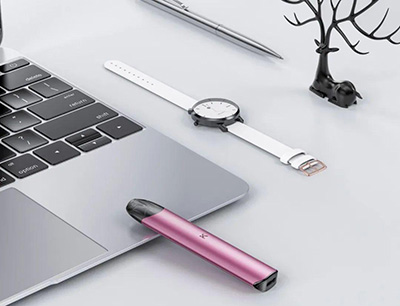
KMOSE PRO and the disposable product K1.
The KMOSE PRO features a 400mAh large-capacity battery, magnetic pod connection that allows for blind insertion, and a Type-C charging port that supports use while charging, manufactured by Yijiate. The price for one device with two pods is 269 yuan.
The K1 disposable e-cigarette achieved 3 million yuan in revenue within its first month of launch last year.
In the first quarter mental awareness ranking of Chinese e-cigarettes released by Blue Hole New Consumption, KMOSE ranked tenth.
A year later, how is the young KMOSE e-cigarette developing now? Blue Hole recently interviewed KMOSE's founder Huang Junhao to get the latest updates.
Founder and R&D Head Huang Junhao
Blue Hole New Consumption: Since November 1 last year until this year's pandemic period, KMOSE has had little market activity. I heard you are focusing on overseas development; how is that progressing?
Huang Junhao: Since the e-commerce ban was announced last November, the company has accelerated its expansion into overseas markets, achieving resource connections, cooperation discussions, and formal shipments in a very short time.
Between November and December, we participated in three e-cigarette exhibitions in Dubai, Indonesia, and New Zealand, and established strong cooperation intentions with partners in Indonesia, Thailand, the Philippines, Malaysia, the UK, and the USA, starting formal shipments to overseas markets before the New Year.
Among them, our partner in Indonesia is the largest 3C distributor, and KMOSE has now entered over 3000 sales points under their umbrella.
Since November, KMOSE's expansion into overseas markets has been steadily progressing, and we have established a market presence in 13 countries and regions, with the average monthly shipment volume to overseas markets accounting for 36% of total shipments.
Blue Hole New Consumption: What are the differences between the overseas e-cigarette market and the domestic market?
Huang Junhao: First, the maturity of the markets is different. The overseas e-cigarette market has developed for over ten years, and the entire market is relatively complete and mature, which is reflected in the well-established sales channels, regulations, and higher marketization. Many channels in the overseas market feature chain Vape Shop brands, which we believe will also emerge in the domestic market. Due to the maturity of the overseas market and channels, customer acquisition can happen more quickly, so going overseas is not as difficult as imagined, as the channels are already in place.
Second, consumer attitudes and habits differ between the two markets. E-cigarette users are driven by price; overseas, cigarettes are much more expensive than e-cigarettes, so users are more tolerant of issues like leaking. In the domestic market, prices are inverted, so customers tend to be stricter.
Third, different countries have varying requirements for products; overall, there is a greater demand for open systems than for closed markets.
Blue Hole New Consumption: In developing overseas markets, did KMOSE start from scratch, or did you have resources prepared beforehand? Few new domestic brands have successfully expanded overseas in the past two years.
Huang Junhao: From the company's inception, developing overseas was an important part of our strategic planning; the domestic e-commerce ban in November accelerated the implementation of this policy. We consulted with quality domestic e-cigarette manufacturers and traders, and acquiring overseas customers mainly relies on direct visits.
So in November and December, we actively sought customers overseas rather than waiting for them to come to us. In some key target countries, we arranged for personnel to be stationed for expansion.
Our founding team and investors already have rich overseas study experiences and business connections, so we are not lacking in overseas resources. After deciding to develop overseas, we simultaneously developed mature e-cigarette channel partners and transformed quality resources around us, which is why we could enter multiple countries in just a few months.
The initial expansion was indeed time-consuming and labor-intensive.
Blue Hole New Consumption: What is KMOSE's current strategy? Is it focused more on domestic or international markets? What are the reasons behind this change?
Huang Junhao: Currently, KMOSE's core strategy is two-pronged. This dual-track approach refers to simultaneously advancing both domestic and international markets, as well as promoting through CVS channels and distributor channels.
Of course, at this stage, with the domestic market having basically emerged from the shadow of the pandemic, we will still focus on the domestic market while promoting and selling legally and compliantly. As for the international market, we will launch corresponding marketing strategies based on the overall recovery of the market.
Blue Hole New Consumption: How does KMOSE differentiate its promotion and operation strategies in the completely different domestic and international market environments?
Huang Junhao: Simply put, currently, the domestic e-cigarette market is in its early stages and has certain promotional restrictions, while the overseas market is relatively mature and open. Therefore, the promotion and operation strategies in the overseas market will lean towards fast-moving consumer goods (FMCG) POP promotions, focusing on visual communication at points of sale and sales by staff; while domestically, we will emphasize brand building and creating momentum.
Blue Hole New Consumption: Some readers jokingly say that many customers are drawn to your duo's attractiveness. As a product manager, how do you view KMOSE's product advantages?
Huang Junhao: Haha, it's all thanks to our customers' affection; our personal attractiveness certainly cannot compare to that of our products.
Since our team is relatively young, we pay more attention to the fashion aspect of product aesthetics. The vape pen is like a lighter for smokers, an accessory they carry daily, and a lighter can reflect a person's taste. Our PRO touch paint series is the first product in the industry to use this material, and in terms of color richness and tactile feel, it is more vibrant than purely metallic devices on the market.
Additionally, I believe KMOSE's core product advantages lie in its stylish appearance, stable product quality, and carefully selected flavors. Flavors like passion fruit and snow spring have been meticulously crafted to meet the usage needs of the vast majority of consumers, resulting in good customer loyalty.
Currently and in the future, we will continue to focus on this core in our product development to ensure that the products we launch meet this core demand.
Blue Hole New Consumption: What are KMOSE's product plans for this year? How do you view the low-price market? Will you release low-cost pod products?
Huang Junhao: Recently, I have seen several brands launch entry-level pod products. I believe they are pseudo-low-cost because the pod prices have not decreased, and they are merely a marketing gimmick. The pod is the essence of vaping; the device is just a lighter. If you want low prices, you might as well give the devices away for free.
Users attracted by low-cost devices are mostly existing users, meaning they are competing for customers from other brands. While this can temporarily reduce customer acquisition costs, whether they can retain customers is questionable. Low-cost products inevitably struggle to guarantee a high-quality user experience, and for converting traditional smokers, it will only have negative effects, which is not conducive to the healthy development of the entire industry.
Will KMOSE release low-cost pod products? Never and ever.
Blue Hole New Consumption: Please share your current channel strategy.
Huang Junhao: In 2019, during the e-cigarette boom, KMOSE focused on CVS and distribution channels. Frankly, after going around, we found that partners entering the market due to the so-called boom tend to be unstable because they lack stable channels and customers, ultimately leading to inventory issues.
In the industry, I understand that it refers to entities with established e-cigarette sales channels and customers, primarily focusing on physical e-cigarette stores, including early players in the e-cigarette market.
This year, we have spent several months assessing the situation and found that industry insiders can expand rapidly under stable product quality and favorable pricing policies because they have existing customers and channels, such as e-cigarette collection stores, and do not need to worry about how to sell after receiving the goods, making it easier for both them and us.
Many customers who have never dealt with e-cigarettes want to open stores or become agents; we do not encourage this. Our core philosophy is to ensure that no KMOSE partner loses money. We believe that becoming a regional agent requires a sense of timing, and only when stable channels are established should we expand specialty stores and CVS.
Blue Hole New Consumption: How is KMOSE's talent, product, and funding reserve currently?
Huang Junhao: We are not short on money.
We currently have sufficient cash flow and no financial pressure. Since we opened overseas channels at the end of last year, our headquarters team has expanded to include an overseas business department and a Middle East office. We welcome talent; we are taking this opportunity to invite talent through Blue Hole media.
We will continue to iterate and enrich flavors for existing products, and we are also developing new products, so please look forward to the new product concepts that will be showcased at the August IECIE exhibition.
Blue Hole New Consumption: How do you view the development trend of the domestic e-cigarette market this year?
Huang Junhao: The domestic market is currently in a state of recovery and steady growth, but it will not see the explosive growth of 2019. 2019 was a stage where new entrants invested in educating the market, and the market's heat created a certain base of existing e-cigarette users. Even after the e-commerce ban, market demand still exists.
With the closure of online channels, the growth rate of new users has slowed, and future new customers will increasingly concentrate in offline physical channels. These customers can directly experience the products, and new users have higher demands for product quality, which is why we have always emphasized product quality rather than low prices.


