
Inside a vape factory: How can a brand be created in 39 days?
Since 2009, the second generation of open electronic cigarettes has gradually gained acceptance in countries like the United States and the United Kingdom due to its large vapor production, forming a culture among vaping enthusiasts. Vaping enthusiasts view electronic cigarettes as a hobby and are keen to try different devices and e-liquids.
"20 yuan per hour, with air conditioning, come work with us!" A dark-skinned middle-aged man is recruiting every passerby at the entrance of an electronic cigarette factory in Shajing, Shenzhen.
Shajing, known in the industry as "Electronic Cigarette Street," produces 90% of the world's electronic cigarettes. Entering Shajing, one finds many people gathered in front of factory doors, with both recruiters and job seekers present. This seemingly ordinary street is lined with dozens of electronic cigarette processing factories, large and small, creating a market worth over a hundred billion yuan.
The "Shenzhen speed" has created numerous brands without any design copying. In the past decade, I have seen many small clients, often teams of just three to five people, making over a hundred million with a single mobile phone model," said Han Fang, who originally worked in mobile phone ODM production. He noted that it was a decade of rapid growth for the mobile phone industry, but as mobile phone brands rose, leading companies captured 90% of the market share, making it difficult to continue the "shanzhai" (knockoff) phone business since 2016.
From pagers to big brother phones to "shanzhai" phones, from tiny MP3 players to life-sized robots, Shenzhen does not miss any "hot" product in hardware manufacturing. The transition between manufacturing industries happens in an instant, as factory owners possess a sharper sense than investment firms, allowing them to quickly detect market trends.
"The logic is the same; the electronic cigarette industry is very similar to the shanzhai mobile phone industry from years ago," Han Fang stated. "The electronic cigarette supply chain is very simple, much less complex than the mobile phone supply chain. Besides needing to research materials for the atomizer core, everything else, like chips, feels like making toys if you've worked in mobile phones before."
Unlike Han Fang, who found it easy to transition due to his experience in the consumer electronics supply chain, Chen Ming, who entered the electronic cigarette industry in 2006, told reporters that his journey has been fraught with difficulties.
Chen Ming, the owner of a first-line electronic cigarette processing factory in Shajing, was among the earliest entrants, initially producing for the first generation of electronic cigarettes called "Ruyan." However, due to the significant difference in taste from real cigarettes and false advertising, production was halted, and the domestic electronic cigarette market stagnated. Moreover, there were over a hundred suppliers in the entire electronic cigarette industry supply chain, but none specialized in electronic cigarettes. The high cost of mold opening forced Chen to buy components in Huaqiangbei and craft them himself with a steel file.
Since 2009, the second generation of open electronic cigarettes has gained acceptance in countries like the United States and the United Kingdom due to its large vapor production, forming a culture among vaping enthusiasts. Chen Ming gradually began receiving orders from foreign clients and started "blood transfusing" to upstream suppliers, laying out his own electronic cigarette supply chain.
Chen Ming's factory is located in Shajing. The electronic cigarette industry supply chain in Shenzhen Shajing initially developed due to its proximity to Huaqiangbei, making it convenient for purchasing raw materials and recruiting talent in the electronic cigarette industry. However, now, electronic cigarette factories cannot leave Shajing, as no manufacturer can survive independently outside of Shenzhen's mature electronic cigarette industry chain.
"Even though the cost of living, rent, and labor is high here, you have to be here. For the same plastic part, if I'm in Shajing, the mold factory is right next door, and I can get there in half an hour for very little cost. But if the factory is in Huizhou, the round-trip transaction costs will also be counted against the factory," Chen Ming told the Economic Observer. He noted that no factory in the electronic cigarette industry has the same appeal as Foxconn, which can say, "I can move to the Gobi Desert or the beach in Xinjiang, and suppliers will follow me."
Wearing shoe covers, dust-proof clothing, masks, and hairnets, entering an electronic cigarette production workshop today feels like stepping into a food processing factory. In the air-conditioned, slightly cool electronic cigarette production workshop, rows of production workers are diligently working at long tables. Filling e-liquids into cartridges, inserting atomizing wires, applying glue, welding batteries, labeling anti-counterfeiting codes on packaging bags, heat sealing, and product sampling—all steps in electronic cigarette production can be completed in this not-so-large workshop.
Using a small syringe to extract e-liquid from the tank twice yields just the right amount for one cartridge. Then, manually applying glue ensures that the contact points at the bottom adhere firmly to the e-liquid. Chen Ming explained that the reason the production capacity of third-generation closed electronic cigarettes (small vapes) is lower than that of second-generation open electronic cigarettes (large vapes) is that they can only use manual filling.
Producing small vapes requires more complicated production processes, which also raises the production requirements for factories. "Large vapes are simple to assemble; just put together some hardware, CNC (computer numerical control) parts, and install the battery and circuit board. Large vapes don't require e-liquid; consumers buy e-liquid to fill them as needed, so there's no risk of leaking. However, small vapes tend to leak if left for too long, and solving the leakage issue is quite challenging," Chen Ming told reporters.
On the next production line, workers are assembling circuit boards through welding. The welded circuit boards will be assembled with the electronic cigarette's battery and casing by workers on the next production process. After passing through five production lines, an electronic cigarette can be produced.
Workers in electronic cigarette production factories typically work from 8 AM to 10 PM, sitting at long tables. Each production line has a supervisor responsible for coordination. Workers are assigned specific tasks, and the work is relatively uniform. However, the electronic cigarettes they are assembling can vary in shape, from flat USB-like designs to pen-like casings from different brands. During the visit, the Economic Observer reporter observed that at least five different electronic cigarette brands' products were being processed on the same production floor.
"The factory has assigned us about 250 workers, but these 250 workers do not work exclusively for us. If our materials are not available, the workers will produce electronic cigarettes for other brands. We only provide our production requirements to the factory, and the rest is managed by them," a staff member responsible for production at the Xiwuyou electronic cigarette company told reporters. "Currently, OEM factories are in high demand, and they are selective about their clients." Chen Min, CEO of Xiwuyou electronic cigarettes, told the Economic Observer that new electronic cigarette brands are emerging rapidly. It is impossible to build a factory from scratch immediately; one can only seek OEM services. However, the capacity and scale of factories will not increase rapidly in the short term, which gives factories the upper hand in choosing brands and clients in the current stage of the electronic cigarette industry.
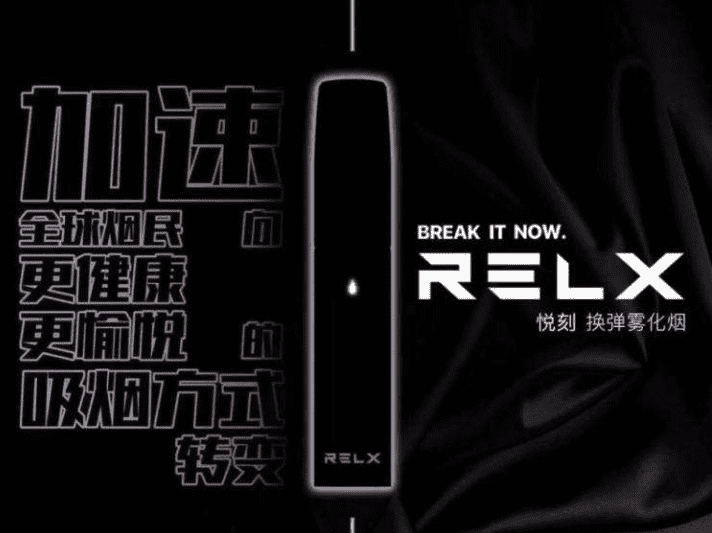
Chen Min mentioned that the company has invested over a million yuan in collaborative research and development with factories for the production of electronic cigarette casings and packaging. In September of this year, the electronic cigarette company RELX also announced plans to open a dedicated electronic cigarette factory in Shenzhen, to be operated and managed in collaboration with MCV. RELX stated that the dedicated factory will cover over 20,000 square meters and employ more than 4,000 workers.
Chen Ming is also expanding his factory's scale, stating, "We need 12,000 workers during peak production times. Our larger factory is in Tangwei, and the factory in Zhongshan will officially start production in May next year; it is currently under renovation."
"If you can order 3,000 disposable vapes at once, I can give you this price," said a vendor at a stall in Huaqiangbei, calculating the lowest price for a disposable vape on a calculator. "From e-liquid, design to packaging, you don't have to worry about anything. Just register a brand, and we will print it on for you, and you can sell it."
With an investment of less than 90,000 yuan and a production period of 10 days, a new electronic cigarette brand can appear on the market. "If you want a cartridge replacement type, I can help you design a completely different outer packaging from RELX, but the cartridge can use RELX's," the electronic cigarette vendor quoted a supply price of 33 yuan for another cartridge-style electronic cigarette, while its online selling price is 169 yuan.
An industry insider told reporters that the entry barrier for the electronic cigarette industry is extremely low. Nowadays, the electronic cigarette supply chain is becoming increasingly mature; all one needs is a factory, a bit of floor paint, two production lines, and some workers to assemble. There are no testing phases, let alone production standards. One can start a factory with just a few tens of thousands of yuan, buy some raw materials, and directly find clients to sell to. This insider stated that the entire process from brand registration to factory finalization to the final product launch only takes 39 days.
At the Huaqiangbei stall, the vendor assured reporters that the price he offered was the lowest in the industry. When asked whether vaping is truly safe and if there are corresponding production standards at his factory in Humen, the vendor waved his hand dismissively, unconcerned, "There are no standards now; why think so much?"
Despite making money from producing "shanzhai" phones, Han Fang still feels he missed the opportunity to become a leading mobile phone brand. Therefore, in this transition to the electronic cigarette industry, he aims to change his strategy and build a brand. "Mobile phones are rarely replaced in a year, but electronic cigarettes are different; their repurchase rate is high, and cartridges are a continuous purchase behavior. The electronic cigarette market still has a lot of space," Han Fang firmly believes.
Many like Han Fang dream of becoming "China's Juul." In 2018, Juul was valued at $38 billion, capturing over 70% of the U.S. electronic cigarette market. The "myth" across the ocean stimulates the nerves of domestic entrepreneurs and investors. According to incomplete statistics, in the first half of 2019, there were over 35 investment cases in the domestic electronic cigarette industry, with a total investment exceeding 1 billion yuan.
According to a report by Great Wall Securities, the number of smokers in China accounts for nearly one-third of the global smoking population. As a major smoking country, China's electronic cigarette penetration rate is still far below that of Western countries like the UK and the US. As of 2018, China's electronic cigarette penetration rate was only 0.32%. If China's electronic cigarette penetration rate reaches the UK's level of 9.50%, the market size for electronic cigarettes in China would exceed 140 billion yuan.
In the context of high gross margins and high growth potential in the industry, numerous institutions are entering the electronic cigarette sector. Zhu Xiaomu, former product director of Smartisan Technology, founded the "FLOW" electronic cigarette; "Tongdao Dashi" Cai Yuedong and former Huang Taiji founder He Chang launched the "YOOZ electronic cigarette" together; and several self-media figures, including Tongdao Dashi chairman Zhang Jinyuan, Visual志 CEO Sha Xiaopi, and Military Second Dimension CEO Zeng Hang, co-founded "Lingxi LINX."
In Han Fang's view, despite the crowded market and obvious product homogeneity, the electronic cigarette industry has yet to form a true brand. In his eyes, the largest electronic cigarette brand in China, RELX, with annual sales exceeding 3 billion yuan, is merely a channel company.
"There are only a few factories producing e-liquids, and everyone can source from them. The differences in taste among various electronic cigarette brands are not significant, and there are no so-called core patents. Electronic cigarette brands are mostly just different marketing approaches," Han Fang stated. He plans to allocate 10%-20% of electronic cigarette profits to agents, 10% for research and development, and invest the remaining profits entirely into marketing.


