
Analysis of China’s e-cigarette market size and development prospects in 2020
In recent years, e-cigarettes have gained popularity as a product marketed as a substitute for traditional cigarettes, thanks to their ability to significantly reduce harmful components. They have become favored by smokers, especially young consumers, due to their health-conscious, fashionable, and personalized image. Coupled with the growing demand for a healthy lifestyle and the strengthening of smoking bans in various countries, the traditional tobacco market has stagnated, while the e-cigarette market has shown an upward trend.
China's e-cigarette industry enters a reshuffling phase
In 2003, Chinese pharmacist Han Li applied for the first patent for modern e-cigarettes, marking the beginning of the modern e-cigarette era in China. The period from 2009 to 2018 was the golden age for the development of the e-cigarette industry. During this time, the industry had a low technical threshold, and national regulatory frameworks were not yet clear, providing rapid expansion opportunities for the industry, leading to the rise of numerous domestic brands and intensified competition. In 2019, the national regulations on e-cigarettes became clearer, and online sales began to be prohibited, marking the entry of the e-cigarette industry into a reshuffling phase, with more orderly development expected in the future.

E-cigarette industry chain analysis
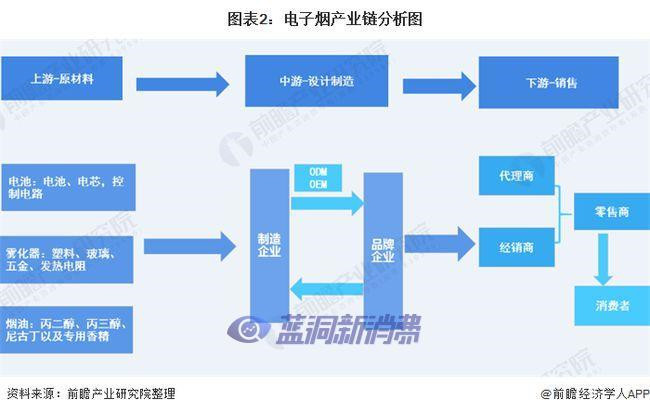
The e-cigarette industry chain includes upstream raw material suppliers, e-cigarette design manufacturers, and downstream sales enterprises.
From the upstream raw material perspective, it can be divided into battery raw material suppliers (batteries, battery cells, control circuits), atomizer raw material suppliers (plastics, glass, hardware, heating resistors), and e-liquid raw material suppliers. The midstream mainly involves the design and manufacturing of e-cigarettes, which can be categorized into professional e-cigarette manufacturing companies and the manufacturing departments of international tobacco giants. Chinese e-liquid companies primarily operate on an OEM/ODM basis, producing for internationally recognized brands. Downstream, products are delivered to retailers through agents and distributors, including well-known e-cigarette brands, large supermarkets, convenience stores, and pharmacies.
E-cigarette industry forms a competitive landscape of three tiers
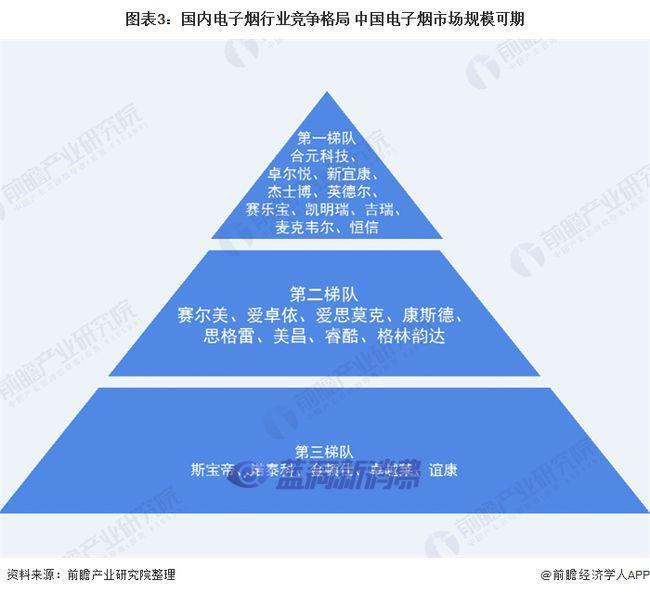
The domestic e-cigarette market exhibits a state of perfect competition, with a large number of enterprises and intense price competition. Early entrants have a significant advantage in strength, with better brand recognition and development in the early stages, allowing them to secure more quality orders. Later entrants, including many small and medium-sized enterprises and traders, currently find it difficult to compete with stronger companies.
Overall, a competitive landscape has formed, consisting of early entrants such as Heyuan Technology, Jireh, Jieshibo, and MCV, which are well-known in the industry, have large company sizes, distinctive products, and strong R&D capabilities; the second tier consists of many medium-sized enterprises and large traders with relatively high brand recognition but smaller scales and lower product recognition; the third tier comprises numerous small enterprises and traders.
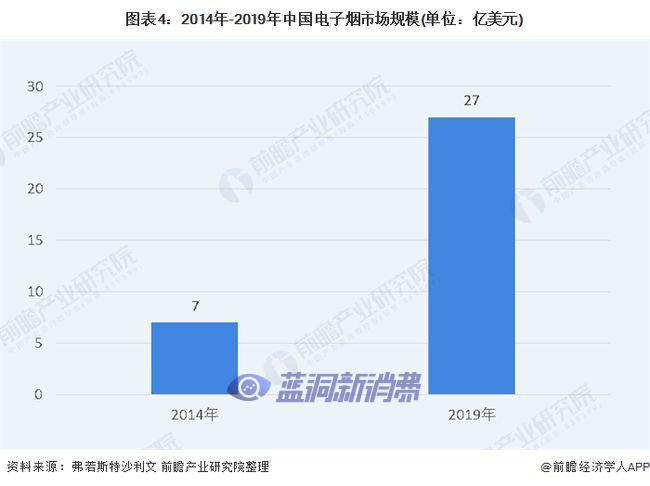
As consumers increasingly prioritize health and in light of stringent anti-smoking policies, e-cigarettes are viewed as an ideal substitute for traditional tobacco products, gradually becoming the new focus of the tobacco industry. According to statistics from Frost & Sullivan, the market size of China's e-cigarette market was $700 million in 2014, increasing to $2.7 billion in 2019, with an average annual compound growth rate of 30.99%, indicating the rapid expansion of the Chinese e-cigarette market.
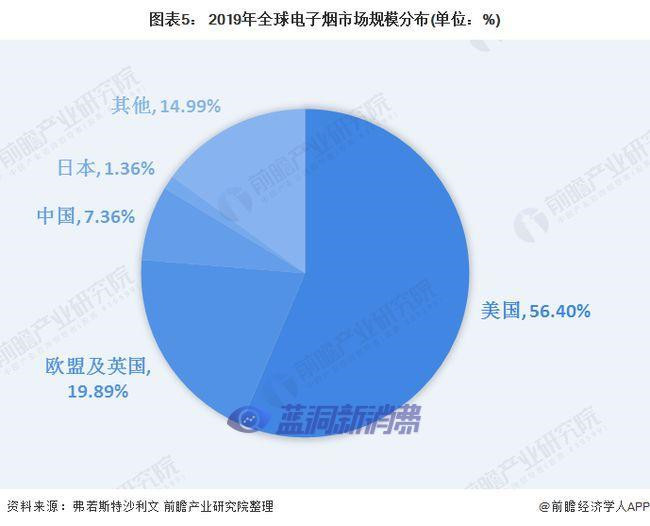
The global e-cigarette market size grew from $12.4 billion in 2014 to $36.7 billion in 2019, with an average annual compound growth rate of 24.2%. In 2019, the United States consumed 56.40% of the world's e-cigarettes, with a market size reaching $20.7 billion. The EU and the UK are the second-largest consumer markets for e-cigarettes globally, contributing 19.89% of the market share. Although the Chinese e-cigarette market is expanding rapidly, its market size is still far less than that of the United States.
China's e-cigarette penetration rate is relatively low, and in terms of e-cigarette consumption, China is also far behind the United States; the per capita consumption of e-cigarettes in the United States is $62.7, while in China, it is only $0.19. As a substitute for traditional tobacco, e-cigarettes have significant market growth potential in China, provided that policies allow.
Analysis of the prospects of China's e-cigarette industry
China has the largest population of smokers in the world, with nearly 400 million smokers, seven times the number of smokers in the United States. Based on China's large number of smokers, if the penetration rate of the e-cigarette market in China can reach half of that of the United States, the market size of e-cigarettes in China will significantly increase. In recent years, the introduction of anti-smoking regulations across the country is also expected to accelerate the increase in penetration rates. #p#分页标题#e#
This article is reproduced from Blue Hole New Consumption


