Change your bias: The UK Department of Health’s latest revelation of 8 truths about vaping
Prejudice is a disease more frightening than ignorance.What is prejudice?
Prejudice is a subjective view, a one-sided inference, speculating and assuming about a person or thing from one’s own perspective. Prejudice can sometimes “kill.” Carrying prejudice will forever blind one to the truth. Ultimately, prejudice is a form of mental laziness, a simplistic and crude attribution.
Electronic cigarettes have been listed by some media in the U.S. as one of the greatest inventions of the 21st century; unfortunately, they are most shrouded in “prejudice,” facing the most disdain and ridicule. Often, the formation of prejudice stems from an imbalance of information. The saying goes, “Three men make a tiger,” and rumors become distorted after repeated transmission.
This month, the UK Department of Health, which oversees public health affairs, published an article that thoroughly analyzes the most common prejudices against electronic cigarettes, listing basic facts and advocating for scientific understanding. Moreover, the article was published on the UK government website (GOV.UK).
This article is titled “8 Truths You Must Know About E-Cigarettes.” (The following is the full text of the article published by the UK Department of Health)
UK Department of Health:
8 Truths You Must Know About E-Cigarettes Published: UK Government Official Website
Agency: UK Department of Health
Date: March 5, 2020
E-cigarettes are not absolutely harmless, but their harm is far less than that of cigarettes. Our advice remains that smokers should switch completely to e-cigarettes, but if you are not a smoker, do not try e-cigarettes.
This article clarifies some of the most common misconceptions surrounding e-cigarettes and provides basic facts and claims.
1. Regulated nicotine e-cigarettes are not related to lung diseases in the U.S.
In August last year, severe lung injury cases began to appear across the U.S. In the following months, a total of 68 people died from this lung injury, but the cause of the disease could not be immediately identified.
This outbreak of lung disease only affected specific populations, and the proportion of new cases quickly reached a turning point. Based on these facts, we wrote to The Lancet magazine explaining that a batch of “inferior” illegal cannabis e-cigarette products might be the culprit.
However, in response to this outbreak of lung disease, regulatory agencies worldwide began to demand the removal of nicotine e-cigarette products from the market, while cigarettes remained available for purchase. This greatly hindered those who wanted to switch to e-cigarettes from traditional cigarettes.
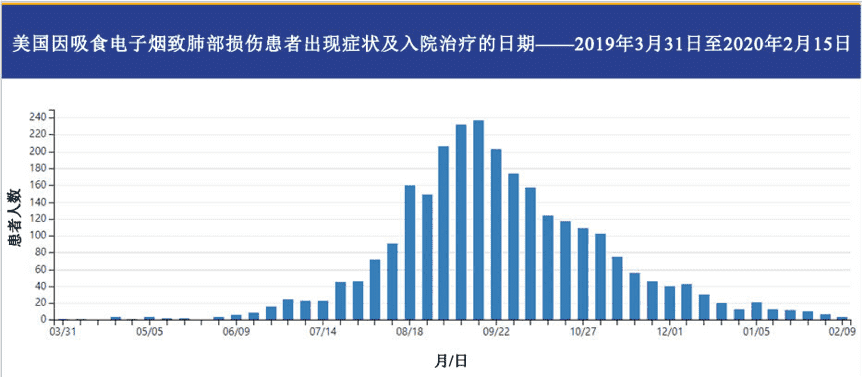
Subsequently, U.S. authorities gradually acknowledged that the vitamin E acetate added to e-cigarette products was the main trigger for this lung disease. UK regulations stipulate that nicotine-containing e-cigarettes must not contain vitamin E acetate.
2. Switching to e-cigarettes can improve vascular health
A controversial study published in the American Heart Association Journal stated that e-cigarette users have the same risk of heart disease as smokers—this report has recently been retracted by the American Heart Association Journal because it did not consider that almost all e-cigarette users are current or former smokers.
Regarding the impact of e-cigarettes on heart health, a randomized controlled trial published in December 2019 assessed the effects on blood vessels after smokers switched to e-cigarettes, yielding encouraging results:
Those who completely switched to e-cigarettes showed significant improvements in vascular health, nearly reaching the levels of a healthy “control group.” Future larger-scale and longer-term studies will further enhance the confidence of e-cigarette users.
3. The harm of e-cigarettes is far less than that of cigarettes
Only one-third of adults in the UK know that the harm of using e-cigarettes is far less than that of smoking. However, the fact is that the National Academies of Sciences, Engineering, and Medicine (NASEM) found that the harm of e-cigarettes is far less than that of traditional cigarettes.
The UK Department of Health's independent report in 2015 concluded: “While using e-cigarettes may not be completely safe, e-cigarettes do not contain most of the chemicals that cause smoking-related diseases, and the harm of the chemicals they do contain is very limited.”#p#分页标题#e#
More research is needed on the “relative harm” of e-cigarettes. Last month, the UK Department of Health commissioned an international expert group to write the most significant report in the series on e-cigarettes.
The expert group consists of previous report authors and other international experts, and the team is beginning a comprehensive systematic review (including a safety review) to provide the most authoritative assessment by 2022.
4. The carcinogen is not nicotine, but cigarette smoke
40% of smokers and former smokers mistakenly believe that nicotine is carcinogenic, while evidence shows that nicotine poses minimal health risks. Although nicotine is the reason for addiction in smokers, the thousands of other chemicals present during cigarette combustion are the real culprits behind all the harm.
5. E-cigarettes can assist in quitting smoking and are highly effective
In February 2019, the UK National Institute for Health Research (NIHR) funded a large-scale clinical trial involving nearly 900 participants. The results showed that e-cigarettes were twice as effective as nicotine replacement therapy (NRT) in helping smokers quit.
An independent study by University College London (UCL) found that e-cigarettes help between 50,000 to 70,000 smokers in the UK quit each year.
6. E-cigarettes do not have secondhand smoke issues
There is evidence that exposure to secondhand smoke is harmful to health, which is why UK law prohibits smoking in enclosed public places and workplaces. However, these laws do not include e-cigarettes, and organizations can set their own regulations regarding e-cigarettes.
The main components of e-cigarette e-liquid are nicotine, propylene glycol, glycerin, and various flavorings. Unlike cigarettes, e-cigarettes do not emit sidestream smoke into the atmosphere; they only release aerosol.
The UK Department of Health's 2018 report found no evidence that vaping poses a health risk to those around them, and in the 2022 report, the UK Department of Health will review the relevant evidence again. Individuals with asthma and other respiratory diseases may be allergic to various environmental irritants, and the UK Department of Health has advised organizations to consider this and adjust relevant regulations accordingly.
7. The youth smoking rate in the UK will not rise due to e-cigarettes
Recent reports have found no evidence that e-cigarettes are leading to an increase in youth smoking rates. Surveys show that the proportion of e-cigarette users among young people is extremely low, and these users are primarily those who already smoke. It is also worth noting that the smoking rate among young people in the UK continues to decline.
A study in 2019 alleviated concerns that e-cigarettes might lead to a resurgence in smoking rates. The UK Department of Health will continue to monitor trends in youth vaping and smoking. We have recently launched a new study to examine the differences in the impact of flavoring on youth vaping and adult switching to e-cigarettes.
8. Improving e-cigarette regulations is very important
The UK has established comprehensive e-cigarette regulations. According to the Tobacco and Related Products Regulations 2016, nicotine-containing e-cigarette products must meet minimum quality and safety standards, as well as packaging and labeling requirements, and provide necessary information to consumers to make informed decisions.
In the UK, advertising related to e-cigarettes is strictly regulated, and manufacturers must report all product details to the UK Medicines and Healthcare products Regulatory Agency.