Market Analysis: Is Vaping Still a Good Business?
How far can e-cigarettes go? Besides policies, the most important factor is the consumer market. After half a year of silence in e-cigarette sales, is it still a good business for the market?
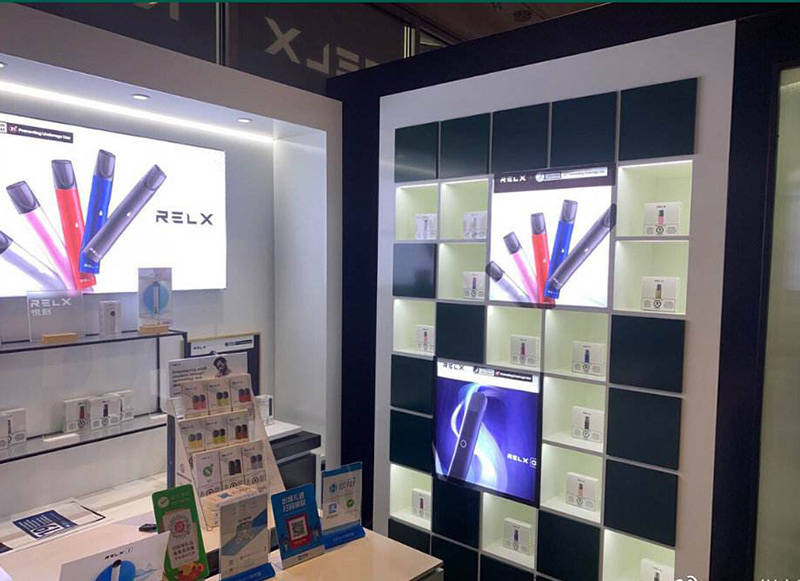
"I saw some articles online saying that RELX store dealers can achieve monthly sales of over 200,000, and some even exceed 150,000. How about your store?"
In response to the author's question, a dealer from a RELX physical store first showed a surprised expression but quickly recovered, saying, "Stores in better locations in cities like Beijing, Shanghai, and Guangzhou might achieve that, but my sales are not that high. Most of my customers are regulars from before, and due to the pandemic, foot traffic in malls hasn't recovered this year, so it's hard to say the exact sales amount, but it's still decent."
A market promoter from a startup e-cigarette brand told "Smart Relativity," "Our brand's products have only been in market promotion for about two months, and we have already set up 500-600 points in Changsha. Sales are quite good at locations in the city center entertainment area, where we can sell 20-30 disposable e-cigarettes a day."
Clearly, those "extreme" cases are widely publicized and have become part of the brand's recruitment strategy. Whether for big brands or small ones, the direction for making money seems to be roughly the same. So, is the e-cigarette market really just self-indulgent? Not entirely.
Huang Jin is a dedicated cameraman at a large media organization, where most of his shooting work is done in studios that prohibit open flames. The "smoking addiction" has become the biggest trouble for many cameramen. "Sometimes we stay in the studio for several hours, even over ten hours. The most we can do is sneak a few puffs while going to the restroom. When filming variety shows, as long as a celebrity is in your shot, you can't move, even if you need to pee. I'm responsible for following the talent, so wherever they go, I go. It's even more troublesome to find someone to check the machine and sneak out for a puff."

"Now, almost every cameraman I know who smokes has an e-cigarette. There's no open flame, and the smell dissipates quickly. E-cigarettes have indeed helped me break free from my dependence on traditional cigarettes; last month, I only smoked one pack of cigarettes."
Ms. Su is another e-cigarette user. "Although I don't have a strong addiction, I've been smoking on and off. I started trying e-cigarettes last year while preparing for pregnancy, and I used them for about two weeks. I would take a few puffs whenever I wanted to smoke, and now I've completely quit traditional cigarettes. Just the smell of smoke makes me feel nauseous."
From the e-cigarette users around me, at least in the "quitting smoking" aspect, e-cigarettes do have a unique effect. In May this year, a clinical trial by the American Heart Association concluded that e-cigarette users are 2.4 times more likely to quit smoking than regular smokers.
Currently, there are approximately 315 million smokers in China, with about half expressing a desire to quit, but only 2-3% succeed. If e-cigarettes can truly reach the consumer group with the goal of quitting smoking, this potential is indeed worth the major brands' "rush to the current."
At present, the e-cigarette market is no longer a short-term market. Those relying on policies still need to look at the broader environment, but evidently, e-cigarette brands still have their "dreams."