Visit the Exclusive RELX Factory: How Is the Invisible E-cigarette Born?
Recently, at the "E-Cigarette You Can't See" media open day event held in Shenzhen, China, the e-cigarette brand "RELX" announced that it has recently launched the world's largest exclusive e-cigarette factory. 36Kr learned that this exclusive factory covers an area of over 20,000 square meters and employs over 4,000 workers, with a maximum production capacity of 50 million cigarettes per month.
At the same time, RELX also announced that it will continue to increase investment in laboratories. The relevant person in charge stated that the RELX laboratory is one of the first professional e-cigarette laboratories among domestic e-cigarette brands, mainly engaged in safety testing and innovative research related to e-cigarettes. Since its establishment, it has invested over 20 million yuan. Relying on the laboratory, RELX has also independently established standards for e-liquid companies.
Co-founder and head of R&D and supply chain, Wen Yilong, told 36Kr that the Chinese e-cigarette industry is still in its infancy, which requires brands and producers to be strict and self-disciplined. To control the quality of its e-cigarette products, we choose to invest heavily in establishing professional laboratories and exclusive factories. "The exclusive factory is one we have already completed operations and management with another domestic e-cigarette giant, McQuay.
RELX hopes to integrate internal and external resources in the manufacturing process through the exclusive factory, closely combining design, R&D, and production to ensure more effective product quality control.
It is worth mentioning that since officially starting production in April 2018, its monthly production of e-cigarettes has increased by 160 times; previously, according to data provided by Euromonitor, RELX has captured 44% of the domestic e-cigarette market share as of the first half of this year.
The exclusive factory has four floors. The 3rd and 4th floors are dedicated to the production of pods, the second floor is for the assembly of batteries and tobacco sticks, and the first floor is for packaging and warehousing, with over 4,000 employees involved in the production process. Yuelong stated that with the introduction of more automated equipment, it will continue to replace manual operations and can improve production efficiency and productivity while ensuring stable product quality.
The factory's hygiene management is also strict and regular. Before entering the pod production workshop, everyone must wear dust-proof clothing and pass through a wind shower for dust removal. The environmental requirements exceed those of many food industries. The company meets the GMP 10,000-level cleanroom standards to ensure the cleanliness of the cartridge production process.
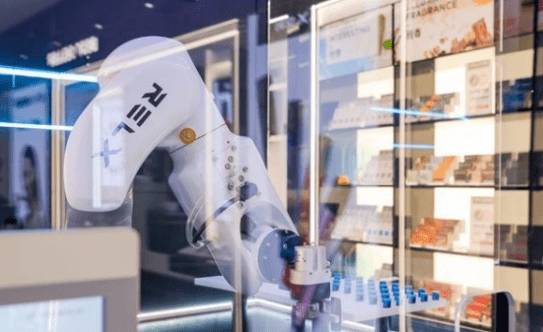
In the management team, the exclusive factory and McQuay's quality supply chain team of over 150 people jointly control the incoming materials, production, and finished products. There are 58 inspection procedures and strict sampling protocols. "We use over 2 million cartridges for quality checks each year, a number that exceeds the total number of cartridges sold by many e-cigarette brands annually," Wen Yilong said.
At the beginning of the brand's establishment in 2018, many tests and developments related to e-liquid required the assistance of e-liquid manufacturers or direct purchases of branded e-liquids. To ensure the controllability and safety of e-liquids and to reserve technology and product reserves for the upcoming new national standards for e-cigarettes, RELX established its own e-liquid laboratory in early 2019, led by chief e-liquid research and development expert Jiang Xingtang.
The task of the Yuelong e-liquid laboratory is to improve the flavor of e-liquids while ensuring safety. "How strict are these standards? For example, we use this set of standards to conduct safety tests on e-cigarette products from other brands, and over 90% of the brands fail to meet the standards," Jiang Xingtang said.
Taking the benzene series, which is a concern for e-liquid safety, as an example, due to the use of organic solvents in the extraction of nicotine and flavors, there is a risk of excessive benzene solvent. The main standards for e-cigarettes do not specify reference values for benzene residues. The pleasant corporate standard adopts the strictest drinking water standards and conducts safety tests on the total amount of benzene, toluene, ethylbenzene, and xylene in e-liquids, meaning that the benzene content in used tobacco oil must not exceed the standard for drinking water.
This set of company standards is based on relevant EU standards and the HPHCs requirements of the US PMTA, enhancing testing procedures and dimensions. At the same time, it references nearly 30 items related to national food safety standards regarding safety component limits and testing methods.
Additionally, RELX's e-liquid is first tested on smokers before packaging, with the bottling factory and templates. Among them, smooth testing will execute 17 categories of e-liquid quality safety testing items, covering 54 specific indicators. At the same time, a traceability mechanism is established for each batch of e-liquid, with all samples stored in the sample room for two years, and special categories may have longer retention times. "The Yuelong laboratory also collaborates with external institutions such as the Shenzhen Advanced Institute of the Chinese Academy of Sciences to conduct fundamental research related to reducing the harm of e-cigarettes and has achieved research results," Jiang Xingtang said in an interview.
In fact, for emerging e-cigarette brands, the time and financial costs of establishing their own factories are relatively high. However, with the rapid growth of market demand, there is already a trend of shortages in the industry. In this case, some new brand products are limited in their development due to insufficient capacity.
Yueke Ming hopes that the exclusive factory can accomplish two tasks: product safety and controllable production capacity, while the laboratory addresses the flavor and composition issues of e-liquids. "Most e-cigarette brands lack testing capabilities, and the e-liquids used are basically zero. They mainly rely on e-liquid suppliers and casting factories to control the quality of e-liquids. Currently, the industry is generally weak, with limited testing capabilities, and casting factories focus more on production management. In quality management, especially for the safety testing and investment of e-liquids, there is generally insufficient investment," Wen Yilong said.
Many startups in the industry face similar pain points, and due to the lack of new national standards, there is a lack of motivation for testing and R&D for new brands.
In the past two years, the e-cigarette industry has shown a trend of rapid growth. More and more people and capital are entering the industry. However, as the overall scale of the industry grows, the supply chain and quality management systems will become increasingly important. Future significant areas will develop slowly, which also deepens the public's misunderstanding of the e-cigarette industry. "We hope that more e-cigarette brands can establish independent safety controls for their products while increasing investment in the supply chain to ensure product quality and jointly promote industry development," Wen Yilong said.