
Burning Cash, Burning Cash, Burning Cash: Chaos in Vaping Channels
Electronic cigarettes cannot have a single dominant player, but it is also impossible for there to be hundreds of brands as we see today. This industry will undergo a reshuffle this year, and perhaps only about ten brands will remain, yet players continue to pour money into it, believing they will be one of the survivors.
Li Junxiang is one of the latest entrants into the electronic cigarette entrepreneurial wave. He was previously the managing director of Fangchuang Capital and, in 2017 and 2018, interacted with many electronic cigarette companies, helping them with financing or participating in investments. He discovered that the electronic cigarette industry can indeed allow many entrepreneurs to achieve sales of hundreds of millions from zero in just two to three years, so he decided to launch his own electronic cigarette brand, focusing on zero nicotine and vitamins.
There are now hundreds of such electronic cigarette brands. Entrepreneurs from various backgrounds, including new media, cosmetics, internet, alcohol sales, and even investment, have joined the electronic cigarette industry.
“In the past three months, I have seen a new brand emerge almost every day,” said Jiang Long, co-founder of RELX, to the investment website.
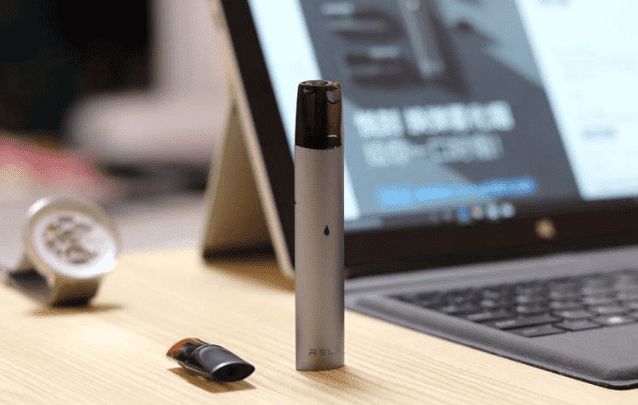
The production costs of electronic cigarettes are low, and research and development costs are also low. As long as you connect with a Shenzhen OEM, almost anyone can register an electronic cigarette brand, but Li Junxiang still does not believe this is a low-barrier industry.
At least in terms of investment, the barriers to entry in the electronic cigarette industry have been significantly raised by fervent capital and entrepreneurial enthusiasm. Whether it’s product iteration and innovation, market operations, distributor management, or brand building, it requires continuous investment of money, money, and more money.
Since entering the electronic cigarette market this year, Li Junxiang has spent the most on brand building, “Our office is located in the Bund, with an annual rent of over a million, and we also need to hire influencers for promotion. This year, our marketing and market promotion budget is 5 million, and next year it will exceed 10 million because we plan to hire celebrity endorsements.”
Although electronic cigarettes currently cannot conduct large-scale advertising, this does not deter entrepreneurs. Some electronic cigarette companies have found various ways to secretly “endorse” celebrities.
On August 5, Zheng Kai posted a Weibo with a picture featuring a product from an electronic cigarette brand, which is the latest electronic coffee launched by Xuejia; on August 28, Chen Guanzhi posted on Weibo saying, “Don’t be too wild, just be a little wild,” and shot a promotional video for Xiaoye.
Theoretically, the domestic electronic cigarette industry is still in its infancy, with only 0.6% of Chinese smokers being electronic cigarette consumers, compared to 13% penetration in the United States, indicating that the current competition in the electronic cigarette market is far from reaching a breakout or red ocean competition stage. However, the competition among brands is already intensifying.
Major electronic cigarette brands like RELX, Xuejia, and Fulou are also spending considerable effort and money to compete for channels like bars and KTVs. “At a music festival, there are four electronic cigarette brands competing at the same time,” a Beijing distributor told the investment website. “Their mentality is, if you go, I have to go too.”
A story circulating among various distributors is that just to sign a chain nightclub like “Noah's Ark” (Noah's Ark Cultural Group is one of the largest nightclub groups in China, with hundreds of bars under its umbrella), brand owners need to spend tens of millions. One electronic cigarette brand initially wanted to sign an exclusive partnership for 15 million, but later added another 15 million because Fulou offered 50 million, and RELX offered 70 million.
Finding partnerships is one aspect; to compete for channels, later brands are also continuously offering lower prices, discounts, and subsidies.
At the retail end, electronic cigarette brands are attracting consumers with lower prices, switching user bases built from other categories, and even launching activities to exchange other brands for their own; at the distributor end, they are offering higher entry fees and higher margins to quickly switch channels from one brand to another.
“Currently, there is a widespread challenge that affects and harms the pricing system we have established,” Jiang Long, co-founder of RELX, said.
In his view, these newcomers are doing this for two reasons: one is to quickly increase sales volume, allowing them to raise more funds, which is a typical internet approach—burning money first to build a user base, and then figuring out how to raise prices for profit; the other is that they may not necessarily intend to enter this channel, but by quoting such prices, they can force retailers to demand higher margins from RELX as well.
“The penetration rate of Chinese smokers is less than 1%, so there is no need for anyone to engage in a price war at this time,” Jiang Long said. In fact, the more intense the price war, the more it indicates that companies are not profitable, and without profits, they cannot continue to invest in research and development.
“Most of the profits will be given to distributors, and the overall profit of distributors will definitely exceed that of the brand,” Li Junxiang believes. The electronic cigarette market is somewhat like the smartphone market; it’s not about burning money and engaging in price wars to dominate. In the process, companies may find themselves severely weakened without capturing the market, and consumers may not necessarily buy into it.
He admires the approach of OPPO and vivo, where they become a community of interests with distributors, “When we evaluate a brand, we see whether the distributors of Xiaomi or OV are making money. It’s definitely the latter. I know OPPO and vivo distributors earn billions a year, while Xiaomi distributors earn only a few hundred million at most.”
Currently, various brand owners distribute electronic cigarettes to different provinces and cities through provincial agents and first and second-level distributors. Some even have exclusivity clauses in their agreements with agents, prohibiting them from handling competing products, hoping that distributors will focus on one brand.
In reality, there are still distributors who choose to cooperate with multiple brands. “We definitely prefer this because it diversifies the products and gives consumers more choices,” a distributor told the investment website.
To quickly distribute products, brand owners are heavily developing distributors. A Beijing distributor, Zhao Yu, told the investment website that one electronic cigarette manufacturer has ten agents in Beijing alone, which is the first time he has seen such a strategy.
“They want to quickly distribute products, but having ten agents in one area means that prices may become chaotic in the future, leading to significant losses,” Zhao Yu explained. “For example, if I am one of the agents in Beijing and the cost is 100 yuan, all ten should be at 100 yuan, and the retail price should be uniformly set at 130 yuan. But if I want to sell quickly and set it at 110 yuan, someone else will set it at 120 yuan, and the one at 130 yuan will definitely not agree. If I lower it to 105 yuan, it will be chaotic.”
In Zhao Yu's experience as a long-time distributor, many electronic cigarette brands fail due to pricing issues. Once the pricing becomes chaotic, no one wants to participate, leading to internal competition among first, second, and third-level distributors. Each level must be controlled, and the number of distributors should be limited. There shouldn’t be ten agents in Beijing competing for territory, as this leads to intense regional competition and internal strife.
Generally speaking, 3C channels are considered suitable, but distributors do not see it that way. “Retail specialty stores have the best sales, followed by e-commerce, and then micro-businesses. 3C channels are very poor,” said Li Lixiong, a distributor from Shandong.
In his view, 3C channel operators have previously sold highly consumable electronic products, leading to fierce competition. Therefore, they have a strong sense of crisis and have formed a habitual mindset—products must be sold quickly. If they don’t sell today, they will be stuck with inventory, and that product will be eliminated, leading to losses in the future.
After getting involved in electronic cigarettes, 3C distributors see the high profits, with retail margins doubling or even tripling. To sell quickly, they often lower prices significantly.
Li Lixiong mentioned that some 3C distributors even sell for just three or five yuan more. “For example, Xiaoye has collaborated with many 3C distributors. The provincial agent's purchase price is 115 yuan, and they can wholesale at 118 yuan and retail at 120 yuan, making only two yuan in wholesale and five yuan in retail, which does not protect the interests of city and district agents at all.”
Consumers are happy to feel they got a bargain, but city and district agents are troubled because the supply is controlled by provincial agents, who do not maintain the pricing system, making it impossible for them to sell at higher prices. If they also sell at 120 yuan, they will not make any profit.
“The 3C channel has completely destroyed the pricing system for electronic cigarettes among local distributors, so I am very resistant to signing agreements with national 3C distributors. I don’t believe they are protecting this industry; they are just playing around and destroying it,” Li Lixiong said.
Under normal circumstances, first-level distributors will leave a profit margin of 10% to 20% for themselves, then distribute the remaining 80% to the next level, while second-level distributors will allocate a large portion of the profits to retail. Li Lixiong, with a monthly turnover of 3 million yuan, can achieve a profit margin of 10% to 15% after deducting costs.
More and more people are joining the electronic cigarette wave, even though most know that in the long run, most brands will fail. However, many still believe they will be among the survivors and make money.
“Last year, I had to spend a lot of energy educating the market and convincing agents to carry our products. But this year, especially since March, more and more people are actively seeking us to become partners. When we approach target retailers and agents, they have already heard of our brand,” said Jiang Long, co-founder of RELX.
Those who have already become part of the electronic cigarette wave believe this will be a long-term business, not just a venture capital industry. “I believe electronic cigarettes are revolutionary and will eventually surpass traditional cigarettes, even completely replace them,” said Zhao Yu from Beijing, likening it to how cars used to run on fuel, but now they are all new energy vehicles. It’s all about reform.
Investors believe that electronic cigarettes are undoubtedly this year's trend. “There’s no doubt that with so much money being invested, it is definitely a trend, and its business model is highly certain. It’s not a false proposition; it is a consumer product that users need, a better alternative to traditional cigarettes,” said Wang Sheng, a partner at Inno Angel Fund.
Wang Sheng believes that because it is a consumer product, the calculations are straightforward. It is just in the growth stage now, so there’s no need to worry about profitability. “Growth means investment; as long as you reduce the investment in growth, these companies will immediately become profitable. If you don’t look at it from the perspective of an entrepreneur or investor, you may fall into confusion about whether it’s a loss or a profit.”
Currently, due to the influence of overseas markets, the supply chain has developed ahead of the brand and is relatively mature. In contrast, domestic brand manufacturers are facing similar supply chains, and the competition in electronic cigarettes is more about channel competition and sales capabilities.
However, in the long run, electronic cigarettes are still a high-tech industry. “The electronic cigarettes we see today may be vastly different from those in a few years. Just like the difference between small and large devices today. Therefore, there is still significant room for improvement in electronic cigarettes, including nicotine technology, e-liquid technology, and atomization methods. The future will be a comprehensive competition of technology, products, and channels,” Wang Sheng said.
The strategy of internet companies is to capture head traffic and form a certain monopoly to dominate the market. However, as a tobacco brand, similar to fast-moving consumer goods, it is impossible for one brand to dominate. Just like cosmetics and skincare, the market can accommodate hundreds or thousands of brands, each with its own business.
“Ultimately, everyone thinks the barriers are low, so they rush in. In reality, this industry will undergo a reshuffle this year, and perhaps only about ten brands will remain. It is impossible for there to be hundreds of brands just messing around,” Li Junxiang said.


