
Is the E-Cigarette Business Profitable, and Is Selling E-Cigarettes Illegal?
Is the e-cigarette business profitable, and is selling e-cigarettes illegal? In recent years, vaping has been a relatively sensitive yet fast-growing topic. Many major investors have repeatedly tested the waters and watched the market closely. The potenti
Is it profitable to make e-cigarettes? Is it illegal to sell e-cigarettes? E-cigarettes have been a relatively hidden, sensitive and hot topic in recent years. Many big names in capital have repeatedly tried and waited and saw. The potential amount involved every year is at least one trillion yuan: in the face of the ever-increasing and sweltering e-cigarette market, sensitive entrepreneurs and bold venture capital are competing to jump in.Is it profitable to make e-cigarettes? Is it illegal to sell e-cigarettes?It may be an issue that many people outside the besieged city are concerned about. Today's e-cigarette information will take your pulse!
“Everyone, what we spend is RMB and what we earn back is a large amount of dollars.& rdquo; Facing the crowded merchants in the audience, Kang Tau, head of the e-cigarette industry at Alibaba International Station, said.
This was an industry gathering in Shenzhen in August this year. More than 200 e-cigarette merchants were crammed into the 80-square-meter venue. Many people stood at the venue and listened to the entire process. They seized every opportunity between the meetings to surround representatives of Alibaba's Tmall, International Station, and 1688, and asked questions about industry prospects, entry conditions, supporting policies, regulatory changes and other aspects. This will be a typical story of lost and recovered, involving potential amounts of at least one trillion yuan: Faced with the ever-growing and splurging e-cigarette market, sensitive entrepreneurs and bold venture capital are competing to jump in.
According to public information, in the past three years, at least 10 China e-cigarette companies have received financing totaling several hundred million yuan. More manufacturers gathered in the Pearl River Delta who originally thought they were mainly engaged in OEM production overseas are also eager to create their own consumer brands and build their influence in China and overseas markets.
Although they still face various difficulties, they will embark on a long journey to try to recapture the market, honor and money that were born here and originated here, but were occupied by foreign manufacturers.
Is selling e-cigarettes illegal?
It's like a scene often seen in stories: on the eve of the opening of the New World, its founder fell at the gate.
In 2013, China Ruyan Company, the inventor of e-cigarettes, was acquired by Imperial Tobacco, the world's fourth largest tobacco company, for US$75 million after years of losses. Like stories that have happened in many industries such as FMCG, the Ruyan brand was subsequently shelved.
Han Li, the founder of Ruyan, can be called the father of e-cigarettes. In 2003, pharmacist Han Li invented the world's first e-cigarette in order to quit smoking. He used tobacco oil containing nicotine, propylene glycol, and food flavors instead of tobacco. The built-in atomizer volatilize the tobacco oil to form smoke, which will not produce coal tar, the carcinogenic culprit in traditional tobacco.
Subsequently, Han Li established Ruyan to produce and sell e-cigarette products, focusing on smoking cessation functions. It began exporting overseas in 2005, and sales reached 1 billion yuan in 2006. In 2008, Ruyan Company was listed in Hong Kong under the name of Sanlong International, reaching its peak moment.
What followed was the ensuing blow. In China, Ruyan is considered by CCTV and regulatory agencies to be ineffective in smoking cessation and has false publicity. The market, which has been unable to be lifted due to high prices, lax tobacco restrictions, and weak demand for substitution, is even more sluggish.
In the European and American markets where demand is relatively greater, the rapid growth of e-cigarette sales has quickly attracted the attention of tobacco giants. Faced with Ruyan without patent protection, the elephants entering the market quickly broke through the low technical barriers of e-cigarettes and used their own advantages in publicity, channels and brands to occupy the market.
Rich tycoons use celebrity endorsements, advertise in magazines such as Rolling Stone and Sports Illustrated, sponsor high-end fashion events such as New York Fashion Week, and persuade popular stars such as Xiao Li, Depp, and widow Scarlett Johansson to become fans of e-cigarettes, making e-cigarettes a symbol of fashion and popularity.
This has promoted the steady growth of the e-cigarette market in Europe and the United States, but it has nothing to do with Ruyan, which is small and weak. Ruyan suffered losses in succession in the next few years. In 2013, it sold itself to Imperial Tobacco. Han Li became a consultant to Imperial Tobacco's companies and could only sit and watch the changes in the e-cigarette market in the following four years.
Is it profitable to make e-cigarettes?
During the time when Ruyan gradually fell to the ground, e-cigarettes, which were gradually becoming popular in Europe and the United States, were developed with play and performance attributes by foreign young people through social software as a representative of a trend culture and subculture, and began to be popular among domestic young people.# p #pagination title #e #
Since 2014, offline e-cigarette stores with experiential functions have appeared in some cities in China. Cigarette smoking, skateboarding, and graffiti videos are often played in the stores. China players use these offline stores as clubs, constituting the main consumption power.
At the National Tobacco Work Conference in the same year, Ling Chengxing, then director of the State Tobacco Administration, clearly mentioned that we must attach great importance to the research and development of new tobacco products such as heated non-combustible cigarettes, e-cigarettes, and mouth-filled cigarettes, and regard it as a sustainable development related to the industry. Major issues. rdquo;
Since then, China Tobacco Companies in Yunnan, Sichuan and Chongqing, Jiangsu and Hunan have successively promoted the research and development of new products and applied for patents to seize the e-cigarette market.
In the following four years, e-cigarettes were not only spread among young people as a fashion trend and culture through social software. Updated foreign products, such as smoke and small cigarettes with smaller specifications, and heated non-burning products using real tobacco, have begun to become popular among consumer groups other than players.
In particular, the IQOS, which was first launched by tobacco group Philip Morris International in Japan, has become a gift often brought back by Chinese people when traveling to Japan because it tastes closer to cigarettes and has a fashionable appearance.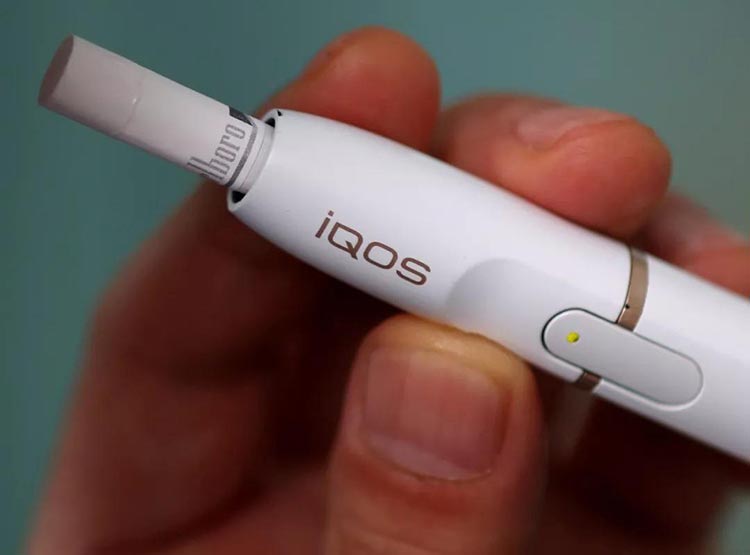 According to data from China Tobacco Journal, my country's e-cigarette sales reached 4.009 billion yuan in 2017, and the number of e-cigarette consumers reached 7.3659 million.
During the same period, a number of e-cigarette OEM companies developed and developed in Shenzhen. Unconfirmed but basically recognized data in the industry is that more than 600 e-cigarette companies gathered in Shenzhen produce 90% of the world's e-cigarette hardware products. By providing ODM/OEM OEM production for foreign brands, there are even five e-cigarette companies listed on the New Third Board in China.
Greater imagination is still behind: If consumers can establish a perception of cigarette replacements, theoretically speaking, the space for e-cigarettes is at least equivalent to the current cigarette market in China. In 2017, the taxes and profits paid by cigarettes throughout the year reached 1.1 trillion yuan.
This is not imaginary. In 2017, my country's per capita GDP exceeded US$8800, and a new generation of consumers need healthy and civilized smoking methods. The development of European and American markets over the past decade has partially verified the authenticity of this growth in demand.
The next choice is obvious. Market demand is growing rapidly and there is huge room for imagination. Domestic production technology and raw materials are fully mature. What needs to be done is to quickly jump in, make a big cake, and seize a share.
A group of sensitive venture capital has taken action. Public information shows that since last year, a series of e-cigarette companies such as Zhisheng Zhineng, Laan Shanlan, relx Yueshi, Gippro Longwu, Jingyan Technology, IJOY Aizoyi, and Yibo Electronics have been raised., totaling hundreds of millions of yuan.
More money is on the way. An investment manager of an investment company in Shenzhen said that e-cigarettes are a hot investment spot this year. As far as he knows, many investment companies are in contact with new projects. They also have their own layout on the upstream production side and downstream consumer side, and believe that there is hope that a world-renowned brand like Juul will emerge soon.
From the product perspective, small cigarettes and heated and non-burning products are becoming more and more popular. They do not aim to help consumers quit smoking, but only reduce the harm of tobacco and try to become alternative products.
Compared with large smoke products, small cigarettes are smaller in size and are easy to carry, and the smoke they emit is the same as normal cigarettes. Non-players can also use it on a daily basis; in terms of taste, small cigarettes represented by Juul are added to the tobacco oil. Nicotine salts are added to reduce the sensation of smoke hitting the throat, while improving the efficiency of blood absorption of nicotine, which can better solve the cravings.
Compared with atomized e-cigarettes that use tobacco oil to simulate the feeling of smoking, heated non-burning products represented by IQOS use smoke bombs containing real tobacco, and the taste is closer to real smoke. After the smoking set is inserted into the smoking set, it is heated to produce smoke, but it will not ignite. When the heating temperature is controlled below 300C, harmful substances in tobacco will be greatly reduced.
Manufacturers now emphasize e-cigarettes as a representative of fashionable life
Philip Morris International, the brand owner of IQOS, began to link products with fashion early, creating a sense of life for the brand through product appearance and offline space. According to interface reports, IQOS stores in Japan all choose to be located in the bustling commercial district of the city. The stores are mainly white and decorated with wood or green plants to highlight the experience of combining modern technology and nature.# p#pagination title #e#
Foreign products mainly enter the country through purchasing, which inspired the domestic market to develop similar products, each with improvements.
For example, RELX's products are only the size of a voice recorder and can be used for a long time, trying to solve the trouble of consumers frequently replacing cigarette bombs. Gippro Dragon Dance excels in its many product lines, including heating non-burn, smoke e-cigarettes, inhaled energy bars and nicotine-free tobacco oil products. Its heating non-burn products have become IQOS's main substitutes in China.
Compared with those established manufacturers that are mainly OEM manufacturers, new players pay more attention to building brands. A typical representative is RELX Yueshi. It defines the target users as young white-collar workers, you and him/her in love, and fathers with babies, and emphasizes the use of the product in multiple scenarios in daily life. Yue Ke uses stars such as actor Huang Jue, Monster Charging founder Cai Guangyuan and KOL to expand its popularity, and also looks for Internet celebrities and amateur people to grow grass on Xiaohongshu to impress consumers in a way with a weaker sense of marketing.
This approach works well, but there is still much room for improvement. As a local product, RELX's popularity is not even as good as IQOS, which needs to be purchased from Japan and spread through word of mouth. Searching for the Baidu Index, IQOS's overall average daily value in one month is 4069, while RELX's value is 16.
At the same time, the image of e-cigarettes in the minds of the general public is still vague or even negative. The top ten search-related terms for e-cigarettes on Baidu are occupied by hazards; judging from the e-cigarette industry media, its content still focuses on product evaluations for players and industry information for merchants, while promotion content for ordinary consumers accounts for a minority.
Policy is also a major risk. There was no clear definition of e-cigarettes when Ruyan was controlled more than ten years ago, but it is still not clear today. Different positioning largely determines the fate of e-cigarettes. Consumer goods, tobacco, or medical devices? Different positioning corresponds to gradually stricter regulatory policies, and the control of standards will greatly affect the development of e-cigarettes.
The latest regulatory trend is that on August 30, the State Administration for Market Regulation and the State Tobacco Monopoly Administration issued a notice prohibiting the sale of e-cigarettes to minors, recommending that e-commerce platforms remove e-cigarette products containing the words students, minors, etc. Remove the shelves and deduct points or close relevant stores.
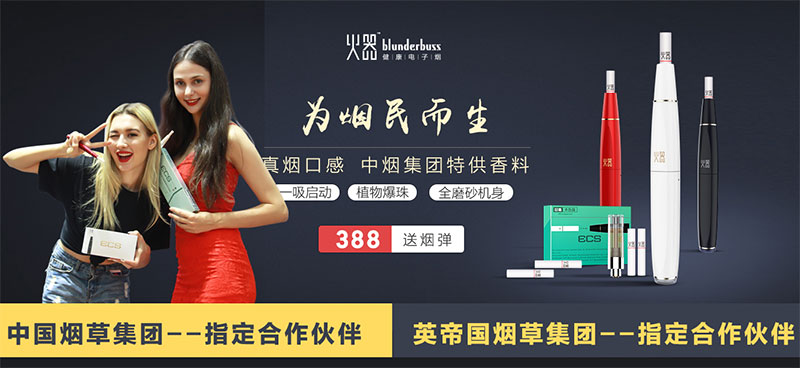 The manufacturers surrounding Alibaba representatives are eager and hesitant
Making a brand in a market that has not yet grown up and faces numerous risks requires a lot of investment and the rewards are unknown. On the other hand, in the European and American markets that have been strictly controlled since 2016, taking the U.S. FDA regulations as an example, all e-cigarette products must go through a traceable pre-market approval process, which results in a unit of product costing at least US$2 million to meet this requirement. According to industry insiders, local European and American e-cigarette companies, as well as the American branch of the Shenzhen Electronic Cigarette Association, are all playing games with European and American regulatory authorities and are expected to win more friendly policies.
E-commerce giants like Alibaba have already begun to take action, whether in the domestic market with huge potential or overseas markets that are expected to reopen.
On August 29, Alibaba's three B-side and C-side platforms, Tmall, International Station, and 1688 respectively, jointly held the Nuggets E-commerce Conference with the IECIE E-Cigarette Conference, inviting brands of e-cigarette products and accessories to settle in.
Alibaba representatives said that they will focus on helping merchants in building brands, and require merchants to pay attention to highlighting brand positioning and unique temperament when settling in to distinguish them from the numerous and ambiguous competing products.
All three platforms promise to give e-cigarettes more traffic tilt. For example, e-cigarettes were originally only used as a level 4 entrance under the Big 3C category on Alibaba International Station. Next, they will be upgraded to a level 2, shallower entrance. Kang Tau said that e-cigarettes have huge space and will continue to help China companies set sail in the future.
“Everyone, what we spend is RMB and what we earn back is a large amount of dollars.& rdquo; Facing the enthusiastic and confused e-cigarette merchants under the stage, the slightly plump kang, wearing a dark short-sleeved T-shirt and blue jeans, repeated it again.# p#pagination title #e#At present, we already own the largest e-cigarette production workshop in Shenzhen, have obtained many e-cigarette patents at home and abroad, and recruit partners from around the world. If you are interested in earning a bucket of gold in the e-cigarette industry, you can call: 17682343645 or consult WeChat: vapeos
“Everyone, what we spend is RMB and what we earn back is a large amount of dollars.& rdquo; Facing the crowded merchants in the audience, Kang Tau, head of the e-cigarette industry at Alibaba International Station, said.
This was an industry gathering in Shenzhen in August this year. More than 200 e-cigarette merchants were crammed into the 80-square-meter venue. Many people stood at the venue and listened to the entire process. They seized every opportunity between the meetings to surround representatives of Alibaba's Tmall, International Station, and 1688, and asked questions about industry prospects, entry conditions, supporting policies, regulatory changes and other aspects.
This will be a typical story of lost and recovered, involving potential amounts of at least one trillion yuan: Faced with the ever-growing and splurging e-cigarette market, sensitive entrepreneurs and bold venture capital are competing to jump in.According to public information, in the past three years, at least 10 China e-cigarette companies have received financing totaling several hundred million yuan. More manufacturers gathered in the Pearl River Delta who originally thought they were mainly engaged in OEM production overseas are also eager to create their own consumer brands and build their influence in China and overseas markets.
Although they still face various difficulties, they will embark on a long journey to try to recapture the market, honor and money that were born here and originated here, but were occupied by foreign manufacturers.
Is selling e-cigarettes illegal?
It's like a scene often seen in stories: on the eve of the opening of the New World, its founder fell at the gate.
In 2013, China Ruyan Company, the inventor of e-cigarettes, was acquired by Imperial Tobacco, the world's fourth largest tobacco company, for US$75 million after years of losses. Like stories that have happened in many industries such as FMCG, the Ruyan brand was subsequently shelved.
Han Li, the founder of Ruyan, can be called the father of e-cigarettes. In 2003, pharmacist Han Li invented the world's first e-cigarette in order to quit smoking. He used tobacco oil containing nicotine, propylene glycol, and food flavors instead of tobacco. The built-in atomizer volatilize the tobacco oil to form smoke, which will not produce coal tar, the carcinogenic culprit in traditional tobacco.
Subsequently, Han Li established Ruyan to produce and sell e-cigarette products, focusing on smoking cessation functions. It began exporting overseas in 2005, and sales reached 1 billion yuan in 2006. In 2008, Ruyan Company was listed in Hong Kong under the name of Sanlong International, reaching its peak moment.
What followed was the ensuing blow. In China, Ruyan is considered by CCTV and regulatory agencies to be ineffective in smoking cessation and has false publicity. The market, which has been unable to be lifted due to high prices, lax tobacco restrictions, and weak demand for substitution, is even more sluggish.
In the European and American markets where demand is relatively greater, the rapid growth of e-cigarette sales has quickly attracted the attention of tobacco giants. Faced with Ruyan without patent protection, the elephants entering the market quickly broke through the low technical barriers of e-cigarettes and used their own advantages in publicity, channels and brands to occupy the market.
Rich tycoons use celebrity endorsements, advertise in magazines such as Rolling Stone and Sports Illustrated, sponsor high-end fashion events such as New York Fashion Week, and persuade popular stars such as Xiao Li, Depp, and widow Scarlett Johansson to become fans of e-cigarettes, making e-cigarettes a symbol of fashion and popularity.
This has promoted the steady growth of the e-cigarette market in Europe and the United States, but it has nothing to do with Ruyan, which is small and weak. Ruyan suffered losses in succession in the next few years. In 2013, it sold itself to Imperial Tobacco. Han Li became a consultant to Imperial Tobacco's companies and could only sit and watch the changes in the e-cigarette market in the following four years.
Is it profitable to make e-cigarettes?
During the time when Ruyan gradually fell to the ground, e-cigarettes, which were gradually becoming popular in Europe and the United States, were developed with play and performance attributes by foreign young people through social software as a representative of a trend culture and subculture, and began to be popular among domestic young people.# p #pagination title #e #
Since 2014, offline e-cigarette stores with experiential functions have appeared in some cities in China. Cigarette smoking, skateboarding, and graffiti videos are often played in the stores. China players use these offline stores as clubs, constituting the main consumption power.
At the National Tobacco Work Conference in the same year, Ling Chengxing, then director of the State Tobacco Administration, clearly mentioned that we must attach great importance to the research and development of new tobacco products such as heated non-combustible cigarettes, e-cigarettes, and mouth-filled cigarettes, and regard it as a sustainable development related to the industry. Major issues. rdquo;
Since then, China Tobacco Companies in Yunnan, Sichuan and Chongqing, Jiangsu and Hunan have successively promoted the research and development of new products and applied for patents to seize the e-cigarette market.
In the following four years, e-cigarettes were not only spread among young people as a fashion trend and culture through social software. Updated foreign products, such as smoke and small cigarettes with smaller specifications, and heated non-burning products using real tobacco, have begun to become popular among consumer groups other than players.
In particular, the IQOS, which was first launched by tobacco group Philip Morris International in Japan, has become a gift often brought back by Chinese people when traveling to Japan because it tastes closer to cigarettes and has a fashionable appearance.
According to data from China Tobacco Journal, my country's e-cigarette sales reached 4.009 billion yuan in 2017, and the number of e-cigarette consumers reached 7.3659 million.During the same period, a number of e-cigarette OEM companies developed and developed in Shenzhen. Unconfirmed but basically recognized data in the industry is that more than 600 e-cigarette companies gathered in Shenzhen produce 90% of the world's e-cigarette hardware products. By providing ODM/OEM OEM production for foreign brands, there are even five e-cigarette companies listed on the New Third Board in China.
Greater imagination is still behind: If consumers can establish a perception of cigarette replacements, theoretically speaking, the space for e-cigarettes is at least equivalent to the current cigarette market in China. In 2017, the taxes and profits paid by cigarettes throughout the year reached 1.1 trillion yuan.
This is not imaginary. In 2017, my country's per capita GDP exceeded US$8800, and a new generation of consumers need healthy and civilized smoking methods. The development of European and American markets over the past decade has partially verified the authenticity of this growth in demand.
The next choice is obvious. Market demand is growing rapidly and there is huge room for imagination. Domestic production technology and raw materials are fully mature. What needs to be done is to quickly jump in, make a big cake, and seize a share.
A group of sensitive venture capital has taken action. Public information shows that since last year, a series of e-cigarette companies such as Zhisheng Zhineng, Laan Shanlan, relx Yueshi, Gippro Longwu, Jingyan Technology, IJOY Aizoyi, and Yibo Electronics have been raised., totaling hundreds of millions of yuan.
More money is on the way. An investment manager of an investment company in Shenzhen said that e-cigarettes are a hot investment spot this year. As far as he knows, many investment companies are in contact with new projects. They also have their own layout on the upstream production side and downstream consumer side, and believe that there is hope that a world-renowned brand like Juul will emerge soon.
From the product perspective, small cigarettes and heated and non-burning products are becoming more and more popular. They do not aim to help consumers quit smoking, but only reduce the harm of tobacco and try to become alternative products.
Compared with large smoke products, small cigarettes are smaller in size and are easy to carry, and the smoke they emit is the same as normal cigarettes. Non-players can also use it on a daily basis; in terms of taste, small cigarettes represented by Juul are added to the tobacco oil. Nicotine salts are added to reduce the sensation of smoke hitting the throat, while improving the efficiency of blood absorption of nicotine, which can better solve the cravings.
Compared with atomized e-cigarettes that use tobacco oil to simulate the feeling of smoking, heated non-burning products represented by IQOS use smoke bombs containing real tobacco, and the taste is closer to real smoke. After the smoking set is inserted into the smoking set, it is heated to produce smoke, but it will not ignite. When the heating temperature is controlled below 300C, harmful substances in tobacco will be greatly reduced.
Manufacturers now emphasize e-cigarettes as a representative of fashionable life
Philip Morris International, the brand owner of IQOS, began to link products with fashion early, creating a sense of life for the brand through product appearance and offline space. According to interface reports, IQOS stores in Japan all choose to be located in the bustling commercial district of the city. The stores are mainly white and decorated with wood or green plants to highlight the experience of combining modern technology and nature.# p#pagination title #e#
Foreign products mainly enter the country through purchasing, which inspired the domestic market to develop similar products, each with improvements.
For example, RELX's products are only the size of a voice recorder and can be used for a long time, trying to solve the trouble of consumers frequently replacing cigarette bombs. Gippro Dragon Dance excels in its many product lines, including heating non-burn, smoke e-cigarettes, inhaled energy bars and nicotine-free tobacco oil products. Its heating non-burn products have become IQOS's main substitutes in China.
Compared with those established manufacturers that are mainly OEM manufacturers, new players pay more attention to building brands. A typical representative is RELX Yueshi. It defines the target users as young white-collar workers, you and him/her in love, and fathers with babies, and emphasizes the use of the product in multiple scenarios in daily life. Yue Ke uses stars such as actor Huang Jue, Monster Charging founder Cai Guangyuan and KOL to expand its popularity, and also looks for Internet celebrities and amateur people to grow grass on Xiaohongshu to impress consumers in a way with a weaker sense of marketing.
This approach works well, but there is still much room for improvement. As a local product, RELX's popularity is not even as good as IQOS, which needs to be purchased from Japan and spread through word of mouth. Searching for the Baidu Index, IQOS's overall average daily value in one month is 4069, while RELX's value is 16.
At the same time, the image of e-cigarettes in the minds of the general public is still vague or even negative. The top ten search-related terms for e-cigarettes on Baidu are occupied by hazards; judging from the e-cigarette industry media, its content still focuses on product evaluations for players and industry information for merchants, while promotion content for ordinary consumers accounts for a minority.
Policy is also a major risk. There was no clear definition of e-cigarettes when Ruyan was controlled more than ten years ago, but it is still not clear today. Different positioning largely determines the fate of e-cigarettes. Consumer goods, tobacco, or medical devices? Different positioning corresponds to gradually stricter regulatory policies, and the control of standards will greatly affect the development of e-cigarettes.
The latest regulatory trend is that on August 30, the State Administration for Market Regulation and the State Tobacco Monopoly Administration issued a notice prohibiting the sale of e-cigarettes to minors, recommending that e-commerce platforms remove e-cigarette products containing the words students, minors, etc. Remove the shelves and deduct points or close relevant stores.
The manufacturers surrounding Alibaba representatives are eager and hesitantMaking a brand in a market that has not yet grown up and faces numerous risks requires a lot of investment and the rewards are unknown. On the other hand, in the European and American markets that have been strictly controlled since 2016, taking the U.S. FDA regulations as an example, all e-cigarette products must go through a traceable pre-market approval process, which results in a unit of product costing at least US$2 million to meet this requirement. According to industry insiders, local European and American e-cigarette companies, as well as the American branch of the Shenzhen Electronic Cigarette Association, are all playing games with European and American regulatory authorities and are expected to win more friendly policies.
E-commerce giants like Alibaba have already begun to take action, whether in the domestic market with huge potential or overseas markets that are expected to reopen.
On August 29, Alibaba's three B-side and C-side platforms, Tmall, International Station, and 1688 respectively, jointly held the Nuggets E-commerce Conference with the IECIE E-Cigarette Conference, inviting brands of e-cigarette products and accessories to settle in.
Alibaba representatives said that they will focus on helping merchants in building brands, and require merchants to pay attention to highlighting brand positioning and unique temperament when settling in to distinguish them from the numerous and ambiguous competing products.
All three platforms promise to give e-cigarettes more traffic tilt. For example, e-cigarettes were originally only used as a level 4 entrance under the Big 3C category on Alibaba International Station. Next, they will be upgraded to a level 2, shallower entrance. Kang Tau said that e-cigarettes have huge space and will continue to help China companies set sail in the future.
“Everyone, what we spend is RMB and what we earn back is a large amount of dollars.& rdquo; Facing the enthusiastic and confused e-cigarette merchants under the stage, the slightly plump kang, wearing a dark short-sleeved T-shirt and blue jeans, repeated it again.# p#pagination title #e#At present, we already own the largest e-cigarette production workshop in Shenzhen, have obtained many e-cigarette patents at home and abroad, and recruit partners from around the world. If you are interested in earning a bucket of gold in the e-cigarette industry, you can call: 17682343645 or consult WeChat: vapeos


