
New Changes in the Vaping Industry in 2018
If 2014 was the first year of e-cigarettes in China, then 2018 may be considered the first year of pod systems. China's vaping market began gradually entering the public eye in 2014. As a major manufacturing base for e-cigarettes, most Chinese vaping comp
If 2014 was the first year of e-cigarettes in China, then 2018 will be the first year of pod systems.
The domestic e-cigarette market began to gradually come into the public eye starting in 2014. China is a major manufacturer of e-cigarettes, and before 2014, most e-cigarette companies focused on foreign markets. With the decline in sales of disposable e-cigarettes, the hot sales of foreign brand e-liquids, and the intervention of FDA regulations, domestic e-cigarette companies faced shrinking orders. After 2014, as the reshuffling of the European and American markets was completed, the domestic e-cigarette industry, facing sales bottlenecks, had to turn its attention to the domestic market. Since 2014, the domestic market has shown explosive growth, with market sales increasing by 263% compared to the same period in 2013, and users increasing by 259%. The total market volume in 2014 was around 200 million yuan, which broke through 500 million yuan in 2015, and the industry scale exceeded 1 billion in 2016. As of today, the e-cigarette market has quietly undergone significant changes. JUUL became the top-selling e-cigarette in the U.S. in 2017, capturing nearly 60% of the market share, relying solely on a single product dimension. The world's largest independent e-cigarette brand, VMR, entered the Chinese market, launching the GR series e-cigarettes, with the main product still being the small pod-type GR-EX series. Meanwhile, major e-cigarette brands that have been acquired by tobacco companies have also adopted market strategies centered around pod systems, suggesting that pod systems have become the new industry trend.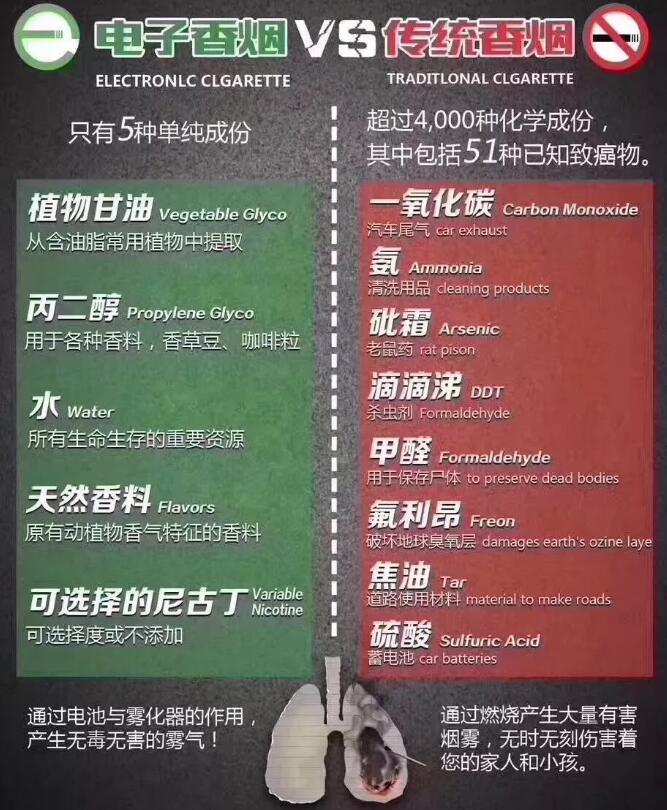 Why have pod systems emerged? Has the winter for large cloud (box-type) e-cigarettes arrived?
1. Technological changes have brought a new experience
E-cigarettes have evolved from their initial imitation to large cloud devices due to technological bottlenecks. Early e-cigarette e-liquid technology was not mature enough, and most early e-cigarette companies were emerging tech companies outside the tobacco industry, lacking sufficient technical reserves and R&D teams to replicate the tobacco flavor in e-liquids. Early e-cigarette e-liquids mainly used freebase nicotine and various food flavorings, resulting in strong aromas, weak throat hits, low transfer rates, and poor smoothness. For users, while the flavor was sufficient to meet the smoking cessation needs, the satisfaction was lacking.
In this context, the flavor was sufficient to meet the smoking cessation needs, but the lack of satisfaction remained. The technological innovation of e-cigarettes entered the era of large clouds. With higher power, higher nicotine content, and higher VG content, larger vapor volumes were produced, allowing users to achieve greater satisfaction in a single puff. The emergence of such products essentially solved the needs for flavor and satisfaction. The larger power and e-liquid usage also led to larger device sizes and atomizer specifications. Additionally, the significant increase in vapor volume attracted a new customer base—self-identified VAPOR e-cigarette enthusiasts.
Today, the e-cigarette industry has become a new battleground for tobacco giants, with the emergence of platforms for nicotine salts, tobacco extracts, and heated tobacco technologies providing a new user experience for pod systems. For users looking to quit smoking, products that can effectively replace cigarettes are the true first choice.
2. Completion of industry reshuffling
Currently, major e-cigarette brands in Europe and America have been largely consumed. The e-cigarette industry has undoubtedly become a new playground for traditional tobacco giants, where new companies are left waiting for either acquisition or bankruptcy.
The EU ISO/TC126 secretariat and the FDA have fully incorporated e-cigarettes into the regulatory framework and established a high market entry mechanism. As products of large clouds, innovation and diverse functions and appearances are the selling points pursued by customers, which will also incur astronomical certification costs.
The tightening of market regulations is also a major factor leading large cloud products to transition from the industry's spring to winter. No manufacturer can afford the full-line entry certification for numerous product models, inevitably leading to the gradual elimination of complex product lines and a leaner approach.
3. Changes in user perception
Once, there was much debate about the health risks of e-cigarettes, but with the release of new clinical data, the myths surrounding the dangers of e-cigarettes have gradually been debunked. More users are inclined to choose smoking cessation products rather than becoming players in the vaping scene.
Why have pod systems emerged? Has the winter for large cloud (box-type) e-cigarettes arrived?
1. Technological changes have brought a new experience
E-cigarettes have evolved from their initial imitation to large cloud devices due to technological bottlenecks. Early e-cigarette e-liquid technology was not mature enough, and most early e-cigarette companies were emerging tech companies outside the tobacco industry, lacking sufficient technical reserves and R&D teams to replicate the tobacco flavor in e-liquids. Early e-cigarette e-liquids mainly used freebase nicotine and various food flavorings, resulting in strong aromas, weak throat hits, low transfer rates, and poor smoothness. For users, while the flavor was sufficient to meet the smoking cessation needs, the satisfaction was lacking.
In this context, the flavor was sufficient to meet the smoking cessation needs, but the lack of satisfaction remained. The technological innovation of e-cigarettes entered the era of large clouds. With higher power, higher nicotine content, and higher VG content, larger vapor volumes were produced, allowing users to achieve greater satisfaction in a single puff. The emergence of such products essentially solved the needs for flavor and satisfaction. The larger power and e-liquid usage also led to larger device sizes and atomizer specifications. Additionally, the significant increase in vapor volume attracted a new customer base—self-identified VAPOR e-cigarette enthusiasts.
Today, the e-cigarette industry has become a new battleground for tobacco giants, with the emergence of platforms for nicotine salts, tobacco extracts, and heated tobacco technologies providing a new user experience for pod systems. For users looking to quit smoking, products that can effectively replace cigarettes are the true first choice.
2. Completion of industry reshuffling
Currently, major e-cigarette brands in Europe and America have been largely consumed. The e-cigarette industry has undoubtedly become a new playground for traditional tobacco giants, where new companies are left waiting for either acquisition or bankruptcy.
The EU ISO/TC126 secretariat and the FDA have fully incorporated e-cigarettes into the regulatory framework and established a high market entry mechanism. As products of large clouds, innovation and diverse functions and appearances are the selling points pursued by customers, which will also incur astronomical certification costs.
The tightening of market regulations is also a major factor leading large cloud products to transition from the industry's spring to winter. No manufacturer can afford the full-line entry certification for numerous product models, inevitably leading to the gradual elimination of complex product lines and a leaner approach.
3. Changes in user perception
Once, there was much debate about the health risks of e-cigarettes, but with the release of new clinical data, the myths surrounding the dangers of e-cigarettes have gradually been debunked. More users are inclined to choose smoking cessation products rather than becoming players in the vaping scene.

