
Why Are Imported E-Liquids on Taobao Cheaper Than on the Official Website?
Years ago, when the domestic market was just emerging, the best-selling e-liquids on Taobao were mainly imported ones, originally for a very niche group of users. Imported e-liquid prices were generally high at the time. The main sizes were 15 ml and 30 m
Years ago, when the domestic market for e-liquids was just emerging, the imported e-liquids sold on Taobao were primarily for a niche group of players. At that time, the prices of imported e-liquids were generally high. The specifications were mainly 15ml and 30ml, with few merchants and little competition, leading to fewer users and lower purchase volumes. The prices of e-liquids were mainly marked based on the official prices in Europe and the United States, converted through exchange rates. Some would add shipping costs or tariffs.
At that time, the price of a 15ml branded e-liquid on the US official website was generally around 15 USD, which, when converted, was about 90-100 yuan; the price for a 30ml bottle was generally around 25 USD, roughly 160 yuan. The merchants at that time were mainly online retailers concentrated on Taobao, directly targeting end users. They would source small batches from American brand owners or traders, adding some shipping or tariffs, with an average markup of 1-2 USD. Some even brought back small batches directly when returning to China. Retailers generally had a profit margin of about 100%. At this time, the prices were relatively normal, with the common specifications of 15ml and 30ml priced around 100 yuan and 160 yuan respectively, with market sensitivity allowing the first batch of merchants to reap rewards, but due to the niche nature of the market, the sales volumes were not large. During this phase, imported e-liquids had the following characteristics:Many products were genuinely original imports.
Many original imports were indeed foreign brands (regardless of brand size).
The market participants were mostly small online retailers (on Taobao), with physical retailers and large-scale traders yet to participate.
Brands were concentrated in the US, with a few from Europe, Malaysia, and the Philippines.
Most brand owners viewed the Chinese market as a secondary market, with no brand planning in China.
Some basic examples include:
Halo
Five Pawns
Ejuice 2 die 4
Cuttwood
Cosmic Fog
Space Jam
Suicide Bunny
12 Vapor
Kilo
Mad Mike's
Mount Baker Vapor
Ruthless
Trabuco
Mylk
Pop Corn
Triumphant
Milkman
Lazarus
Voodoovape (Malaysia)
Almost every small retailer had a focus, working hard to promote and even market their products. At that time, the market was small, and efforts quickly yielded returns, with everyone getting along well. The prices at that time were generally reasonable. It is well known that domestic merchants had little brand awareness or knowledge and preferred to take ready-made products.
With the efforts of these small merchants, the domestic market gradually began to take shape, with more e-cigarette users emerging and market demand gradually increasing.
At this time, the industry backdrop was that domestic e-cigarette production capacity was excessive, with many factories facing insufficient orders, making it increasingly difficult for traders. A large number of industry personnel faced business transitions.
Some sensitive traders who had accumulated certain capital saw the market potential and quickly entered, marking the beginning of the bulk purchasing era, which was the second phase.
Bulk purchasing made brand owners gradually pay attention to the Chinese market. Of course, in a closed and unknown market, they preferred to have a financial backer to carry large shipments, which generally made brand planning easier. However, this also became the root of the chaotic pricing mentioned by the questioner.
For example, the initial bulk purchase price for a 30ml Cuttwood was around 8-9 USD, with an average of 1 USD for shipping and tariffs (in reality, it was more, as the industry generally does not declare customs based on actual prices, as seen in the case of the largest batch of imported e-liquids smuggling case caught by Zhuhai Customs). This means that the declared value could range from 1-9 USD, depending on the risk tolerance. Therefore, the actual cost of a 30ml Cuttwood e-liquid arriving in China, after adding VAT of 17%, tariffs of 5%, and other miscellaneous taxes, was about 12 USD, roughly 75 yuan. Even so, it was still more cost-effective and convenient than small batch purchases by retailers, providing a basic price for original imported e-liquids (this does not refer to some abnormal brands, as the wholesale price for 30ml e-liquids in the US can vary from 6-12 USD depending on the brand).
The trader (importer) would add a markup of about 20% and distribute the goods in small batches to Taobao retailers or physical stores (at this time, domestic physical stores were gradually emerging). This transformed the market from an oligopoly to one with multiple competitors: between Taobao shops, online and offline, and even traders and importers directly competing in retail. The profit margins for Taobao merchants dropped from 100% (160 yuan) to 50% (120 yuan), and some even dropped lower due to direct participation from traders. As demand for a particular brand increased due to the collective promotion by numerous merchants, other traders also entered the market. Over time, the market became a bloody competition (Turn the blue ocean blood), leading to a number of merchants offering "add 5 yuan to sell" (80-100 yuan). At this point, all channels for that brand lost profitability, and the brand gradually lost its value in the Chinese market. Even if the flavor was excellent, no merchants were willing to promote it, leading to the gradual disappearance of once-popular brands from the Chinese market. #p#分页标题#e#
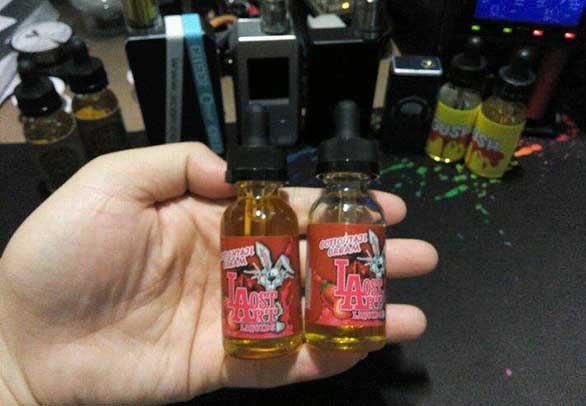 Another reason is that foreign brand owners lack understanding of the Chinese market and are eager to enter this globally promising market. During the bulk purchasing phase, many traders, in order to secure better prices to meet market demand, often bit off more than they could chew. Alternatively, foreign brand owners themselves may not have taken their brands seriously, only seeking to make a quick profit (lower-end brands, brand owners, or brand strategies) or, like in the first phase, brand owners had not formally entered the Chinese market but were operated by agents. This led to an overall oversupply in the market. Merchants were pressured to reduce inventory, while new products continued to enter the market. Everyone was eager to lower prices to clear stock.
During this phase, imported e-liquids had the following characteristics:
Another reason is that foreign brand owners lack understanding of the Chinese market and are eager to enter this globally promising market. During the bulk purchasing phase, many traders, in order to secure better prices to meet market demand, often bit off more than they could chew. Alternatively, foreign brand owners themselves may not have taken their brands seriously, only seeking to make a quick profit (lower-end brands, brand owners, or brand strategies) or, like in the first phase, brand owners had not formally entered the Chinese market but were operated by agents. This led to an overall oversupply in the market. Merchants were pressured to reduce inventory, while new products continued to enter the market. Everyone was eager to lower prices to clear stock.
During this phase, imported e-liquids had the following characteristics:Most classic brands were still original imports.
The number of market participants increased: online retail; offline retail; various traders; micro-businesses, etc.
The number of brands surged, with brands from the US, Europe, Southeast Asia, Japan, South Korea, Canada, Russia, etc., entering the market one after another.
Prices continued to drop, and profits became thinner, leading to intense competition among merchants.
Very few brand owners directly managed the intermediary market, mainly leaving it to agents or traders.
A few star brands experienced astonishing sales volumes at certain stages.
Almost no brand could sustain itself, leading to the industry saying that one should "sell off within three months".
At this time, most people indeed saw the potential of the Chinese market, but some brands had been killed by intermediaries or traders in the domestic market. However, new foreign brands continued to flood in. Inventory pressure was severe, while downstream players tirelessly sought new sources and compared prices. The market entered a new phase, referred to as "localized production".
Localized production further reduced e-liquid costs.
To briefly discuss the cost of e-liquids in the US, the basic raw materials PG, VG, and flavorings can be said to be half domestic and half imported, while glass bottles are generally imported from China, and labor costs in the US are significantly higher than in China.
After localized production, the main materials PG and VG are primarily sourced from China, accounting for about 90% of the e-liquid composition, and the e-liquid bottles come from China, eliminating the need for overseas shipping. This saves about 1/4 of the cost in shipping and customs. Foreign manufacturers may only transport large barrels of pre-mixed flavorings, which can then be combined with PG and VG as required. Thus, the cost of a 30ml so-called imported e-liquid can be controlled to around 20 yuan, and with the markup from traders and retailers, the normal retail price remains profitable at 50-80 yuan. Market participants regained profit margins, and some brands showed signs of revival.
Since the barriers to entry for imported e-liquid brands are so low, some merchants thought: why not create an imported brand themselves? They would go to e-liquid workshops to select existing flavors, design a logo and packaging, take some photos abroad, and register an Instagram and Facebook account. The cost of a 30ml e-liquid could drop below 10 yuan, while the terminal price could compete with imported brands. Thus, a new batch of high-cost performance, high-profit margin e-liquid brands emerged.
Before this, there were even some individuals who could replicate the star flavors of certain brands, creating near-identical products at unexpectedly low prices. This can be categorized as domestic counterfeiting.
At this point, brand owners or manufacturers often kept silent about the origin of their products or deliberately concealed it. Many times, terminal retailers were only partially aware of the situation. This deception has been perpetuated among stakeholders, excluding consumers.


