
Why Does E-Cigarette Vapor Production Get Smaller Over Time?
Why does e-cigarette vapor production decrease the longer you use it? Vapor output is one of the standards people use to judge an e-cigarette, especially for enthusiasts who enjoy doing vapor tricks and prefer large clouds. Many users report that a new de
Why does the vapor production of e-cigarettes get smaller over time? The vapor production of e-cigarettes is one of the criteria for evaluating the quality of an e-cigarette, especially for those e-cigarette enthusiasts who enjoy blowing smoke rings and prefer devices that produce large vapor clouds. Many users report that when they first start using an e-cigarette, the vapor production is substantial, but over time, it diminishes. Why is this?
Reason 1: Quality Issues
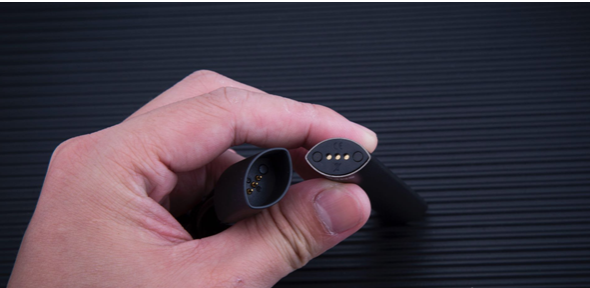
If the vapor production decreases shortly after starting to use it, it is likely a quality issue. The resistance parameters of the heating wire in the atomizer may be too high, or the cotton wicking may not be functioning properly, the battery quality may be poor, excessive oil leakage, or even oil leakage issues, all of which can lead to reduced vapor production; disposable e-cigarettes generally produce less vapor as well. In such cases, the only solution is to buy a new atomizer.
Reason 2: Lack of Cleaning
If the atomizer has been used for a long time and the vapor production is decreasing, check if the atomizer is clogged, carbonized, or if the cotton wicking is burnt. If so, a simple solution is to clean it.
Reason 3: Incorrect Parameter Matching
The battery voltage and atomizer resistance parameters may not be matched correctly. For example, if the atomizer resistance is too low, the battery may not be able to drive it, resulting in insufficient vapor production. You may need to replace the battery or atomizer to ensure proper parameter matching.
Reason 4: E-Liquid
It may be due to using e-liquid with a low VG content. VG (vegetable glycerin) is an essential component of e-liquid, primarily responsible for vapor production. Therefore, if you switch to e-liquid with lower VG content, it will lead to reduced vapor. When selecting e-liquid, carefully check the product description or ask the seller about the VG content. If you want more vapor, choose e-liquid with higher VG content; if you want less vapor, choose e-liquid with lower VG content.
To achieve larger vapor production, you need to choose the right atomizer. Simply put, the lower the atomizer resistance and the higher the voltage, the larger the vapor. However, this will also accelerate the vaporization speed of the e-liquid, and if the wicking material cannot keep up with the vaporization speed, it will quickly burn out. Therefore, theoretically, to achieve better results, you need to involve some specialized knowledge. For example, this formula: Power = Voltage squared / Resistance (P = U*U/R). Currently, the standard battery voltage in the industry is 3.7V, and when fully charged, it can reach about 4.2V. Knowing this, you can find the most suitable power based on the resistance of the atomizer. If the resistance of the atomizer is 0.2Ω, the suitable power value is about 68-88W; if it is 0.9Ω, the suitable power value is about 15-19.6W. Other resistance values can also be calculated using the above formula to determine the power value, allowing you to create a high vapor e-cigarette.
Reason 1: Quality Issues
If the vapor production decreases shortly after starting to use it, it is likely a quality issue. The resistance parameters of the heating wire in the atomizer may be too high, or the cotton wicking may not be functioning properly, the battery quality may be poor, excessive oil leakage, or even oil leakage issues, all of which can lead to reduced vapor production; disposable e-cigarettes generally produce less vapor as well. In such cases, the only solution is to buy a new atomizer.
Reason 2: Lack of Cleaning
If the atomizer has been used for a long time and the vapor production is decreasing, check if the atomizer is clogged, carbonized, or if the cotton wicking is burnt. If so, a simple solution is to clean it.
Reason 3: Incorrect Parameter Matching
The battery voltage and atomizer resistance parameters may not be matched correctly. For example, if the atomizer resistance is too low, the battery may not be able to drive it, resulting in insufficient vapor production. You may need to replace the battery or atomizer to ensure proper parameter matching.
Reason 4: E-Liquid
It may be due to using e-liquid with a low VG content. VG (vegetable glycerin) is an essential component of e-liquid, primarily responsible for vapor production. Therefore, if you switch to e-liquid with lower VG content, it will lead to reduced vapor. When selecting e-liquid, carefully check the product description or ask the seller about the VG content. If you want more vapor, choose e-liquid with higher VG content; if you want less vapor, choose e-liquid with lower VG content.
To achieve larger vapor production, you need to choose the right atomizer. Simply put, the lower the atomizer resistance and the higher the voltage, the larger the vapor. However, this will also accelerate the vaporization speed of the e-liquid, and if the wicking material cannot keep up with the vaporization speed, it will quickly burn out. Therefore, theoretically, to achieve better results, you need to involve some specialized knowledge. For example, this formula: Power = Voltage squared / Resistance (P = U*U/R). Currently, the standard battery voltage in the industry is 3.7V, and when fully charged, it can reach about 4.2V. Knowing this, you can find the most suitable power based on the resistance of the atomizer. If the resistance of the atomizer is 0.2Ω, the suitable power value is about 68-88W; if it is 0.9Ω, the suitable power value is about 15-19.6W. Other resistance values can also be calculated using the above formula to determine the power value, allowing you to create a high vapor e-cigarette.


