
Why Does an E-Cigarette Short Circuit?
An e-cigarette consists of an atomizer, metal and copper components, a control chip board, and a battery. If any component has a problem or develops a short circuit, the device will not function properly. Common causes of short circuits include metal debr
An e-cigarette consists of an atomizer, metal components, a chip control board, and a battery. If any one of these components has a problem or short circuits, the e-cigarette will not function properly.
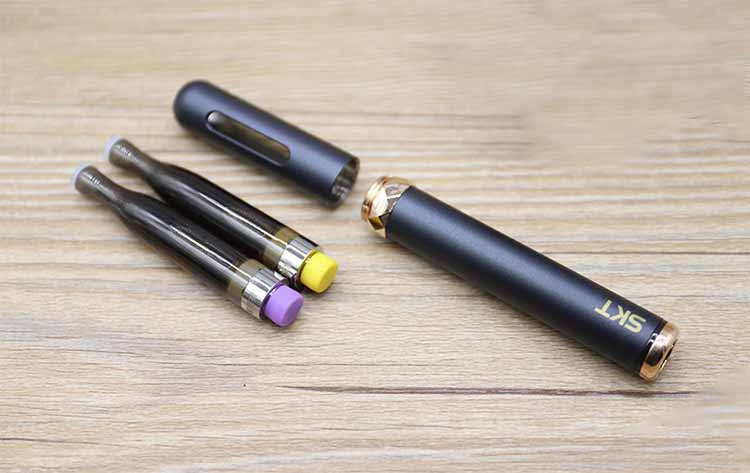
Why does an e-cigarette short circuit? The common causes of e-cigarette short circuits include:
1. Metal shavings in the threaded copper ring of the atomizer during production, which can cause a discharge short circuit.
2. Metal shavings between the threaded copper ring of the charger and the e-cigarette can also lead to a charging short circuit.
3. The design of the metal threaded copper ring requires high precision; the interference between the internal and external threads is critical to prevent short circuits in e-cigarettes.
4. Issues during the production assembly process or errors by assembly workers can also cause short circuits.
Consequences of short circuits in e-cigarettes!
1. E-cigarettes typically use rechargeable batteries, which have very low internal resistance. If the positive and negative terminals of the power supply short circuit, the current can immediately cause the power line to smoke and glow red. Within seconds, the insulation around the wire (which has some resistance) can melt. If the wire does not break, the battery can also heat up and become hot to the touch.
2. When a short circuit occurs, the internal resistance of the battery suddenly decreases, and the current flowing through the short circuit point can be dozens of times the normal operating current, damaging components like wires and MOSFETs. Faulty components and some non-faulty components can be damaged due to the large short circuit current, shortening their lifespan.
3. Popular EGO devices on the market use batteries with high power consumption. During a short circuit, a significant amount of energy is concentrated in a small volume and must be released in a very short time, which can lead to explosions.
How to avoid short circuits in mechanical e-cigarettes?
1. Regularly check the resistance and short circuit status of the atomizer. Unlike general finished e-cigarettes, mechanical e-cigarettes can still fire even when the atomizer has short-circuited. Here, a short circuit refers to the resistance value dropping to zero or near zero, but most finished e-cigarettes will not allow the resistance to drop below 1.5 ohms, ensuring the battery does not experience excessive pressure.
When using a new atomizer, always check the resistance first to confirm there are no abnormalities before attaching it to the mechanical battery compartment.
If using a rebuildable atomizer (RBA), do not allow the resistance to drop too low, as this can cause excessive pressure on the battery. It is best to keep the resistance between 2.4 - 3.0 ohms for safety.
Although atomizers are not prone to short circuits, it is still advisable to use a multimeter to test (friends using mechanical e-cigarettes should prepare a multimeter). The testing method is as follows: remove the battery, connect the battery compartment and atomizer, place one probe of the multimeter on the positive terminal of the battery compartment, and the other probe on the surface of the battery compartment (note that it should not touch the negative terminal). If the multimeter shows a non-zero resistance, it means current is flowing, indicating a short circuit somewhere.
When testing resistance with a multimeter, be aware that the multimeter leads may also introduce resistance. We have seen some very cheap multimeters where the lead resistance is even higher than 0.6 ohms. You can check the lead resistance by touching the two probes together. When testing the atomizer, subtract this value to get the true resistance. For example, if you measure the atomizer and find a resistance of 2 ohms, but the lead resistance is 0.6 ohms, the true resistance is only 1.4 ohms.
2. Avoid fully discharging the battery. Another potential cause of battery damage or even fire is continuous discharge beyond the discharge threshold, meaning the battery is drained too completely.
A lithium battery is typically at 4.2v when fully charged. As the battery is used, the voltage decreases. When the voltage drops to 3.6v or even 3.3v, you can usually still use the battery safely. However, a safer practice is to stop using the battery and recharge it when the voltage reaches 3.6v.
If you are not familiar with your battery, you should regularly use a multimeter to measure the battery voltage to see how many uses it takes for the voltage to drop from 4.2v to 3.6v. This can help you estimate the battery level even without a multimeter.
Fully discharging the battery can shorten its lifespan.
3. Avoid stacking batteries (using multiple batteries). Unless you really know what you're doing, don't do this. Stacking batteries means connecting one battery to another, which can produce a higher voltage. However, this increases the pressure on each battery.
Not all batteries are designed to be stacked. When an atomizer is set up for a single battery, stacking batteries can cause excessive pressure on all batteries.
Another issue with stacking batteries is over-discharge (draining the battery too much). For example, one battery may be fully charged while another is half charged. After some time, one battery will inevitably over-discharge, leading to problems.
In another scenario, if two new batteries are used, one may age faster than the other, leading to over-discharge as well.
If you must stack batteries, choose high-quality batteries that are specifically designed for stacking. Regularly check the condition of the batteries.
4. Avoid accidentally pressing the fire switch. Besides fully discharging the battery, another cause of over-discharge is frequently and accidentally pressing the fire switch over an extended period. Finished e-cigarettes usually have a 10-15 second shut-off mechanism, meaning it takes 10-15 seconds to completely turn off. For example, the eGo requires pressing the button five times in succession to turn it on or off.
Some mechanical battery compartments have a locking feature for the fire switch, but not all products have this feature. If your mechanical battery compartment has this feature, you should lock the fire switch when placing it in a bag or pocket. If your battery compartment does not have this feature, it is best to remove the atomizer and place the battery compartment in a small cloth bag.
5. Use safe, high-quality batteries. There are many types of batteries available on the market for mechanical e-cigarettes. The two most popular lithium batteries are ICR and IMR batteries, which can be used in all devices requiring 3.7v, including mechanical e-cigarettes, but may not be suitable for all applications.
In terms of safety, both ICR and IMR batteries are chemical structure batteries, but ICR batteries have a higher risk of catching fire than IMR batteries because ICR is more flammable and can generate pressure more easily. IMR batteries have a stable chemical structure and are less likely to catch fire or explode like ICR batteries; they do not require protection and are more suitable for mechanical e-cigarettes.
You may wonder which is better: IMR batteries or ICR batteries with protection circuits? It can be said that IMR batteries are more suitable for mechanical e-cigarettes. The reason is that although IMR batteries do not have protection circuits, they are still safer than ICR batteries with protection circuits. The risk with ICR batteries with protection circuits is that the protection system can fail, especially in cheaper batteries. In fact, we have learned that those cheap ICR batteries with circuit protection are more flammable than IMR batteries.
6. Do not invert the battery. The outer casing of the battery is always the negative terminal, so the wall of the mechanical rod (battery compartment) should also be the negative terminal. For most mechanical rods (battery compartments), the negative end of the battery is placed at the bottom of the battery compartment, ensuring the entire steel tube is negative. The principle is that if the outer casing of the battery is damaged and it contacts the steel tube, regardless of the battery's position, the steel tube will always be negative, preventing a short circuit. However, if the steel tube is positive, a short circuit will occur if the battery's outer casing is damaged.
7. Do not overcharge the battery. Before placing a fully charged battery into the battery compartment (mechanical rod), measure the voltage with a multimeter. The voltage should not exceed 4.2v; if it does, consider replacing the battery and charger. Overcharged batteries can be very unstable. To extend battery life, charge it at 4.1v.
8. Ensure the mechanical battery compartment has vent holes. If you can follow the precautions mentioned above, that's great. However, even the smartest people can make mistakes, and even if we follow all these precautions, accidents can still happen. When accidents occur, it is best to have a so-called safety mechanism in place.
Batteries generate heat during use, which can cause the air inside the battery compartment to expand rapidly. If the mechanical battery compartment is sealed without vent holes, it can lead to excessive pressure and rupture. Vent holes in the mechanical battery compartment effectively prevent gas from expanding too quickly, avoiding excessive pressure and potential danger.
You can think of a battery compartment without vent holes as a balloon; if you blow too much air into it, it will explode. If the balloon has a hole, no matter how much air you blow in, it will not burst.
Why does an e-cigarette short circuit? The common causes of e-cigarette short circuits include:
1. Metal shavings in the threaded copper ring of the atomizer during production, which can cause a discharge short circuit.
2. Metal shavings between the threaded copper ring of the charger and the e-cigarette can also lead to a charging short circuit.
3. The design of the metal threaded copper ring requires high precision; the interference between the internal and external threads is critical to prevent short circuits in e-cigarettes.
4. Issues during the production assembly process or errors by assembly workers can also cause short circuits.
Consequences of short circuits in e-cigarettes!
1. E-cigarettes typically use rechargeable batteries, which have very low internal resistance. If the positive and negative terminals of the power supply short circuit, the current can immediately cause the power line to smoke and glow red. Within seconds, the insulation around the wire (which has some resistance) can melt. If the wire does not break, the battery can also heat up and become hot to the touch.
2. When a short circuit occurs, the internal resistance of the battery suddenly decreases, and the current flowing through the short circuit point can be dozens of times the normal operating current, damaging components like wires and MOSFETs. Faulty components and some non-faulty components can be damaged due to the large short circuit current, shortening their lifespan.
3. Popular EGO devices on the market use batteries with high power consumption. During a short circuit, a significant amount of energy is concentrated in a small volume and must be released in a very short time, which can lead to explosions.
How to avoid short circuits in mechanical e-cigarettes?
1. Regularly check the resistance and short circuit status of the atomizer. Unlike general finished e-cigarettes, mechanical e-cigarettes can still fire even when the atomizer has short-circuited. Here, a short circuit refers to the resistance value dropping to zero or near zero, but most finished e-cigarettes will not allow the resistance to drop below 1.5 ohms, ensuring the battery does not experience excessive pressure.
When using a new atomizer, always check the resistance first to confirm there are no abnormalities before attaching it to the mechanical battery compartment.
If using a rebuildable atomizer (RBA), do not allow the resistance to drop too low, as this can cause excessive pressure on the battery. It is best to keep the resistance between 2.4 - 3.0 ohms for safety.
Although atomizers are not prone to short circuits, it is still advisable to use a multimeter to test (friends using mechanical e-cigarettes should prepare a multimeter). The testing method is as follows: remove the battery, connect the battery compartment and atomizer, place one probe of the multimeter on the positive terminal of the battery compartment, and the other probe on the surface of the battery compartment (note that it should not touch the negative terminal). If the multimeter shows a non-zero resistance, it means current is flowing, indicating a short circuit somewhere.
When testing resistance with a multimeter, be aware that the multimeter leads may also introduce resistance. We have seen some very cheap multimeters where the lead resistance is even higher than 0.6 ohms. You can check the lead resistance by touching the two probes together. When testing the atomizer, subtract this value to get the true resistance. For example, if you measure the atomizer and find a resistance of 2 ohms, but the lead resistance is 0.6 ohms, the true resistance is only 1.4 ohms.
2. Avoid fully discharging the battery. Another potential cause of battery damage or even fire is continuous discharge beyond the discharge threshold, meaning the battery is drained too completely.
A lithium battery is typically at 4.2v when fully charged. As the battery is used, the voltage decreases. When the voltage drops to 3.6v or even 3.3v, you can usually still use the battery safely. However, a safer practice is to stop using the battery and recharge it when the voltage reaches 3.6v.
If you are not familiar with your battery, you should regularly use a multimeter to measure the battery voltage to see how many uses it takes for the voltage to drop from 4.2v to 3.6v. This can help you estimate the battery level even without a multimeter.
Fully discharging the battery can shorten its lifespan.
3. Avoid stacking batteries (using multiple batteries). Unless you really know what you're doing, don't do this. Stacking batteries means connecting one battery to another, which can produce a higher voltage. However, this increases the pressure on each battery.
Not all batteries are designed to be stacked. When an atomizer is set up for a single battery, stacking batteries can cause excessive pressure on all batteries.
Another issue with stacking batteries is over-discharge (draining the battery too much). For example, one battery may be fully charged while another is half charged. After some time, one battery will inevitably over-discharge, leading to problems.
In another scenario, if two new batteries are used, one may age faster than the other, leading to over-discharge as well.
If you must stack batteries, choose high-quality batteries that are specifically designed for stacking. Regularly check the condition of the batteries.
4. Avoid accidentally pressing the fire switch. Besides fully discharging the battery, another cause of over-discharge is frequently and accidentally pressing the fire switch over an extended period. Finished e-cigarettes usually have a 10-15 second shut-off mechanism, meaning it takes 10-15 seconds to completely turn off. For example, the eGo requires pressing the button five times in succession to turn it on or off.
Some mechanical battery compartments have a locking feature for the fire switch, but not all products have this feature. If your mechanical battery compartment has this feature, you should lock the fire switch when placing it in a bag or pocket. If your battery compartment does not have this feature, it is best to remove the atomizer and place the battery compartment in a small cloth bag.
5. Use safe, high-quality batteries. There are many types of batteries available on the market for mechanical e-cigarettes. The two most popular lithium batteries are ICR and IMR batteries, which can be used in all devices requiring 3.7v, including mechanical e-cigarettes, but may not be suitable for all applications.
In terms of safety, both ICR and IMR batteries are chemical structure batteries, but ICR batteries have a higher risk of catching fire than IMR batteries because ICR is more flammable and can generate pressure more easily. IMR batteries have a stable chemical structure and are less likely to catch fire or explode like ICR batteries; they do not require protection and are more suitable for mechanical e-cigarettes.
You may wonder which is better: IMR batteries or ICR batteries with protection circuits? It can be said that IMR batteries are more suitable for mechanical e-cigarettes. The reason is that although IMR batteries do not have protection circuits, they are still safer than ICR batteries with protection circuits. The risk with ICR batteries with protection circuits is that the protection system can fail, especially in cheaper batteries. In fact, we have learned that those cheap ICR batteries with circuit protection are more flammable than IMR batteries.
6. Do not invert the battery. The outer casing of the battery is always the negative terminal, so the wall of the mechanical rod (battery compartment) should also be the negative terminal. For most mechanical rods (battery compartments), the negative end of the battery is placed at the bottom of the battery compartment, ensuring the entire steel tube is negative. The principle is that if the outer casing of the battery is damaged and it contacts the steel tube, regardless of the battery's position, the steel tube will always be negative, preventing a short circuit. However, if the steel tube is positive, a short circuit will occur if the battery's outer casing is damaged.
7. Do not overcharge the battery. Before placing a fully charged battery into the battery compartment (mechanical rod), measure the voltage with a multimeter. The voltage should not exceed 4.2v; if it does, consider replacing the battery and charger. Overcharged batteries can be very unstable. To extend battery life, charge it at 4.1v.
8. Ensure the mechanical battery compartment has vent holes. If you can follow the precautions mentioned above, that's great. However, even the smartest people can make mistakes, and even if we follow all these precautions, accidents can still happen. When accidents occur, it is best to have a so-called safety mechanism in place.
Batteries generate heat during use, which can cause the air inside the battery compartment to expand rapidly. If the mechanical battery compartment is sealed without vent holes, it can lead to excessive pressure and rupture. Vent holes in the mechanical battery compartment effectively prevent gas from expanding too quickly, avoiding excessive pressure and potential danger.
You can think of a battery compartment without vent holes as a balloon; if you blow too much air into it, it will explode. If the balloon has a hole, no matter how much air you blow in, it will not burst.


