
Are E-cigarettes Highly Profitable? Let's Look at the Profit Analysis of the E-cigarette Industry
Batteries are an essential component of the electronic cigarette devices we use (you can't exactly carry a 220-volt power supply around while vaping). The quality of the battery affects the performance output, battery life, size, weight, and most importantly—personal safety. With the increasing number of portable electronic products, news of various battery fires and explosions has become frequent in recent years (for example: Samsung, Apple, and various power banks).
Even international first-tier manufacturers find it challenging to guarantee that their products won't have accidents, so when we vape, shouldn't we pay more attention to the battery itself?
Why is the "skin-covered battery" so prevalent in the industry?
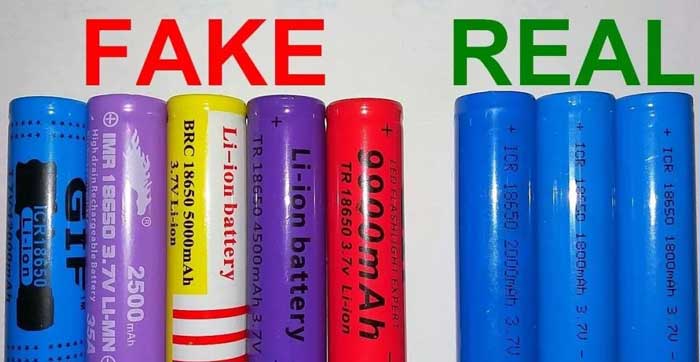
Essential Knowledge
Let's start with a brief, non-professional, and non-rigorous introduction to prepare everyone for the realities of society!
VAPE devices typically use lithium-ion batteries, which can be divided into standard cylindrical batteries (such as 21700 / 18650 / 26650) and polymer batteries (generally used in built-in battery devices, customizable in shape and size).
The ultimate killer of lithium-ion batteries is—overcharging / short-circuiting. When charging causes the battery voltage to exceed 4.2V, lithium ions inside the battery can form dendritic crystals. Once these crystals penetrate the insulating separator, it leads to a direct short circuit inside the battery, generating high temperatures and pressures, which can cause explosions.
This is why it is not recommended to charge directly through the device. If the device's control chip malfunctions and causes overcharging, the battery could explode in the sealed battery compartment (excess gas could also lead to an explosion), and the metal fragments from the explosion can be very lethal (think of a shrapnel grenade).
Even when using independent chargers (please exclude cheap and unknown sources of chargers), for your own safety, please charge them away from flammable materials and do not exceed 12 hours of charging time (although the risk of accidents is low).
The 12-hour limit is to protect the battery's lifespan. Some chargers are set to charge and discharge the battery after it is fully charged, which is equivalent to continuous use (although the impact is minimal, batteries are not cheap).
The Dark Side of VAPE Battery Manufacturing
If you are a new vapor, you might be attracted by some seemingly professional brands, as electronic cigarette devices often have high discharge requirements. At this point, the so-called detailed and exaggerated "professional 18650 batteries" may catch your eye and possibly become your first choice.
This all stems from the rise of large vapor clouds. When the power of 10 to 20 W can no longer satisfy people's needs, lower resistance combined with mechanical rods allows output power to leap to over 70W. However, frequent battery explosion incidents have also sounded alarms for people, leading them to understand batteries and seek safer usage methods (which is high-discharge current batteries).
But high current seems to be the only option, with insufficient battery life, large size, and safety concerns, yet the public still insists on finding a way to have it all.
The "skin-covered battery" emerged as a result.
Skin-covered batteries often claim discharge currents above 35A, while also boasting capacities over 3,500mAh. The most exaggerated can even have "supernova technology" with 100A discharge and 4,000mAh capacity (are you from the Zenith Star?).
The performance of a battery is mainly determined by its internal resistance. Moreover, for the same volume, battery capacity and discharge performance are always inversely proportional (meaning that any 3,500mAh battery claiming to have over 30A discharge capability is extraterrestrial technology; if you believe it, you've lost).
The only way to significantly increase the discharge current limit is through parallel connections.
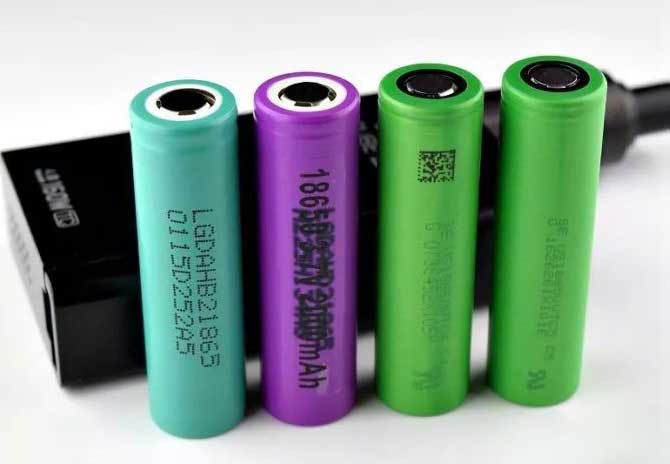
Most importantly, the world's best battery manufacturing processes belong to a few world-class brands in Japan and South Korea (LG / SONY / SANYO / SAMSUNG...).
Logical Course
Major premise: 18650 batteries are industrial batteries widely used in electronic products globally;
Minor premise: If a manufacturer produces batteries that exceed current technological barriers (Zenith Star technology);
Conclusion: Then why would they need to enter the still-developing VAPE market to sell?
Imagine, all they need to do is register a brand, print a batch of batteries that cost a few cents each, and with extremely low labor costs (1 dime each? Seems high), they can sell batteries originally priced at 30-50 yuan for 2-3 times the price. This business is naturally very profitable.
After reading this, will you still choose skin-covered batteries?
What is the value of "skin covering"?
After all this, I can only tell everyone that apart from the aforementioned four international brands' batteries, all other "VAPE professional" batteries are skin-covered batteries, including those sold by electronic cigarette brands.
Question: Do they still have value?
Answer: Yes, but this answer comes with conditions. This conclusion also stems from discussions with others, starting from the fact that there are a significant number of counterfeit products in the market for the four major brand batteries (but they are usually not qualified products, 'possibly due to insufficient power, excessive self-discharge, etc.,' which we refer to as substandard products), and most sellers do not have the ability to identify authenticity (requiring professional equipment).
Thus, the premise for reaching this conclusion is:
The skin underneath is a legitimate battery from a reputable manufacturer (taking SONY VTC5A and C6 as examples);
The skin above has marked capacity/discharge/voltage information.
However, I still have some resistance to this conclusion:
What if I unfortunately buy a "skin-covered" "skin-covered" battery?
Why spend several times the price to buy a "skin-covered" battery?
Why has skin covering become the benchmark in this industry?
The ultimate affirmation of "skin covering" comes from the fact that batteries like Sony VTC5A, due to general industrial use, rarely have battery parameter information marked (they are just green sticks...), manufacturers at least use skin covering to help everyone better understand the batteries. (But this is essentially no different from pure false marking; ordinary consumers have no professional equipment to test them.)
Finally, I hope the VAPE industry can develop healthily, and manufacturers can launch cost-effective OEM batteries without any false marking, conducting strict testing and controlling the supply chain, which could also become a favorite among users.


