
Why Are E-Cigarettes Restricted? The Clash Between Vaping and Cigarettes Is a Battle for Survival Am
Why are e-cigarettes restricted? The conflict between vaping and cigarettes is a battle for survival among vested interests. In 2017, e-cigarettes made in China accounted for more than 90% of global output. Some analysts say that in the coming years, Chin
Why are e-cigarettes banned? The clash between vaping and cigarettes is a battle for survival! In 2017, e-cigarettes manufactured in China accounted for over 90% of the global total. Some analyses suggest that in the coming years, the domestic e-cigarette industry will produce world-class brands, but government regulation will be the biggest factor affecting the development of this industry.
After years of silence, e-cigarettes have quietly become popular again.
As a "smoking alternative," e-cigarettes were initially loved by smoke enthusiasts, but since they appeared as a "smoking cessation tool," they have received widespread acclaim from young people. Nowadays, vaping has become a new "fashion."
"Convenient to carry" and "economical and practical" are reasons many young people are flocking to e-cigarettes, with more and more people joining the "army" of e-cigarette users. Statistics show that in 2016, China's e-cigarette production reached 1.205 billion units, approximately 1.6 billion in 2017, and it is expected to exceed 2.2 billion units in 2018.
China has become the world's largest producer of e-cigarettes. According to the official website of the National Tobacco Monopoly Administration, e-cigarettes were introduced to mainland China in 2003. With the rapid increase in manufacturers in recent years, e-cigarettes made in China accounted for over 90% of the global total in 2017.
However, according to data from the China Business Industry Research Institute, 83.7% of domestic e-cigarette products are exported to Europe and the United States. Now, e-cigarettes are also beginning to show a trend of bestsellers in the domestic market.
Often, an unintentional decision can give birth to an entirely new industry.
Han Li, known as the father of e-cigarettes, invented the world's first e-cigarette in 2003 to help himself quit smoking, naming it "Ruyan." This product uses e-liquid containing nicotine, propylene glycol, and food-grade flavoring instead of tobacco, and it vaporizes the e-liquid through a built-in atomizer to create vapor, without producing the carcinogenic tar found in traditional tobacco.
Just a year later, in 2004, Ruyan officially launched its e-cigarettes, with Han Li as one of the founders, mass-producing and marketing the product for the first time. By 2006, Ruyan's sales reached 1 billion yuan, and in 2008, the company went public in Hong Kong under the name "Sanlong International," entering its peak period.
 However, the development of the story was not as smooth as imagined, as Ruyan faced continuous setbacks in the market.
First, CCTV exposed doubts about Ruyan's smoking cessation effects. Next, the famous anti-counterfeiting fighter Wang Hai accused Ruyan's products of being harmful and deceiving consumers. A spokesperson for the National Tobacco Monopoly Administration stated to several media outlets that Ruyan's advertising was suspected of being misleading and contrary to scientific theory, and demanded regulation.
This series of events brought the safety of e-cigarettes and market regulation to the forefront, leading Ruyan to ultimately abandon the domestic market and focus its marketing efforts on developed regions in Europe and the United States.
Although e-cigarettes have received a warm response and rapidly growing sales in overseas markets, due to the lack of patent protection, Ruyan faced "attacks" from various tobacco giants.
Those financially powerful giants launched celebrity endorsement strategies to seize the market, inviting numerous popular stars like Leonardo DiCaprio, Johnny Depp, and Scarlett Johansson to use e-cigarettes, gradually making many young people view e-cigarettes as a symbol of fashion and trend.
This also caused Ruyan to gradually lose its marketing dominance in overseas markets.
It wasn't until 2012 that Ruyan's invention patent was finally recognized in the United States, and it subsequently began suing major international e-cigarette brands, involving over 10 brands. However, all of this came too late, as Ruyan had missed the best development period for the company, and the market had no place for it.
Imperial Tobacco Group Factory
After years of losses, Ruyan was acquired in 2013 by Imperial Tobacco Group, the world's fourth-largest tobacco company, for $75 million, while its founder Han Li became an advisor at the group's Fontem Ventures company.
The once pioneer of e-cigarettes thus exited the market, only able to watch the future changes in the industry, with no further involvement.
With the continuous improvement of public health literacy, e-cigarettes have welcomed a survival opportunity. #p#分页标题#e#
According to the latest survey by the World Health Organization, compared to 2000, the total number of smokers worldwide decreased by 40 million by 2018, with over 35 million switching to e-cigarettes. Among these people,
About half of the users believe that e-cigarettes are "healthier" than traditional cigarettes and try to use them to quit smoking.
Faced with this vast emerging market, many multinational tobacco companies have entered the e-cigarette field, launching new products or acquiring small companies in this sector.
For example, Lorillard Tobacco Company acquired e-cigarette companies BLUE ECIGS and SKYCIG around 2013, generating profits of $4.05 million that year; American Altria Group also launched the MARKTEN brand e-cigarette in 2013 and later acquired GREEN SMOKE for $112 million in 2014; British American Tobacco, Japan Tobacco, and Imperial Tobacco have also made significant moves in the e-cigarette market.
As of now, there are 300 million smokers in the Chinese market. If 10% of smokers are willing to accept e-cigarettes, the annual production of e-cigarettes could reach 3.622 billion units, and the market size would exceed 100 billion yuan.
Recently, when searching for "e-cigarettes" on JD.com, it showed 180,000 products, with prices ranging from 38,000 yuan to 5 yuan. Clearly, the Chinese e-cigarette market is currently in a chaotic and rapidly growing stage.
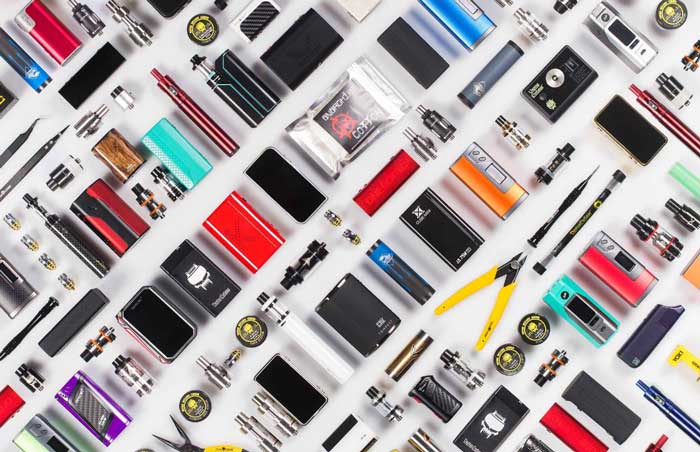 Meanwhile, on the New Third Board, the performance of companies like Maikewei has rapidly increased, with 1.566 billion yuan in revenue in 2017, a year-on-year increase of 115.64%; net profit was 220 million yuan, a year-on-year increase of 76.39%.
In the A-share market, stocks like Dongfeng Co., Meiyingsen, Yiwei Lithium Energy, Jinjia Co., and Shunhao Co. have performed very strongly.
The domestic e-cigarette industry is currently on a fast track to development. On one hand, as a substitute for cigarettes, the technology of e-cigarettes is continuously improving, becoming increasingly similar to the taste and flavor of traditional cigarettes. On the other hand, the large number of consumers in the domestic market gives the e-cigarette industry unlimited potential for the future.
Industry insiders analyze that in the coming years, the domestic e-cigarette industry will produce world-class brands, but government regulation will be the biggest factor affecting the development of this industry.
The survival battle of interest groups, e-cigarettes have been controversial since their birth.
While many smokers are puffing away, they are paying the price for their health. Hong Kong Chief Executive Carrie Lam stated in her policy address on October 10 that to protect citizens, especially children and teenagers, Hong Kong will implement a comprehensive ban on the new generation of smoke-free tobacco products—e-cigarettes.
"There is no doubt that the tobacco industry is very good at lobbying," Carrie Lam added at a press conference after her speech, noting that she received 3,000 letters opposing the e-cigarette ban this year. "But we must do what is beneficial to the health of young people.
Not only in Hong Kong, but under the advocacy of the World Health Organization, several countries and regions, including Canada, New Zealand, Japan, and Argentina, have issued regulations to completely ban e-cigarettes. Undoubtedly, policy suppression has left the future of the e-cigarette market uncertain.
Many non-smokers are puzzled as to why cigarettes are still produced when they are addictive and harmful. This question can be easily explained without lengthy preaching. Just a few numbers can represent everything.
In our country, the tobacco industry has long maintained its position as the top taxpayer.
In 2017, the tobacco industry's industrial and commercial tax revenue was 1.1 trillion yuan.
In 2017, China's military spending was approximately 900 billion yuan.
In 2015, profits from tobacco companies accounted for 32.34% of the total revenue of all state-owned enterprises.
In 2015, Shanghai Tobacco Group paid 76.203 billion yuan in taxes, ranking first in Shanghai.
 Where will the Chinese market go? Will the new battlefield of "smoking and anti-smoking" be reopened?
"Currently, the promotion of e-cigarettes has a significant appeal to young people," said Wu Yiqun, deputy director of the New Exploration Health Research Center, who publicly expressed great concern about the negative impact of e-cigarettes on the public. She hopes that before the safety of e-cigarettes is fully scientifically verified, the government should strengthen regulation to prevent harm to young people. #p#分页标题#e#
In December 2013, the General Office of the Central Committee of the Communist Party of China and the General Office of the State Council issued a notice on the prohibition of smoking in public places, requiring leaders at all levels to model compliance with smoking regulations in public places and to set an example with their actions, consciously maintaining the authority of laws and regulations and the image of party and government agencies and leaders.
In November 2014, the State Council Legislative Affairs Office published the "Public Places Smoking Control Regulations (Draft for Review)" drafted by the National Health and Family Planning Commission, which clearly required a complete ban on smoking in all indoor public places, with fines ranging from 50 to 500 yuan for violations.
This was the first time our country proposed to formulate administrative regulations to comprehensively control smoking nationwide. However, the government has yet to regulate the e-cigarette market, and future regulatory standardization is imperative.
Just two months ago, the State Administration for Market Regulation and the National Tobacco Monopoly Administration also issued a notice prohibiting the sale of e-cigarettes to minors.
In mid-October, the Beijing Smoking Control Association released a smoking control report, which pointed out that complaints about new types of e-cigarettes have been continuously emerging in Beijing. The report stated that the next step in Beijing's smoking control work will strengthen research on the harms and management models of e-cigarettes, exploring whether it is feasible to prohibit the use of e-cigarettes in public places.
It is undeniable that the tightening of policies means that for many e-cigarette manufacturers, the confrontation between "smoking control" and "anti-smoking" will become increasingly intense. Although they still face various difficulties in the future, compared to the ups and downs of the past market, they are undoubtedly fighting for survival.
The impact of e-cigarettes is not health, but the distribution of interests. The day the distribution of interests is finalized may be the day e-cigarettes turn around.
Because the harm of e-cigarettes is evidently less than that of cigarettes. When the income difference is minimal, both emotionally and logically, a choice to help smokers quit should be made available.
The distribution of interests stems from the improvement of laws. In terms of e-cigarette taxation, countries around the world are stuck in a deadlock, as this emerging phenomenon directly challenges tax policies.
Clearly, this is a war without gunpowder that will continue.
After years of silence, e-cigarettes have quietly become popular again.
As a "smoking alternative," e-cigarettes were initially loved by smoke enthusiasts, but since they appeared as a "smoking cessation tool," they have received widespread acclaim from young people. Nowadays, vaping has become a new "fashion."
"Convenient to carry" and "economical and practical" are reasons many young people are flocking to e-cigarettes, with more and more people joining the "army" of e-cigarette users. Statistics show that in 2016, China's e-cigarette production reached 1.205 billion units, approximately 1.6 billion in 2017, and it is expected to exceed 2.2 billion units in 2018.
China has become the world's largest producer of e-cigarettes. According to the official website of the National Tobacco Monopoly Administration, e-cigarettes were introduced to mainland China in 2003. With the rapid increase in manufacturers in recent years, e-cigarettes made in China accounted for over 90% of the global total in 2017.
However, according to data from the China Business Industry Research Institute, 83.7% of domestic e-cigarette products are exported to Europe and the United States. Now, e-cigarettes are also beginning to show a trend of bestsellers in the domestic market.
Often, an unintentional decision can give birth to an entirely new industry.
Han Li, known as the father of e-cigarettes, invented the world's first e-cigarette in 2003 to help himself quit smoking, naming it "Ruyan." This product uses e-liquid containing nicotine, propylene glycol, and food-grade flavoring instead of tobacco, and it vaporizes the e-liquid through a built-in atomizer to create vapor, without producing the carcinogenic tar found in traditional tobacco.
Just a year later, in 2004, Ruyan officially launched its e-cigarettes, with Han Li as one of the founders, mass-producing and marketing the product for the first time. By 2006, Ruyan's sales reached 1 billion yuan, and in 2008, the company went public in Hong Kong under the name "Sanlong International," entering its peak period.
However, the development of the story was not as smooth as imagined, as Ruyan faced continuous setbacks in the market.First, CCTV exposed doubts about Ruyan's smoking cessation effects. Next, the famous anti-counterfeiting fighter Wang Hai accused Ruyan's products of being harmful and deceiving consumers. A spokesperson for the National Tobacco Monopoly Administration stated to several media outlets that Ruyan's advertising was suspected of being misleading and contrary to scientific theory, and demanded regulation.
This series of events brought the safety of e-cigarettes and market regulation to the forefront, leading Ruyan to ultimately abandon the domestic market and focus its marketing efforts on developed regions in Europe and the United States.
Although e-cigarettes have received a warm response and rapidly growing sales in overseas markets, due to the lack of patent protection, Ruyan faced "attacks" from various tobacco giants.
Those financially powerful giants launched celebrity endorsement strategies to seize the market, inviting numerous popular stars like Leonardo DiCaprio, Johnny Depp, and Scarlett Johansson to use e-cigarettes, gradually making many young people view e-cigarettes as a symbol of fashion and trend.
This also caused Ruyan to gradually lose its marketing dominance in overseas markets.
It wasn't until 2012 that Ruyan's invention patent was finally recognized in the United States, and it subsequently began suing major international e-cigarette brands, involving over 10 brands. However, all of this came too late, as Ruyan had missed the best development period for the company, and the market had no place for it.
Imperial Tobacco Group Factory
After years of losses, Ruyan was acquired in 2013 by Imperial Tobacco Group, the world's fourth-largest tobacco company, for $75 million, while its founder Han Li became an advisor at the group's Fontem Ventures company.
The once pioneer of e-cigarettes thus exited the market, only able to watch the future changes in the industry, with no further involvement.
With the continuous improvement of public health literacy, e-cigarettes have welcomed a survival opportunity. #p#分页标题#e#
According to the latest survey by the World Health Organization, compared to 2000, the total number of smokers worldwide decreased by 40 million by 2018, with over 35 million switching to e-cigarettes. Among these people,
About half of the users believe that e-cigarettes are "healthier" than traditional cigarettes and try to use them to quit smoking.
Faced with this vast emerging market, many multinational tobacco companies have entered the e-cigarette field, launching new products or acquiring small companies in this sector.
For example, Lorillard Tobacco Company acquired e-cigarette companies BLUE ECIGS and SKYCIG around 2013, generating profits of $4.05 million that year; American Altria Group also launched the MARKTEN brand e-cigarette in 2013 and later acquired GREEN SMOKE for $112 million in 2014; British American Tobacco, Japan Tobacco, and Imperial Tobacco have also made significant moves in the e-cigarette market.
As of now, there are 300 million smokers in the Chinese market. If 10% of smokers are willing to accept e-cigarettes, the annual production of e-cigarettes could reach 3.622 billion units, and the market size would exceed 100 billion yuan.
Recently, when searching for "e-cigarettes" on JD.com, it showed 180,000 products, with prices ranging from 38,000 yuan to 5 yuan. Clearly, the Chinese e-cigarette market is currently in a chaotic and rapidly growing stage.
Meanwhile, on the New Third Board, the performance of companies like Maikewei has rapidly increased, with 1.566 billion yuan in revenue in 2017, a year-on-year increase of 115.64%; net profit was 220 million yuan, a year-on-year increase of 76.39%.In the A-share market, stocks like Dongfeng Co., Meiyingsen, Yiwei Lithium Energy, Jinjia Co., and Shunhao Co. have performed very strongly.
The domestic e-cigarette industry is currently on a fast track to development. On one hand, as a substitute for cigarettes, the technology of e-cigarettes is continuously improving, becoming increasingly similar to the taste and flavor of traditional cigarettes. On the other hand, the large number of consumers in the domestic market gives the e-cigarette industry unlimited potential for the future.
Industry insiders analyze that in the coming years, the domestic e-cigarette industry will produce world-class brands, but government regulation will be the biggest factor affecting the development of this industry.
The survival battle of interest groups, e-cigarettes have been controversial since their birth.
While many smokers are puffing away, they are paying the price for their health. Hong Kong Chief Executive Carrie Lam stated in her policy address on October 10 that to protect citizens, especially children and teenagers, Hong Kong will implement a comprehensive ban on the new generation of smoke-free tobacco products—e-cigarettes.
"There is no doubt that the tobacco industry is very good at lobbying," Carrie Lam added at a press conference after her speech, noting that she received 3,000 letters opposing the e-cigarette ban this year. "But we must do what is beneficial to the health of young people.
Not only in Hong Kong, but under the advocacy of the World Health Organization, several countries and regions, including Canada, New Zealand, Japan, and Argentina, have issued regulations to completely ban e-cigarettes. Undoubtedly, policy suppression has left the future of the e-cigarette market uncertain.
Many non-smokers are puzzled as to why cigarettes are still produced when they are addictive and harmful. This question can be easily explained without lengthy preaching. Just a few numbers can represent everything.
In our country, the tobacco industry has long maintained its position as the top taxpayer.
In 2017, the tobacco industry's industrial and commercial tax revenue was 1.1 trillion yuan.
In 2017, China's military spending was approximately 900 billion yuan.
In 2015, profits from tobacco companies accounted for 32.34% of the total revenue of all state-owned enterprises.
In 2015, Shanghai Tobacco Group paid 76.203 billion yuan in taxes, ranking first in Shanghai.
Where will the Chinese market go? Will the new battlefield of "smoking and anti-smoking" be reopened?"Currently, the promotion of e-cigarettes has a significant appeal to young people," said Wu Yiqun, deputy director of the New Exploration Health Research Center, who publicly expressed great concern about the negative impact of e-cigarettes on the public. She hopes that before the safety of e-cigarettes is fully scientifically verified, the government should strengthen regulation to prevent harm to young people. #p#分页标题#e#
In December 2013, the General Office of the Central Committee of the Communist Party of China and the General Office of the State Council issued a notice on the prohibition of smoking in public places, requiring leaders at all levels to model compliance with smoking regulations in public places and to set an example with their actions, consciously maintaining the authority of laws and regulations and the image of party and government agencies and leaders.
In November 2014, the State Council Legislative Affairs Office published the "Public Places Smoking Control Regulations (Draft for Review)" drafted by the National Health and Family Planning Commission, which clearly required a complete ban on smoking in all indoor public places, with fines ranging from 50 to 500 yuan for violations.
This was the first time our country proposed to formulate administrative regulations to comprehensively control smoking nationwide. However, the government has yet to regulate the e-cigarette market, and future regulatory standardization is imperative.
Just two months ago, the State Administration for Market Regulation and the National Tobacco Monopoly Administration also issued a notice prohibiting the sale of e-cigarettes to minors.
In mid-October, the Beijing Smoking Control Association released a smoking control report, which pointed out that complaints about new types of e-cigarettes have been continuously emerging in Beijing. The report stated that the next step in Beijing's smoking control work will strengthen research on the harms and management models of e-cigarettes, exploring whether it is feasible to prohibit the use of e-cigarettes in public places.
It is undeniable that the tightening of policies means that for many e-cigarette manufacturers, the confrontation between "smoking control" and "anti-smoking" will become increasingly intense. Although they still face various difficulties in the future, compared to the ups and downs of the past market, they are undoubtedly fighting for survival.
The impact of e-cigarettes is not health, but the distribution of interests. The day the distribution of interests is finalized may be the day e-cigarettes turn around.
Because the harm of e-cigarettes is evidently less than that of cigarettes. When the income difference is minimal, both emotionally and logically, a choice to help smokers quit should be made available.
The distribution of interests stems from the improvement of laws. In terms of e-cigarette taxation, countries around the world are stuck in a deadlock, as this emerging phenomenon directly challenges tax policies.
Clearly, this is a war without gunpowder that will continue.


