The China-US Trade War Is Pushing Chinese E-cigarettes to Accelerate Brand Building
The cigarette rolls, the China-US trade has begun!<\/p>
Indeed, these days, the most talked-about topic online is the China-US trade war.<\/p>
Recently, the US has been wielding the "tariff stick" of trade protectionism against China. The Chinese side has not held back either, not only announcing countermeasures to impose a 25% tariff on 106 US-origin goods but also stating confidently, "We are confident we will laugh last." The spokesperson for the Ministry of Commerce noted: We have clearly stated our position on China-US economic and trade issues. We do not want to fight, but we are not afraid of a trade war. Behind this toughness is the enhancement of our country's comprehensive strength. Amazing, my country!<\/p>
I saw a report released by Ping An Securities, which analyzed the trade balance between China and the US by industry. There is a significant surplus in the industrial sector and a notable deficit in agricultural and service trade. In the industrial manufacturing sector, there is a clear surplus in trade between China and the US; however, in agricultural products and service trade, there is a significant deficit. This indicates that the trade balance between China and the US is not evenly distributed across the three major industries. When the US imposes trade sanctions on China in the industrial manufacturing sector, agricultural products and services may become areas for China to retaliate. The premise of initiating a trade war is that the involved industries have a certain economic contribution and can accommodate a large scale of employment. The US's trade sanctions are not solely aimed at reducing the trade deficit; they also need to consider whether the domestic industries under trade protection can stimulate the economy and employment to a certain extent. From the perspective of industry value added, the value added of US chemical products, transportation equipment, electronics, food and beverages, tobacco, metal processing, machinery, and petroleum and coal accounts for more than 0.5% of GDP, indicating a large scale. Although the value added of plastics, rubber, non-metallic mineral products, primary metal products, electrical equipment, paper products, wooden products, furniture, printing, and textiles ranges from 0.2% to 0.5%, they still have a certain scale. In terms of employment distribution, the number of employees and unemployed in durable goods exceeds that of non-durable goods.<\/p>
For ordinary people, the most concerning issue when a trade war breaks out is whether it will affect their lives, whether some products will increase in price, and whether costs will rise. For example, will the trade war affect the vast number of smokers?<\/p>
After the US announced a $50 billion sanction list against China, our Ministry of Commerce immediately retaliated within 12 hours, releasing a counter-sanction list of the same scale, amount, and intensity. In the list of goods subject to additional tariffs on the US side, 12 tobacco products and raw materials were included. However, the impact of these measures on domestic smokers is minimal because since the implementation of the tobacco monopoly system, our national cigarette brands have firmly controlled the domestic market, occupying over 99% of the cigarette market share, and the situation of foreign cigarette brands flooding the domestic market has become history.<\/p>
 Indeed, for many years, the tobacco industry has adhered to the construction and innovation of Chinese-style cigarette categories, shaping unique brand characteristics to fully meet consumers' personalized and diversified needs, and domestic cigarettes are favored by consumers.<\/p>
The recognition of national cigarette brands by consumers is attributed to the adherence to and improvement of the tobacco monopoly system, the establishment and persistence of the development direction of Chinese-style cigarettes, and the vigorous promotion of enterprise integration and brand integration. This has continuously driven the expansion of key brands, improved quality, and enhanced value, optimizing and upgrading product structures, truly establishing brand development on a reliable market foundation and solid work basis, thus creating a number of distinctive, highly reputable, and loyal strong brands of Chinese-style cigarettes.<\/p>
Indeed, for many years, the tobacco industry has adhered to the construction and innovation of Chinese-style cigarette categories, shaping unique brand characteristics to fully meet consumers' personalized and diversified needs, and domestic cigarettes are favored by consumers.<\/p>
The recognition of national cigarette brands by consumers is attributed to the adherence to and improvement of the tobacco monopoly system, the establishment and persistence of the development direction of Chinese-style cigarettes, and the vigorous promotion of enterprise integration and brand integration. This has continuously driven the expansion of key brands, improved quality, and enhanced value, optimizing and upgrading product structures, truly establishing brand development on a reliable market foundation and solid work basis, thus creating a number of distinctive, highly reputable, and loyal strong brands of Chinese-style cigarettes.<\/p>
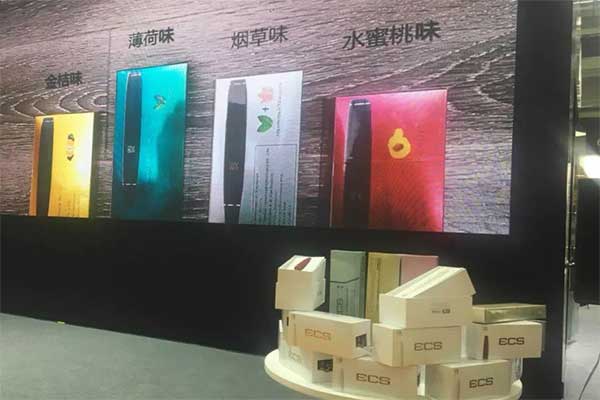 The national bureau has proposed to serve and support the revitalization of national brands, which is of profound significance. In the global tobacco market, several multinational tobacco companies have gradually formed an oligopoly due to their strong competitive strength, and many national tobacco enterprises in various countries have been weakened or even eliminated in fierce market competition. Since 1985, Japan's domestic market has gradually been occupied by foreign tobacco, with the market share of international cigarette brands in Japan increasing from 2.4% in 1985 to 40.1% in 2015. The market share of Korea Tobacco & Ginseng Corporation in the Korean cigarette market has also shown a downward trend year by year, with a domestic market share of 58.8% in 2015, a decrease of 14.2 percentage points over the past decade, with the remaining market share being divided among British American Tobacco, Philip Morris International, Japan Tobacco, and others. Although Russia has developed into the world's second-largest tobacco consumer, since the early 1980s, when foreign capital entered on a large scale, the domestic market has also been controlled by foreign tobacco companies, with multinational tobacco brands currently accounting for over 90% of the Russian tobacco market, leaving little room for domestic tobacco enterprises and brands.<\/p>
As the world's largest cigarette market, if China does not have strong national cigarette brands and industries, the trillion-dollar market share will be occupied by foreign cigarette giants, resulting in a significant loss of national tax revenue.<\/p>
From the perspective of the trade war, if our domestic cigarette leaves need to be imported in large quantities from the US, or if cigarette machines, equipment, and raw materials need to be imported from the US, then the trade war will have a huge impact on our tobacco industry. It is precisely because we implement a monopoly system and firmly control the supply chain of raw materials and production that the trade war has little impact on our tobacco industry.<\/p>
However, the trade war does not mean that there is no impact on the tobacco industry; from a certain perspective, it indicates the difficulties faced by Chinese tobacco in expanding into international markets.<\/p>
Industry media reported that on April 3, 2018, a conference on expanding the international market for the tobacco industry was held in Beijing. Leaders from the national bureau emphasized the need to maintain confidence and strength in the "going out" strategy of Chinese tobacco, leveraging the international strategy of the "Belt and Road" to make efforts in six areas to steadily promote the expansion of international markets. First, focus on building capital platforms. We need to concentrate on constructing mechanisms, focusing on solving problems, and pushing for business restructuring, making the construction of overseas capital operation platforms a top priority, paving the way and building bridges actively. Second, focus on transformation and upgrading. We need to manage business transfers, promote operations abroad; manage asset restructuring, promote management abroad; manage incentive guarantees, promote personnel abroad, and strive to build an internationalized, entity-based, and professional company that operates the entire tobacco industry chain overseas. Third, focus on market expansion. We need to aim at the market and expand efforts in key market development; focus on channel construction and increase marketing investment in international markets; ensure products are suitable for the market and expand product coverage; and implement the "three products" strategy to enhance brand international influence, striving to create an international tobacco company. Fourth, focus on tobacco leaf exports. We need to further optimize processes, change mindsets, and stay close to the market, timely researching market conditions and accurately grasping supply and demand changes to further digest tobacco leaf inventory. Fifth, focus on standardized management. We need to adhere to party building leadership, highlight work priorities, ensure inspection and rectification, and continuously improve the standardized management level of overseas enterprises at a higher starting point. Sixth, focus on risk prevention and control. We need to pay close attention to investment risk prevention, operational risk prevention, financial risk prevention, and legal risk prevention, firmly maintaining the bottom line of not allowing systemic risks to occur, and establishing a long-term mechanism for preventing and resolving risks.<\/p>
I have always felt that there are many difficulties in expanding into the international market for traditional tobacco products. To achieve "overtaking on a bend," we should invest heavily in the field of new tobacco products to strive for a place in the international new tobacco product market.<\/p>
That's right, it's like our country hopes to achieve "overtaking on a bend" in the automotive industry by vigorously supporting the development of new energy vehicles. In the traditional automotive field, domestic cars have fallen far behind global automotive giants due to significant gaps in technology accumulation in engines and transmissions. The biggest difference between new energy vehicles and traditional vehicles is the power system. By developing new energy vehicles, domestic brands can bypass the limitations of traditional engine and transmission technologies, making overtaking possible.<\/p>
From the perspective of foreign tobacco development, they are also vigorously researching new tobacco products. Industry media reported that Philip Morris International (PMI) had a total sales volume of 798.2 billion sticks for its regular cigarette products and heated tobacco products launched in the market in 2017, a decrease of 2.7% compared to the same period in 2016. The market share of various products in the international market also saw a decline compared to the previous year. Despite the decline in product sales, net revenue is still on an upward trend. Data shows that PMI's net revenue reached $78.1 billion in 2017, an increase of 4.2% compared to the previous year. In response, PMI's executives stated that the significant growth in the company's performance in the fourth quarter drove effective growth for the entire year. Although overall sales have declined, the sales of their main heated tobacco product—iQOS—are performing well, and the company will continue to invest in this new tobacco product. To this end, the company will first stop selling regular cigarettes in the UK and focus on promoting new heated tobacco products.<\/p>
Japan Tobacco has established development strategies for both new tobacco products and traditional tobacco products. In the field of new products, they are accelerating domestic and international investments and establishing international electronic cigarette production bases. In the field of traditional tobacco products, they are accelerating the cultivation of the "seed market" by acquiring and restructuring to seize market share and implementing brand integration. They have adjusted the organizational structure of their tobacco business, adding a "Global Strategy Committee" specifically to study medium- and long-term strategies, further emphasizing the importance of strategic planning. One of the three core elements of Reynolds Tobacco's transformation strategy is to reduce the harm of tobacco products. By innovating products to significantly reduce the health hazards of tobacco use, they established a product innovation subsidiary in 2016, focusing on next-generation vapor and nicotine products, with over $400 million invested in R&D over the past five years, accounting for 1% of sales revenue excluding tax in 2016. Reynolds was one of the first among major multinational tobacco companies to launch heated tobacco products and has consistently focused on the R&D of new tobacco products, with its flagship electronic cigarette brand Vuse becoming the highest market share brand in the US within just two years of its launch.<\/p>
In previous discussions, we also talked about how the country has strengthened market regulation of new tobacco products since last year, seizing multiple cases of smuggling iQOS. This also indicates that there is already a fixed consumer group for new tobacco products in the domestic market. Director Ling has stated that creating new competitive advantages for new tobacco products in the international market is a significant responsibility, key work, and important task for the industry’s new tobacco product R&D system, focusing on three key areas. First, focus on the key of innovative talent mechanisms. Strengthen the integration of industry, academia, and research, gathering and attracting top talent. Second, focus on the key of product integration and standardization. Strengthen product integration innovation to achieve standardization, commercialization, industrialization, and branding. Third, focus on the key of international market competition. We need to go to the international market to test, fight, and expand, enhancing the international competitiveness of new tobacco products.<\/p>
I believe that in the new tobacco product sector, our industry should quickly launch several key brands for focused cultivation. #p#分页标题#e#
The national bureau has proposed to serve and support the revitalization of national brands, which is of profound significance. In the global tobacco market, several multinational tobacco companies have gradually formed an oligopoly due to their strong competitive strength, and many national tobacco enterprises in various countries have been weakened or even eliminated in fierce market competition. Since 1985, Japan's domestic market has gradually been occupied by foreign tobacco, with the market share of international cigarette brands in Japan increasing from 2.4% in 1985 to 40.1% in 2015. The market share of Korea Tobacco & Ginseng Corporation in the Korean cigarette market has also shown a downward trend year by year, with a domestic market share of 58.8% in 2015, a decrease of 14.2 percentage points over the past decade, with the remaining market share being divided among British American Tobacco, Philip Morris International, Japan Tobacco, and others. Although Russia has developed into the world's second-largest tobacco consumer, since the early 1980s, when foreign capital entered on a large scale, the domestic market has also been controlled by foreign tobacco companies, with multinational tobacco brands currently accounting for over 90% of the Russian tobacco market, leaving little room for domestic tobacco enterprises and brands.<\/p>
As the world's largest cigarette market, if China does not have strong national cigarette brands and industries, the trillion-dollar market share will be occupied by foreign cigarette giants, resulting in a significant loss of national tax revenue.<\/p>
From the perspective of the trade war, if our domestic cigarette leaves need to be imported in large quantities from the US, or if cigarette machines, equipment, and raw materials need to be imported from the US, then the trade war will have a huge impact on our tobacco industry. It is precisely because we implement a monopoly system and firmly control the supply chain of raw materials and production that the trade war has little impact on our tobacco industry.<\/p>
However, the trade war does not mean that there is no impact on the tobacco industry; from a certain perspective, it indicates the difficulties faced by Chinese tobacco in expanding into international markets.<\/p>
Industry media reported that on April 3, 2018, a conference on expanding the international market for the tobacco industry was held in Beijing. Leaders from the national bureau emphasized the need to maintain confidence and strength in the "going out" strategy of Chinese tobacco, leveraging the international strategy of the "Belt and Road" to make efforts in six areas to steadily promote the expansion of international markets. First, focus on building capital platforms. We need to concentrate on constructing mechanisms, focusing on solving problems, and pushing for business restructuring, making the construction of overseas capital operation platforms a top priority, paving the way and building bridges actively. Second, focus on transformation and upgrading. We need to manage business transfers, promote operations abroad; manage asset restructuring, promote management abroad; manage incentive guarantees, promote personnel abroad, and strive to build an internationalized, entity-based, and professional company that operates the entire tobacco industry chain overseas. Third, focus on market expansion. We need to aim at the market and expand efforts in key market development; focus on channel construction and increase marketing investment in international markets; ensure products are suitable for the market and expand product coverage; and implement the "three products" strategy to enhance brand international influence, striving to create an international tobacco company. Fourth, focus on tobacco leaf exports. We need to further optimize processes, change mindsets, and stay close to the market, timely researching market conditions and accurately grasping supply and demand changes to further digest tobacco leaf inventory. Fifth, focus on standardized management. We need to adhere to party building leadership, highlight work priorities, ensure inspection and rectification, and continuously improve the standardized management level of overseas enterprises at a higher starting point. Sixth, focus on risk prevention and control. We need to pay close attention to investment risk prevention, operational risk prevention, financial risk prevention, and legal risk prevention, firmly maintaining the bottom line of not allowing systemic risks to occur, and establishing a long-term mechanism for preventing and resolving risks.<\/p>
I have always felt that there are many difficulties in expanding into the international market for traditional tobacco products. To achieve "overtaking on a bend," we should invest heavily in the field of new tobacco products to strive for a place in the international new tobacco product market.<\/p>
That's right, it's like our country hopes to achieve "overtaking on a bend" in the automotive industry by vigorously supporting the development of new energy vehicles. In the traditional automotive field, domestic cars have fallen far behind global automotive giants due to significant gaps in technology accumulation in engines and transmissions. The biggest difference between new energy vehicles and traditional vehicles is the power system. By developing new energy vehicles, domestic brands can bypass the limitations of traditional engine and transmission technologies, making overtaking possible.<\/p>
From the perspective of foreign tobacco development, they are also vigorously researching new tobacco products. Industry media reported that Philip Morris International (PMI) had a total sales volume of 798.2 billion sticks for its regular cigarette products and heated tobacco products launched in the market in 2017, a decrease of 2.7% compared to the same period in 2016. The market share of various products in the international market also saw a decline compared to the previous year. Despite the decline in product sales, net revenue is still on an upward trend. Data shows that PMI's net revenue reached $78.1 billion in 2017, an increase of 4.2% compared to the previous year. In response, PMI's executives stated that the significant growth in the company's performance in the fourth quarter drove effective growth for the entire year. Although overall sales have declined, the sales of their main heated tobacco product—iQOS—are performing well, and the company will continue to invest in this new tobacco product. To this end, the company will first stop selling regular cigarettes in the UK and focus on promoting new heated tobacco products.<\/p>
Japan Tobacco has established development strategies for both new tobacco products and traditional tobacco products. In the field of new products, they are accelerating domestic and international investments and establishing international electronic cigarette production bases. In the field of traditional tobacco products, they are accelerating the cultivation of the "seed market" by acquiring and restructuring to seize market share and implementing brand integration. They have adjusted the organizational structure of their tobacco business, adding a "Global Strategy Committee" specifically to study medium- and long-term strategies, further emphasizing the importance of strategic planning. One of the three core elements of Reynolds Tobacco's transformation strategy is to reduce the harm of tobacco products. By innovating products to significantly reduce the health hazards of tobacco use, they established a product innovation subsidiary in 2016, focusing on next-generation vapor and nicotine products, with over $400 million invested in R&D over the past five years, accounting for 1% of sales revenue excluding tax in 2016. Reynolds was one of the first among major multinational tobacco companies to launch heated tobacco products and has consistently focused on the R&D of new tobacco products, with its flagship electronic cigarette brand Vuse becoming the highest market share brand in the US within just two years of its launch.<\/p>
In previous discussions, we also talked about how the country has strengthened market regulation of new tobacco products since last year, seizing multiple cases of smuggling iQOS. This also indicates that there is already a fixed consumer group for new tobacco products in the domestic market. Director Ling has stated that creating new competitive advantages for new tobacco products in the international market is a significant responsibility, key work, and important task for the industry’s new tobacco product R&D system, focusing on three key areas. First, focus on the key of innovative talent mechanisms. Strengthen the integration of industry, academia, and research, gathering and attracting top talent. Second, focus on the key of product integration and standardization. Strengthen product integration innovation to achieve standardization, commercialization, industrialization, and branding. Third, focus on the key of international market competition. We need to go to the international market to test, fight, and expand, enhancing the international competitiveness of new tobacco products.<\/p>
I believe that in the new tobacco product sector, our industry should quickly launch several key brands for focused cultivation. #p#分页标题#e#