How Is the Juul E-Cigarette?
How is the Juul e-cigarette? U.S. vaping giant Juul has run into trouble after its explosive popularity. Since the beginning of this year, multiple consumers in courts in New York, California, and other places in the United States have sued Juul over impr
How is the Juul e-cigarette? The American e-cigarette giant Juul has gotten into trouble due to its "explosive popularity." Since the beginning of this year, several consumers have sued Juul in courts in New York, California, and other places, claiming that its improper marketing has led to youth addiction to e-cigarettes. As a result, Juul has become a key focus for the U.S. Food and Drug Administration (FDA). Facing the FDA, which has a history of strict regulation on e-cigarettes, Juul, which has not yet passed the "premarket tobacco application," must show reform intentions to navigate through its legal troubles.
How is the Juul e-cigarette?
For the e-cigarette industry, the recently arrived August has not been friendly.
 On the 3rd local time, the FDA released a draft guidance on how to test the toxicity of nicotine products, aiming to define the hazards of e-cigarettes. In the same week, two U.S. senators announced they would introduce a bill to regulate e-cigarette flavors to prevent youth addiction.
As a new player with over 70% market share in the U.S., just a month ago, this company, which was founded only three years ago, completed a new round of financing, raising $650 million, with a valuation exceeding $15 billion, making it the sixth highest-valued startup in the U.S., successfully joining the ranks of "super unicorns" like Uber, Airbnb, and Lyft.
Under the new regulations, Juul is at the forefront. At the end of July, Juul was sued for selling e-cigarette products to minors. According to The Verge, the Attorney General of Massachusetts is investigating Juul statewide to end youth addiction to e-cigarettes and nicotine. In three other lawsuits filed by consumers against Juul, two in California also revolve around "creating a group of new customers who are addicted, rather than ordinary smokers."
Data from the Centers for Disease Control and Prevention (CDC) shows that efforts to curb smoking in the U.S. have been very successful in recent years, with the number of high school students smoking dropping to a historic low of 8.8% in 2017. However, e-cigarettes have become a new alternative. A recent study published in the Journal of the American Medical Association showed that in 2016, 11% of high school students and 4% of middle school students reported having used e-cigarettes in the past month. Juul argued in an interview with The Verge in early July that it is only for adult smokers who want to switch from combustible tobacco.
Explosive popularity raises doubts
Juul's rapid rise in the U.S. market may indicate some issues. Nielsen's survey data shows that Juul's sales grew by 800% last year, currently holding over two-thirds of the U.S. market share, making it the highest market share company in the U.S. e-cigarette market.
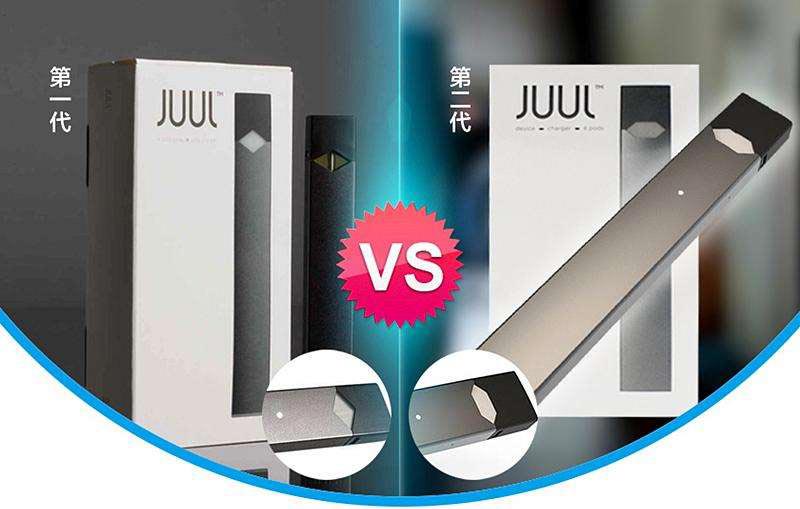
When Juul was launched in 2015, it came with a strong postmodern electronic vibe: the e-cigarette device, packaged in a white box, resembles an elongated USB drive, with another box containing four pods. The pod flavors include eight varieties, ranging from Virginia tobacco to mango and other mixed fruits.
Traditional e-cigarette products are typically modeled after cigarettes, shaped like cylinders. Juul's design, in a rectangular shape, is unique. Juul's founder, Adam Bowen, has openly stated, "We want users to have a completely new experience when they think of Juul."
In addition to design, Juul's biggest breakthrough is in the chemical aspect. The tobacco material in Juul is based on nicotine salts as the core ingredient, rather than the freebase nicotine found in traditional e-cigarettes. The addition of organic acids in the formula makes it smoother to inhale, reducing the throat irritation.
It is precisely because of these advantages that Juul has quickly gained popularity among young people in the U.S. With Juul available on shopping websites, 7-11 convenience stores, and e-cigarette specialty shops, young people can easily access this product.
Statistics show that the most popular pod flavor in the U.S. market is not Virginia tobacco, but mango. This indicates that Juul's real customer base is not adult smokers looking to quit, but rather the younger generation, primarily those born in the 90s and 00s.
However, a recent survey of Americans aged 15-24 revealed that 25% could recognize Juul's products from advertisements, but 63% of those who had used Juul were unaware that it contained nicotine.
In fact, a paper published in the May issue of the Independent Chemical Research journal pointed out that compared to other brands, Juul's e-liquid contains more nicotine and fewer harsh free radicals. This means Juul has included a stronger dose of nicotine in a "tasty" package. According to Juul's data, the nicotine content in its products is about 5%, equivalent to that of a pack of cigarettes.
Struggle for status
In recent years, the U.S. e-cigarette market has been expanding at a rate of nearly 25% per year. According to Wells Fargo's forecast, the U.S. e-cigarette market size will reach $5.5 billion in 2018. Juul's annual sales are expected to exceed $1 billion.
Against this backdrop, regulation of the e-cigarette market has also received increasing attention. In April of this year, the FDA launched a special undercover operation aimed at cracking down on organizations or individuals selling e-cigarettes to minors. At the same time, the FDA sent Juul an open letter requesting all internal documents to investigate its physiological, toxicological, psychological, and behavioral aspects, including whether its marketing and product design targeted youth users.
In July of this year, FDA Commissioner Gottlieb stated to the media that if these manufacturers do not take more measures to address youth usage issues, they will not be able to remain in the market.
Gottlieb's statement corresponds to the FDA's powerful tool—the "premarket tobacco application" review. The policy stipulates that new e-cigarette products launched after August 8, 2016, must first apply to the FDA. Therefore, if Juul wants to add any new flavors or devices, it must obtain FDA authorization. Although the deadline for submitting applications has been extended to 2022, this process is lengthy and costly, which can directly lead to the bankruptcy of small e-cigarette manufacturers.
According to Bloomberg reports, Juul has revealed a plan to spend $30 million to prevent youth from using its products. The report states that Juul is considering using Bluetooth and software updates to set geofencing features to prevent e-cigarette use in schools and workplaces. Additionally, starting in October, Juul will begin launching e-cigarette devices with Bluetooth connectivity, allowing users to track their nicotine intake through software.
Moreover, the Juul team is also trying various ways to prevent minors from purchasing their e-cigarette products. On the Juul website, to purchase e-cigarettes or pods, one must upload an ID photo to prove they are over 21 years old. The team is also attempting to report merchants on eBay and other e-commerce sites that "resell" Juul e-cigarettes. However, this is challenging, as Juul's staff stated, "It's like playing whack-a-mole; when one is shut down, five more pop up."
How is the Juul e-cigarette?
For the e-cigarette industry, the recently arrived August has not been friendly.
On the 3rd local time, the FDA released a draft guidance on how to test the toxicity of nicotine products, aiming to define the hazards of e-cigarettes. In the same week, two U.S. senators announced they would introduce a bill to regulate e-cigarette flavors to prevent youth addiction.As a new player with over 70% market share in the U.S., just a month ago, this company, which was founded only three years ago, completed a new round of financing, raising $650 million, with a valuation exceeding $15 billion, making it the sixth highest-valued startup in the U.S., successfully joining the ranks of "super unicorns" like Uber, Airbnb, and Lyft.
Under the new regulations, Juul is at the forefront. At the end of July, Juul was sued for selling e-cigarette products to minors. According to The Verge, the Attorney General of Massachusetts is investigating Juul statewide to end youth addiction to e-cigarettes and nicotine. In three other lawsuits filed by consumers against Juul, two in California also revolve around "creating a group of new customers who are addicted, rather than ordinary smokers."
Data from the Centers for Disease Control and Prevention (CDC) shows that efforts to curb smoking in the U.S. have been very successful in recent years, with the number of high school students smoking dropping to a historic low of 8.8% in 2017. However, e-cigarettes have become a new alternative. A recent study published in the Journal of the American Medical Association showed that in 2016, 11% of high school students and 4% of middle school students reported having used e-cigarettes in the past month. Juul argued in an interview with The Verge in early July that it is only for adult smokers who want to switch from combustible tobacco.
Explosive popularity raises doubts
Juul's rapid rise in the U.S. market may indicate some issues. Nielsen's survey data shows that Juul's sales grew by 800% last year, currently holding over two-thirds of the U.S. market share, making it the highest market share company in the U.S. e-cigarette market.
When Juul was launched in 2015, it came with a strong postmodern electronic vibe: the e-cigarette device, packaged in a white box, resembles an elongated USB drive, with another box containing four pods. The pod flavors include eight varieties, ranging from Virginia tobacco to mango and other mixed fruits.
Traditional e-cigarette products are typically modeled after cigarettes, shaped like cylinders. Juul's design, in a rectangular shape, is unique. Juul's founder, Adam Bowen, has openly stated, "We want users to have a completely new experience when they think of Juul."
In addition to design, Juul's biggest breakthrough is in the chemical aspect. The tobacco material in Juul is based on nicotine salts as the core ingredient, rather than the freebase nicotine found in traditional e-cigarettes. The addition of organic acids in the formula makes it smoother to inhale, reducing the throat irritation.
It is precisely because of these advantages that Juul has quickly gained popularity among young people in the U.S. With Juul available on shopping websites, 7-11 convenience stores, and e-cigarette specialty shops, young people can easily access this product.
Statistics show that the most popular pod flavor in the U.S. market is not Virginia tobacco, but mango. This indicates that Juul's real customer base is not adult smokers looking to quit, but rather the younger generation, primarily those born in the 90s and 00s.
However, a recent survey of Americans aged 15-24 revealed that 25% could recognize Juul's products from advertisements, but 63% of those who had used Juul were unaware that it contained nicotine.
In fact, a paper published in the May issue of the Independent Chemical Research journal pointed out that compared to other brands, Juul's e-liquid contains more nicotine and fewer harsh free radicals. This means Juul has included a stronger dose of nicotine in a "tasty" package. According to Juul's data, the nicotine content in its products is about 5%, equivalent to that of a pack of cigarettes.
Struggle for status
In recent years, the U.S. e-cigarette market has been expanding at a rate of nearly 25% per year. According to Wells Fargo's forecast, the U.S. e-cigarette market size will reach $5.5 billion in 2018. Juul's annual sales are expected to exceed $1 billion.
Against this backdrop, regulation of the e-cigarette market has also received increasing attention. In April of this year, the FDA launched a special undercover operation aimed at cracking down on organizations or individuals selling e-cigarettes to minors. At the same time, the FDA sent Juul an open letter requesting all internal documents to investigate its physiological, toxicological, psychological, and behavioral aspects, including whether its marketing and product design targeted youth users.
In July of this year, FDA Commissioner Gottlieb stated to the media that if these manufacturers do not take more measures to address youth usage issues, they will not be able to remain in the market.
Gottlieb's statement corresponds to the FDA's powerful tool—the "premarket tobacco application" review. The policy stipulates that new e-cigarette products launched after August 8, 2016, must first apply to the FDA. Therefore, if Juul wants to add any new flavors or devices, it must obtain FDA authorization. Although the deadline for submitting applications has been extended to 2022, this process is lengthy and costly, which can directly lead to the bankruptcy of small e-cigarette manufacturers.
According to Bloomberg reports, Juul has revealed a plan to spend $30 million to prevent youth from using its products. The report states that Juul is considering using Bluetooth and software updates to set geofencing features to prevent e-cigarette use in schools and workplaces. Additionally, starting in October, Juul will begin launching e-cigarette devices with Bluetooth connectivity, allowing users to track their nicotine intake through software.
Moreover, the Juul team is also trying various ways to prevent minors from purchasing their e-cigarette products. On the Juul website, to purchase e-cigarettes or pods, one must upload an ID photo to prove they are over 21 years old. The team is also attempting to report merchants on eBay and other e-commerce sites that "resell" Juul e-cigarettes. However, this is challenging, as Juul's staff stated, "It's like playing whack-a-mole; when one is shut down, five more pop up."