What Are the Advantages and Disadvantages of Ceramic Coils for E-Cigarettes?
What are the advantages and disadvantages of ceramic coils for e-cigarettes? In recent years, new materials that emphasize surface and interface have received increasing attention. Porous ceramic materials are a type of new material that utilizes physical surfaces, formed through high-temperature sintering, with a large number of three-dimensional interconnected pores, featuring a three-dimensional network structure. This type of porous ceramic material plays an extremely important role in the atomization process of e-cigarettes.
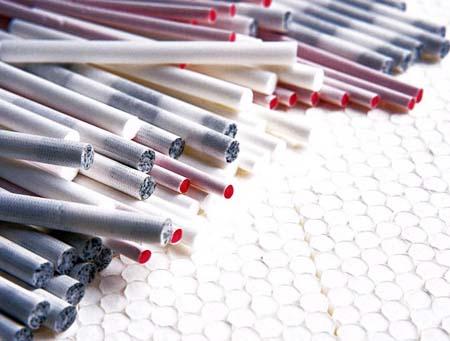
The atomization core used is a ceramic heating element, which has the characteristics of stability, high-temperature resistance, and safety in oil conduction, providing a more delicate taste and the advantage of preventing oil leakage. Currently, micro-porous ceramic atomization cores are standard for e-liquid e-cigarettes. How is this three-dimensional network structure of porous ceramics manufactured?
There are many types of porous ceramic materials, and due to different usage purposes, the performance of the materials varies. Therefore, many different preparation techniques have been gradually developed in recent years. The general preparation process for porous ceramics includes granulation, mixing, forming, and sintering.
The methods for forming pores in porous ceramics mainly involve the formation of pores during the sintering process. The methods include adding pore-forming agents, foaming processes, organic foam impregnation processes, and sol-gel processes.
1. Adding Pore-Forming Agents
By adding pore-forming agents to the ceramic mixture, the pore-forming agents occupy a certain space in the green body, and during the sintering process, the pore-forming agents leave the matrix, thus forming pores and obtaining porous ceramics. The forming methods mainly include molding, extrusion, rolling, isostatic pressing, injection, and slip casting. The products are generally referred to as honeycomb porous ceramics.
2. Organic Foam Impregnation
Using organic foam to impregnate the ceramic slurry, drying, and then burning off the organic foam to obtain porous ceramics. This method is suitable for preparing porous ceramics with high porosity and open pores. The products are generally referred to as mesh porous ceramics.
3. Foaming Method
Mixing foaming agents with clay materials, under pressure, causing the clay particles to bond together. When sufficient heat reaches the clay particles, the material foams and expands to fill the entire mold, cooling to obtain porous ceramic materials. Various pore sizes and shapes of porous ceramics can be prepared, generally referred to as foam porous ceramics.
4. Sol-Gel Process
Mixing ceramic particles with organic gel, washing with ion exchange, and then sintering to form porous ceramic materials. The sintering temperature can be adjusted to change the structure, porosity, and pore size of the porous SiO2 material. The sol-gel method is mainly used to prepare microporous ceramic materials, especially microporous ceramic films.
Advantages
1. Different forming methods can produce complex-shaped products
2. Various pore structures can be produced
1. Can produce products with high porosity
2. Good strength of samples
1. Particularly suitable for producing closed-pore products
2. High porosity and strength
1. Suitable for producing microporous ceramics
2. Suitable for producing film materials
3. Uniform pore distribution
Disadvantages
1. Poor uniformity of pore distribution
2. Not suitable for producing high porosity
1. Cannot manufacture small-diameter closed-pore products
2. Product shape is limited
3. Product composition density is difficult to control
High requirements for raw materials
Difficult control of process conditions
1. Raw materials are limited
2. Low productivity
3. Product shape is limited
Among the successful applications and active research, the most notable is the addition of volatile or combustible pore-forming agents to the ceramic mixture, utilizing these agents to vaporize or burn out at high temperatures, leaving pores in the ceramic body. Depending on the pore size, ceramics can be classified into coarse pore products ranging from 1000μm to several tens of micrometers, microporous products ranging from 0.2 to 20μm, and ultramicroporous products ranging from 0.2μm to several nanometers. Based on the pore-forming methods and voids, porous ceramics can be divided into foam ceramics, honeycomb ceramics, and granular ceramics, corresponding to the following porosity:
The preparation technology allows for precise control of the structure of porous ceramics, including different influences on pore size, shape, and distribution. The bonding strength between aggregate particles determines the strength of porous ceramics, and it is also necessary to reasonably coordinate the relationship between porosity and strength.
Due to their high porosity, low density, and low thermal conductivity, porous ceramics have significant thermal resistance and small volumetric heat capacity. The applications of porous ceramic materials have spread across metallurgy, chemical engineering, environmental protection, energy, and biology, in addition to the commonly known applications in aerospace thermal insulation, missile heads, and filters, they also play a significant role in the field of e-cigarettes.