
Chengdu Tightens Smoking Ban: Government Offices, Public Institutions, Hospitals, and Schools to Bec
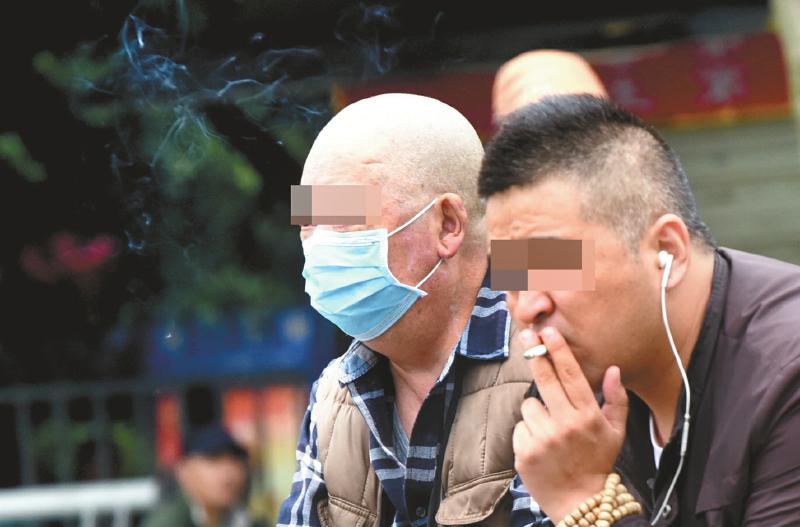
In Chengdu, the management of smoking in public places has been ongoing for nearly 20 years. How can we encourage everyone to consciously participate in smoking control? Just after the National Day, Chengdu has once again upgraded its "smoking ban".
On October 7, the West China Metropolis Daily reported from the Chengdu Municipal Government Office that the "Implementation Opinions of the Chengdu Municipal People's Government on Further Strengthening Patriotic Hygiene Work in the New Era" (hereinafter referred to as the "Opinions") revealed that by 2020, all party and government agencies, public institutions, medical and health institutions at all levels, primary and secondary schools, kindergartens, and youth activity centers should meet and maintain the standards of smoke-free units.
Requirements
Leading cadres must take the lead in banning smoking, and no smoking during official activities
On October 7, according to the "Opinions," Chengdu has clearly stated the legal provisions for smoking control in public places, implementing the requirements of the Central Committee of the Communist Party of China and the State Council's "Notice on Leading Cadres Taking the Lead in Banning Smoking in Public Places" (Document No. [2013] 19), urging leading cadres to model compliance with the smoking ban in public places.
"The regulations for leading cadres to take the lead in banning smoking are very detailed. For example, leaders at all levels are not allowed to smoke in public places where smoking is prohibited, such as schools, hospitals, sports venues, public cultural venues, and public transportation. In other public places with no smoking signs, they must also take the lead in not smoking," revealed a civil servant working in a municipal agency. The smoking ban regulations apply to both official activities and private occasions. For instance, in official activities of party and government agencies, the organizing unit must not provide tobacco products, and participants in official activities must not smoke, offer cigarettes, or encourage smoking. At the same time, it is strictly prohibited to use or indirectly use public funds to pay for tobacco consumption expenses.
The office areas of party and government agencies are also clearly designated as smoke-free zones. Reporters learned that the sale or provision of tobacco products will be prohibited within the agency, tobacco advertising will be banned, smoking will be prohibited in public office spaces, and prominent no smoking signs will be required in reception areas, conference rooms, hallways, canteens, and restrooms. At the 12th Plenary Session of the Chengdu Municipal Committee in September this year, it was noted in the meeting discipline that "smoking is prohibited in the conference hall." Whether in the plenary session or group discussions, participating members adhered to the smoking ban discipline.
Case
A Chengdu official was interviewed for failing to stop smoking when reported
So, how will violations of the smoking ban by leading cadres be handled? Last year, a Chengdu netizen wrote to report that an official in Longquanyi District was smoking in the office, violating regulations and should be dealt with seriously. The Longquanyi District Internet User Message Handling Leadership Group Office quickly responded to the netizen's letter, stating that after investigation, the official did not smoke in the no smoking area, but during work, there were occasional instances of visitors smoking in the office, which were not stopped, and the cigarette butts were not cleaned up in time, leading to misunderstandings. In response, the agency held a meeting for all staff to reiterate the system and discipline requirements for the smoking ban in public places, and required all staff to strictly comply with relevant regulations. Meanwhile, the responsible leaders of the committee were asked to interview and remind the official to take it as a warning.
Reporters learned that the regulations require leading cadres at all levels to actively accept public and media supervision. Party and government agencies at all levels must strengthen supervision and inspection, and for leading cadres who violate regulations by smoking in public places, they should be given criticism and education, and those causing a bad influence should be dealt with seriously according to laws and regulations.
Promotion
Government offices, hospitals, and schools will be completely smoke-free in three years
As early as 1997, Chengdu began implementing the "Regulations on Prohibiting Smoking in Public Places in Chengdu," which prohibits smoking in public places such as waiting areas in nurseries and medical institutions, classrooms in various schools, etc. The subsequently implemented "Sichuan Provincial Regulations on Public Place Hygiene Management" clarified the definition of public places and who enforces and punishes violations, among which individuals smoking in prohibited public places can be fined up to 200 yuan. However, the smoke-filled areas outside hospital waiting rooms and at hospital entrances remain serious issues.
Ms. Wang, a citizen, is most troubled by the fact that every time she takes her child to Huaxi Second Hospital, there is a strong smell of smoke even ten meters away from the hospital entrance. Some parents of sick children smoke while holding their children, and many pregnant women can only wear masks to walk through. Although the hospital has clearly posted no smoking signs, smokers are not restrained.
"Although there are provisions for fines for smokers, hospitals are not the enforcement body and can only persuade and promote smoking bans," said Liu Xiaobin, director of the Prevention and Health Care Department of Sichuan Provincial People's Hospital. Since 2013, this department has been responsible for smoking control in the provincial hospital. For patients, before hospitalization, they need to sign a smoking ban notice, and smoking is strictly prohibited in the inpatient area and consultation rooms. Medical staff are also prohibited from smoking during operations and treatments. However, smoking behavior in hospital open spaces, stairwells, and entrances can only be addressed through promotion.
In response, Liu Xiaobin suggested that the approach of criminalizing drunk driving could be borrowed to enforce smoking bans. When it enters the legal level, smoking becomes a bottom line that must be followed and respected.
In this regard, Chengdu has outlined a timetable. In three years, patients and medical staff will no longer passively inhale "secondhand smoke." They will actively promote the revision of smoking control regulations, and administrative law enforcement departments will increase the enforcement of smoking bans in public places. Various public places will set up standardized no smoking signs and implement a smoking ban guidance system. By 2020, all party and government agencies, public institutions, medical and health institutions at all levels, primary and secondary schools, kindergartens, and youth activity centers should meet and maintain the standards of smoke-free units.
Expert Interpretation
Provincial CPPCC member Zeng Wenzhong suggests:
Chengdu can take the lead in legislation to provide a smoking ban model
"When I was studying at University College London, I was confused when a group of friends started putting on coats and scarves while chatting in the living room. Later, I realized they were going to the balcony to smoke." Sichuan Provincial CPPCC member and director of the management committee of Beijing Yingke (Chengdu) Law Firm, Zeng Wenzhong, was deeply impressed by the British adherence to smoking control laws.
As early as the 2014 provincial two sessions, Zeng Wenzhong submitted a proposal titled "Suggestions on Controlling Smoking through Legislation to Protect National Health and Create a Clean and Civilized Environment," hoping to control smoking through legislation. In his proposal, he suggested that units where smoking is prohibited should perform smoking supervision work, and impose heavy fines on those who smoke in public places and on public place managers who do not stop smoking.
"Legislation is not for the purpose of fines, but to express an attitude legally, making everyone pay attention. Before national legislation is introduced, Chengdu can take the lead in legislation to provide a model. As an international city, it should also take the lead in pilot programs." Zeng Wenzhong noted that smoking control work has not achieved significant results, partly due to the lack of unified national legislation and insufficient local legislation, thus lacking sufficient binding force to effectively control smoking. Chengdu's strong smoking ban will be a positive exploration and pilot.
News Depth
Focus 1: Smoking Control Legislation
CPPCC members suggest: Include smoking control in the integrity system
In March of this year, the Chengdu Municipal Government website announced the 2016 legislative work plan, which included prohibiting smoking in public places as part of this year's legislative work plan. The "Regulations on Prohibiting Smoking in Public Places in Chengdu," drafted by the Chengdu Health and Family Planning Commission, has been listed as a legislative project for strengthening research and demonstration. Whether hospitals can take the lead in banning smoking may be reflected in the revised "Regulations."
"I suggest that relevant departments impose strict penalties on units that do not persuade or inadequately persuade smokers in public places, and that no smoking public places should have supervisors year-round. Through multiple measures, we can encourage the public to consciously resist smoking in public places," said Zhang Yong, a respiratory authority and Sichuan Provincial CPPCC member. He believes that in recent years, respiratory diseases have been increasing, closely related to the city's air quality, including smoking, secondhand smoke, barbecues, etc.
"Currently, the establishment of a social integrity system is still imperfect. If smoking control is combined with the integrity system, certain achievements can also be made." In this regard, Zhang Yong suggested that the smoking behavior of consumers who refuse to heed advice should be included in the municipal government's integrity system, and that units that do not implement smoking control should be penalized more severely to regulate their behavior and promote positive social development.
Focus 2: Youth Group
Suggest no tobacco sales within 200 meters of schools
According to Chengdu's goals, strict implementation of laws prohibiting tobacco sales to minors will be enforced. The education department will focus on youth as a key group for smoking prevention and intervention, striving to reduce the number of new smokers.
"For school staff, they definitely won't smoke in class, but there are currently no hard regulations in other areas of the school outside the classroom." Sichuan Provincial CPPCC member and one of the first civil observers in Sichuan, Tang Shunfa, a middle school teacher, has been paying attention to smoking prevention work for minors. He believes that Chengdu's determination to achieve smoke-free environments in primary and secondary schools and youth activity centers by 2020 should be strongly supported.
How to reduce the number of new smokers among youth? Tang Shunfa has a suggestion: "I think we should borrow measures used to regulate internet cafes around schools, such as prohibiting the sale of tobacco within 200 meters of school premises. If tobacco is not easily accessible to students, then those who see smoking as a novelty will have fewer opportunities to come into contact with tobacco after leaving school."
Extended Reading
Countries are implementing strict smoking bans
United States, New York: 70% of cigarette prices are taxes
The United States has clearly stipulated the proportion of health warnings on cigarette packs, disclosed the components of tobacco products, and implemented a series of smoking control measures such as banning cigarette advertisements and raising tobacco taxes. As one of the cities with the strictest smoking control in the United States, the price of a pack of cigarettes in New York has been raised to $14, of which 70% is tax.
United Kingdom: £50 fine for indoor smoking
The United Kingdom was one of the first countries to implement indoor smoking bans. The smoking control law prohibits smoking in all public places and imposes heavy fines for smoking in public places. Anyone who illegally smokes indoors will be fined £50. The smoking ban in the UK is enforced quite strictly, and all businesses do not allow customers to smoke. Even in winter, you will see a group of people huddled outside bars, shivering, as they smoke.
Bhutan: The only country with a complete smoking ban
In 2004, Bhutan passed a comprehensive smoking ban, becoming the first and only country in the world to implement a complete smoking ban. Bhutan prohibits the sale of all tobacco products nationwide, and smoking is banned in all public places, including parks, nightclubs, shops, open markets, and public restrooms. Violators face a minimum penalty of $225. If someone is found smoking indoors, the police have the right to break in and extinguish the cigarette.
Munich, Germany: Up to €2,500 fine for smoking
Munich is known as the "strictest smoking ban city." In 2007, Munich began implementing the "Non-Smoker Protection Law," prohibiting smoking in schools, restaurants, bars, and other public places. Smokers will be fined €35 for the first violation, with fines up to €2,500 for repeated offenses. If someone smokes on school grounds, they will be expelled by security. Many families display no smoking signs, and some even have smoking alarms. Munich has also set up "smoking police" whose daily work mainly involves patrolling, focusing on train stations, restaurants, cafes, and shopping malls. They will issue a fine ticket for "violating smoking regulations" upon seeing a smoker.
South Korea: Smokers can enjoy "paid leave" for quitting
To encourage quitting smoking, the South Korean government will gradually implement a "quit smoking leave" system. Employees in government agencies and private enterprises who are determined to quit smoking can apply for 3-4 days of paid leave. The majority of the losses incurred by companies due to employee leave will be borne by the government, with funds mainly raised from tobacco taxes.


