
What Core Technologies Did Funded E-Cigarette Companies Have in 2019?
What core technologies did e-cigarette companies that secured funding in 2018 have? One harsh reality is that, apart from JUUL, which invented and mastered nicotine salt technology, most companies did not possess core technologies of their own. Before Jin
What were the core technologies of funded e-cigarette companies in 2018? A harsh reality is that, apart from the JUUL e-cigarette, which invented and mastered the nicotine salt technology, most companies do not have their own core technology.
Before the establishment of Precision Salt Technology, I was responsible for overseas sales at Dekang Biotechnology and later founded two B2B e-liquid brands, Oplus Tech and SteamWorks. In my eighth year of my career, I brought in Hitesh Dubey, head of the new tobacco department of the international tobacco giant ITC, to co-found Precision Salt Technology SALT LABS, an e-cigarette brand aimed at the mass market.
For two years, from 2016 to 2017, we spent almost all our time in university laboratories in Finland and the United States, jointly developing a new atomization technology.
The currently available EVOVE atomizing e-cigarette uses our self-developed high-purity nicotine salt formula, and the device features a dual power mode switch (which seems to be the first small e-cigarette supporting power adjustment in the industry). The atomization chamber, which is crucial in e-cigarettes, is designed based on the physical properties of our formulated e-liquid, combined with our hardware structure (patent applied for).
So objectively speaking, our distinction from other brands is not in the e-liquid or self-developed devices and cartridges, but rather in our research into atomization technology. Moreover, we are continuously working on this.
JUUL
In 2018, JUUL became a focal point in the funding circle and the e-cigarette industry. Altria acquired a 35% stake, valuing the company at $38 billion, with $2 billion in cash bonuses at year-end. The brand became a unicorn in just three years, capturing over 70% of the U.S. market share, with numerous accolades.
Core technology: nicotine salt formula
This patent is a global patent, the number one core competitive advantage, unmatched and incomparable, which is why it is valued at $38 billion, and it has been validated by the market as the core technology, being the pioneer of the small e-cigarette trend!
GR GIL
Produced by VMR, the brand was initially the only vertically integrated e-cigarette company globally. It was first acquired by China’s largest tobacco flavor supplier, Huabao International, and later fully acquired by JUUL in October 2018. Its core technology should not be underestimated, but its patent rights currently belong to the parent company.
IJOY
A domestic e-cigarette giant, IJOY received $300 million in Series A funding in May 2018. The full name of the parent company is Shenzhen Aijia Electronic Technology Co., Ltd.
The number of patents is astonishing. However, they are all appearance patents and do not involve any core technology.
RELX
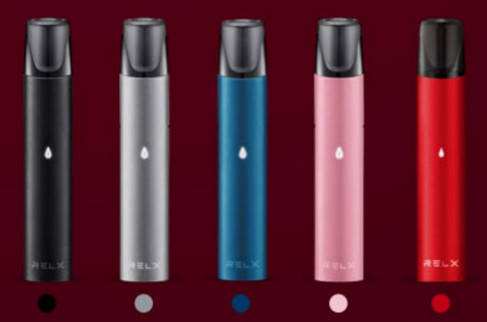 In 2018, RELX was the leader in the Chinese e-cigarette industry, an absolute success product. With executives from Didi and the founder of Monster Battery, the internet startup team raised $30 million in angel funding, enjoying great success. The parent company is Shenzhen Wuxin Technology Co., Ltd.
The patent for the e-cigarette working method is evident to those who understand it. Core technology? Not really; it has some technology, but this patent is merely a protective moat and cannot be considered core.
GiPPRO
Private equity investment of $15 million, no patents found.
MOTI
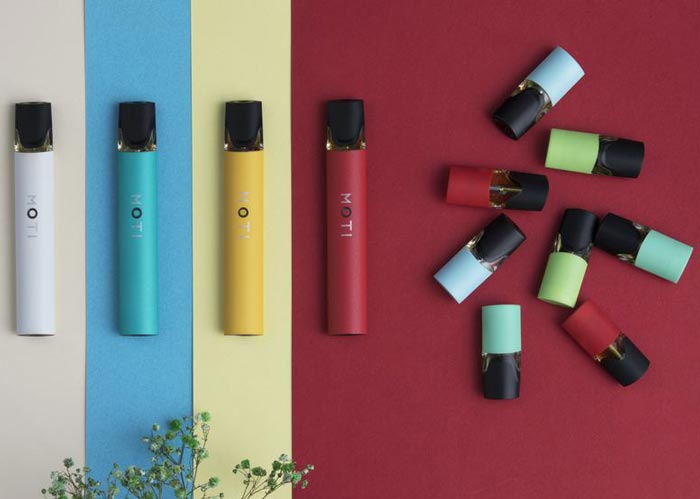 Zhenge Fund, Pre-A round $10 million, no patents found.
As for other trending brands, whether it's Luo's Fulu or Tongdao Dashi's YOOZ, even utility model patents are likely just appearance patents, which could be risky.
The small e-cigarette trend has emerged fiercely, with many similar JUUL-like designs flooding the market. Those unable to replicate JUUL's small size have copied the early PHIX design. Users with insight can easily compare and see what distinguishes the small e-cigarettes launched after 2018.
What constitutes core technology?
Do you know why international tobacco giants have been pouring money in recent years? Do they really think it's just the booming e-cigarette market? TOO YOUNG, the core patent comes from the father of e-cigarettes, Han Li, whose international patent was applied for in 2006 and is about to expire. The Damocles sword hanging over the e-cigarette industry is about to disappear, which is why there is such a storm.
Currently, the core technologies are heat-not-burn and nicotine salts.
If you look into the Incopat global technology database, none of the emerging domestic e-cigarette brands are relevant, while several major tobacco companies under China Tobacco are rapidly laying out their strategies, continuously filling similar patent gaps since 2016, almost on a monthly basis. #p#分页标题#e#
What others have, I will find ways to invalidate your patents; what others lack, I will fill the gap first and then invalidate; what I have that others do not, I will establish a multi-dimensional patent moat. The high profits of tobacco lead to a top-level technology competition in e-cigarettes that is not only about technology but also about policy (especially in our country).
Before the establishment of Precision Salt Technology, I was responsible for overseas sales at Dekang Biotechnology and later founded two B2B e-liquid brands, Oplus Tech and SteamWorks. In my eighth year of my career, I brought in Hitesh Dubey, head of the new tobacco department of the international tobacco giant ITC, to co-found Precision Salt Technology SALT LABS, an e-cigarette brand aimed at the mass market.
For two years, from 2016 to 2017, we spent almost all our time in university laboratories in Finland and the United States, jointly developing a new atomization technology.
The currently available EVOVE atomizing e-cigarette uses our self-developed high-purity nicotine salt formula, and the device features a dual power mode switch (which seems to be the first small e-cigarette supporting power adjustment in the industry). The atomization chamber, which is crucial in e-cigarettes, is designed based on the physical properties of our formulated e-liquid, combined with our hardware structure (patent applied for).
So objectively speaking, our distinction from other brands is not in the e-liquid or self-developed devices and cartridges, but rather in our research into atomization technology. Moreover, we are continuously working on this.
JUUL
In 2018, JUUL became a focal point in the funding circle and the e-cigarette industry. Altria acquired a 35% stake, valuing the company at $38 billion, with $2 billion in cash bonuses at year-end. The brand became a unicorn in just three years, capturing over 70% of the U.S. market share, with numerous accolades.
Core technology: nicotine salt formula
This patent is a global patent, the number one core competitive advantage, unmatched and incomparable, which is why it is valued at $38 billion, and it has been validated by the market as the core technology, being the pioneer of the small e-cigarette trend!
GR GIL
Produced by VMR, the brand was initially the only vertically integrated e-cigarette company globally. It was first acquired by China’s largest tobacco flavor supplier, Huabao International, and later fully acquired by JUUL in October 2018. Its core technology should not be underestimated, but its patent rights currently belong to the parent company.
IJOY
A domestic e-cigarette giant, IJOY received $300 million in Series A funding in May 2018. The full name of the parent company is Shenzhen Aijia Electronic Technology Co., Ltd.
The number of patents is astonishing. However, they are all appearance patents and do not involve any core technology.
RELX
In 2018, RELX was the leader in the Chinese e-cigarette industry, an absolute success product. With executives from Didi and the founder of Monster Battery, the internet startup team raised $30 million in angel funding, enjoying great success. The parent company is Shenzhen Wuxin Technology Co., Ltd.The patent for the e-cigarette working method is evident to those who understand it. Core technology? Not really; it has some technology, but this patent is merely a protective moat and cannot be considered core.
GiPPRO
Private equity investment of $15 million, no patents found.
MOTI
Zhenge Fund, Pre-A round $10 million, no patents found.As for other trending brands, whether it's Luo's Fulu or Tongdao Dashi's YOOZ, even utility model patents are likely just appearance patents, which could be risky.
The small e-cigarette trend has emerged fiercely, with many similar JUUL-like designs flooding the market. Those unable to replicate JUUL's small size have copied the early PHIX design. Users with insight can easily compare and see what distinguishes the small e-cigarettes launched after 2018.
What constitutes core technology?
Do you know why international tobacco giants have been pouring money in recent years? Do they really think it's just the booming e-cigarette market? TOO YOUNG, the core patent comes from the father of e-cigarettes, Han Li, whose international patent was applied for in 2006 and is about to expire. The Damocles sword hanging over the e-cigarette industry is about to disappear, which is why there is such a storm.
Currently, the core technologies are heat-not-burn and nicotine salts.
If you look into the Incopat global technology database, none of the emerging domestic e-cigarette brands are relevant, while several major tobacco companies under China Tobacco are rapidly laying out their strategies, continuously filling similar patent gaps since 2016, almost on a monthly basis. #p#分页标题#e#
What others have, I will find ways to invalidate your patents; what others lack, I will fill the gap first and then invalidate; what I have that others do not, I will establish a multi-dimensional patent moat. The high profits of tobacco lead to a top-level technology competition in e-cigarettes that is not only about technology but also about policy (especially in our country).


