What are the prospects for China’s e-cigarette market?
According to relevant data, there were approximately 35 million e-cigarette consumers worldwide in 2017. Compared to 2016, the growth rate of e-cigarettes slowed significantly last year, but this does not affect its future development. Among various tobacco products, e-cigarette sales have already surpassed that of smokeless tobacco and pipe tobacco, becoming the fourth largest category of tobacco products after cigarettes, loose tobacco, and cigars.
Abroad, online and specialty stores remain the most important sales channels for e-cigarettes, accounting for over two-thirds of total sales. The advantages of online sales lie in convenience and speed, aligning closely with the consumption habits of the younger generation. However, there are also vulnerabilities: it is difficult to verify whether consumers are of legal age, leading to underage purchases and significant regulatory challenges. It is reported that some EU countries have already banned online sales of e-cigarettes, leaving product display, consumption, and interaction solely to specialty stores.
The growth of the Chinese e-cigarette market has been slow.
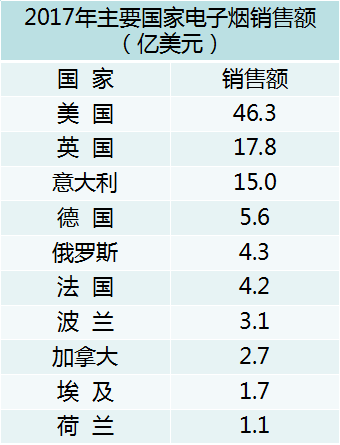
From the actual market performance, the development of the domestic e-cigarette market has been relatively slow. This is partly due to the need for further technological improvements; currently, China's e-cigarette development and cultivation technology still has significant room for growth. Additionally, there is a growing national identity with traditional Chinese cigarettes, coupled with the tobacco monopoly system in China, which has slowed the development of e-cigarettes.
However, the Chinese e-cigarette market still has considerable growth potential.
Firstly, it aligns with consumption trends. The emergence of e-cigarettes stems from smokers' increasing health awareness. In the future, consumers' emphasis on health will only increase, leading to a gradual rise in e-cigarette awareness and trial rates.
Secondly, there is dual attention from the government and the industry. Recently, the three-day 2018 IECIE e-cigarette exhibition concluded successfully. For Chinese tobacco, e-cigarettes represent a new and exciting product. At the national tobacco work conference earlier this year, the national bureau repeatedly mentioned e-cigarettes, with keywords such as "promote," "push," "prepare," "actively," and "increase" appearing frequently.

Thirdly, the advancement of tobacco consumption culture—reducing the potential demand for secondhand smoke. E-cigarettes are primarily used for smoking cessation and as a substitute for traditional cigarettes. The biggest difference from traditional cigarettes is that they do not involve combustion, thus avoiding tar, carbon monoxide, nitrous oxide, and other toxic substances. Moreover, aside from e-cigarettes designed to produce large clouds, most e-cigarettes do not generate significant amounts of "secondhand smoke" that could affect those around them. With 350 million smokers in China, the domestic e-cigarette market has broad prospects.
Fourthly, Chinese tobacco companies are increasingly enthusiastic about developing e-cigarettes as a new tobacco product. The experiences offered by traditional cigarettes and e-cigarettes are different. The satisfaction derived from traditional cigarettes is irreplaceable, but the emergence of e-cigarettes provides companies with another way to enrich their brands. This offers a new perspective on brand image, development, consumer memory, recognition, and favorability. Additionally, the synchronized development of brands in the e-cigarette sector will foster healthy competition within the industry. Compared to the global e-cigarette market, the Chinese e-cigarette market is just beginning, with companies competing based on marketing strength and product reputation, contributing to the diversified development of the Chinese tobacco market.