Is Legalizing E-Cigarettes a Transitional Measure for Smoke-Free Cities?
In recent years, the heated tobacco device iQOS, which has sold extremely well in Japan, has entered Hong Kong and attracted many smokers to switch from traditional combustible cigarettes to heated tobacco products that are said to have no lingering smoke
In recent years, the heated tobacco device iQOS, which has been a hit in Japan, has made its way to Hong Kong, attracting many smokers to abandon traditional combustible cigarettes in favor of heated tobacco that claims to have no smoke odor or tar taste. Tobacco companies assert that this product does not produce smoke or ash during the heating process and does not contain carcinogenic tar, which may help smokers quit and gradually alleviate public health issues caused by smoking. However, the impact of e-cigarettes on human health remains highly controversial; the claim that they can serve as a substitute for traditional cigarettes is merely self-deception. Tobacco companies cannot explain the long-term health effects of e-cigarettes or heated tobacco, so the government should adopt a more cautious approach and follow medical advice to impose a comprehensive ban.
Generally speaking, common tobacco products can be divided into two categories: combustible tobacco products and non-combustible tobacco products (commonly known as e-cigarettes). Combustible products refer to those sold in convenience stores and newsstands, made by drying and shredding tobacco, then rolling it in paper to be smoked. Non-combustible tobacco products can be further divided into two types: e-cigarettes, which are electronic nicotine delivery systems (some without nicotine) that deliver aerosol by heating a solution; and electronic heated non-combustible cigarettes, which heat tobacco through electronic devices at high temperatures, producing aerosol containing nicotine and other chemicals (more commonly used by Hong Kong residents). Although the public often collectively refers to the latter two as e-cigarettes, they are not entirely the same.
It is currently difficult to determine the extent of e-cigarettes' impact on health, but it is certain that there is an impact. As e-cigarettes become increasingly prevalent in Hong Kong, the government's urgent task is to ban e-cigarettes and conduct relevant background research, regulatory reviews, and amendments to clearly respond to the current situation with explicit prohibitions, rather than avoiding related controversies through inaction and allowing e-cigarettes to circulate illegally in the market, which would lead Hong Kong towards a true "smoke-free city."
The harm remains controversial; does legalization mean encouragement to smoke?
Regarding the impact of e-cigarettes on human health, tobacco companies and health departments in various countries certainly hold differing views. Research by Philip Morris, the world's largest tobacco company (also the developer of iQOS), suggests that compared to traditional smoking methods, which burn tobacco at 600°C, iQOS technology can control the heating process at 350°C, which not only prevents the production of smoke and ash but also reduces harmful chemicals by not burning tobacco when releasing nicotine vapor.
Although the study received a response from UK authorities, indicating that the health risks for smokers switching to such tobacco products may be lower (compared to combustible cigarettes), the UK also emphasized that since e-cigarettes are a relatively new phenomenon, there is a lack of long-term data to fully dismiss their potential impact on health.
The Hong Kong Smoking and Health Council states:

Despite e-cigarettes (note 1) generally having lower nicotine content, they also contain higher levels of formaldehyde and polybrominated diphenyl ethers, so they cannot be regarded as "less harmful smoking cessation tools" as claimed by developers.
Recently, members of the medical community, anti-smoking organizations, and legislative councilors have expressed their opposition, urging the Hong Kong government to adhere to a "zero tolerance" principle towards e-cigarettes, which is undoubtedly worthy of full public support. Professor Lau Chak-sing from the Hong Kong Academy of Medicine stated at a press conference that if the Hong Kong government legalizes e-cigarettes, it may increase the likelihood of young people smoking in the future; Dr. Chan Ka-leung, Dean of the Chinese University of Hong Kong's Faculty of Medicine, also believes that e-cigarettes are as harmful to health as traditional cigarettes, so the government should not "take it lightly," emphasizing that the Faculty of Medicine stands firm on this position and further proposed that the government set a timetable for a comprehensive ban on traditional cigarettes. Similarly, Legislative Council members, including Civic Party's Kwok Wing-hung and New People's Party Chairwoman Regina Ip, have clearly expressed their opposition to e-cigarettes. From the perspective of safeguarding public health, what they say is indeed valid, as cigarettes are harmful to both the body and the environment, and comprehensive tobacco control is a global trend. However, the more important question is how to translate this concept into concrete policies and gradually implement them.
▲ The Hong Kong Smoking and Health Council, together with the Hong Kong Medical Association, the Hong Kong Western Medicine Association, and the Hong Kong Dental Association, urges the government to legislate as soon as possible to comprehensively ban e-cigarettes and other new tobacco products.
According to Hong Kong's Pharmacy and Poisons Ordinance, if e-cigarettes contain nicotine, they are classified as pharmaceutical products and must be registered with the Pharmacy and Poisons Board before they can be sold or distributed. Currently, there are no nicotine-containing e-cigarettes registered as pharmaceutical products in Hong Kong. In other words, e-cigarettes remain in a gray area in Hong Kong; on one hand, smokers can "legally" purchase heated devices; on the other hand, they must "illegally" buy untaxed tobacco known as "pods" (i.e., smuggled cigarettes).
One of the core issues regarding the consideration of e-cigarette legalization is whether this move would encourage more non-smokers to use them, becoming a gateway to traditional cigarettes, thus creating a moral crisis. According to data from the Census and Statistics Department, the smoking population in Hong Kong has steadily declined over the past twenty years. In 2017, the daily smoking rate was about 10.0%, a decrease of 0.5% compared to similar statistics from 2015; the smoking rate among adolescents (ages 15 to 19) slightly decreased by 0.1%, but the number of e-cigarette users has significantly increased. For instance, since its launch abroad in 2014, the usage of iQOS in Hong Kong seems to be more of a substitute for smokers than a concern for authorities (note 2). Therefore, the Hong Kong government must provide more precise data and research to convince the public that the harms and negative impacts of legalizing e-cigarettes are indeed present.
Research results indicate that non-combustible tobacco products help smokers gradually quit traditional cigarettes.
▲ A user is taking an e-cigarette pod out of the box ▲ A beautiful woman demonstrates an e-cigarette
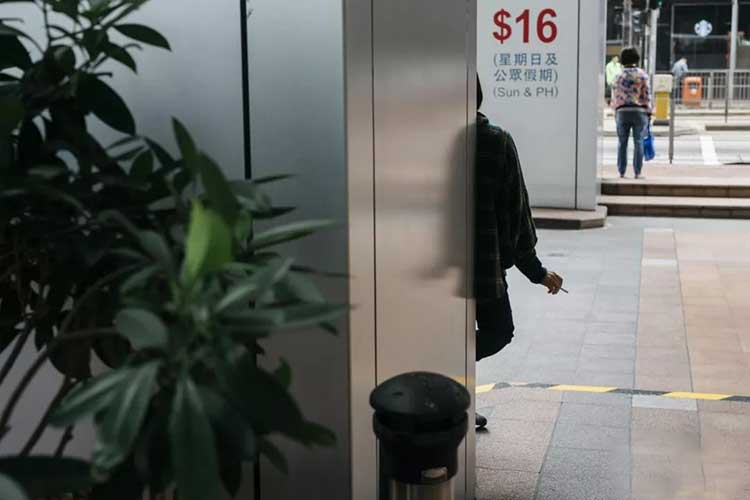
Since the indoor smoking ban was implemented in Hong Kong in 2007, it has been 11 years, yet there are still instances of smokers violating the ban.
▲ Some smokers in Hong Kong disregard the smoking ban and continue to smoke in non-smoking areas, violating the ban ▲ Some smokers in Hong Kong disregard the smoking ban and continue to smoke in non-smoking areas, violating the ban ▲ Some smokers in Hong Kong disregard the smoking ban and continue to smoke in non-smoking areas, violating the ban ▲ Some smokers in Hong Kong disregard the smoking ban and continue to smoke in non-smoking areas, violating the ban ▲ Some smokers in Hong Kong disregard the smoking ban and continue to smoke in non-smoking areas, violating the ban ▲ Some smokers in Hong Kong disregard the smoking ban and continue to smoke in non-smoking areas
Legalizing e-cigarettes is a "necessary evil," a transitional measure for a smoke-free city?
From a public health perspective, a comprehensive smoking ban is indeed the trend, but the key lies in how to implement it and set a roadmap. Currently, like many cities, Hong Kong has designated indoor places, offices, schools, and public transport facilities as non-smoking areas to protect citizens from the effects of secondhand smoke (or even thirdhand smoke). However, with the rise of e-cigarettes, some argue that the government could use the "necessary evil" argument to legalize e-cigarettes, providing smokers with a legal alternative, enhancing their incentive to switch to e-cigarettes, and reducing the impact of smoking traditional cigarettes in public places (objectively, at least reducing smoke odor), while also helping the government generate new fiscal revenue.
This argument seems reasonable, but it must also be remembered, as discussed above, that e-cigarettes are not as "safe" as claimed by developers. Although some cite foreign research reports indicating that e-cigarettes contain fewer carcinogenic substances than traditional cigarettes and do not have the major carcinogen tar, viewing the legalization of e-cigarettes as a short-term "necessary evil" carries too much uncertainty, and there is not enough scientific evidence to confirm that e-cigarettes help smokers quit. Therefore, the government should proceed with caution.
▲ A wide variety of tobacco products
In the long run, if the government wants to create a smoke-free city, it must expand the smoking ban and increase tobacco taxes (setting aside the philosophical "educational" approach) to raise the cost and difficulty of smoking in public places. Currently, apart from Japan, which restricts smokers to designated "smoking areas," many developing countries, such as Bhutan, Mongolia, and Kazakhstan, have already banned smoking in public streets, leading the way compared to many developed countries. In contrast, Hong Kong still has many smokers walking and smoking on crowded streets (commonly known as "train heads"), which is lacking in public morality. Therefore, in addition to raising tobacco taxes economically, the Hong Kong government should also consider expanding the public smoking ban, gradually moving towards a citywide smoking ban. After all, smoking in public places is not merely a matter of personal freedom, but a public health issue, so the government also has a moral responsibility to regulate smoking behavior in public places to ensure the health of the public is not harmed by secondhand smoke.
Regarding the design of a roadmap for a comprehensive smoking ban, the Hong Kong government could refer to the policy adjustments made by Russia over the past decade. Since Russia joined the WHO Framework Convention on Tobacco Control in 2008, the authorities have shifted from a "hands-off" attitude towards tobacco control to becoming one of the world's strictest tobacco control countries. Currently, Russia, like Hong Kong, has designated indoor workplaces, public places, and public transport as completely non-smoking areas, and has strict requirements for health warnings on tobacco packaging. Furthermore, the authorities intend to promote legislation to prevent the younger generation born in 2014 or later from developing bad habits, hoping to significantly reduce the smoking population by 2050, permanently solving public health issues and associated economic losses caused by smoking, and becoming the first country in the world to achieve a comprehensive smoking ban. Although this move is considered bold and progressive, there are indeed lessons for the Hong Kong government to learn from.
Generally speaking, common tobacco products can be divided into two categories: combustible tobacco products and non-combustible tobacco products (commonly known as e-cigarettes). Combustible products refer to those sold in convenience stores and newsstands, made by drying and shredding tobacco, then rolling it in paper to be smoked. Non-combustible tobacco products can be further divided into two types: e-cigarettes, which are electronic nicotine delivery systems (some without nicotine) that deliver aerosol by heating a solution; and electronic heated non-combustible cigarettes, which heat tobacco through electronic devices at high temperatures, producing aerosol containing nicotine and other chemicals (more commonly used by Hong Kong residents). Although the public often collectively refers to the latter two as e-cigarettes, they are not entirely the same.
It is currently difficult to determine the extent of e-cigarettes' impact on health, but it is certain that there is an impact. As e-cigarettes become increasingly prevalent in Hong Kong, the government's urgent task is to ban e-cigarettes and conduct relevant background research, regulatory reviews, and amendments to clearly respond to the current situation with explicit prohibitions, rather than avoiding related controversies through inaction and allowing e-cigarettes to circulate illegally in the market, which would lead Hong Kong towards a true "smoke-free city."
The harm remains controversial; does legalization mean encouragement to smoke?
Regarding the impact of e-cigarettes on human health, tobacco companies and health departments in various countries certainly hold differing views. Research by Philip Morris, the world's largest tobacco company (also the developer of iQOS), suggests that compared to traditional smoking methods, which burn tobacco at 600°C, iQOS technology can control the heating process at 350°C, which not only prevents the production of smoke and ash but also reduces harmful chemicals by not burning tobacco when releasing nicotine vapor.
Although the study received a response from UK authorities, indicating that the health risks for smokers switching to such tobacco products may be lower (compared to combustible cigarettes), the UK also emphasized that since e-cigarettes are a relatively new phenomenon, there is a lack of long-term data to fully dismiss their potential impact on health.
The Hong Kong Smoking and Health Council states:
Despite e-cigarettes (note 1) generally having lower nicotine content, they also contain higher levels of formaldehyde and polybrominated diphenyl ethers, so they cannot be regarded as "less harmful smoking cessation tools" as claimed by developers.
Recently, members of the medical community, anti-smoking organizations, and legislative councilors have expressed their opposition, urging the Hong Kong government to adhere to a "zero tolerance" principle towards e-cigarettes, which is undoubtedly worthy of full public support. Professor Lau Chak-sing from the Hong Kong Academy of Medicine stated at a press conference that if the Hong Kong government legalizes e-cigarettes, it may increase the likelihood of young people smoking in the future; Dr. Chan Ka-leung, Dean of the Chinese University of Hong Kong's Faculty of Medicine, also believes that e-cigarettes are as harmful to health as traditional cigarettes, so the government should not "take it lightly," emphasizing that the Faculty of Medicine stands firm on this position and further proposed that the government set a timetable for a comprehensive ban on traditional cigarettes. Similarly, Legislative Council members, including Civic Party's Kwok Wing-hung and New People's Party Chairwoman Regina Ip, have clearly expressed their opposition to e-cigarettes. From the perspective of safeguarding public health, what they say is indeed valid, as cigarettes are harmful to both the body and the environment, and comprehensive tobacco control is a global trend. However, the more important question is how to translate this concept into concrete policies and gradually implement them.
▲ The Hong Kong Smoking and Health Council, together with the Hong Kong Medical Association, the Hong Kong Western Medicine Association, and the Hong Kong Dental Association, urges the government to legislate as soon as possible to comprehensively ban e-cigarettes and other new tobacco products.
According to Hong Kong's Pharmacy and Poisons Ordinance, if e-cigarettes contain nicotine, they are classified as pharmaceutical products and must be registered with the Pharmacy and Poisons Board before they can be sold or distributed. Currently, there are no nicotine-containing e-cigarettes registered as pharmaceutical products in Hong Kong. In other words, e-cigarettes remain in a gray area in Hong Kong; on one hand, smokers can "legally" purchase heated devices; on the other hand, they must "illegally" buy untaxed tobacco known as "pods" (i.e., smuggled cigarettes).
One of the core issues regarding the consideration of e-cigarette legalization is whether this move would encourage more non-smokers to use them, becoming a gateway to traditional cigarettes, thus creating a moral crisis. According to data from the Census and Statistics Department, the smoking population in Hong Kong has steadily declined over the past twenty years. In 2017, the daily smoking rate was about 10.0%, a decrease of 0.5% compared to similar statistics from 2015; the smoking rate among adolescents (ages 15 to 19) slightly decreased by 0.1%, but the number of e-cigarette users has significantly increased. For instance, since its launch abroad in 2014, the usage of iQOS in Hong Kong seems to be more of a substitute for smokers than a concern for authorities (note 2). Therefore, the Hong Kong government must provide more precise data and research to convince the public that the harms and negative impacts of legalizing e-cigarettes are indeed present.
Research results indicate that non-combustible tobacco products help smokers gradually quit traditional cigarettes.
▲ A user is taking an e-cigarette pod out of the box ▲ A beautiful woman demonstrates an e-cigarette
Since the indoor smoking ban was implemented in Hong Kong in 2007, it has been 11 years, yet there are still instances of smokers violating the ban.
▲ Some smokers in Hong Kong disregard the smoking ban and continue to smoke in non-smoking areas, violating the ban ▲ Some smokers in Hong Kong disregard the smoking ban and continue to smoke in non-smoking areas, violating the ban ▲ Some smokers in Hong Kong disregard the smoking ban and continue to smoke in non-smoking areas, violating the ban ▲ Some smokers in Hong Kong disregard the smoking ban and continue to smoke in non-smoking areas, violating the ban ▲ Some smokers in Hong Kong disregard the smoking ban and continue to smoke in non-smoking areas, violating the ban ▲ Some smokers in Hong Kong disregard the smoking ban and continue to smoke in non-smoking areas
Legalizing e-cigarettes is a "necessary evil," a transitional measure for a smoke-free city?
From a public health perspective, a comprehensive smoking ban is indeed the trend, but the key lies in how to implement it and set a roadmap. Currently, like many cities, Hong Kong has designated indoor places, offices, schools, and public transport facilities as non-smoking areas to protect citizens from the effects of secondhand smoke (or even thirdhand smoke). However, with the rise of e-cigarettes, some argue that the government could use the "necessary evil" argument to legalize e-cigarettes, providing smokers with a legal alternative, enhancing their incentive to switch to e-cigarettes, and reducing the impact of smoking traditional cigarettes in public places (objectively, at least reducing smoke odor), while also helping the government generate new fiscal revenue.
This argument seems reasonable, but it must also be remembered, as discussed above, that e-cigarettes are not as "safe" as claimed by developers. Although some cite foreign research reports indicating that e-cigarettes contain fewer carcinogenic substances than traditional cigarettes and do not have the major carcinogen tar, viewing the legalization of e-cigarettes as a short-term "necessary evil" carries too much uncertainty, and there is not enough scientific evidence to confirm that e-cigarettes help smokers quit. Therefore, the government should proceed with caution.
▲ A wide variety of tobacco products
In the long run, if the government wants to create a smoke-free city, it must expand the smoking ban and increase tobacco taxes (setting aside the philosophical "educational" approach) to raise the cost and difficulty of smoking in public places. Currently, apart from Japan, which restricts smokers to designated "smoking areas," many developing countries, such as Bhutan, Mongolia, and Kazakhstan, have already banned smoking in public streets, leading the way compared to many developed countries. In contrast, Hong Kong still has many smokers walking and smoking on crowded streets (commonly known as "train heads"), which is lacking in public morality. Therefore, in addition to raising tobacco taxes economically, the Hong Kong government should also consider expanding the public smoking ban, gradually moving towards a citywide smoking ban. After all, smoking in public places is not merely a matter of personal freedom, but a public health issue, so the government also has a moral responsibility to regulate smoking behavior in public places to ensure the health of the public is not harmed by secondhand smoke.
Regarding the design of a roadmap for a comprehensive smoking ban, the Hong Kong government could refer to the policy adjustments made by Russia over the past decade. Since Russia joined the WHO Framework Convention on Tobacco Control in 2008, the authorities have shifted from a "hands-off" attitude towards tobacco control to becoming one of the world's strictest tobacco control countries. Currently, Russia, like Hong Kong, has designated indoor workplaces, public places, and public transport as completely non-smoking areas, and has strict requirements for health warnings on tobacco packaging. Furthermore, the authorities intend to promote legislation to prevent the younger generation born in 2014 or later from developing bad habits, hoping to significantly reduce the smoking population by 2050, permanently solving public health issues and associated economic losses caused by smoking, and becoming the first country in the world to achieve a comprehensive smoking ban. Although this move is considered bold and progressive, there are indeed lessons for the Hong Kong government to learn from.