
2019 Vaping Trends and Policy Direction
2019 vaping trends and policy direction: vaping is more like a niche consumer product for specific groups. It is not easily able to break into the traditional cigarette smoker segment looking for alternatives, but it can attract a new generation of young
2019 Vaping Trends and Policy Direction: Vaping has become more of a consumer product for a specific group, making it difficult to penetrate the market of traditional smokers looking for alternatives. However, it can attract a new generation of young consumers who wish to differentiate themselves from their parents. It resembles craft beer, reflecting a quality upgrade, but typically does not see rapid market expansion under normal circumstances.
"Back then, we invested and waited for the right moment; now that the moment has arrived, everyone looks like a bad boyfriend," said Li Oucheng. He pointed out that the current influx of capital into the vaping industry is concerning. "From cases like shared bicycles and power banks, we can see that a market inflated by capital is not a good market." He mentioned that major tobacco companies are currently competing for the UK market, with a subsidy price of £1 (about 10 RMB) for a vaping device in London. "Which Chinese capital company dares to say we are wealthier than tobacco companies?"
With the emergence of multiple new vaping brands, he believes that current vaping products do not demonstrate high product capability and originality, focusing more on market capture. Moreover, once a brand begins distribution and loses core control over its products, any product issues could lead to public backlash, "which is like setting fire to a forest for oneself."
Consumer Voice: You noticed vaping back in 2016; what was the trigger at that time?
Li Oucheng: My partner Zheng Lan went to the United States in 2016 and asked me if I had tried vaping. At that time, I had just started using vape and immediately judged that this would be a revolutionary consumer product. Traditional tobacco burning leads to many health issues, but vape juice is primarily composed of VG (vegetable glycerin) and PG (propylene glycol), which is relatively healthier. Based on my previous investment experience in consumer products, such high-margin, highly dependent, and popular products are always favored in the market.
At that time, vaping was still "big smoke," meaning an open system that required users to refill e-liquid, wrap coils (for heating e-liquid), clean atomizers, and charge batteries. I always hoped for a product like the iPhone. Then PAX Lab launched JUUL (PAX Lab later spun off JUUL, establishing a subsidiary called JUUL Lab), and after buying one, I hoped to invest in a domestic company that would create a closed system.
Consumer Voice: What was the market environment like back then? What choices did you make?
Li Oucheng: In March 2016, we went to Shenzhen for research, meeting with eight factories, four e-liquid companies, as well as agents and media communities. Shenzhen is the global hub for vape products, but many are OEM (original equipment manufacturer) and ODM (original design manufacturer) factories. At the same time, we also began consumer research in California.
In the Chinese market, it was relatively quiet, with only a few companies like Huoqi Electronic Cigarettes operating domestically. I vividly remember in Shajing, the owner of Kang'er received us in a living room styled like an old cadre's, brewing tea while playing with the latest big smoke device, firmly stating that the domestic market has no future and that everyone has enough money and would not accept our investment.
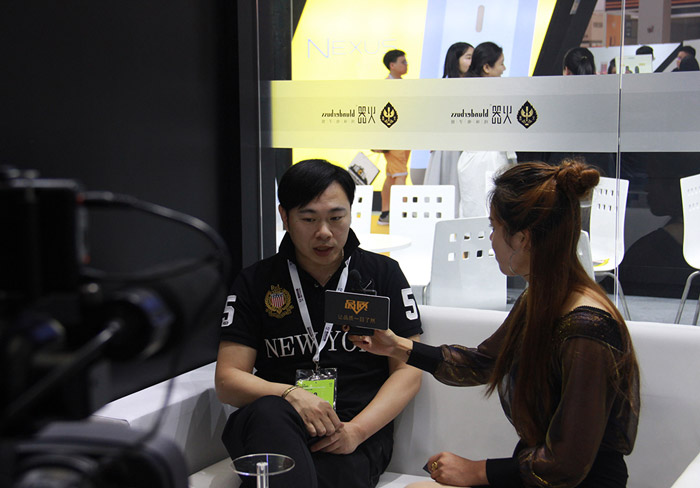 Another memorable encounter was with the CEO of Kleppeng, the only entrepreneur from an e-commerce background, who was not optimistic about the future. He believed the mortality rate in this industry is too high, and if it develops overseas, foreign governments also have industry protections. Once big tobacco companies collaborate with the government to introduce new regulations, it could easily push you out. Additionally, in Shenzhen, design companies would massively replicate vaping device designs, making it difficult for any product to remain popular in the market for long, posing challenges to a company's long-term R&D capabilities.
We were somewhat disappointed by this research; everyone we met had doubts about the closed system, and we did not find the people we were looking for.
At the same time, Philip Morris's IQOS system was also launched. For closed systems, it uses tobacco products, providing a taste closer to traditional cigarettes, aligning with the habits of mature consumers, representing a 1.5 generation solution for tobacco evolution. This created two technological branches on the vaping technology tree, leading to internal debates on how to choose. My opinion is that IQOS's technology is not fully mature, and using tobacco products makes it susceptible to regulatory scrutiny. Moreover, IQOS aligns more with the experience habits of mature consumers, which is not the demographic we aim to penetrate.
On the other hand, our market research data from California indicated that 55% of vaping consumers do not use nicotine-containing e-liquids. This means that their first "smoke" was actually vaping. This data aligns with the consumption trends we usually study in craft beer and single malt whiskey. We believe the reason is that both tobacco and alcohol are considered everyday consumer goods in China. When young people enter adulthood, they wish to choose products that differ from their parents to express their individuality. Therefore, I still firmly stand with the closed system.
#p#分页标题#e#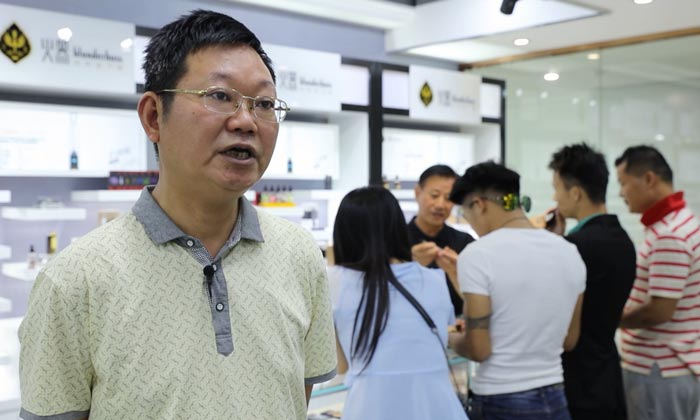 Consumer Voice: How do you understand vaping? Is it a fast-moving consumer good or smart hardware? Does it belong to a mature market or a growing market?
Li Oucheng: In my view, vaping, like women's beauty appliances, is a consumer product for a specific demographic. It is inappropriate to categorize it as a fast-moving consumer good or smart hardware; it shares similarities with craft beer. For instance, over half of craft beer enthusiasts had previously consumed beer, but after experiencing craft beer, they would never go back to regular beer.
Many vaping users were not smokers before, and the e-liquids they usually use do not contain nicotine, so it definitely belongs to a growing market. However, the user base for products like IQOS (heated, non-combustible electronic cigarettes containing real tobacco) is entirely from the mature market.
Consumer Voice: In your estimation, how large is the Chinese vaping consumption market? How fast is its growth?
Li Oucheng: I personally estimate that the domestic market was about 1 billion RMB in 2018, but if we include the purchasing of IQOS and other products (like caffeine sticks), the market size should exceed 2.5 billion RMB.
The growth rate is also rapid. According to unofficial data, Juul's sales were less than $100 million in 2016, $530 million in 2017, and about $1.5 billion in 2018. Domestic RELX's sales should also have surpassed 10 million now, and they achieved this in less than a year. However, while everyone sees the rapid growth of vaping, its proportion in the tobacco industry is still not very high, only about 3-5%.
Consumer Voice: Before the Chinese vaping consumption market took off, why did Bopai invest in Jinyan Technology? What attracted you to them?
Li Oucheng: I was attracted to Samuel because only the two of us believed that the closed system would be the mainstream in the future and acted on it immediately. Hitesh, our second partner, served as CTO and is a top technical talent from the Indian Tobacco Company (ITC). Luo Feng is the sales director, a former head of Huawei's app store. Industry resources, technical advantages, and overseas market experience are our core strengths.
The biggest issue for Samuel and Hitesh was their obsession with technology. We spent a lot of energy developing new atomization technology, but then we encountered issues with improving the yield rate. I cited the examples of Bright Dairy and Mengniu, and Yili. Everyone knows that pasteurized milk is better than regular milk, but because regular milk does not require cold chain transportation, the market is larger, leading to Yili and Mengniu capturing a lot of second and third-tier cities while Bright Dairy could only remain in first-tier cities.
However, I do not believe that the current rankings represent the future landscape. The vaping market is very similar to the mobile phone market of the past. The once-glorious MTK has now fallen drastically, and no one dares to bet on Vivo and Oppo. Now, people have forgotten how low the first-generation Huawei Honor's benchmark scores were.
Consumer Voice: Currently, many self-media outlets are crossing into the vaping industry. Do you think strong channel intervention in this field is feasible?
Li Oucheng: Recently, seven or eight self-media outlets have approached me wanting to enter the vaping industry. What about product development? What about technological iteration? What about product certification? If the goal is to quickly educate the market through media, I fully support it. But if the aim is to harvest users, everyone needs to be very confident in their product's repurchase rate.
We see that very few media accounts dare to disclose their average conversion rates and repurchase rates. I do not wish for this industry to see the emergence of micro-businesses, as this represents a dangerous critical state. Unrestrained market development will spark significant social discussions, and those who set fire to a forest for themselves are the most terrifying.
Claiming to have strong sales channels, I do not agree with that. The current self-media approach is still traditional. Moreover, once distribution begins, agents may engage in extensive marketing for their sales, causing the brand to lose core control over its products. Once the influence grows, if a product issue arises, it will attract attention from regulatory bodies.
Consumer Voice: Is the most uncertain factor in vaping currently policy?
Li Oucheng: I believe the most uncertain factor is public opinion. JUUL is a typical example. It successfully captured the attention of young people due to early sales without ID verification and the loosening of marijuana regulations in the U.S., leading to multiple lawsuits and intense scrutiny from the FDA since 2018. This was also the main reason JUUL accepted investment from big tobacco last year.
Consumer Voice: With the emergence of these new play styles, will the supply chain follow suit and create more of its own brands?
Li Oucheng: I don't think so. The loss rate in this industry is too high, and it could lead to losing everything in an instant. Therefore, some companies in the industry prefer to operate as ODM.
#p#分页标题#e#
Consumer Voice: Will Xiaomi enter the market? Will Cheetah enter the market? Which giants are likely to enter?
Li Oucheng: Xiaomi is likely, Cheetah is uncertain, but Smartisan has already made it clear they will enter. My biggest concern is that institutions on Douyin will enter the market. Because if the vapor produced by electronic cigarettes can have colors or other special effects, I would look to Douyin, and it would quickly go viral. In terms of influencer marketing capabilities, no one can compete with Douyin. I am not particularly worried about other giants entering the market.
"Back then, we invested and waited for the right moment; now that the moment has arrived, everyone looks like a bad boyfriend," said Li Oucheng. He pointed out that the current influx of capital into the vaping industry is concerning. "From cases like shared bicycles and power banks, we can see that a market inflated by capital is not a good market." He mentioned that major tobacco companies are currently competing for the UK market, with a subsidy price of £1 (about 10 RMB) for a vaping device in London. "Which Chinese capital company dares to say we are wealthier than tobacco companies?"
With the emergence of multiple new vaping brands, he believes that current vaping products do not demonstrate high product capability and originality, focusing more on market capture. Moreover, once a brand begins distribution and loses core control over its products, any product issues could lead to public backlash, "which is like setting fire to a forest for oneself."
Consumer Voice: You noticed vaping back in 2016; what was the trigger at that time?
Li Oucheng: My partner Zheng Lan went to the United States in 2016 and asked me if I had tried vaping. At that time, I had just started using vape and immediately judged that this would be a revolutionary consumer product. Traditional tobacco burning leads to many health issues, but vape juice is primarily composed of VG (vegetable glycerin) and PG (propylene glycol), which is relatively healthier. Based on my previous investment experience in consumer products, such high-margin, highly dependent, and popular products are always favored in the market.
At that time, vaping was still "big smoke," meaning an open system that required users to refill e-liquid, wrap coils (for heating e-liquid), clean atomizers, and charge batteries. I always hoped for a product like the iPhone. Then PAX Lab launched JUUL (PAX Lab later spun off JUUL, establishing a subsidiary called JUUL Lab), and after buying one, I hoped to invest in a domestic company that would create a closed system.
Consumer Voice: What was the market environment like back then? What choices did you make?
Li Oucheng: In March 2016, we went to Shenzhen for research, meeting with eight factories, four e-liquid companies, as well as agents and media communities. Shenzhen is the global hub for vape products, but many are OEM (original equipment manufacturer) and ODM (original design manufacturer) factories. At the same time, we also began consumer research in California.
In the Chinese market, it was relatively quiet, with only a few companies like Huoqi Electronic Cigarettes operating domestically. I vividly remember in Shajing, the owner of Kang'er received us in a living room styled like an old cadre's, brewing tea while playing with the latest big smoke device, firmly stating that the domestic market has no future and that everyone has enough money and would not accept our investment.
Another memorable encounter was with the CEO of Kleppeng, the only entrepreneur from an e-commerce background, who was not optimistic about the future. He believed the mortality rate in this industry is too high, and if it develops overseas, foreign governments also have industry protections. Once big tobacco companies collaborate with the government to introduce new regulations, it could easily push you out. Additionally, in Shenzhen, design companies would massively replicate vaping device designs, making it difficult for any product to remain popular in the market for long, posing challenges to a company's long-term R&D capabilities.We were somewhat disappointed by this research; everyone we met had doubts about the closed system, and we did not find the people we were looking for.
At the same time, Philip Morris's IQOS system was also launched. For closed systems, it uses tobacco products, providing a taste closer to traditional cigarettes, aligning with the habits of mature consumers, representing a 1.5 generation solution for tobacco evolution. This created two technological branches on the vaping technology tree, leading to internal debates on how to choose. My opinion is that IQOS's technology is not fully mature, and using tobacco products makes it susceptible to regulatory scrutiny. Moreover, IQOS aligns more with the experience habits of mature consumers, which is not the demographic we aim to penetrate.
On the other hand, our market research data from California indicated that 55% of vaping consumers do not use nicotine-containing e-liquids. This means that their first "smoke" was actually vaping. This data aligns with the consumption trends we usually study in craft beer and single malt whiskey. We believe the reason is that both tobacco and alcohol are considered everyday consumer goods in China. When young people enter adulthood, they wish to choose products that differ from their parents to express their individuality. Therefore, I still firmly stand with the closed system.
#p#分页标题#e#
Consumer Voice: How do you understand vaping? Is it a fast-moving consumer good or smart hardware? Does it belong to a mature market or a growing market?Li Oucheng: In my view, vaping, like women's beauty appliances, is a consumer product for a specific demographic. It is inappropriate to categorize it as a fast-moving consumer good or smart hardware; it shares similarities with craft beer. For instance, over half of craft beer enthusiasts had previously consumed beer, but after experiencing craft beer, they would never go back to regular beer.
Many vaping users were not smokers before, and the e-liquids they usually use do not contain nicotine, so it definitely belongs to a growing market. However, the user base for products like IQOS (heated, non-combustible electronic cigarettes containing real tobacco) is entirely from the mature market.
Consumer Voice: In your estimation, how large is the Chinese vaping consumption market? How fast is its growth?
Li Oucheng: I personally estimate that the domestic market was about 1 billion RMB in 2018, but if we include the purchasing of IQOS and other products (like caffeine sticks), the market size should exceed 2.5 billion RMB.
The growth rate is also rapid. According to unofficial data, Juul's sales were less than $100 million in 2016, $530 million in 2017, and about $1.5 billion in 2018. Domestic RELX's sales should also have surpassed 10 million now, and they achieved this in less than a year. However, while everyone sees the rapid growth of vaping, its proportion in the tobacco industry is still not very high, only about 3-5%.
Consumer Voice: Before the Chinese vaping consumption market took off, why did Bopai invest in Jinyan Technology? What attracted you to them?
Li Oucheng: I was attracted to Samuel because only the two of us believed that the closed system would be the mainstream in the future and acted on it immediately. Hitesh, our second partner, served as CTO and is a top technical talent from the Indian Tobacco Company (ITC). Luo Feng is the sales director, a former head of Huawei's app store. Industry resources, technical advantages, and overseas market experience are our core strengths.
The biggest issue for Samuel and Hitesh was their obsession with technology. We spent a lot of energy developing new atomization technology, but then we encountered issues with improving the yield rate. I cited the examples of Bright Dairy and Mengniu, and Yili. Everyone knows that pasteurized milk is better than regular milk, but because regular milk does not require cold chain transportation, the market is larger, leading to Yili and Mengniu capturing a lot of second and third-tier cities while Bright Dairy could only remain in first-tier cities.
However, I do not believe that the current rankings represent the future landscape. The vaping market is very similar to the mobile phone market of the past. The once-glorious MTK has now fallen drastically, and no one dares to bet on Vivo and Oppo. Now, people have forgotten how low the first-generation Huawei Honor's benchmark scores were.
Consumer Voice: Currently, many self-media outlets are crossing into the vaping industry. Do you think strong channel intervention in this field is feasible?
Li Oucheng: Recently, seven or eight self-media outlets have approached me wanting to enter the vaping industry. What about product development? What about technological iteration? What about product certification? If the goal is to quickly educate the market through media, I fully support it. But if the aim is to harvest users, everyone needs to be very confident in their product's repurchase rate.
We see that very few media accounts dare to disclose their average conversion rates and repurchase rates. I do not wish for this industry to see the emergence of micro-businesses, as this represents a dangerous critical state. Unrestrained market development will spark significant social discussions, and those who set fire to a forest for themselves are the most terrifying.
Claiming to have strong sales channels, I do not agree with that. The current self-media approach is still traditional. Moreover, once distribution begins, agents may engage in extensive marketing for their sales, causing the brand to lose core control over its products. Once the influence grows, if a product issue arises, it will attract attention from regulatory bodies.
Consumer Voice: Is the most uncertain factor in vaping currently policy?
Li Oucheng: I believe the most uncertain factor is public opinion. JUUL is a typical example. It successfully captured the attention of young people due to early sales without ID verification and the loosening of marijuana regulations in the U.S., leading to multiple lawsuits and intense scrutiny from the FDA since 2018. This was also the main reason JUUL accepted investment from big tobacco last year.
Consumer Voice: With the emergence of these new play styles, will the supply chain follow suit and create more of its own brands?
Li Oucheng: I don't think so. The loss rate in this industry is too high, and it could lead to losing everything in an instant. Therefore, some companies in the industry prefer to operate as ODM.
#p#分页标题#e#
Consumer Voice: Will Xiaomi enter the market? Will Cheetah enter the market? Which giants are likely to enter?
Li Oucheng: Xiaomi is likely, Cheetah is uncertain, but Smartisan has already made it clear they will enter. My biggest concern is that institutions on Douyin will enter the market. Because if the vapor produced by electronic cigarettes can have colors or other special effects, I would look to Douyin, and it would quickly go viral. In terms of influencer marketing capabilities, no one can compete with Douyin. I am not particularly worried about other giants entering the market.


