
Where Are China’s Vaping Market and Target Customers?
Where are China’s vaping market and target customers? Recently, after observing smoking friends living in Beijing, Shanghai, Guangzhou, Shenzhen, Hangzhou, and Chengdu, it seems that various forms of vaping devices entered everyday life almost overnight.
Where are China's vaping market and target customers? Recently, I observed friends who smoke in cities like Beijing, Shanghai, Guangzhou, Shenzhen, Hangzhou, and Chengdu. Various forms of e-cigarettes have almost suddenly entered everyone's lives. I personally believe that the consumption upgrade in the tobacco industry is driven by the demand to quit smoking, leading to various e-cigarettes, pseudo-e-cigarettes, and low-nicotine cigarettes.
The e-cigarette industry clearly profits from selling pods, similar to the product and business model of razors. Once brand recognition and user habits are established, the long-tail profits are very substantial.
Most devices are sold at cost or even at a loss. The first company to develop heated tobacco products was Philip Morris, the parent company of Marlboro, which launched IQOS in 2015. In 2017, the revenue from pod sales alone reached nearly 3.8 billion USD, successfully increasing PM's stock price from 60 dollars in 2015 to a peak of 117 dollars last year.
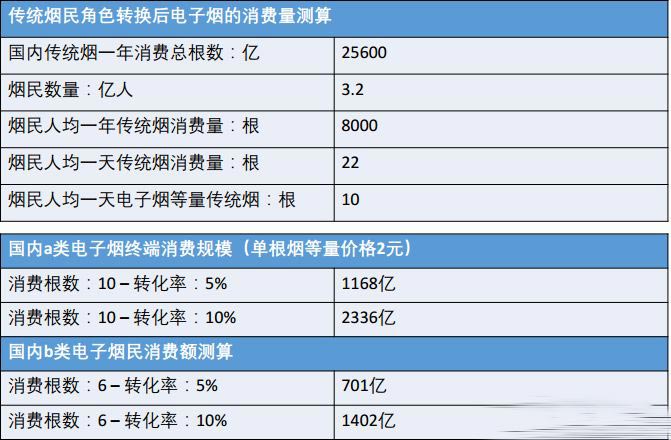 Last week, during a smoke break with my boss, we discussed the current user demand scenarios for e-cigarettes in China.
Firstly, smokers often have the situation of "smoking for no reason"; they might just be fidgeting, passing time, or waking up to regain their state. The first few puffs of a heated tobacco product can indeed satisfy the need, but the remaining 70% is more about not wasting it once it's lit and finishing it off.
Secondly, when smokers feel the urge to smoke, the time and space are almost unpredictable. Inevitably, there will be people nearby who dislike the smell of tobacco or conditions that do not allow smoking outdoors.
Thirdly, young people with a bit of money may not be able to afford their dream homes or cars, but they can still find small pleasures to satisfy themselves. Compared to older smokers who buy company cigarettes, young men and women who enjoy various foreign cigarettes are clearly high-potential users for e-cigarette companies, and they are the ones the tobacco companies want to capture.
The e-cigarette industry clearly profits from selling pods, similar to the product and business model of razors. Once brand recognition and user habits are established, the long-tail profits are very substantial.
Most devices are sold at cost or even at a loss. The first company to develop heated tobacco products was Philip Morris, the parent company of Marlboro, which launched IQOS in 2015. In 2017, the revenue from pod sales alone reached nearly 3.8 billion USD, successfully increasing PM's stock price from 60 dollars in 2015 to a peak of 117 dollars last year.
Last week, during a smoke break with my boss, we discussed the current user demand scenarios for e-cigarettes in China.Firstly, smokers often have the situation of "smoking for no reason"; they might just be fidgeting, passing time, or waking up to regain their state. The first few puffs of a heated tobacco product can indeed satisfy the need, but the remaining 70% is more about not wasting it once it's lit and finishing it off.
Secondly, when smokers feel the urge to smoke, the time and space are almost unpredictable. Inevitably, there will be people nearby who dislike the smell of tobacco or conditions that do not allow smoking outdoors.
Thirdly, young people with a bit of money may not be able to afford their dream homes or cars, but they can still find small pleasures to satisfy themselves. Compared to older smokers who buy company cigarettes, young men and women who enjoy various foreign cigarettes are clearly high-potential users for e-cigarette companies, and they are the ones the tobacco companies want to capture.


