
What will happen to China’s e-cigarette policies and regulations?
What will happen to China’s e-cigarette policies and regulations? Policy has always been the issue that e-cigarette practitioners follow most closely and worry about the most. It has long been regarded as the biggest risk to industry development, like a s
What will happen to China's e-cigarette policies and regulations? Policy issues have always been the most concerned and worrying issue for e-cigarette practitioners. It has always been regarded as the biggest risk to the development of e-cigarettes. It is like a sword of Damocles hanging above its head, making many practitioners nervous. In particular, Hong Kong's proposal to completely ban e-cigarettes has increased everyone's concerns.
Hong Kong originally has a very small market share, so small that it can be ignored. It is mainly a transit point for e-cigarette exports. Why does it attract so much attention? It is mainly due to policy concerns, fearing that the mainland will follow Hong Kong. Now let's think about and discuss future e-cigarette regulatory policies based on issues that everyone is concerned about.
Is it possible to completely ban e-cigarettes in China?? Then calm down and ask yourself, is it possible to completely ban e-cigarettes in China (the exact term is mainland, the same below)?
There are many things that are terrible to think about. Once I calmed down and analyzed it carefully, I found that there were not so many worries. If you think about it with common sense, you will know that the possibility of banning e-cigarettes is like winning the lottery!
When e-cigarettes were first born, e-cigarettes were not eliminated. Now China has become a global e-cigarette production base, producing more than 90% of the world's e-cigarettes, with about 1 million practitioners. The export volume in 2018 is estimated to reach 26 billion yuan, and more than 20,000 patents have been applied, accounting for 87% of the global e-cigarette patents. It has finally developed into an industry with a say in the world. What good will it do to China to ban e-cigarettes now? Looking at the entire country, how many industries are there in the world that have the initiative?
What's more, e-cigarettes were invented in China. Would the government do such stupid things? If the government completely bans e-cigarettes, international tobacco giants will be happy and will wake up laughing in their dreams!
To put it more bluntly, if you really wanted to ban e-cigarettes, you would not have spent any effort to formulate the national standard for "e-cigarettes", and the national standard for "e-cigarettes" would not have entered the approval stage!
It is impossible to ban e-cigarettes. The logical thing to do is to incorporate supervision, regulate the development of e-cigarettes, and then collect taxes!
Large and medium-sized e-cigarette companies do not oppose e-cigarette supervision
At first, some government departments believed that major e-cigarette companies were opposed to and in conflict with government supervision. In fact, the major e-cigarette companies in the industry currently do not oppose supervision.
The current e-cigarette market in China is full of chaos, uneven quality, and difficulty in ensuring safety. These problems are not conducive to the healthy development of the e-cigarette industry and the interests of consumers. They are also detrimental to the development of the e-cigarette industry and the image of e-cigarettes. Have a huge negative impact.
Major e-cigarette companies in the industry also realize that it is very necessary and urgent to use laws and regulations to regulate the development of the e-cigarette industry; strengthening supervision is conducive to the long-term and orderly development of the e-cigarette industry and to protecting the interests of consumers. I just hope that the government will formulate e-cigarette policies with a supportive attitude to protect this industry that has finally developed into a voice in the international market, rather than adopt an attitude of obliteration.
What are the main methods to regulate e-cigarettes
It is safe to say here that although the attributes of e-cigarette products are complex, including electronic product attributes, and cigarette oil involves food, it is inevitable to be included in supervision. It is only a matter of time, as long as it is a matter of how to supervise it.
Due to the complex attributes of e-cigarette products, regulatory policies vary greatly among countries in terms of supervision, and there is no unified supervision method. At present, there are mainly several views on the legal attributes of e-cigarettes, such as tobacco products, drugs and consumer goods. Taking any view will lead to different legal effects and cause the government to adopt inconsistent regulatory ideas.
If e-cigarettes are regarded as consumer goods, consumers can freely purchase them on the market, while the government adopts loose restrictions on the quality, ingredients, and consumer conditions of e-cigarette products.
If e-cigarettes are regarded as tobacco products, the corresponding ingredients, quality, etc. should be stipulated in accordance with traditional tobacco, and the seller should obtain a tobacco monopoly license. ldquo; There is a lower age limit for e-cigarette smokers and restrictions on smoking venues. The government will receive relatively generous tax revenue from e-cigarette sales.
If e-cigarettes are regarded as drugs, they should enjoy the same strict marketing requirements as drugs, that is, every new e-cigarette product launched must go through a cumbersome application and approval process, and the ingredients and product indicators of e-cigarettes must be sufficient. Clinical data confirms that there must be strict regulations on all aspects of production and sales.# p#pagination title #e#
It is precisely because there is currently no explicit regulation on the legal nature of e-cigarettes that no government department has absolutely sufficient reasons to claim the full legitimacy of its regulatory power over e-cigarettes.
Among these three main supervision methods, there are international examples to follow, which are classified as tobacco products and drug supervision.
Regulatory paths in the United States and Japan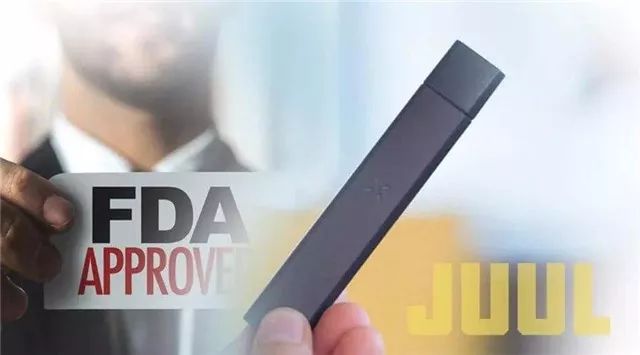 The United States regulates e-cigarettes as tobacco products. The United States is the world's largest e-cigarette market. In 2010, it tried to define e-cigarettes as drugs and regulate them in accordance with drug standards. The U.S. Food and Drug Administration (FDA) believes that nicotine is a drug under the definition of the U.S. Food, Drug and Cosmetic Act. Therefore, e-cigarettes containing nicotine should be reviewed and approved by the FDA for their safety and effectiveness.
However, such relatively strict regulatory measures attracted strong opposition, and the US FDA lost the case in court and had to consider regulatory measures in the context of tobacco products. Since then, the FDA has regulated e-cigarettes as tobacco products.
On May 5, 2016, new regulations were issued, clearly incorporating new tobacco products such as e-cigarettes into government supervision, requiring e-cigarette manufacturers to submit product ingredient information to the FDA. If new e-cigarette products are marketed, they must submit new product applications and be approved by the FDA. At the same time, the FDA has designed tobacco control measures for e-cigarette products, including purchase age limits, packaging health warnings, cigarette vending restrictions, etc.
In Japan, e-cigarettes are currently under drug supervision. At first, Japan faced the same regulatory options as the United States. Should e-cigarettes be regarded as tobacco products under the supervision of the Ministry of Finance or drugs under the supervision of the Ministry of Health of Japan. Japan's Ministry of Finance has long had the legal authority to regulate the country's tobacco products and is the de facto controller of Japan Tobacco Corporation, Japan's only local tobacco company.
In early December 2010, Japan's Ministry of Health obtained regulatory authority for e-cigarette-like drugs through interpretation of the law. Currently, e-cigarettes sold on the market absolutely do not contain any nicotine content (IQOS is sold as cigarettes in Japan, not e-cigarettes). E-cigarettes containing nicotine are currently banned without permission from the Ministry of Health, and only non-nicotine e-cigarettes can be sold on the market.
So which way will the country go?
Thoughts on specific domestic regulatory policies for electronic cigarettes in the future
It is expected to refer to the practices of the mobile phone industry. No matter which company produces e-cigarette smoking equipment, it only needs to follow the standards, and the key points of cigarette oil are included in direct control. Look at communications companies. Telecommunications, China Mobile, and China Unicom are all state-owned enterprises. On the one hand, tobacco oil is a consumable and needs to be used every day; on the other hand, it is imported, and there are also regulatory reasons for safety considerations.
Previously, some practitioners expected that the government would monopolize the production of nicotine-containing tobacco oil, acquire companies that produce nicotine-containing tobacco oil and incorporate it into state-owned enterprises; and liberalize nicotine-free tobacco oil, saying that nicotine-free tobacco oil has nothing to do with tobacco. Or monopolize the production of all tobacco oil.
Let's now discuss how likely it is to do this. We know that consumers 'demand for tobacco oil is too diverse, and they have no loyalty to tobacco oil. Unlike cigarettes, they can smoke it for decades if they like a brand. However, consumers 'demand for the taste of tobacco oil often changes, and they will become tired of smoking a flavor for a period of time, which makes it very unsuitable for large-scale production. The annual demand for a single flavor is not enough for one day's production. Monopoly the production of tobacco oil is not realistic unless the technical problem of smoking tobacco oil will become tired after a long time is solved!
Some practitioners went on to say that if you do not directly monopolize tobacco oil containing nicotine, it may monopolize the production of nicotine. Because there are few types of nicotine, it is suitable for large-scale production.
Then this is even more impossible! Based on the concentration of 30mg in a bottle of 10ML tobacco oil, 33,000 bottles of 10ML tobacco oil can be added to 1 kilogram of nicotine liquid. One ton of nicotine liquid can add more than 60 million bottles of 10ML tobacco oil. Nowadays, one kilogram of nicotine liquid is sold for about 1000 yuan. Even if one kilogram is sold for 10,000 yuan after monopoly, the annual sales of an industry are only hundreds of millions or billions! That is, the output value of medium-sized enterprises, the output value is too small!
Since it is impossible to monopolize tobacco oil production, the most likely thing is to regulate and collect taxes on tobacco oil.
There are also two voices on the way to regulate and collect taxes on tobacco oil. One voice believes that tobacco oil that contains nicotine will be taxed, and tobacco oil that does not contain nicotine will not be taxed. One voice believes that smoking oil will be taxed regardless of whether it contains nicotine.# p#pagination title #e#
After thinking about it, I think it is impossible to operate according to the first sound. During the period of heavy smoke, young people mainly buy it for fun. The estimated proportion of sales of nicotine and non-nicotine tobacco oil is 3:7; currently, this is the era of e-cigarettes and small cigarettes, which mainly serve smokers. The estimated proportion of sales of nicotine and non-nicotine tobacco oil is 6:4. If the first voice is followed, the government will collect half of the tax. In addition, it is logically unreasonable. Nicotine-free tobacco oil is also tobacco oil and imported. It involves the health and safety of consumers. If it is not taxed, what does it matter?
According to understanding, people tend to think that they will operate according to the second sound: whether it contains nicotine or not, as long as it is smoking oil will be taxed. It's just a question of how much to tax.
We should remain optimistic about future regulation
If taxation is carried out, it means that e-cigarettes have been officially standardized and developed, which is a good thing for the long-term development of the e-cigarette industry, and there is no concern about eliminating the e-cigarette industry.
Cigarettes are so monopolized in China, and the tobacco monopoly system is strictly implemented, but cigarettes are sold by private enterprises and through hundreds of thousands of supermarkets, convenience stores and other channels across the country.
Lingxi LINX e-cigarette brand Zhang Jinyuan remains optimistic about future supervision. ldquo; Just like the takeout and online ride-hailing industries, the development of many things will precede policies. But after the policy is implemented, we will cooperate with it. Regardless of whether supervision is carried out in the future by issuing licenses or increasing taxes, I believe that an excellent team can find enough space.& rdquo; He said.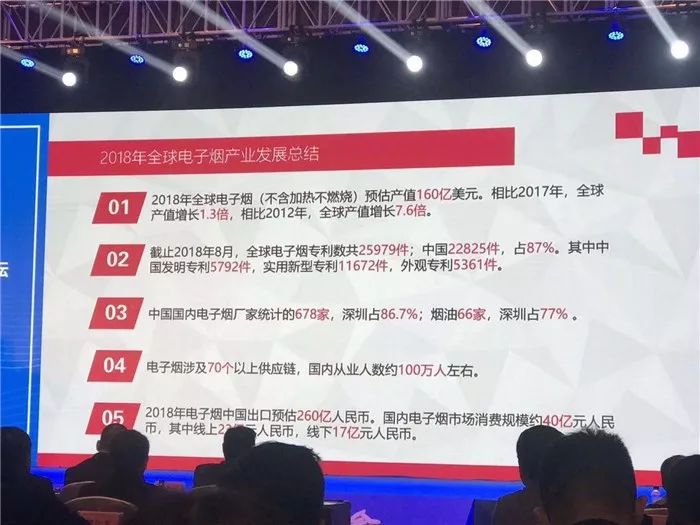 Preview of the future development paradigm of e-cigarettes in China
Paradigm 1 for future development: After the release of the national standard for "E-Cigarette", no taxes will be levied first to support the development of e-cigarettes. There is also a practical basis for doing so. Because the sales of e-cigarettes in the domestic market are too small. According to statistics, the domestic sales of the entire industry in 2016 were only 3.2 billion yuan, and in 2018 it was only 4 billion yuan. The domestic sales of the entire industry are only so small. This sales amount is obtained from listed companies! Compared with cigarette sales, it is just a drop in the bucket. poses no threat to cigarette sales.
Paradigm 2 for future development: The formulation of the national standard for "e-cigarettes" is to pave the way for taxation. After the release of the "Electronic Cigarette" national standard, the taxation policy followed up. However, we strongly support exports and do not restrict the sales of e-cigarettes in the domestic market.
Paradigm 3 for future development: After the release of the national standard of "E-Cigarette", the taxation policy will continue to follow suit. The domestic sales of e-cigarettes will not be restricted in the early stage, but will be restricted after the sales scale is developed to a certain scale (maybe 30 billion, maybe 50 billion, which is expected to be restricted in terms of tax rates); However, we strongly support exports to earn foreign exchange for the country, encourage and cooperate with tobacco companies to implement the going global strategy, and work with tobacco companies to become bigger and stronger abroad!
Which paradigm should we follow in the future? To be honest, I don't know! These three future development paradigms all have theoretical basis and practical significance.
What I want to say is that no matter which paradigm you choose to follow, it will not be bad for e-cigarette companies!
What I want to say is that in China, policy is not the biggest risk to the e-cigarette industry. The biggest risk to e-cigarettes is that the industry changes rapidly. Once it fails to keep up with the development trend, it will be eliminated!
Hong Kong originally has a very small market share, so small that it can be ignored. It is mainly a transit point for e-cigarette exports. Why does it attract so much attention? It is mainly due to policy concerns, fearing that the mainland will follow Hong Kong. Now let's think about and discuss future e-cigarette regulatory policies based on issues that everyone is concerned about.
Is it possible to completely ban e-cigarettes in China??
Then calm down and ask yourself, is it possible to completely ban e-cigarettes in China (the exact term is mainland, the same below)?There are many things that are terrible to think about. Once I calmed down and analyzed it carefully, I found that there were not so many worries. If you think about it with common sense, you will know that the possibility of banning e-cigarettes is like winning the lottery!
When e-cigarettes were first born, e-cigarettes were not eliminated. Now China has become a global e-cigarette production base, producing more than 90% of the world's e-cigarettes, with about 1 million practitioners. The export volume in 2018 is estimated to reach 26 billion yuan, and more than 20,000 patents have been applied, accounting for 87% of the global e-cigarette patents. It has finally developed into an industry with a say in the world. What good will it do to China to ban e-cigarettes now? Looking at the entire country, how many industries are there in the world that have the initiative?
What's more, e-cigarettes were invented in China. Would the government do such stupid things? If the government completely bans e-cigarettes, international tobacco giants will be happy and will wake up laughing in their dreams!
To put it more bluntly, if you really wanted to ban e-cigarettes, you would not have spent any effort to formulate the national standard for "e-cigarettes", and the national standard for "e-cigarettes" would not have entered the approval stage!
It is impossible to ban e-cigarettes. The logical thing to do is to incorporate supervision, regulate the development of e-cigarettes, and then collect taxes!
Large and medium-sized e-cigarette companies do not oppose e-cigarette supervision
At first, some government departments believed that major e-cigarette companies were opposed to and in conflict with government supervision. In fact, the major e-cigarette companies in the industry currently do not oppose supervision.
The current e-cigarette market in China is full of chaos, uneven quality, and difficulty in ensuring safety. These problems are not conducive to the healthy development of the e-cigarette industry and the interests of consumers. They are also detrimental to the development of the e-cigarette industry and the image of e-cigarettes. Have a huge negative impact.
Major e-cigarette companies in the industry also realize that it is very necessary and urgent to use laws and regulations to regulate the development of the e-cigarette industry; strengthening supervision is conducive to the long-term and orderly development of the e-cigarette industry and to protecting the interests of consumers. I just hope that the government will formulate e-cigarette policies with a supportive attitude to protect this industry that has finally developed into a voice in the international market, rather than adopt an attitude of obliteration.
What are the main methods to regulate e-cigarettes
It is safe to say here that although the attributes of e-cigarette products are complex, including electronic product attributes, and cigarette oil involves food, it is inevitable to be included in supervision. It is only a matter of time, as long as it is a matter of how to supervise it.
Due to the complex attributes of e-cigarette products, regulatory policies vary greatly among countries in terms of supervision, and there is no unified supervision method. At present, there are mainly several views on the legal attributes of e-cigarettes, such as tobacco products, drugs and consumer goods. Taking any view will lead to different legal effects and cause the government to adopt inconsistent regulatory ideas.
If e-cigarettes are regarded as consumer goods, consumers can freely purchase them on the market, while the government adopts loose restrictions on the quality, ingredients, and consumer conditions of e-cigarette products.
If e-cigarettes are regarded as tobacco products, the corresponding ingredients, quality, etc. should be stipulated in accordance with traditional tobacco, and the seller should obtain a tobacco monopoly license. ldquo; There is a lower age limit for e-cigarette smokers and restrictions on smoking venues. The government will receive relatively generous tax revenue from e-cigarette sales.
If e-cigarettes are regarded as drugs, they should enjoy the same strict marketing requirements as drugs, that is, every new e-cigarette product launched must go through a cumbersome application and approval process, and the ingredients and product indicators of e-cigarettes must be sufficient. Clinical data confirms that there must be strict regulations on all aspects of production and sales.# p#pagination title #e#
It is precisely because there is currently no explicit regulation on the legal nature of e-cigarettes that no government department has absolutely sufficient reasons to claim the full legitimacy of its regulatory power over e-cigarettes.
Among these three main supervision methods, there are international examples to follow, which are classified as tobacco products and drug supervision.
Regulatory paths in the United States and Japan
The United States regulates e-cigarettes as tobacco products. The United States is the world's largest e-cigarette market. In 2010, it tried to define e-cigarettes as drugs and regulate them in accordance with drug standards. The U.S. Food and Drug Administration (FDA) believes that nicotine is a drug under the definition of the U.S. Food, Drug and Cosmetic Act. Therefore, e-cigarettes containing nicotine should be reviewed and approved by the FDA for their safety and effectiveness.However, such relatively strict regulatory measures attracted strong opposition, and the US FDA lost the case in court and had to consider regulatory measures in the context of tobacco products. Since then, the FDA has regulated e-cigarettes as tobacco products.
On May 5, 2016, new regulations were issued, clearly incorporating new tobacco products such as e-cigarettes into government supervision, requiring e-cigarette manufacturers to submit product ingredient information to the FDA. If new e-cigarette products are marketed, they must submit new product applications and be approved by the FDA. At the same time, the FDA has designed tobacco control measures for e-cigarette products, including purchase age limits, packaging health warnings, cigarette vending restrictions, etc.
In Japan, e-cigarettes are currently under drug supervision. At first, Japan faced the same regulatory options as the United States. Should e-cigarettes be regarded as tobacco products under the supervision of the Ministry of Finance or drugs under the supervision of the Ministry of Health of Japan. Japan's Ministry of Finance has long had the legal authority to regulate the country's tobacco products and is the de facto controller of Japan Tobacco Corporation, Japan's only local tobacco company.
In early December 2010, Japan's Ministry of Health obtained regulatory authority for e-cigarette-like drugs through interpretation of the law. Currently, e-cigarettes sold on the market absolutely do not contain any nicotine content (IQOS is sold as cigarettes in Japan, not e-cigarettes). E-cigarettes containing nicotine are currently banned without permission from the Ministry of Health, and only non-nicotine e-cigarettes can be sold on the market.
So which way will the country go?
Thoughts on specific domestic regulatory policies for electronic cigarettes in the future
It is expected to refer to the practices of the mobile phone industry. No matter which company produces e-cigarette smoking equipment, it only needs to follow the standards, and the key points of cigarette oil are included in direct control. Look at communications companies. Telecommunications, China Mobile, and China Unicom are all state-owned enterprises. On the one hand, tobacco oil is a consumable and needs to be used every day; on the other hand, it is imported, and there are also regulatory reasons for safety considerations.
Previously, some practitioners expected that the government would monopolize the production of nicotine-containing tobacco oil, acquire companies that produce nicotine-containing tobacco oil and incorporate it into state-owned enterprises; and liberalize nicotine-free tobacco oil, saying that nicotine-free tobacco oil has nothing to do with tobacco. Or monopolize the production of all tobacco oil.
Let's now discuss how likely it is to do this. We know that consumers 'demand for tobacco oil is too diverse, and they have no loyalty to tobacco oil. Unlike cigarettes, they can smoke it for decades if they like a brand. However, consumers 'demand for the taste of tobacco oil often changes, and they will become tired of smoking a flavor for a period of time, which makes it very unsuitable for large-scale production. The annual demand for a single flavor is not enough for one day's production. Monopoly the production of tobacco oil is not realistic unless the technical problem of smoking tobacco oil will become tired after a long time is solved!
Some practitioners went on to say that if you do not directly monopolize tobacco oil containing nicotine, it may monopolize the production of nicotine. Because there are few types of nicotine, it is suitable for large-scale production.
Then this is even more impossible! Based on the concentration of 30mg in a bottle of 10ML tobacco oil, 33,000 bottles of 10ML tobacco oil can be added to 1 kilogram of nicotine liquid. One ton of nicotine liquid can add more than 60 million bottles of 10ML tobacco oil. Nowadays, one kilogram of nicotine liquid is sold for about 1000 yuan. Even if one kilogram is sold for 10,000 yuan after monopoly, the annual sales of an industry are only hundreds of millions or billions! That is, the output value of medium-sized enterprises, the output value is too small!
Since it is impossible to monopolize tobacco oil production, the most likely thing is to regulate and collect taxes on tobacco oil.
There are also two voices on the way to regulate and collect taxes on tobacco oil. One voice believes that tobacco oil that contains nicotine will be taxed, and tobacco oil that does not contain nicotine will not be taxed. One voice believes that smoking oil will be taxed regardless of whether it contains nicotine.# p#pagination title #e#
After thinking about it, I think it is impossible to operate according to the first sound. During the period of heavy smoke, young people mainly buy it for fun. The estimated proportion of sales of nicotine and non-nicotine tobacco oil is 3:7; currently, this is the era of e-cigarettes and small cigarettes, which mainly serve smokers. The estimated proportion of sales of nicotine and non-nicotine tobacco oil is 6:4. If the first voice is followed, the government will collect half of the tax. In addition, it is logically unreasonable. Nicotine-free tobacco oil is also tobacco oil and imported. It involves the health and safety of consumers. If it is not taxed, what does it matter?
According to understanding, people tend to think that they will operate according to the second sound: whether it contains nicotine or not, as long as it is smoking oil will be taxed. It's just a question of how much to tax.
We should remain optimistic about future regulation
If taxation is carried out, it means that e-cigarettes have been officially standardized and developed, which is a good thing for the long-term development of the e-cigarette industry, and there is no concern about eliminating the e-cigarette industry.
Cigarettes are so monopolized in China, and the tobacco monopoly system is strictly implemented, but cigarettes are sold by private enterprises and through hundreds of thousands of supermarkets, convenience stores and other channels across the country.
Lingxi LINX e-cigarette brand Zhang Jinyuan remains optimistic about future supervision. ldquo; Just like the takeout and online ride-hailing industries, the development of many things will precede policies. But after the policy is implemented, we will cooperate with it. Regardless of whether supervision is carried out in the future by issuing licenses or increasing taxes, I believe that an excellent team can find enough space.& rdquo; He said.
Preview of the future development paradigm of e-cigarettes in ChinaParadigm 1 for future development: After the release of the national standard for "E-Cigarette", no taxes will be levied first to support the development of e-cigarettes. There is also a practical basis for doing so. Because the sales of e-cigarettes in the domestic market are too small. According to statistics, the domestic sales of the entire industry in 2016 were only 3.2 billion yuan, and in 2018 it was only 4 billion yuan. The domestic sales of the entire industry are only so small. This sales amount is obtained from listed companies! Compared with cigarette sales, it is just a drop in the bucket. poses no threat to cigarette sales.
Paradigm 2 for future development: The formulation of the national standard for "e-cigarettes" is to pave the way for taxation. After the release of the "Electronic Cigarette" national standard, the taxation policy followed up. However, we strongly support exports and do not restrict the sales of e-cigarettes in the domestic market.
Paradigm 3 for future development: After the release of the national standard of "E-Cigarette", the taxation policy will continue to follow suit. The domestic sales of e-cigarettes will not be restricted in the early stage, but will be restricted after the sales scale is developed to a certain scale (maybe 30 billion, maybe 50 billion, which is expected to be restricted in terms of tax rates); However, we strongly support exports to earn foreign exchange for the country, encourage and cooperate with tobacco companies to implement the going global strategy, and work with tobacco companies to become bigger and stronger abroad!
Which paradigm should we follow in the future? To be honest, I don't know! These three future development paradigms all have theoretical basis and practical significance.
What I want to say is that no matter which paradigm you choose to follow, it will not be bad for e-cigarette companies!
What I want to say is that in China, policy is not the biggest risk to the e-cigarette industry. The biggest risk to e-cigarettes is that the industry changes rapidly. Once it fails to keep up with the development trend, it will be eliminated!


